


Michigan college rankings – 10 standout campuses in WalletHub’s 2026 report
Michigan college rankings from WalletHub’s 2026 study highlight 10 campuses that balance cost, quality and career outcomes for college-bound families.
For Michigan families staring down early decision deadlines and rising tuition bills, a new analysis from personal-finance firm WalletHub puts numbers behind a familiar question: which campus is worth the price.
In its 2026’s Best College & University Rankings, WalletHub compared nearly 800 institutions nationwide using 30 metrics across seven categories, from student selectivity and cost to graduation rates and post-college earnings. University of Michigan–Ann Arbor tops the list of Michigan schools, followed by a mix of private liberal arts colleges and public universities that stretch from Houghton to Spring Arbor.
Average “all-in” costs to attend a four-year college, including housing and other expenses, now range roughly from the mid-$20,000s to more than $58,000 per year, according to one national estimate — a backdrop that makes rankings like these hard to ignore for Michigan families.
Michigan college rankings put flagship, tech and liberal arts schools on the same short list

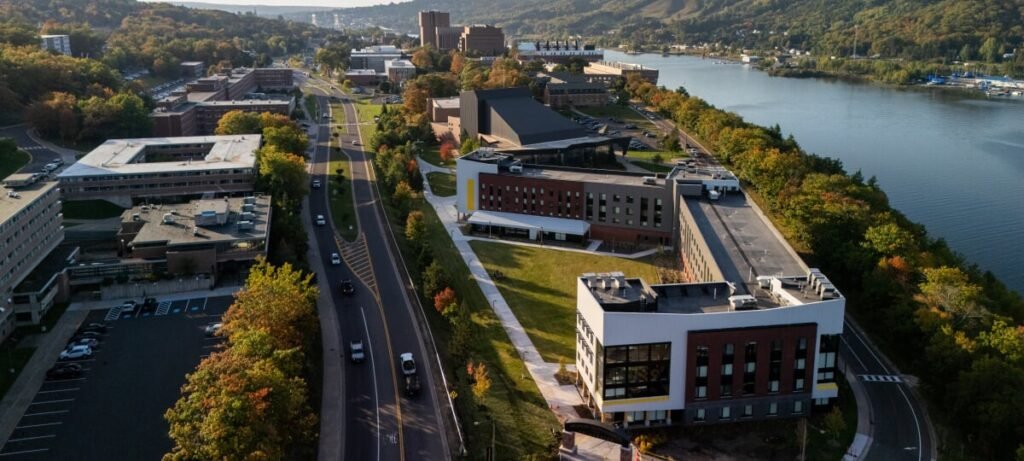
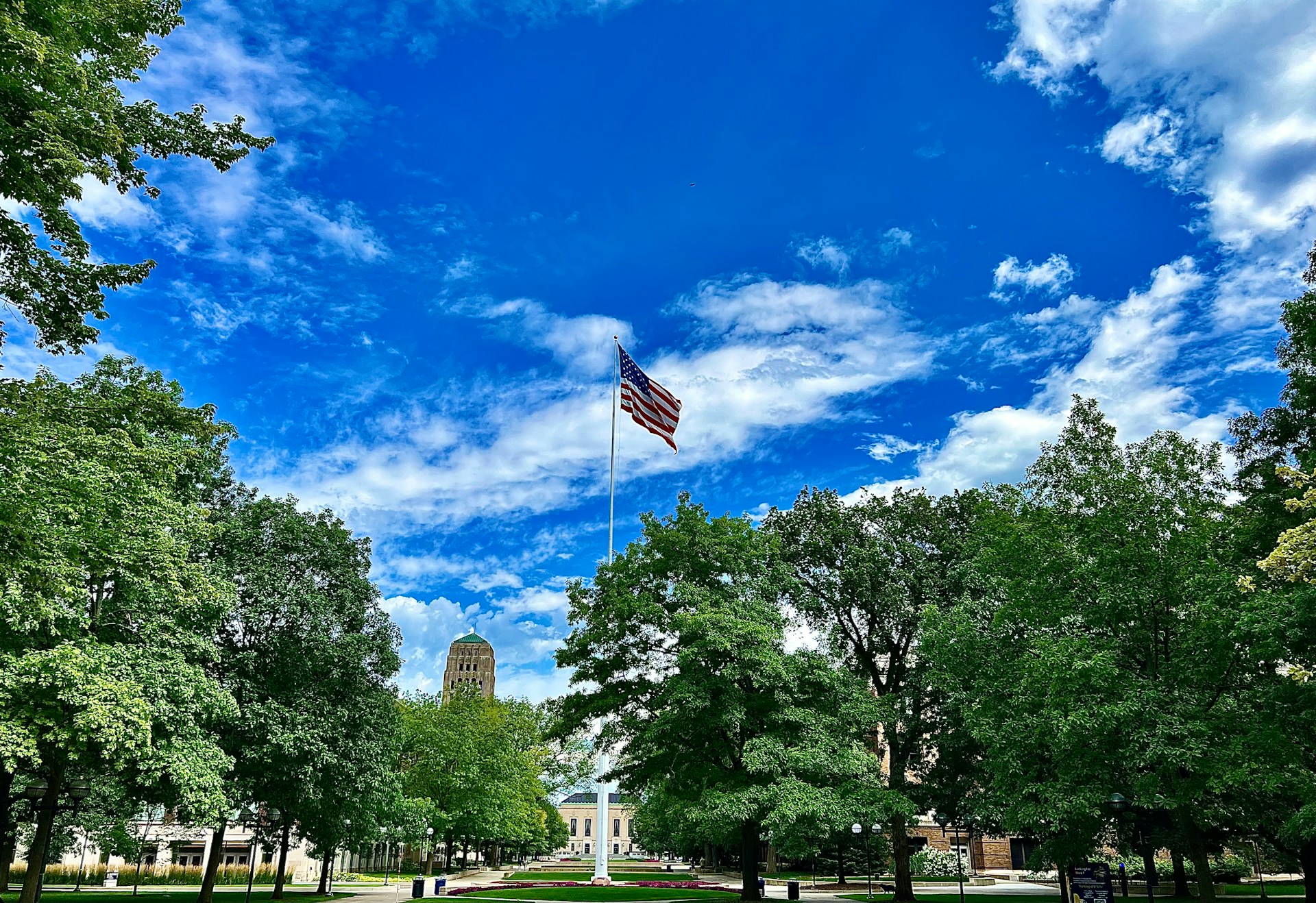
WalletHub’s Michigan top 10 is led by University of Michigan–Ann Arbor, followed by Kalamazoo College and Hope College. Rounding out the list are Calvin University, Michigan Technological University, Spring Arbor University, University of Detroit Mercy, University of Michigan–Dearborn, Siena Heights University and Michigan State University.
The lineup blends large public research universities with smaller private campuses, suggesting that in WalletHub’s Michigan college rankings, institutional size matters less than outcomes.
Snapshot data from the study show why the Ann Arbor flagship leads the state list. Among Michigan institutions analyzed, University of Michigan–Ann Arbor ranks first on admission rate — a proxy for selectivity — and first on graduation rate, while placing near the top on diversity and post-attendance median salary. Its net cost, however, is in the middle of the pack, highlighting the tradeoff between prestige and price even within Michigan.
By contrast, Kalamazoo College ranks first in student-faculty ratio, second in graduation rate, and sixth in post-attendance median salary in the Michigan cohort, but faces weaker marks on campus safety. Hope College, third on the list, posts strong results on student-faculty ratio and graduation rate, with somewhat higher net costs and lower scores on gender and racial diversity.
The inclusion of Michigan Technological University ensures that STEM-focused education in the Upper Peninsula is represented, while Spring Arbor University and Siena Heights University show that smaller religiously affiliated institutions still compete on outcomes and affordability.
Separate coverage of WalletHub’s rankings notes that nine Michigan universities made the national list of best-performing schools, with the University of Michigan–Ann Arbor ranked 37th overall.
How WalletHub built Michigan college rankings on cost, outcomes and campus experience

WalletHub’s methodology, applied uniformly across the country, draws on federal and third-party datasets to evaluate colleges and universities on 30 indicators grouped into seven categories: student selectivity, cost and financing, faculty resources, campus safety, campus experience, educational outcomes and career outcomes.
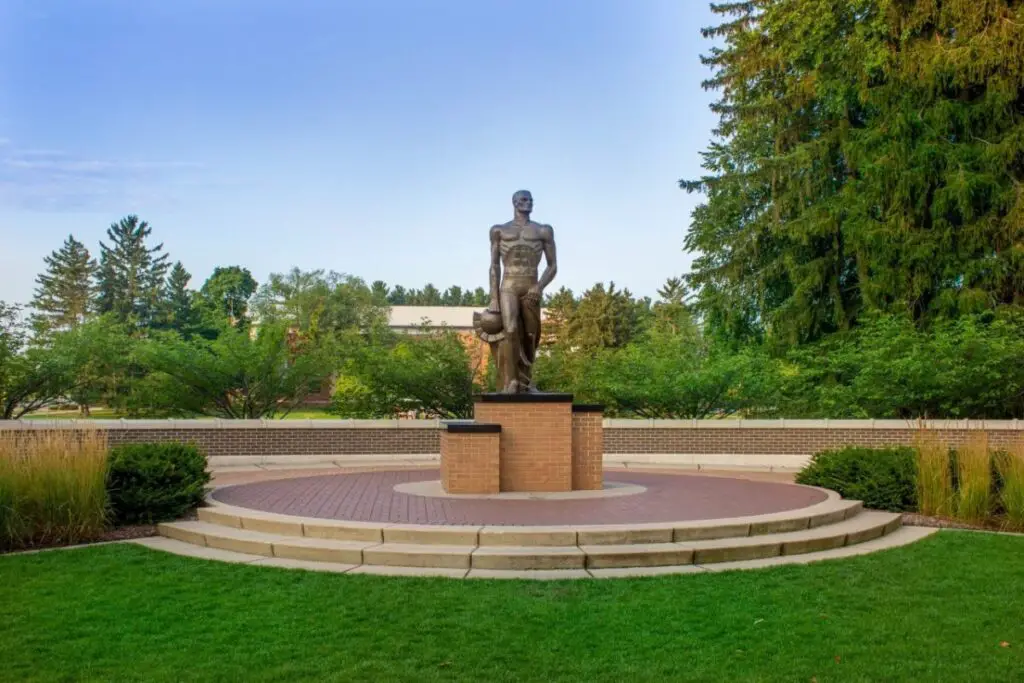
Metrics include student-faculty ratios, graduation rates, on-campus crime, net cost after aid and median earnings for alumni. For Michigan institutions, that means a school like Michigan State University, which appears at the bottom of the state’s top 10, may still outperform peers on campus experience or research opportunities even if it trails smaller colleges on class size or debt levels.
Nationally, WalletHub names Princeton University the top university for 2026, citing an acceptance rate of about 4 percent, a 97 percent graduation rate and an estimated $1.05 million lifetime earnings boost for graduates compared with people whose education ended with high school. The best college in the country, in WalletHub’s separate ranking of primarily undergraduate institutions, is Swarthmore College in Pennsylvania.
For Michigan readers, the more immediate question is how those national metrics translate locally. Another WalletHub analysis this year ranked Michigan 15th nationwide for the overall quality and value of its community colleges, suggesting that two-year schools in the state remain a viable lower-cost route into the higher education system.
Rising college costs make Michigan college rankings a planning tool, not a final verdict


Even the strongest study cannot fully capture fit, program quality or a student’s personal goals. But in an era when total cost of attendance can exceed $230,000 for a four-year private degree, Michigan college rankings like WalletHub’s offer one way to compare options on price and payoff.
Ann Arbor’s standing in the broader higher education environment underscores that context. In WalletHub’s latest ranking of college towns, reported by Southern Living, Ann Arbor — home to the University of Michigan–Ann Arbor — finished second nationally, reflecting a combination of educational quality, job prospects and student life. For students considering U-M, the city’s strong showing adds another dimension to the value calculation.
At the same time, other national rankings tell slightly different stories. Niche’s 2026 college list also places the University of Michigan as the state’s top institution and 19th nationally, with Michigan State University and Michigan Technological University close behind. Families weighing offers from these schools may find reassurance that multiple rating systems, using different formulas, place Michigan’s leading campuses near the top.
Expert advice for Michigan students using Michigan college rankings to reduce debt
Experts consulted in WalletHub’s report caution families not to treat any ranking as a one-size-fits-all verdict.
“The best return comes from schools that keep costs reasonable while also preparing students for careers,” said Tristan N. Jones, a coordinator for recruitment and admissions at Langston University. She emphasized the value of hands-on learning, career services and strong employer connections, especially when combined with lower student debt.
Raquel Muñiz, an associate professor at Boston College, noted that regional universities — institutions that resemble many public campuses in Michigan — educate a large share of undergraduates and often deliver solid job placement because of their lower costs. For students targeting employers that recruit heavily from elite national brands, she said, it can still make sense to consider “name-brand” schools despite higher price tags.
On the policy front, Fred Galloway of the University of San Diego argued that making every four-year college tuition-free is neither realistic nor necessarily fair, given existing federal and state aid systems. Instead, he and other experts recommend expanding need-based grants, encouraging faster completion and supporting community college pathways — all strategies that intersect with Michigan’s mix of flagship universities, regional campuses and two-year schools.
For Michigan high school seniors facing the early decision deadline and their families, the practical takeaway is clear: use Michigan college rankings as one tool among many, comparing net prices, graduation rates and earnings data while also visiting campuses, talking with current students and reviewing specific programs.
Read More Interesting Feature Stories From ThumbWind
- Michigan Feature News Stories – Unveiling the diverse and vibrant people, captivating places, and remarkable events that come together to make the Great Lake State unique.
- Strange Political News – A sarcastic take on official news from around the U.S., calling out the absurdities that often arise in politics while providing a humorous perspective on current events and highlighting the quirks of politicians and policies.
- Michigan Hometown News – News and events from Michigan’s Upper Thumb region worth knowing, including local stories, impactful interviews, and updates on community happenings that shape the culture and lifestyle of the area.
Your Turn – Like This, or Hate it – We Want To Hear From You
Please offer an insightful and thoughtful comment. We review each response. Follow us to have other feature stories fill up your email box, or check us out at ThumbWind News
Works Cited
“9 Michigan Universities Ranked Among Nation’s Best by WalletHub.” ClickOnDetroit, 16 Oct. 2025, https://www.clickondetroit.com/all-about-ann-arbor/2025/10/17/9-michigan-universities-ranked-among-nations-best-by-wallethub/. Accessed 13 Nov. 2025.
“Average Cost of College [2025]: Yearly Tuition + Expenses.” EducationData.org, 29 Aug. 2025, https://educationdata.org/average-cost-of-college. Accessed 13 Nov. 2025.
“College & University Rankings in 2026.” WalletHub, 13 Oct. 2025, https://wallethub.com/edu/e/college-rankings/40750. Accessed 13 Nov. 2025.
Marrin, Meghan. “2026 WalletHub Ranking: Top 10 Universities & Colleges.” Poets & Quants for Undergrads, 25 Oct. 2025, https://poetsandquantsforundergrads.com/news/2026-wallethub-ranking-top-10-universities-colleges/. Accessed 13 Nov. 2025.
“Niche 2026 College Rankings: Here Are the Top 20 Schools in Michigan.” Big Rapids News, 2025, https://www.bigrapidsnews.com/news/article/niche-2026-college-rankings-michigan-21018349.php. Accessed 13 Nov. 2025.
“Study Rates Best College, University Options for 2026.” Escalon Times, 14 Oct. 2025, https://www.escalontimes.com/news/study-rates-best-college-university-options-for-2026/. Accessed 13 Nov. 2025.
“This Southern Spot Was Just Named Best College Town in the Country.” Southern Living, 2025, https://www.southernliving.com/best-college-towns-and-cities-wallethub-ranking-11834873. Accessed 13 Nov. 2025.
“WalletHub Ranks Michigan’s Top Community Colleges; State Places 15th Nationally.” Midland Daily News, 2025, https://www.ourmidland.com/news/article/michigan-community-colleges-wallethub-20817316.php. Accessed 13 Nov. 2025.