


Clifford Michigan History – 12 Unseen Photos Tell A Story on Main Street
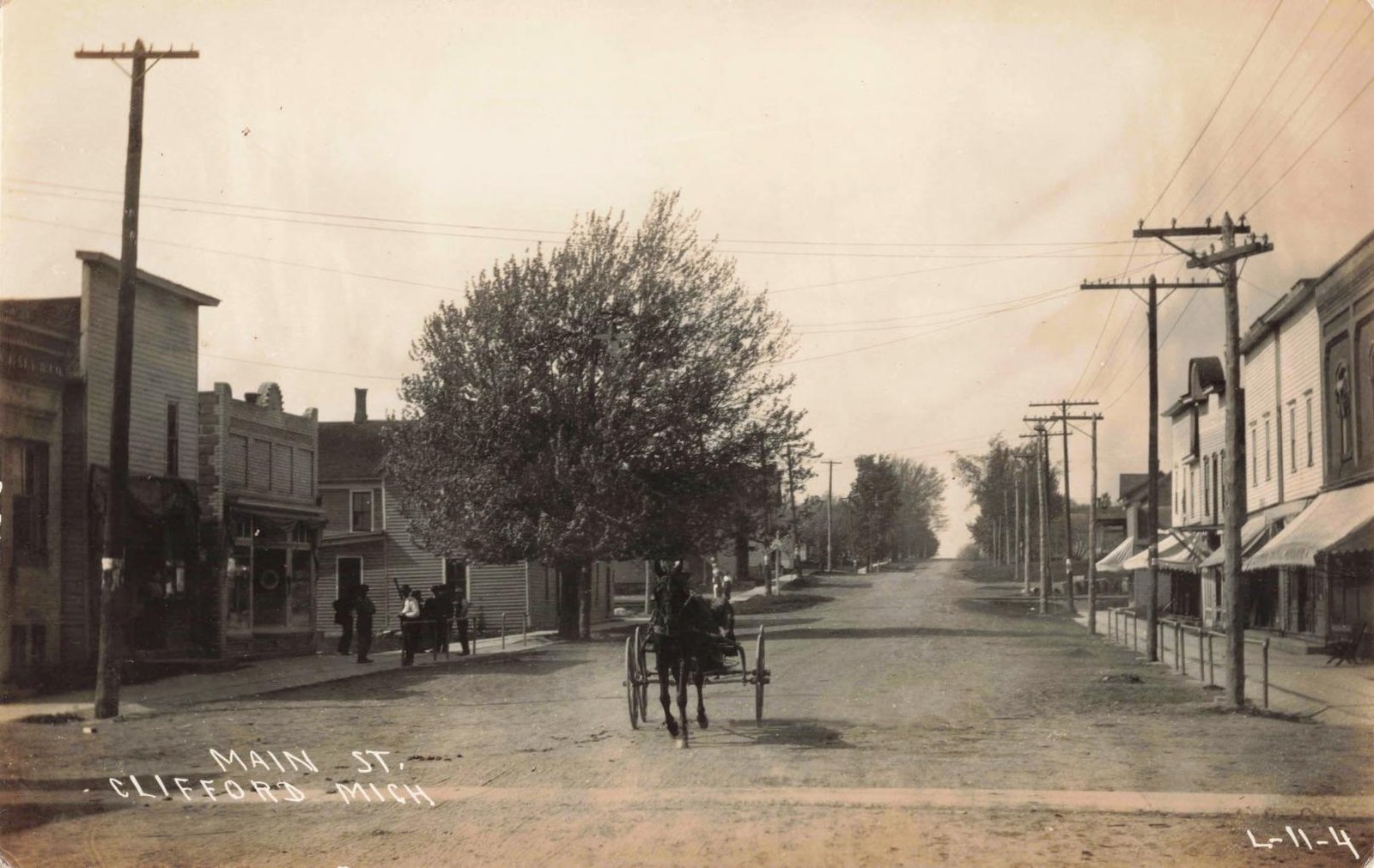
Rare images from Clifford, Michigan, history show a northern Lapeer County village changing from a crossroads settlement into a railroad and farm center, then entering the automobile age.
Old photographs of Clifford, Michigan, do more than show storefronts and dirt streets. Together, they record a community moving through several eras of transportation and commerce in just a few decades. Horse teams crowd the creamery, blacksmiths stand beside wagon wheels, trains connect the village with distant markets, and early automobiles begin appearing along Main Street. The result is a visual record of how quickly rural Michigan changed between the late 1800s and the early 20th century.
Table of Contents
Watch – Clifford Michigan History: 7 Rare Photos That Capture a Town’s Early Days

Clifford Began With One Building and a Mail Route


Clifford traces its beginning to about 1862, when the settlement took shape at a road junction in Burlington Township. The 1884 History of Lapeer County, Michigan says Arden W. Lyman erected the first building and used it as a store, post office, and residence. About the same time, a mail route was established from North Branch to Clifford, and Lyman became the first postmaster. The community was named for his son, Clifford, giving the village a personal name rather than one borrowed from a politician or railroad executive.
The location helped the small settlement become a local trading point because the state road met Burlington’s center road there. A hotel followed in 1871, giving travelers and commercial traffic a place to stop. In 1875, Lyman built a steam sawmill, evidence that timber still played an important role in the local economy. The county history later recorded that the mill burned in the spring of 1883, an abrupt loss for a community where a single industrial building could represent a major share of local employment.
How Railroads Reshaped Clifford Michigan History

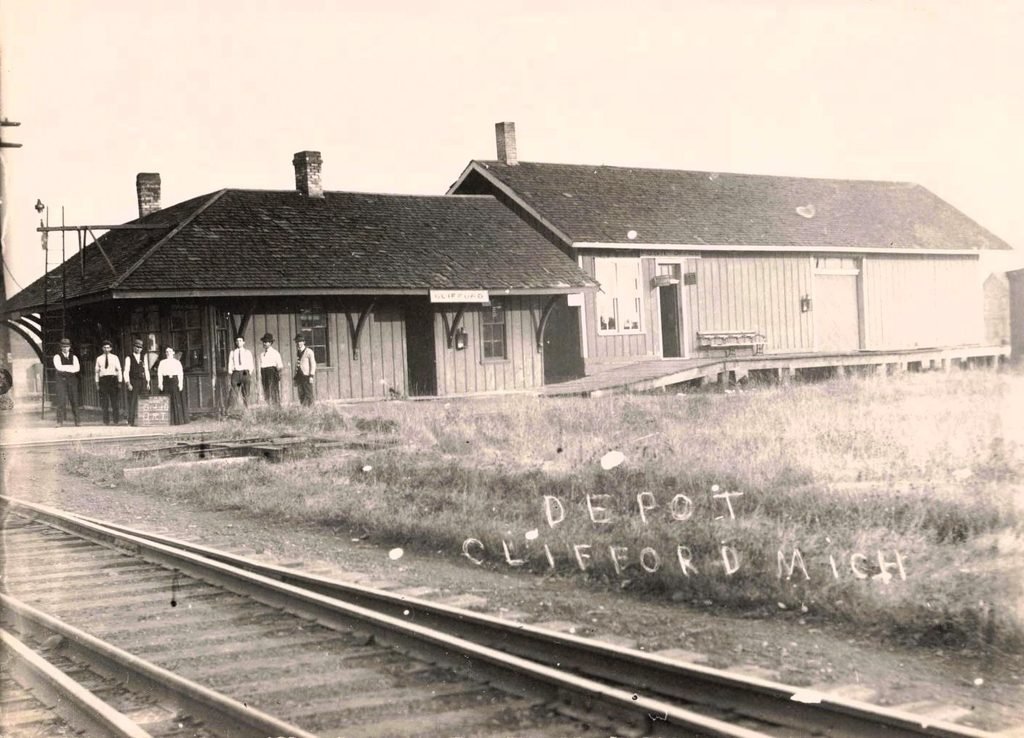
The biggest change came in 1882, when railroad construction altered the village’s geography and economy. The Port Huron & Northwestern Railroad reached Clifford, followed by the Pontiac, Oxford & Port Austin Railroad. The rail development created a second business district about one-third of a mile from the older settlement. Contemporary accounts called the new district North Clifford and the original crossroads settlement South Clifford.According to the county history,
North Clifford began with a hotel built by O. Goddard in February 1882. The railroad district grew because passengers, freight, and agricultural products now moved through a point away from the original crossroads. Instead of merely expanding block by block, Clifford developed around two different transportation systems: the road and the railroad. That unusual pattern helps explain why historic images of the depot are central to understanding Clifford, Michigan, history.
A Surprisingly Busy Village by the 1880s

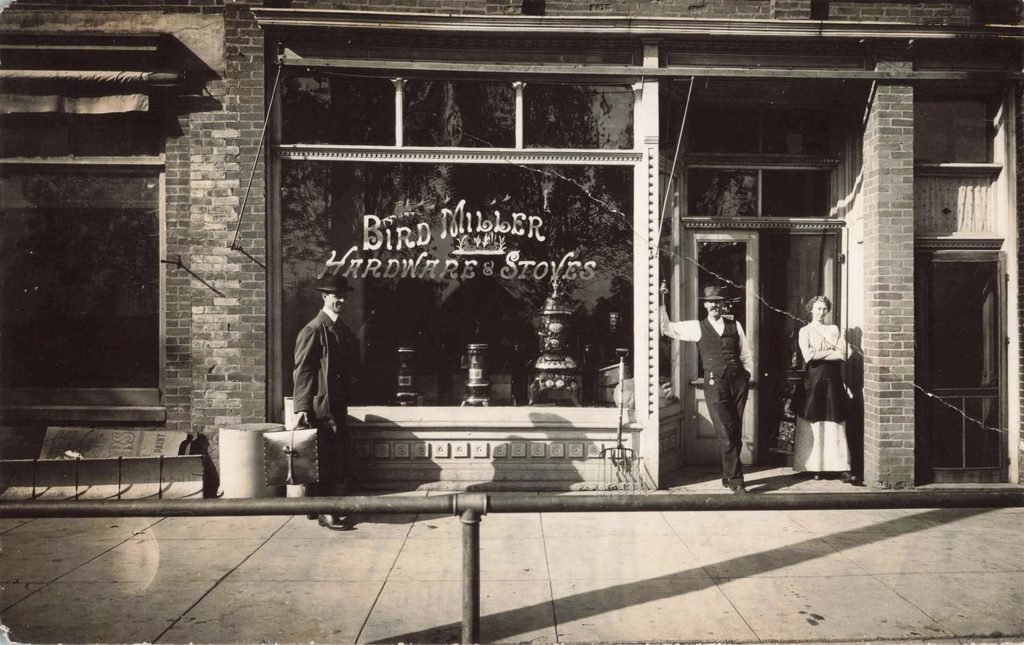
By the time the county history was published in 1884, Clifford had grown far beyond a single store and post office. The account estimated that the village had about 65 to 70 buildings, including two sawmills and a grist mill under construction. It also listed four general stores, two drugstores, a hardware store, a furniture store, shoe and harness shops, two elevators and two hotels. Three blacksmith and wagon shops served a population that still depended heavily on horses and farm equipment.
That list of businesses gives scale to photographs that might otherwise seem like isolated storefronts. A hardware store was not simply one shop among a handful of buildings; it was part of a compact commercial district serving farms across the surrounding countryside. The variety of businesses suggests that residents could buy supplies, repair equipment, and conduct much of their routine business without traveling to a larger city. Clifford’s Main Street was effectively the service center for a much wider rural population.
Inside a Clifford Store, National Consumer Culture Arrives

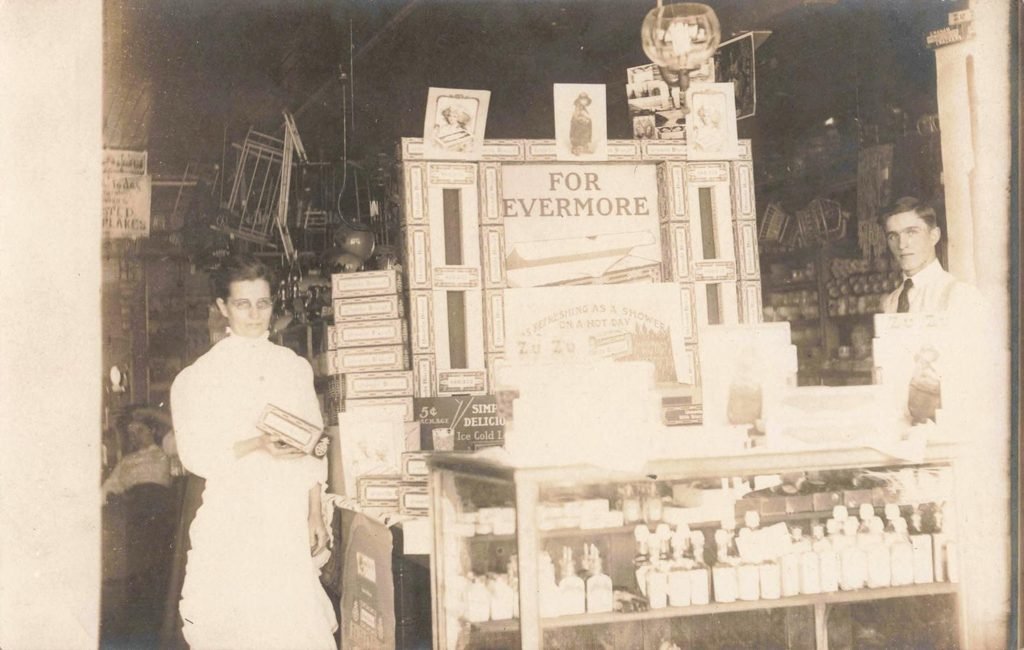
One of the collection’s most revealing images was taken inside a Clifford store. A woman and a man pose beside a glass display case filled with bottles and packaged goods, while advertising rises behind them almost to the ceiling. The scene shows a rural merchant operating in a period when factory packaging and national advertising were becoming part of everyday life. Clifford remained a farm community, but its residents were increasingly buying products made and marketed far from Lapeer County.
The crowded interior also suggests how small-town merchants used space. Shelves, counters, and display cards were packed tightly because nearly every square foot had to produce sales or store inventory. Customers might enter for medicine, household goods, or other necessities and encounter branded products promoted with colorful national advertising. The old store was becoming a bridge between the local farm economy and a rapidly expanding national consumer market.
The Blacksmith Was Clifford’s Mechanic
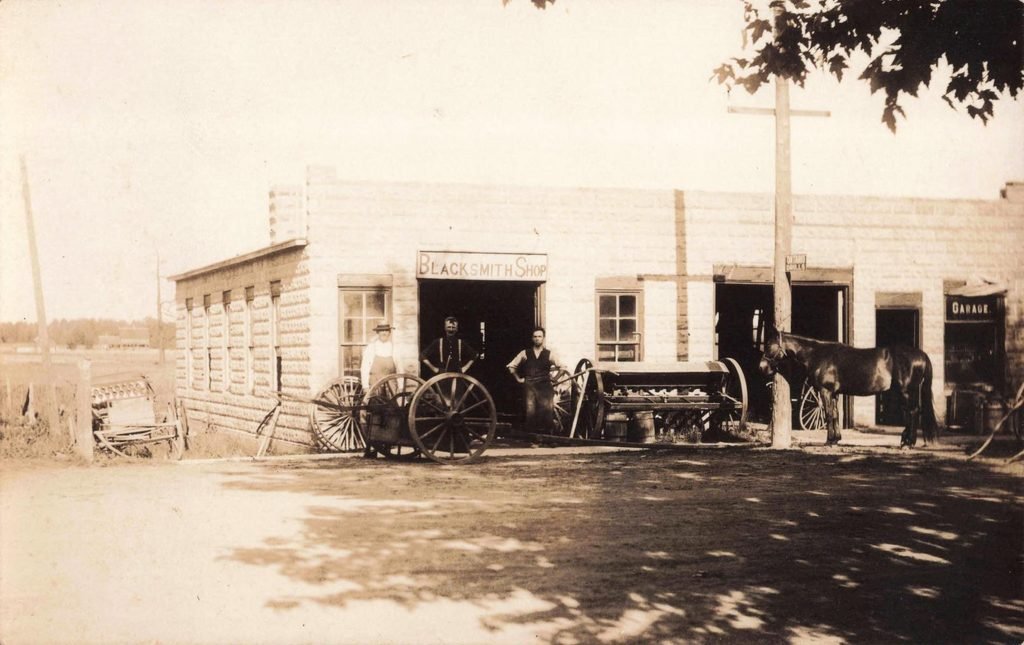
The Clifford blacksmith shop belonged to the horse-powered economy that still dominated rural transportation in the early 1900s. In the photograph, men pose outside the building while wagon wheels, farm equipment and horses surround the shop. Blacksmiths repaired metal parts, maintained wagons and kept horses properly shod. A broken wheel, damaged tool or injured hoof could stop farm work, making the blacksmith one of the village’s most practical tradesmen.
The image becomes more interesting when compared with later Main Street photographs showing automobiles. Within a relatively short period, businesses that supported transportation shifted from blacksmithing and wagon repair to gasoline, tires, and automotive service. The workers posing beside wagon wheels could not have known how quickly the motor vehicle would alter their trade. Their shop records a moment when horsepower still meant an actual horse.
Dairy Farms Supplied the Clifford Creamery

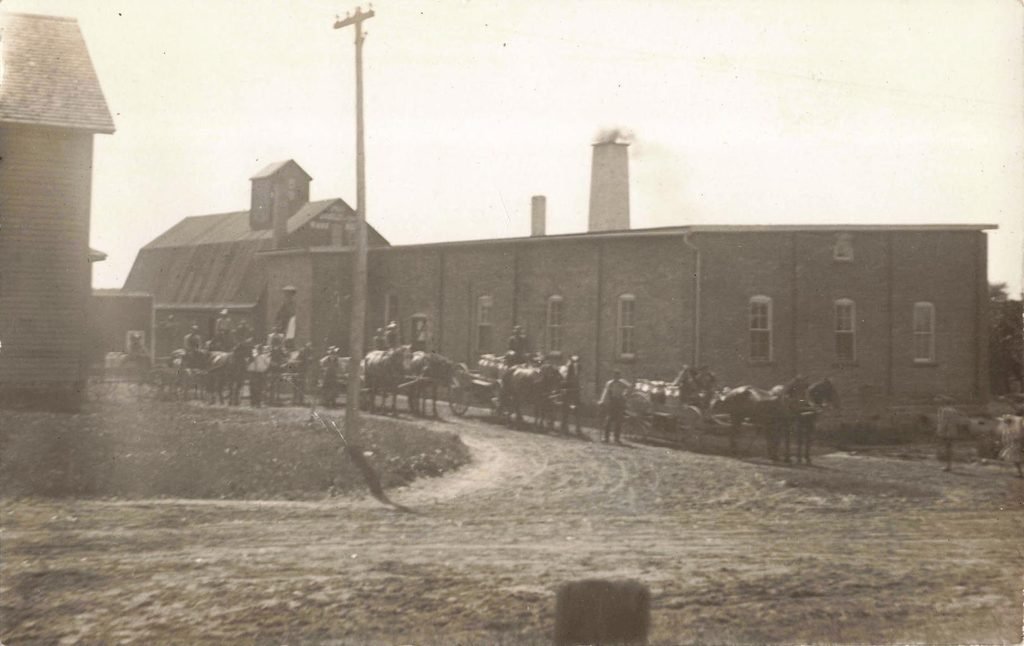
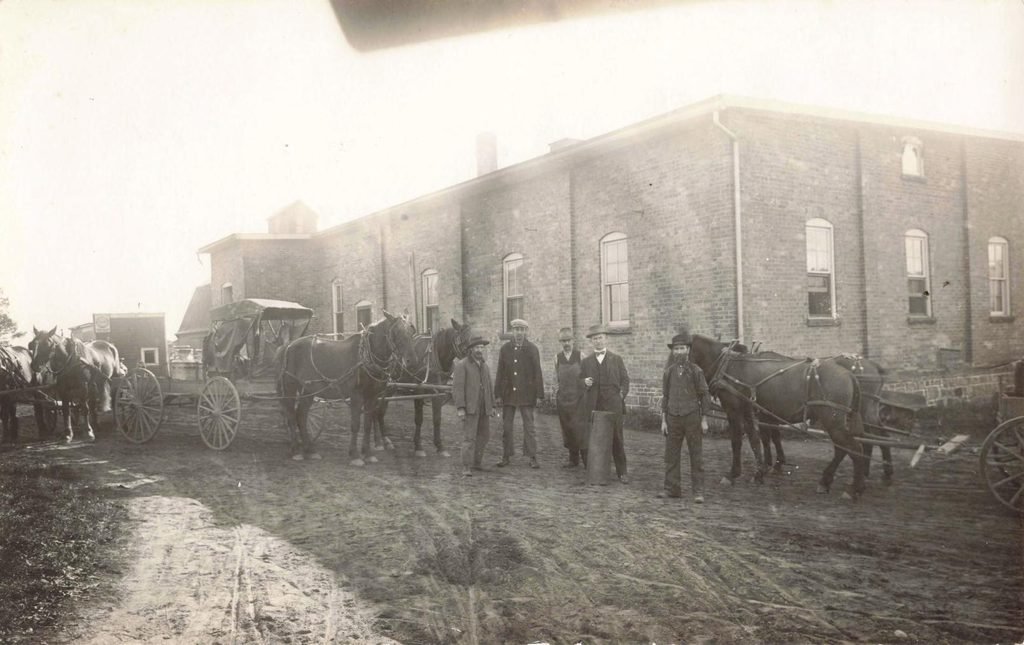
The creamery photographs show another major part of Clifford’s economy. Horse-drawn wagons line up outside a large brick processing building, linking surrounding farms directly with the village. The 1874 agricultural figures for Burlington Township help explain the later dairy business: the township reported 427 milk cows, along with 30,400 pounds of butter and 4,000 pounds of cheese produced during the preceding year. Those numbers cover the township, not the village alone, but they show how important dairy farming was in the area long before the creamery photographs were taken.
A commercial creamery made it possible to collect milk and cream from multiple farms, process it more efficiently, and move finished products into larger markets. Each horse team in the image likely represented a farm family whose income depended on the plant. The creamery therefore functioned as more than a factory; it was the meeting point between rural production and regional commerce. When the wagons arrived, the surrounding countryside came to town.
Lumber Still Had a Place in Clifford’s Economy

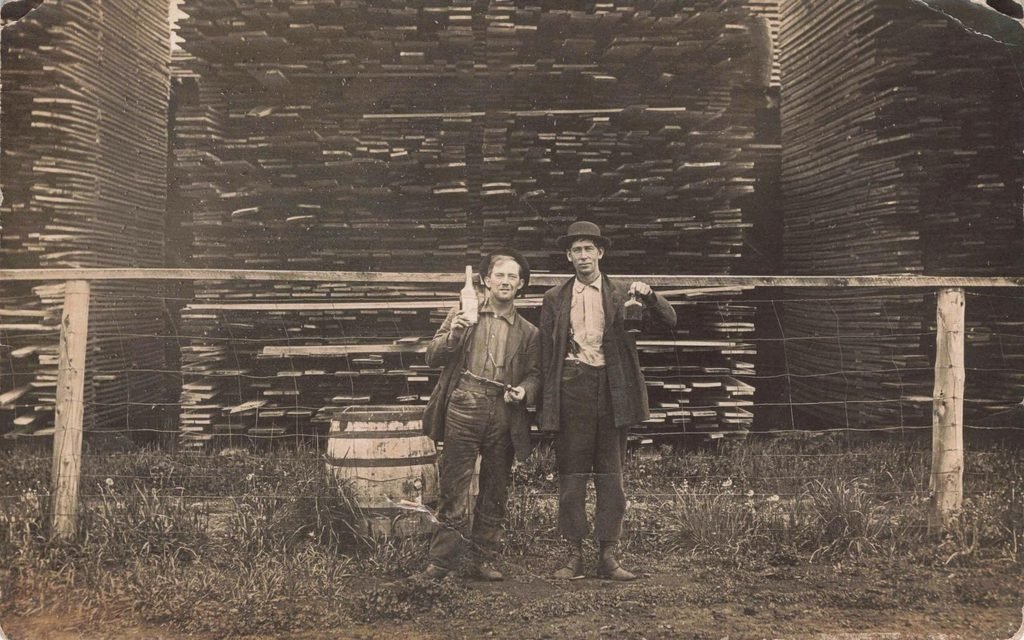
Another photograph shows two men standing before stacks of milled boards that fill nearly the entire background. The scale of the lumber is striking and fits Clifford’s earlier connection to sawmilling. Lyman’s steam sawmill had been built in 1875, and the 1884 county history still listed two sawmills in the village. Timber remained part of the local economy even as cleared land increasingly supported farming.
The image also captures the human side of industrial work more clearly than a production ledger could. The men are not shown operating machinery; they are standing still for the camera in front of the material their labor helped produce. Behind them, the boards are stacked with the regularity required for drying, storage and shipment. It is an ordinary work scene, which is exactly why it is so useful as historical evidence.
Even the Railroad Depot Had Problems

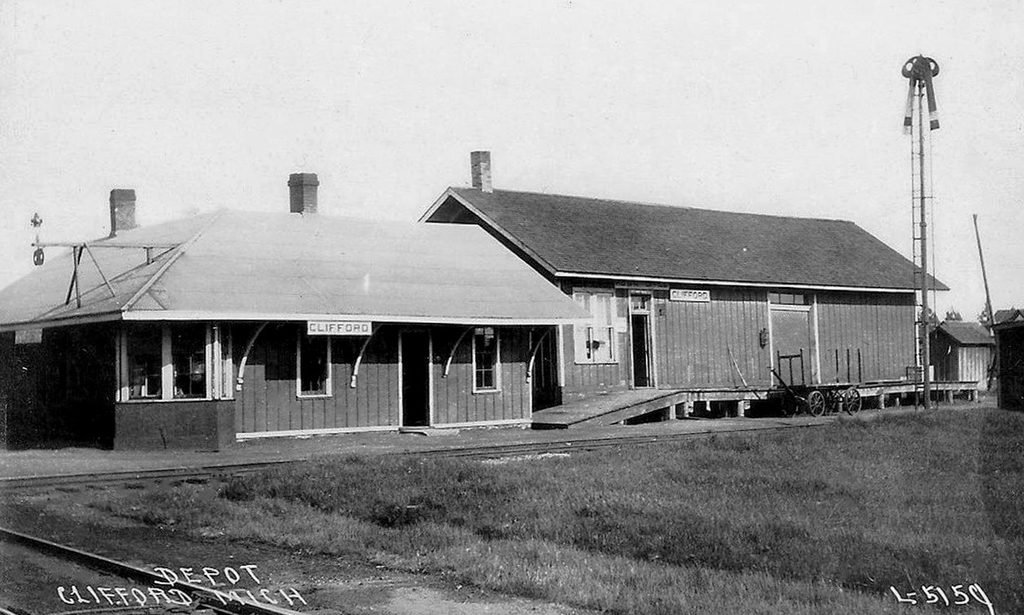
Rail service brought opportunity, but a 1909 state inspection shows that the railroad infrastructure was not always impressive. The Michigan Railroad Commission inspected the Pere Marquette line from Port Huron to Saginaw and specifically criticized Clifford’s station. The report said the station was in poor condition and should be replaced by a more modern structure. That blunt assessment provides a rare contemporary glimpse behind the romantic image of small-town rail travel.
Despite the station’s condition, Clifford remained an active railroad point. In July 1911, both the Pere Marquette and Pontiac, Oxford & Northern were running two trains through Clifford in each direction each day except Sunday. By 1917, the Grand Trunk Western still maintained a daytime agent at the station. The depot was therefore not merely a picturesque building; it was a staffed transportation facility handling the movement of people, freight and information.
Rural Free Delivery Changed the Meaning of Distance

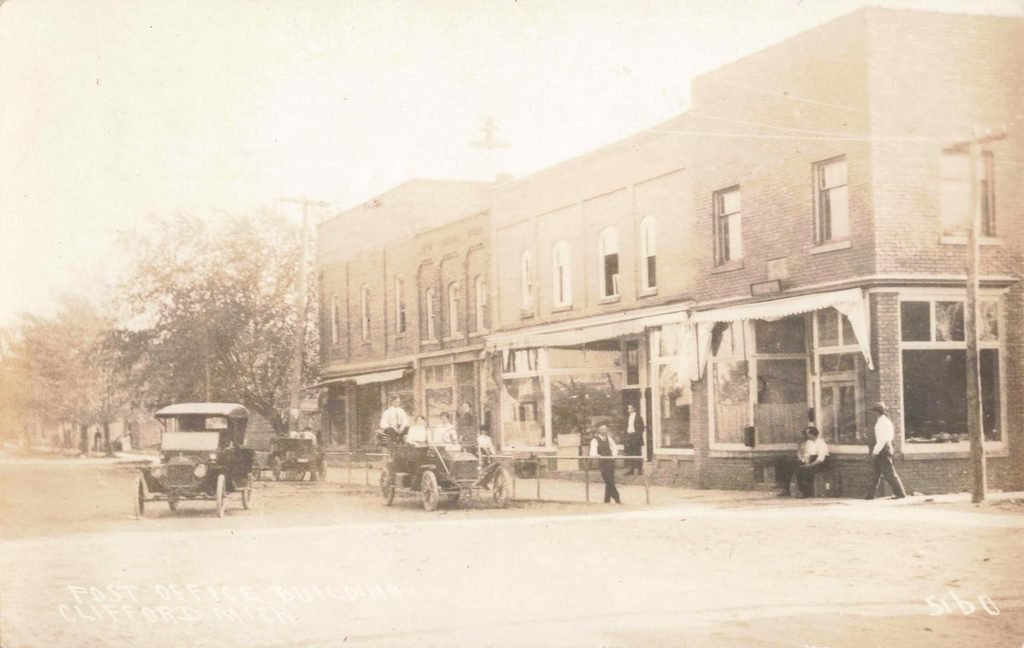
Clifford also participated in another transportation revolution that was quieter than the railroad but important to farm families. U.S. Postal Service records show that Rural Free Delivery began at the Clifford post office on Dec. 1, 1903. Before widespread rural delivery, many farm residents had to travel into town or depend on less direct methods to receive their mail. Bringing letters, newspapers and catalogs to rural households made the village’s postal service part of a national communications network.
The change also affected Main Street merchants. Mail-order catalogs gave farm families access to goods sold by large national companies, increasing competition for local retailers. At the same time, faster mail made it easier for Clifford businesses to place orders, communicate with suppliers and reach customers. Postal service was therefore both a convenience and another force pushing the village into a more connected economy.
Main Street Moves From Horses to Automobiles

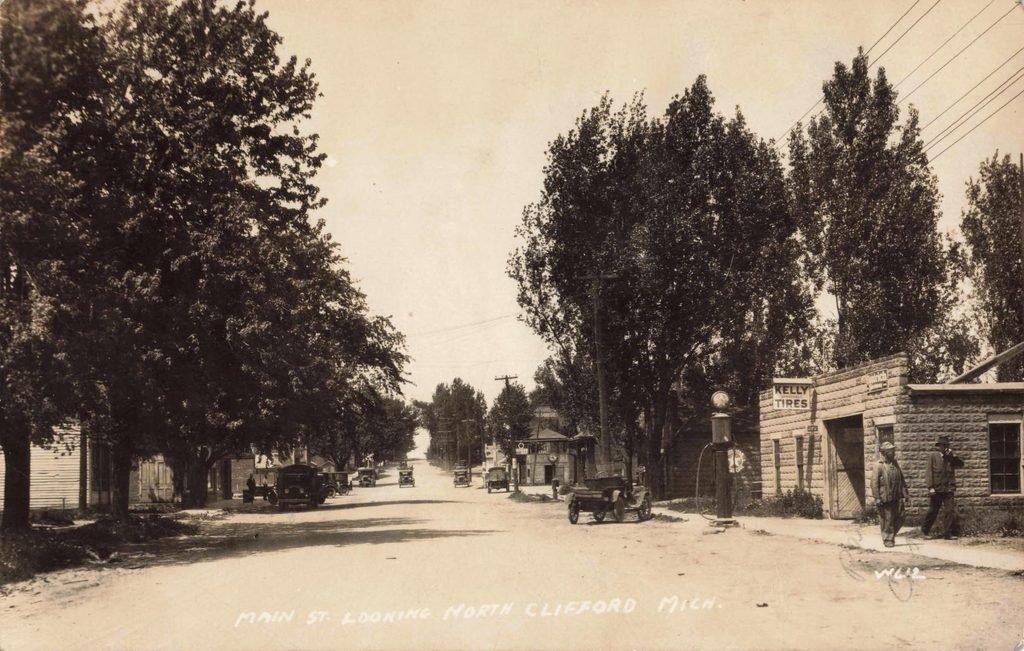
The Main Street photographs provide the clearest visual measure of change. Earlier views show a broad dirt street built for wagons and horse traffic, while later photographs contain increasing numbers of automobiles. One later scene includes a gasoline pump and a Kelly Tires sign, evidence that the town’s service economy had adjusted to motorists. The transformation did not require rebuilding the entire street at once; it happened as new machines gradually occupied the same space horses had used.
Automobiles also changed Clifford’s relationship with neighboring communities. A trip that once required planning around a horse and wagon became faster and easier, allowing residents to shop or work farther from home. That greater mobility eventually weakened the commercial advantage once held by isolated small-town business districts. The same technology that brought freedom to rural families could also carry their spending to another town.
Churches Helped Hold the Community Together

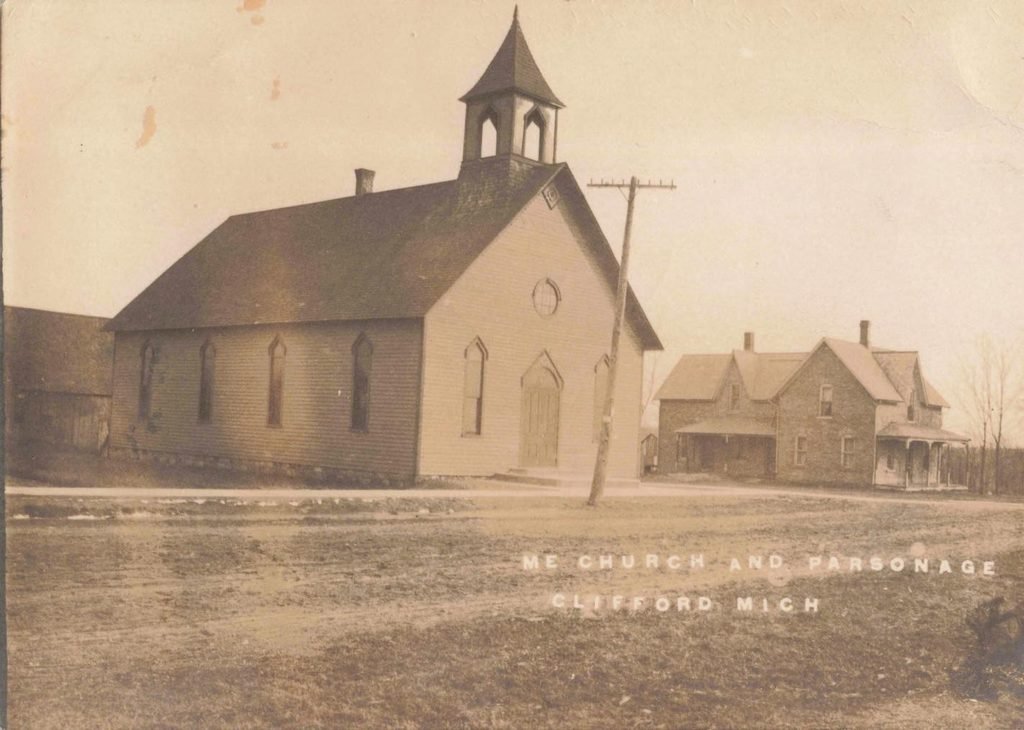
The Methodist Episcopal Church and its nearby parsonage provide a quieter view of Clifford life. Churches in rural towns commonly served religious and social roles at the same time, giving families a regular meeting place outside work and commerce. Weddings, funerals and church activities brought residents together across generations. In a village where farms could be separated by miles of country road, those repeated gatherings helped maintain community ties.
The church photograph also contrasts with the industrial images of mills, railroad facilities and the creamery. Clifford’s history was not only about production and transportation; it was also about institutions that gave daily life structure. The steeple, parsonage and surrounding homes show the residential side of a town often remembered through its businesses. That balance helps make the photo collection feel like a community record rather than a business directory.
Clifford Became an Incorporated Village in 1891
Clifford formally became a village in 1891, nearly three decades after the settlement began. By then, it had survived the early sawmill era and the arrival of competing rail lines while building a substantial commercial district. The official Village of Clifford history notes that the modern community is smaller than the original village. That statement is easy to understand after seeing how many stores, mills and trade shops were operating in the 1880s.
The contraction does not make the earlier period less important. Clifford’s story mirrors a pattern seen across rural Michigan, where towns grew around local trade and rail service before automobiles and regional shopping centers changed travel habits. Some businesses vanished because the industries supporting them changed, while others disappeared because residents could travel farther for goods and services. The old photographs preserve the period when Clifford’s streets were at their busiest.
What These Photographs Add to Clifford Michigan History

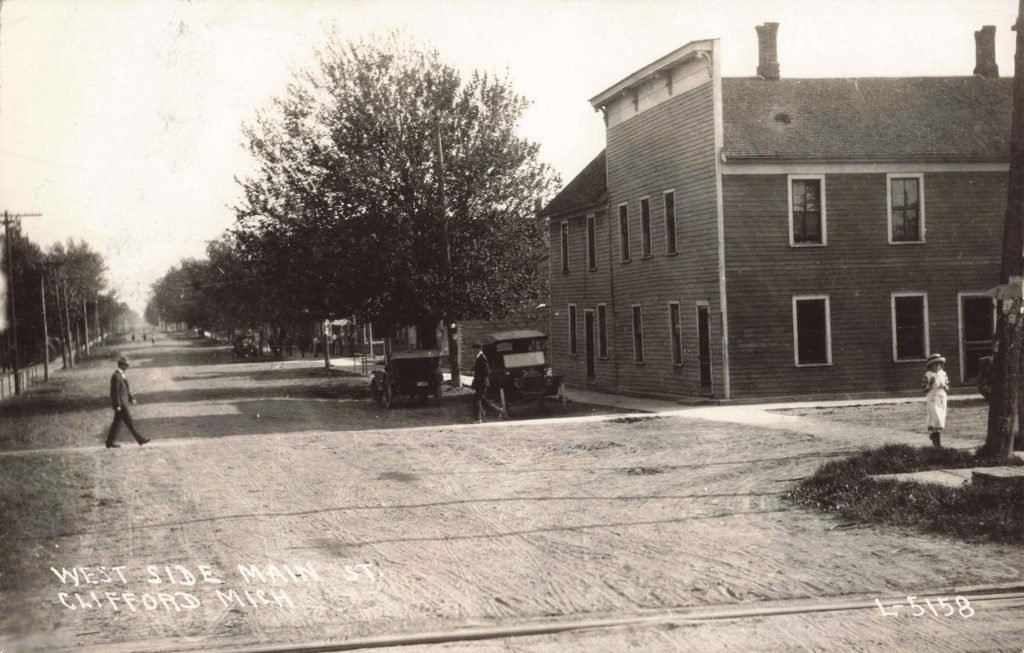
The collection’s strongest feature is that it records change without staging it as history. Merchants stand in doorways at work, and creamery wagons line up because farmers have milk to deliver. Blacksmiths pose beside the tools of their trade while motorists later park in front of businesses built for an earlier era. Each image captures people responding to technology and economic change in ordinary ways.
Taken together, the photographs explain Clifford better than a single landmark ever could. The town began at a crossroads, expanded toward the railroad and later adjusted again to automobiles and improved roads. Its merchants served farmers, its industries processed local products, and its depot connected the village with larger markets. Clifford was never a major Michigan city, but its history shows how transportation could build, divide and then reshape a rural town within the span of a few generations.
FAQs About Clifford Michigan History
When was Clifford, Michigan, founded?
Clifford began as a settlement about 1862 in Burlington Township, Lapeer County. Arden W. Lyman built its first building, which served as a store, post office and residence. The community was named for his son, Clifford, and became an incorporated village in 1891.
Why were railroads important to Clifford’s growth?
Railroads reached Clifford in 1882 and helped establish a second business district about one-third of a mile from the original settlement. The newer district became known as North Clifford, while the original crossroads became South Clifford. Rail service connected local farms and businesses with larger markets.
What businesses operated in early Clifford?
The 1884 county history listed general stores, drugstores, hotels, sawmills, grain elevators and blacksmith and wagon shops. Later photographs show a creamery, hardware store and other Main Street businesses. These businesses supplied nearby farms, repaired equipment and processed local products.
Works Cited For Clifford Michigan History

