


History of Ubly Michigan – Extraordinary Life in a Huron County Farm Town, 1900–1920
The early 20th century was a period of growth and change for rural towns across Michigan’s Thumb. Among them, Ubly stood out as a community shaped by farming, small-scale industry, and strong traditions. The history of Ubly, Michigan, during this era reflects the values, innovation, and cultural life of the people who called it home.
Video – Ubly Michigan – From Swampy Fields to First Prizes in 20 Short Years

The Railroad Connection: Ubly’s Link to the Outside World

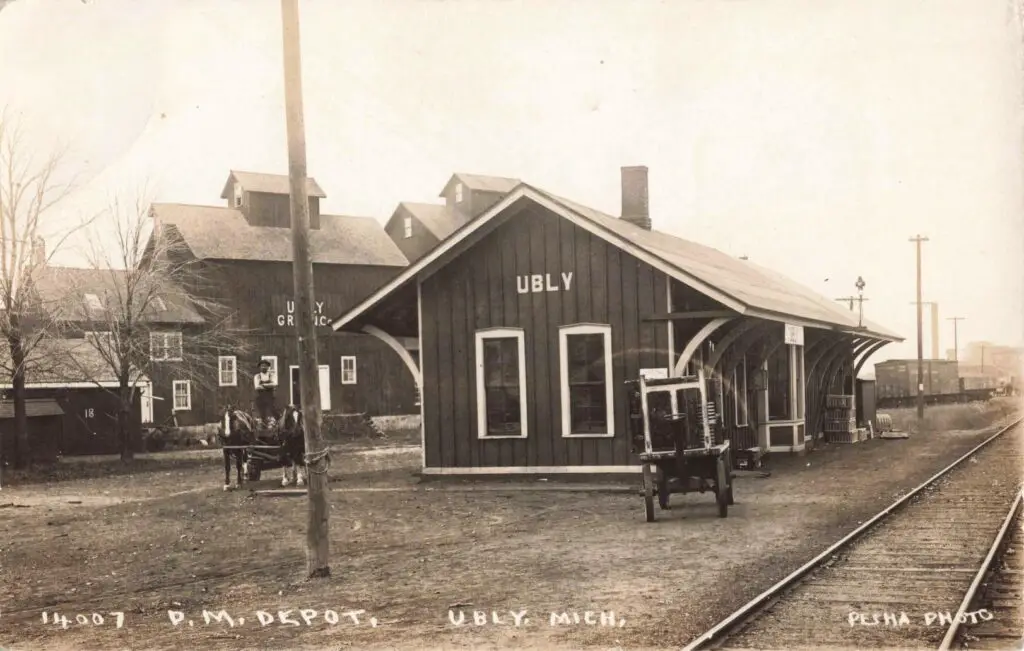
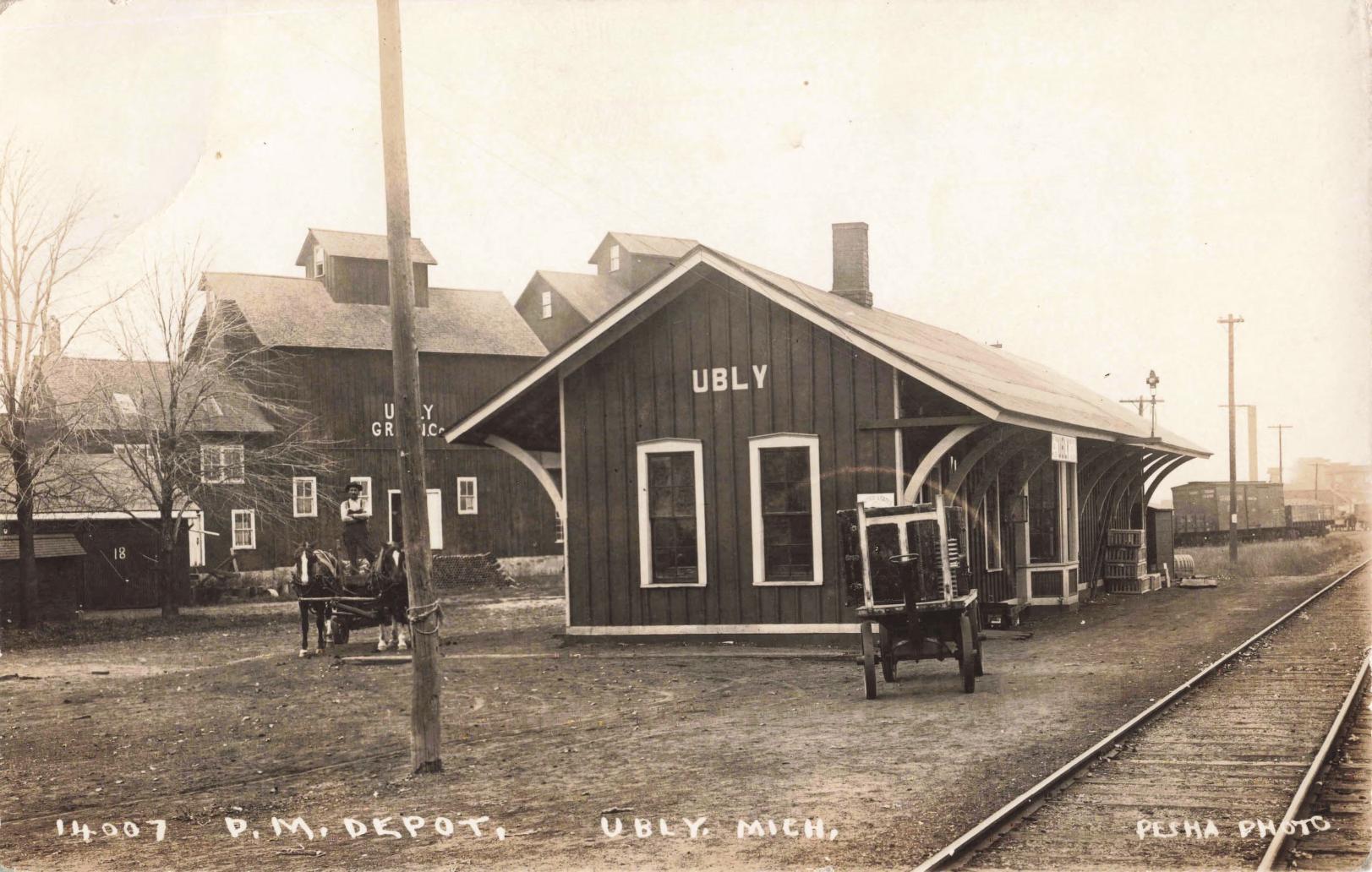
At the turn of the century, the Pere Marquette Railroad depot in Ubly served as the community’s most important connection to the wider world. Farmers brought wagons full of sugar beets, grain, and dairy to the depot, where goods were loaded for shipment to Detroit and other markets.
The depot was more than a shipping hub. It was a gathering place where neighbors met, checked the time by the station clock, and swapped news with travelers. In a rural community like Ubly, the depot symbolized both progress and opportunity.
Industry Comes to Town

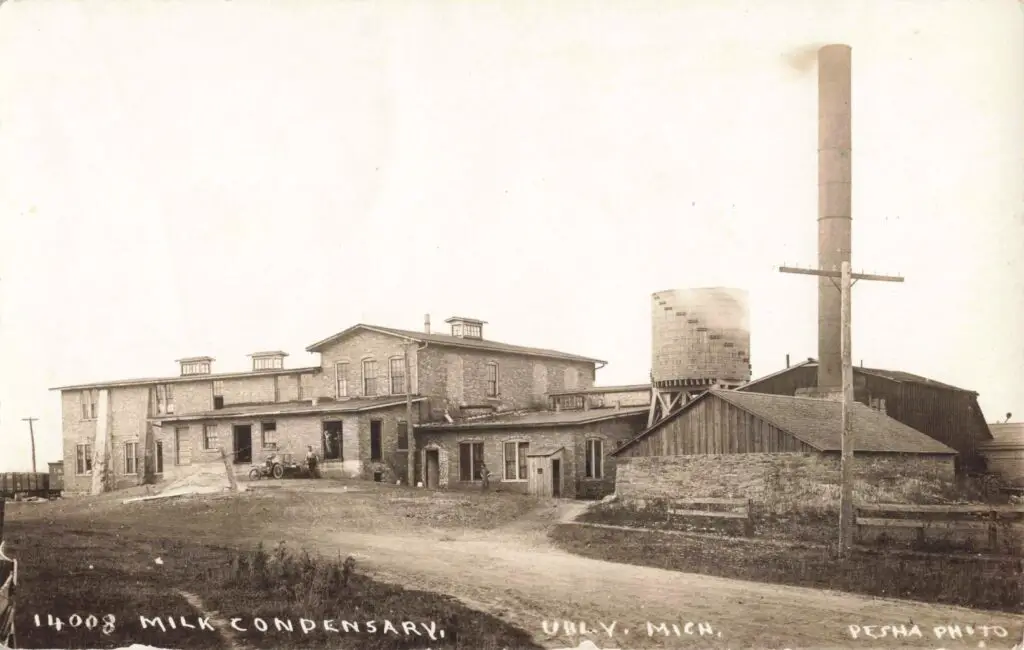
Ubly’s growth was tied to agriculture, but industry quickly followed. By 1910, the town was home to a milk condensary, where local farmers delivered milk to be processed into a stable product for distant cities. The plant’s success reflected a new era of rural industry: small towns could now take raw farm products and turn them into commodities with regional and even national reach.

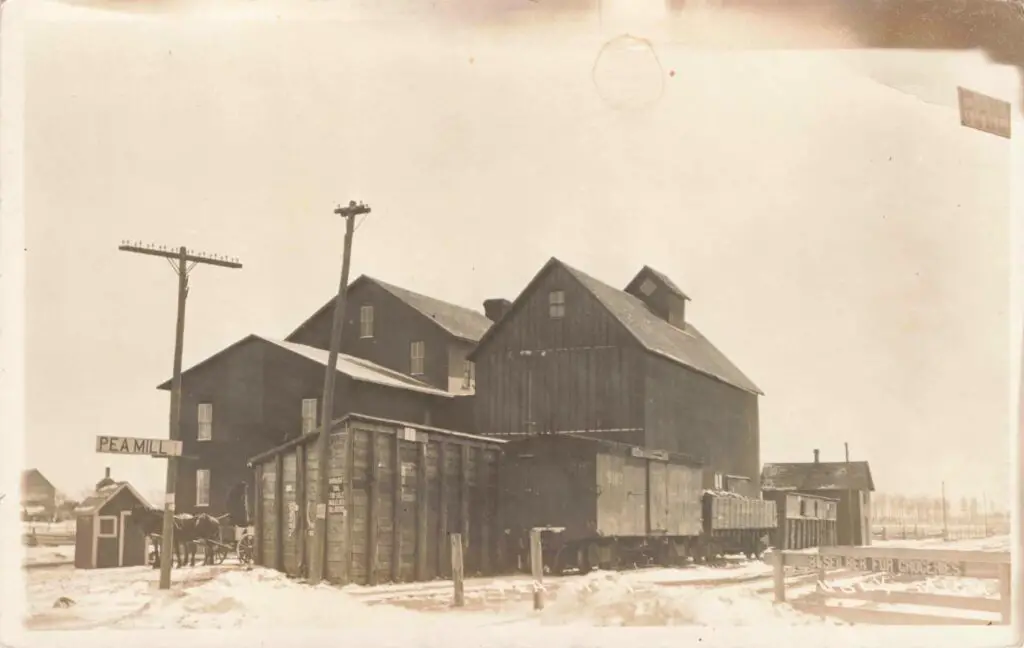
Other facilities, such as the Ubly Grain Elevator and Pea Mill, made the town a processing center for the Thumb’s crops. These buildings stood tall over the fields, signaling that Ubly was not only producing food but also shaping the region’s economy.
Education and the Ubly Schoolhouse
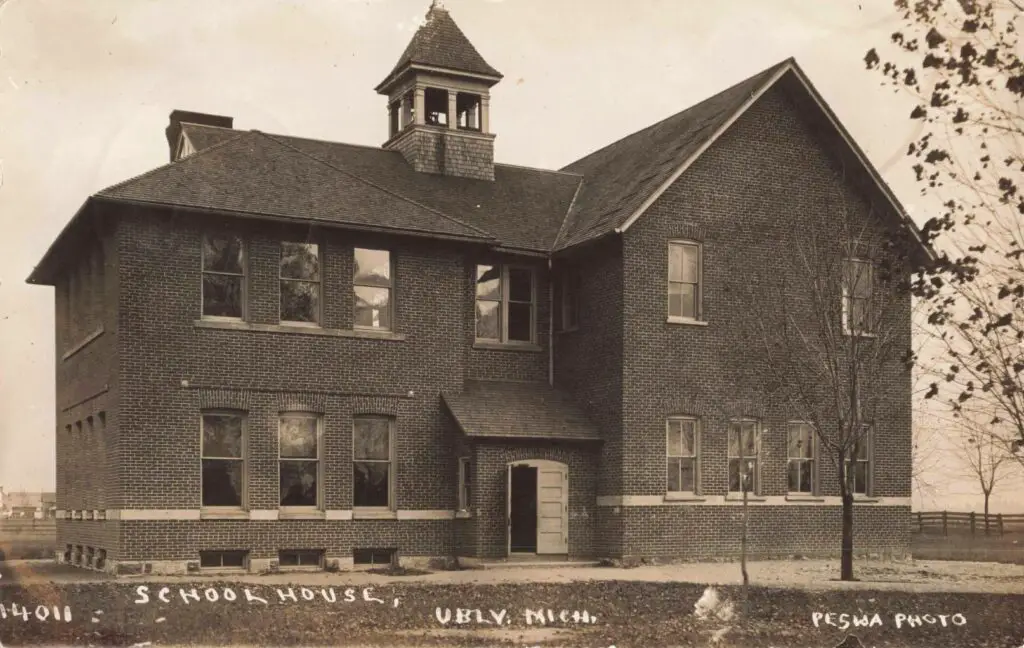
One of the most visible symbols of progress in the history of Ubly Michigan was the construction of the brick Ubly Schoolhouse. With its tall bell tower and large classrooms, the school was more than a place of learning. It was a statement of permanence and pride.
The school prepared children for more than farm life. Lessons in reading, writing, and arithmetic opened paths to business, teaching, and professional trades. School concerts, plays, and graduations became community events that drew families together.
Main Street: Hotels, Bars, and Brick Storefronts

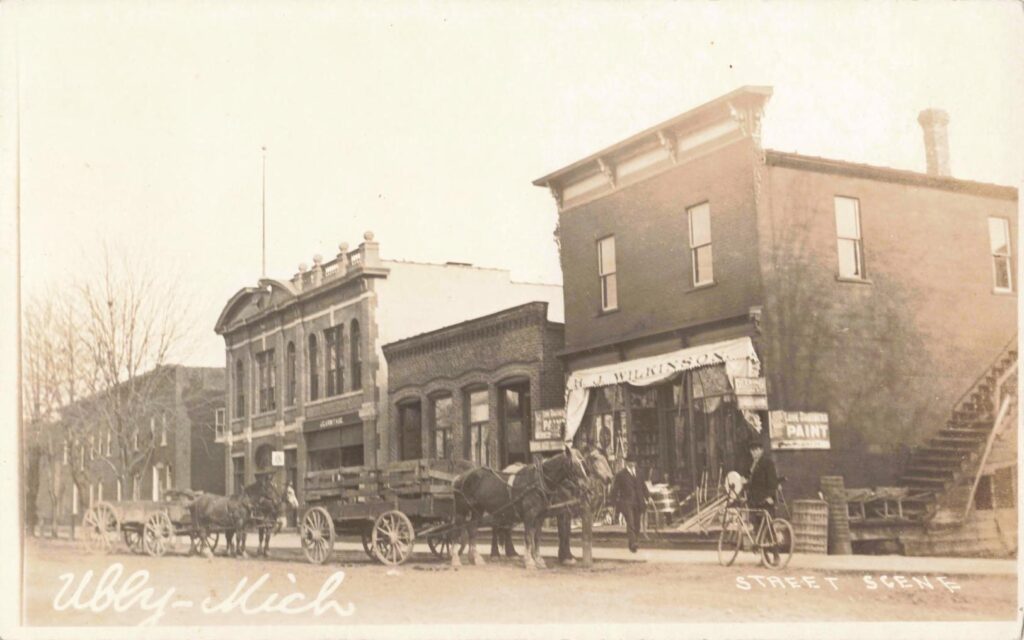
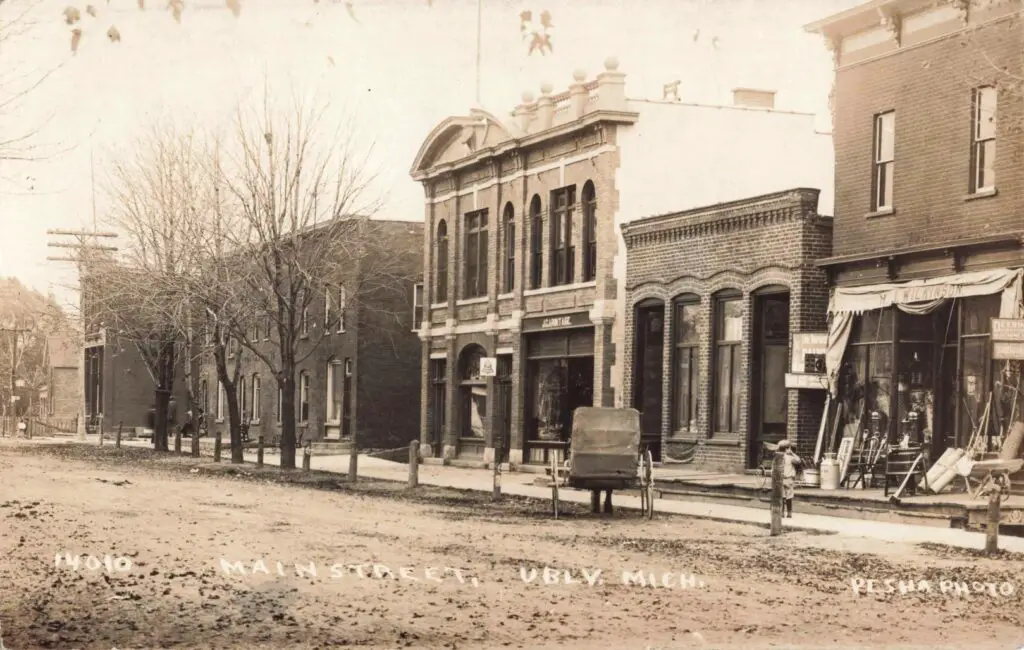
Downtown Ubly in the early 1900s offered a glimpse into the social life of a small Thumb town. Brick storefronts lined Main Street, where wagons were hitched along the curbs. General stores, hardware shops, and groceries supplied everyday needs.

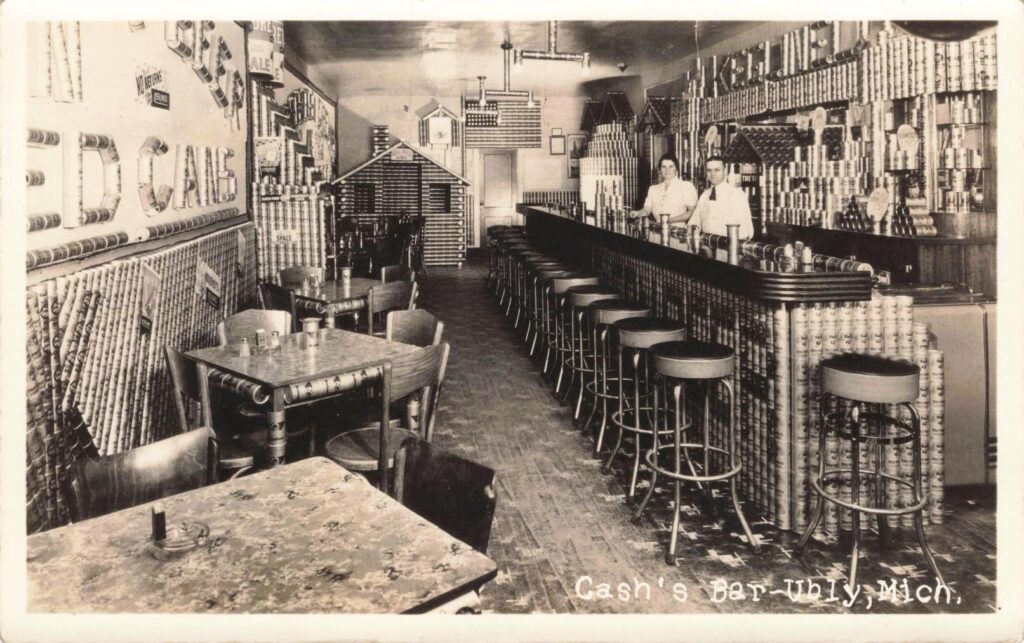
The Union Hotel provided lodging for travelers, while locals found relaxation at Cash’s Bar, a quirky saloon remembered for its collection of beer cans. These establishments were more than businesses; they were meeting places where farmers struck deals, men played cards, and neighbors caught up on the week’s events.
The Orangemen’s Celebration of 1914
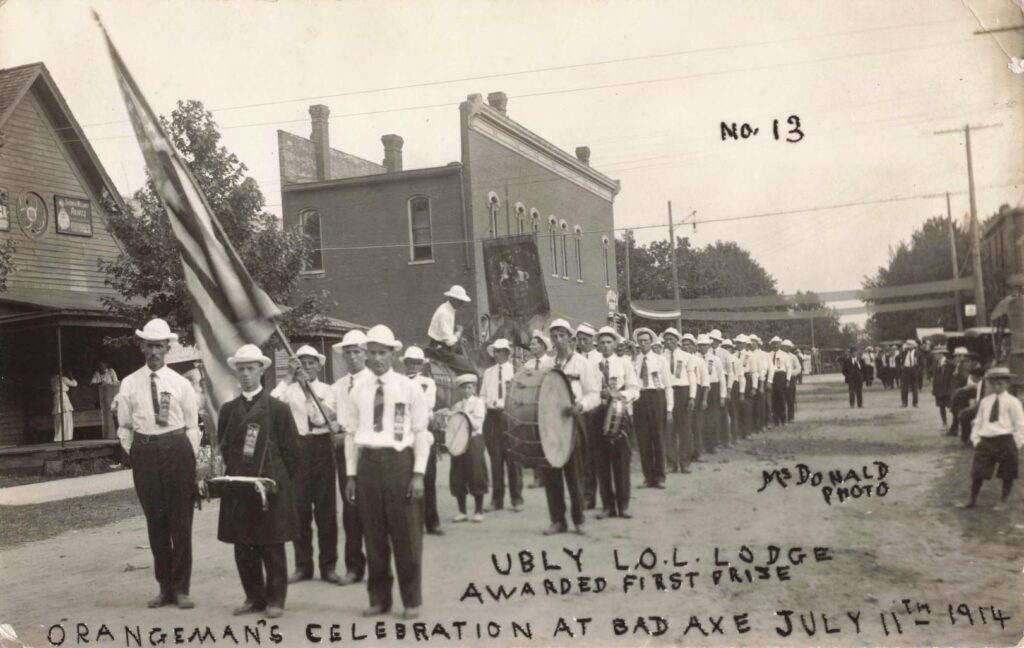
One of the most remarkable events in the history of Ubly was the participation of its Loyal Orange Lodge at the 1914 countywide Orangemen’s celebration in Bad Axe.
On July 11, 1914, Ubly’s Orangemen marched proudly in white shirts and hats, leading their band through the streets. That day, they were awarded first prize for their display. Photographs from the celebration show the pride of a small lodge making its mark in a larger community.
These celebrations reflected the traditions of Protestant fraternal organizations in Michigan. They blended ceremony, music, and community pride, adding a colorful chapter to the history of Ubly Michigan.
Images on this page may contain affiliate links in which we may receive a commission. See our affiliate disclosure for details.
Historic Photos of Detroit in the 50s, 60s, and 70s
Historic Photos of Detroit in the 50s, 60s, and 70s documents what a Metro Detroiter would have experienced through those decades, from the commonplace to a visit from John F. Kennedy.

Farming Innovations: Draining the Land

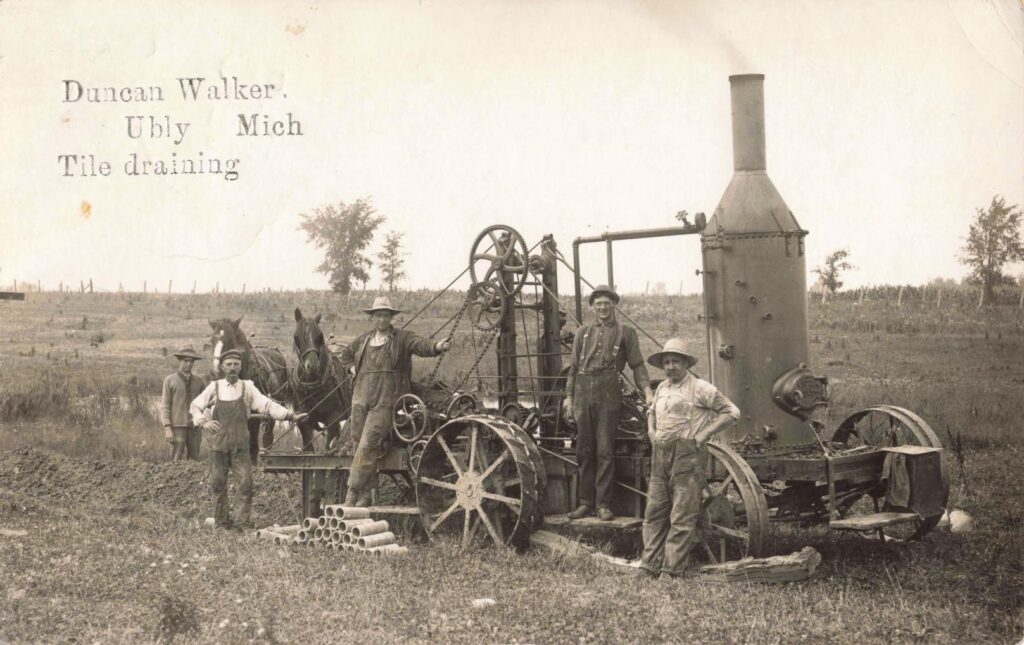
Farming remained Ubly’s backbone. Yet by 1918, new tools were changing the way farmers worked the land. A surviving photograph shows Duncan Walker’s tile-draining machine, a steam-powered rig used to lay drainage tiles beneath fields.
Tile drainage turned wet, swampy ground into productive farmland, allowing Ubly’s farmers to expand their yields. Innovations like these symbolized the determination of the community to adapt and thrive in Michigan’s sometimes challenging conditions.
Churches and Community Life

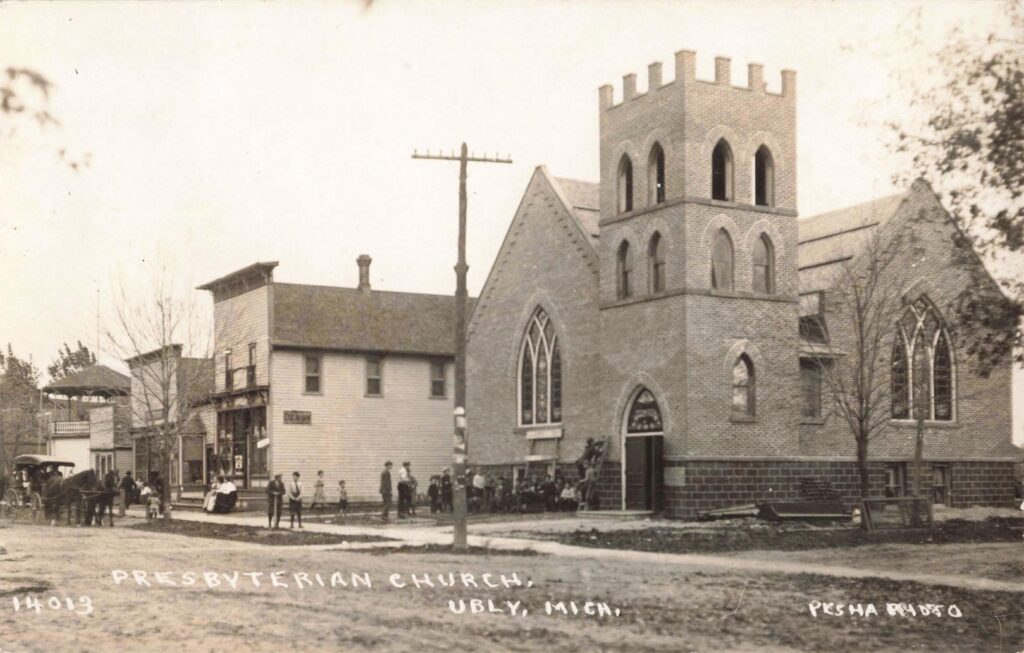
Churches were central to Ubly’s identity. Methodist and Catholic congregations organized socials, dinners, and choir performances. For many families, church events were the highlight of the week, offering both spiritual guidance and social connection.
Saturday nights often brought families into town. Children pressed their noses against shop windows, while parents visited neighbors and bought supplies. Baseball games, school concerts, and traveling shows rounded out the small-town entertainment. These moments gave Ubly its sense of belonging and made community life vibrant.
Ubly by 1920: A Town with Permanence
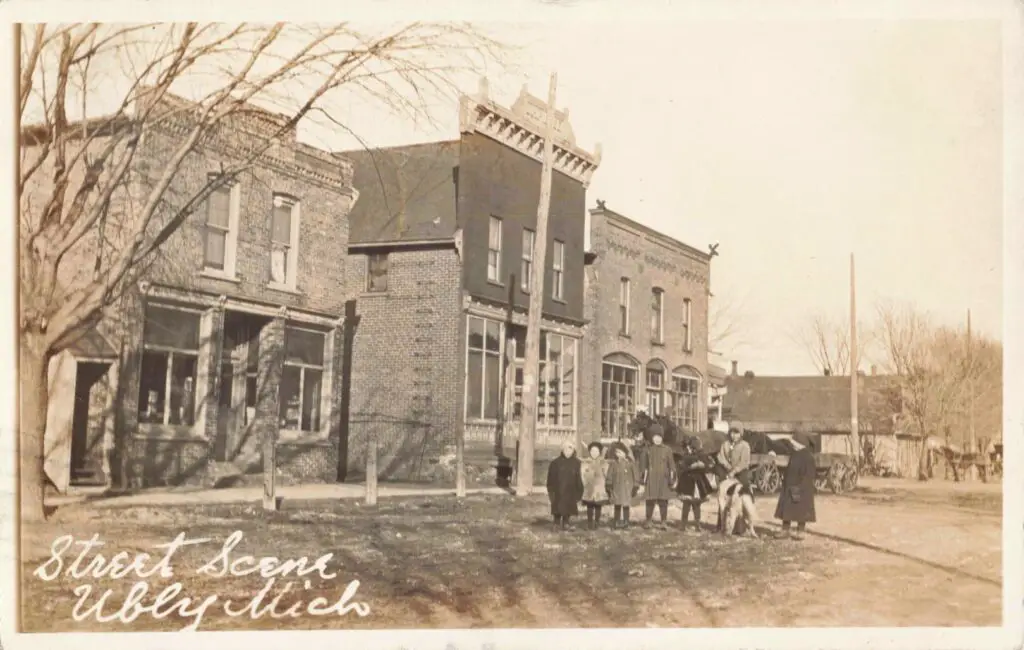
By 1920, Ubly had established itself as a permanent town in Michigan’s Thumb. The depot still linked it to the outside world, but the town was no longer just a collection of farms.
Schools, churches, and businesses gave Ubly stability. Industries like the condensary and grain elevator provided new opportunities. Fraternal groups like the Orangemen added color and ceremony. And farming innovations ensured that the land could continue to support its people.
The history of Ubly Michigan in the early 20th century shows how determination, tradition, and progress combined to shape a small town. Though modest in size, Ubly embodied the values of rural Michigan: hard work, community pride, and a vision for the future.
FAQs About Ubly, Michigan
How did Ubly, Michigan, get its name?
Ubly was first known as Sidon and later as Pagett’s Corners, after merchant Alfred Pagett. When residents sought a post office around 1880, Pagett suggested the name Ubley, after a place he knew in England. The application reportedly came back from Washington spelled Ubly, and the shorter spelling remained. The village was formally established in 1896.
What industries were important to early Ubly?
Agriculture drove Ubly’s early economy. Farmers raised grain, dairy cattle, sugar beets and other crops, while local businesses processed and shipped those products. Historic photographs show a milk condensary, grain facilities and a pea mill, all signs of Ubly’s role as an agricultural processing center. The railroad also helped farmers move products to larger Michigan markets
What role did the railroad play in Ubly’s history?
The railroad was one of Ubly’s most important links to the rest of Michigan. The community was served by the Flint & Pere Marquette and later the Pere Marquette Railroad. Records show Ubly had a 31-car passing track and a daytime station agent by 1898, and the railroad expanded the depot in 1910. Passenger trains, freight shipments and agricultural traffic made the station a key part of local commerce during the early 1900s.
How large is Ubly today?
Ubly remains a small village in Huron County in Michigan’s Thumb. The 2020 U.S. Census counted 836 residents and 410 housing units in the village. Agriculture remains important to the surrounding area, while Ubly also serves as a local center for schools, government services and community activities.
Final Thoughts on the History of Ubly Michigan
The early decades of the 20th century were formative years in the history of Ubly Michigan. From its bustling depot to its schoolhouse, from the Orangemen’s march to Duncan Walker’s tile-draining machine, Ubly’s story reflects the daily life of a rural town that looked forward while holding on to its traditions.
Today, the photographs from 1900 to 1920 remain as windows into that past. They remind us of the people who built Ubly and the spirit that defined a community at the heart of Michigan’s Thumb.
Sources Cited For the History of Ubly Michigan
Sources
- Village of Ubly. “Welcome to Ubly Michigan.” Village of Ubly, accessed 28 Sept. 2026.
- MichiganRailroads.com. “Station: Ubly, MI.” MichiganRailroads.com, accessed 28 Sept. 2026.
- MichiganRailroads.com. “Bad Axe Sub — Pere Marquette — Saginaw to Port Huron.” MichiganRailroads.com, accessed 28 Sept. 2026.
- “In Ubly, Mich., Milk Fraud Investigation.” Ingham County News, 27 Jan. 1910. Capital Area District Libraries Local History Collection. Digitized newspaper edition. Accessed 28 Sept. 2026.
- Clement, Clarence E., and George M. Whitaker. “The Market Milk Business of Detroit, Mich., in 1915.” United States Department of Agriculture Bulletin No. 639, U.S. Department of Agriculture, 1918.
- Loyal Orange Institution of the United States of America. “History of the Orange Order.” Loyal Orange USA, accessed 28 Sept. 2026.
- Loyal Orange Institution of the United States of America. “Lodge Directory.” Loyal Orange USA, accessed 28 Sept. 2026.
- Supreme Grand Lodge of Loyal Orange Institution of the United States of America v. Grand Lodge of Loyal Orange Institution of the State of Michigan. 240 Mich. 1, 215 N.W. 24. Michigan Supreme Court, 29 July 1927. “Supreme Grand Lodge of Loyal Orange Institution v. Grand Lodge of Loyal Orange Institution.” OpenJurist, accessed 28 Sept. 2026.
- Hardy, Michael. “History of Ubly Michigan — Extraordinary Life in a Huron County Farm Town, 1900–1920.” Thumbwind, 31 Aug. 2025, updated 15 Oct. 2025.
Primary photographic sources: Historic real-photo postcards and photographs of Ubly, Michigan, including the Pere Marquette depot, Ubly schoolhouse, milk condensary, pea mill, Union Hotel, downtown street scenes, Duncan Walker tile-draining operation, Cash’s Bar and the Ubly Loyal Orange Lodge at the July 11, 1914, Orangemen’s celebration in Bad Axe. Images supplied from the Thumbwind historical photo collection.

