


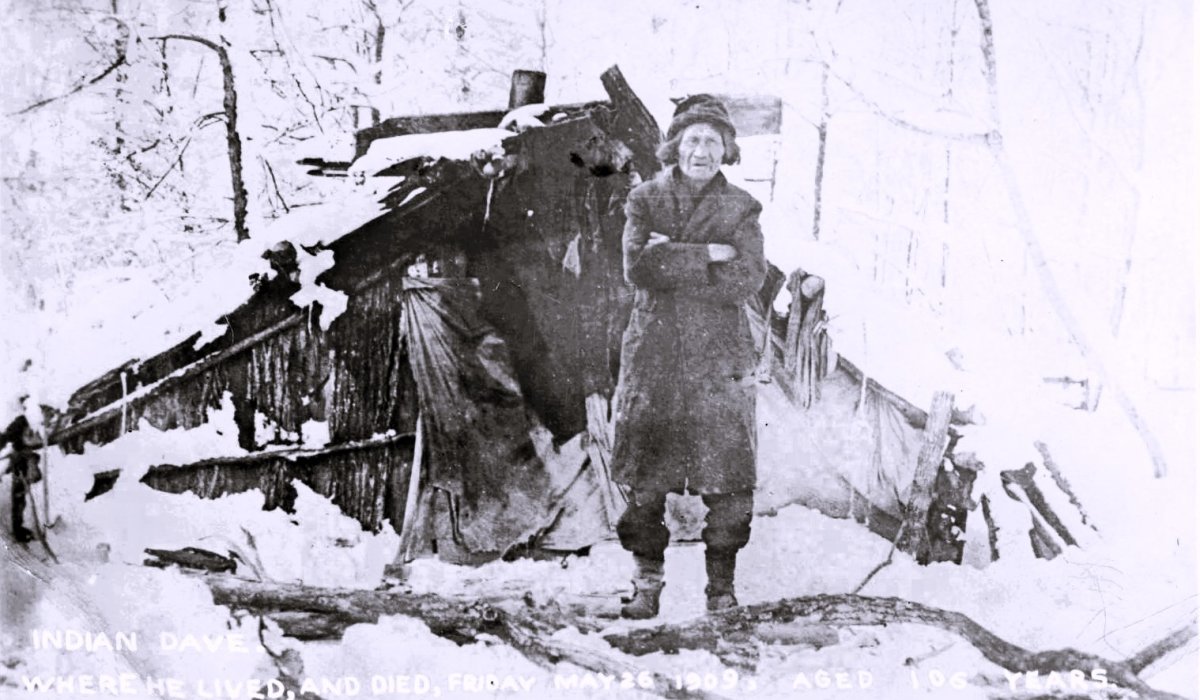
The Story of Indian Dave – A Legend in the Thumb 1803–1909
In 1866, two men paddled a canoe from Vassar to Caro carrying the official government records that would settle a heated dispute over the location of the Tuscola County seat. One of those men was David Stocker, known throughout the region as Indian Dave, a figure who served as the final living link between the traditional Saginaw Chippewa way of life and the rapid industrialization of the Thumb. His life spanned over a century, beginning around the time of the 1819 Treaty of Saginaw and ending in the early 1900s.
If you grew up in Tuscola or Huron counties, you’ve likely heard fragments of his story, yet it’s easy to get lost in the folklore. Many residents find it difficult to locate consistent historical data that separates the man from the legends often shared in local circles. This confusion is compounded by modern digital searches that sometimes mistake our regional icon for unrelated figures from overseas.
We’ve gathered documented history and regional lore to provide a clear timeline of his 106 year journey. This look at his life identifies the specific Michigan landmarks tied to his name and distinguishes his documented contributions from the tall tales that followed his death in 1909.
Key Takeaways
- Identify David Stocker and his heritage as a prominent member of the Saginaw Chippewa tribe.
- Trace the seasonal hunting and trapping camps indian dave established throughout the river basins of Tuscola and Huron counties.
- Compare 19th-century census data against common folklore to distinguish documented history from regional tall tales.
- Find the locations of historical markers and his final resting place in Wisner Township Cemetery for a self-guided heritage tour.
Who Was the Michigan Legend Known as Indian Dave?
David Stocker, known to many as indian dave, remains a central figure in the oral history of Michigan’s Thumb. He was born around 1803, and his Chippewa name was Ish-Don-Quit, which translates to “Crossing Cloud.” For over a century, he lived as a respected member of the Saginaw Chippewa tribe, navigating the changing landscape of Tuscola County as it transitioned from wilderness to pioneer settlement.
Modern internet searches for this name often lead to results about a UK crime figure named Verinder Sharma. However, that man has no connection to the heritage of the Great Lakes. The local legend was a hunter and craftsman who became a fixture in the lives of early settlers and was reportedly present at the signing of the Treaty of Saginaw in 1819. This event ceded millions of acres of land to the United States and changed the region forever.
The name Dave carries weight in many different stories today, from historical legends to modern accounts of individual impact.

His Place in the Saginaw Chippewa Tribe
The mid-1800s were a time of upheaval for indigenous communities in the Thumb. As timber interests moved into the region, many tribal members were pushed toward reservations or moved further west. Stocker stayed, maintaining a connection to the land that predated the arrival of the first sawmills. Understanding his story requires a look at Michigan Indian Place Names, which reveal how the geography of the Cass River and Saginaw Bay was defined long before European settlers arrived. He was one of the last individuals in the area to live in the traditional manner by hunting, fishing, and trapping.
A Familiar Face in Pioneer Settlements
Residents of Vassar and Caro in the late 1800s knew Stocker well. He didn’t live in a farmhouse or a town cottage; instead, he maintained traditional camps along the riverbanks. He traded handmade baskets, bows, and arrows for supplies, often carving wooden toys for local children. Settlers described him as an honest man with a striking appearance, often seen wearing traditional clothing and carrying the tools of a professional trapper. He didn’t just coexist with the pioneers. He taught many of their children outdoor skills and was generally regarded as a kind, reliable neighbor.
Life Along the Cass River and Saginaw Bay
For much of the 19th century, the Cass River served as the primary travel corridor for indian dave. While settlers were busy clearing timber and platting towns, he moved seasonally between Tuscola and Huron counties. His camps were strategically placed near the rich marshlands of Saginaw Bay and the fertile banks of the Cass. He lived a subsistence lifestyle, relying on hunting, fishing, and trapping to provide for himself and trade with neighbors. He was particularly known for his skill in the marshlands, where he harvested resources that many pioneers found difficult to access.
His movements followed ancient Native American Indian Trails that crisscrossed the Thumb long before the first gravel roads were laid. These paths provided the most efficient routes through the dense forests and wetlands. Today, the Indian Dave Historical Marker preserves the memory of his travels, noting his presence at key regional events and his role as an unofficial guide for early pioneers. If you want to see the landscapes he once called home, you can view our live regional webcams to see the Saginaw Bay as it looks today.
The Art of the Dugout Canoe
One of Dave’s most respected skills was the construction of traditional dugout canoes. He would select a single, straight-grained log, usually pine or cedar, and begin the laborious process of hollowing it out. He used a combination of controlled fire and hand-carving with an adze to shape the vessel. Local residents often watched him work, fascinated by the precision of his craftsmanship. These canoes were perfectly balanced for navigating the shallow, snag-filled waters of the Cass River, where heavier wooden boats often struggled.
Wisner Township and the Final Years
In his later years, indian dave settled more permanently in Wisner Township. He lived in a modest cabin that stood as a stark contrast to the growing industrial towns nearby. Despite the rapid changes to the landscape, he adapted while maintaining his traditional practices. He became something of a local celebrity, often visited by neighbors who wanted to hear firsthand accounts of early Michigan. He was known for his sharp memory and his willingness to share stories with the younger generation, serving as a living archive for a disappearing way of life.


Folklore vs. Fact: Separating Myth from Documented History
The local stories surrounding indian dave often blur the line between historical record and community myth. One of the most persistent legends is his extreme longevity. While many accounts claim he was 106 years old at his passing, verifying such a claim from 19th-century records remains difficult. His persona eventually became a symbol for a “vanishing” era in Michigan. He was a frequent guest of honor at local events, including small-town Michigan 4th of July history celebrations where he demonstrated traditional skills for crowds of settlers.
Factual anchors are found in the official Indian Dave Historical Marker, which notes his presence at the 1819 Treaty of Saginaw. However, researchers often face conflicting dates regarding his death. Some local records cite 1920, while other primary sources and cemetery records point to 1909. These discrepancies are common for figures whose lives began before standardized birth and death registration in the state. If you want to see more of these stories brought to life, explore our archive of Michigan Moments for more regional history.
The ‘Last of His Tribe’ Narrative
Newspapers in the late 1800s frequently labeled David Stocker as the “last of the Chippewas” in the region. This was a common romanticized trope used by media of the era to emphasize the shift from indigenous life to industrial agriculture. In reality, the Saginaw Chippewa Indian Tribe remained a present and active community. While indian dave was certainly one of the last to live a subsistence lifestyle in the Tuscola County marshlands, he was not the final member of his people as the headlines suggested.
Documented Encounters and Primary Sources
Historical society records in Tuscola County provide a more grounded view of his daily life. Pioneer journals from the mid-1800s describe him as a tall, dignified man who moved with ease between the world of the settlers and the traditional ways of his ancestors. Some journals from Vassar families mention his specific trade routes and the distinct patterns of the baskets he sold. These primary sources help strip away the exaggerated feats of strength found in later tall tales, revealing a man who was deeply respected for his practical knowledge and quiet demeanor.
Commemorating Indian Dave in Modern Michigan
Today, the memory of indian dave is preserved through physical landmarks scattered across Tuscola County. These sites offer a tangible connection to a man who witnessed the total transformation of the Michigan wilderness. For those interested in regional heritage, visiting these locations provides a quiet space to reflect on the transition between indigenous life and the pioneer era. His story remains a staple of local museum exhibits and school curriculum throughout the Thumb, focusing on his role as a bridge between two very different cultures.
Visiting the Wisner Township Marker
The most prominent tribute is the official state historical marker located in Wisner Township. Situated along M-25, the marker is easily accessible for those traveling the scenic route around the Saginaw Bay. The site provides a concise summary of his life and his presence at the 1819 Treaty of Saginaw. While you are in the area, you might also explore nearby Michigan Ghost Towns that tell a parallel story of the region’s industrial rise and fall.
His final resting place is in the Wisner Township Cemetery. For decades, the grave remained unmarked, but local efforts eventually ensured his name was properly memorialized with a headstone. The cemetery is open to the public during daylight hours; however, heavy snow can make access difficult during the winter months. Parking is limited to the cemetery’s small gravel drive, so visitors should plan accordingly during wet seasons when the ground may be soft.
Preserving the Heritage of the Thumb
Local schools and museums continue to use the life of indian dave as a case study for 19th-century history. By focusing on his documented interactions with settlers and his traditional craftsmanship, educators avoid the romanticized caricatures often found in older textbooks. This commitment to factual reporting ensures that his documented contributions to the region remain clear for future generations. It is a narrative that emphasizes coexistence and survival rather than the sensationalized conflict often found in fictionalized accounts of the era.
Maintaining this history requires active support for the historical societies in Tuscola and Huron counties. These volunteer-driven organizations manage the archives and primary sources that allow us to distinguish between tall tales and lived reality. Preserving this story isn’t just about honoring one individual. It’s about protecting the collective identity of a region that still feels a deep connection to its foundational roots and the people who first navigated its riverbanks.
Protecting the Heritage of the Cass River Valley
The life of indian dave reminds us that regional history is rarely a single, static story. It’s a collection of documented records, seasonal camps, and the shared memories of a community that respected his presence for over a century. By looking past the romanticized headlines of the early 1900s, we find a man who was a skilled craftsman and a vital participant in the early development of Tuscola County. His legacy isn’t just found on a historical marker along M-25; it’s preserved every time we choose primary sources over local tall tales.
Thumbwind has provided trusted regional news and reporting since 2009. Our extensive archive focuses on the Native American history of the Thumb and the primary source-driven reporting that keeps our regional identity intact. Explore more Michigan Moments and regional history at Thumbwind to see the people and places that shaped our home. Understanding our past is the best way to appreciate the landscape we walk today.
Frequently Asked Questions
Who was the historical figure known as Indian Dave in Michigan?
David Stocker was a well known hunter, trapper, and craftsman who lived in Michigan’s Thumb region throughout the 1800s. He became a local legend for maintaining a traditional lifestyle while coexisting peacefully with early pioneer settlers in Tuscola and Huron counties. Many residents remember him as a figure who bridged the gap between indigenous ways and the developing agricultural communities of the late 19th century. He was a familiar face in local villages for decades.
Where is Indian Dave buried in Tuscola County?
He is buried in the Wisner Township Cemetery, located in Tuscola County. For many years, his grave remained unmarked and was nearly lost to time. Local efforts eventually led to the placement of a permanent headstone to honor his historical significance. Visitors can find the cemetery along the M-25 corridor, though parking is limited to a small gravel drive near the entrance. The site is a quiet place for reflection.
What tribe did Indian Dave belong to?
He was a member of the Saginaw Chippewa tribe. This group was part of the larger Anishinaabe people who lived throughout central and eastern Michigan before the influx of European settlers. While he was often described by local newspapers as the “last” of his people, he was actually part of a resilient community that continues to maintain its heritage in the region today. He remained connected to his tribal roots throughout his long life.
Are there any historical markers for Indian Dave in the Thumb?
Yes, a prominent historical marker is dedicated to indian dave in Wisner Township along highway M-25. The Michigan History Division erected this marker to commemorate his life and his reported presence at the signing of the 1819 Treaty of Saginaw. It serves as a primary source of information for travelers interested in the indigenous history of the Thumb region and is easily accessible during the summer months.
What was Indian Dave’s real name?
His Chippewa name was Ish-Don-Quit, which translates to “Crossing Cloud.” In official government records and among local settlers, he was known by his anglicized name, David Stocker. Using both names allowed him to navigate two different worlds, maintaining his tribal identity while engaging in trade and legal matters with the pioneers who settled in villages like Vassar and Caro. Most historical documents from the era refer to him by his English name.
Did Indian Dave really make dugout canoes?
Historical accounts and pioneer journals confirm that indian dave was a master at crafting traditional dugout canoes. He used a specialized process involving controlled fire and hand-carving with an adze to hollow out single pine or cedar logs. These vessels were highly prized for their stability and were perfectly suited for navigating the shallow, often obstructed waters of the Cass River where larger wooden boats couldn’t pass.
Disclaimer
Information published on Thumbwind.com is provided for general informational purposes. While we make reasonable efforts to keep articles accurate and current, details such as prices, hours, regulations, access conditions, and other information may change without notice. Readers should verify important details with the appropriate business, agency or official source before making travel, financial or other decisions. Thumbwind.com is not responsible for the content, availability or practices of third-party websites linked from our articles.