


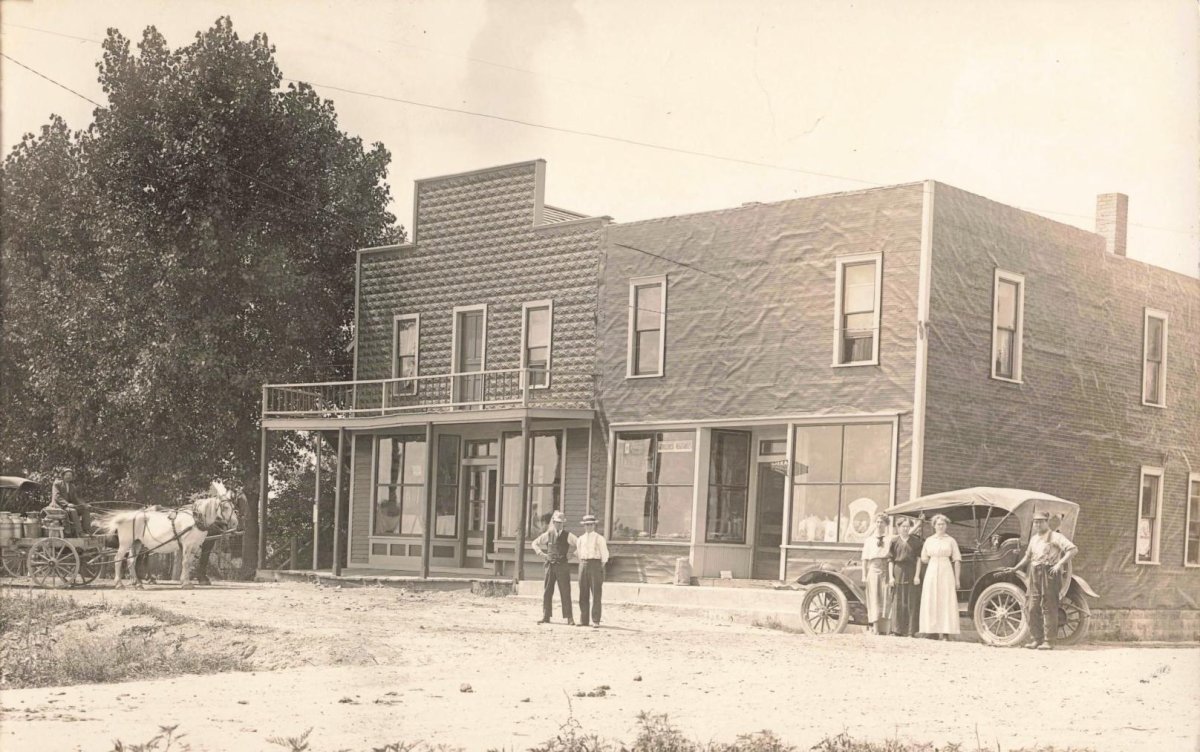
Michigan Ghost Towns: A Guide to the State’s Abandoned Industrial Settlements
Between 1845 and 1880, the Keweenaw Peninsula produced more copper than any other region in the world, yet today many of the towns that fueled this boom are nothing more than ruins. These abandoned settlements are the physical fossils of a time when resource extraction dictated where Michiganders lived and died. Many people looking for michigan ghost towns often find themselves staring at a “No Trespassing” sign or a vacant field because the structures they expected to see collapsed decades ago. It’s frustrating to drive hours into the woods only to lose cell service and realize your destination is on private land.
This guide provides a verified list of sites that still contain standing buildings and offer legal public access. We will examine the economic origins of industrial hubs like Fayette in Delta County and the mining communities of the Copper Country. You will learn about the seasonal requirements for visiting these remote locations, including parking availability and how to navigate without a digital map. This article offers the practical instructions needed to see Michigan’s industrial history firsthand while staying safe and within the law.
Key Takeaways
- Learn the five specific classifications of abandoned settlements to manage expectations when visiting michigan ghost towns.
- Identify accessible locations like Fayette and Central Mine where industrial ruins and standing structures remain open to the public.
- Use county plat maps to verify land ownership and ensure your travel remains legal and stays off private property.
- Prepare for remote conditions in the Upper Peninsula by checking seasonal road access and carrying physical maps for areas without cell service.
- Understand how the Department of Natural Resources and local historical societies work to document and maintain these vanishing sites.
Economic Origins of Michigan Ghost Towns
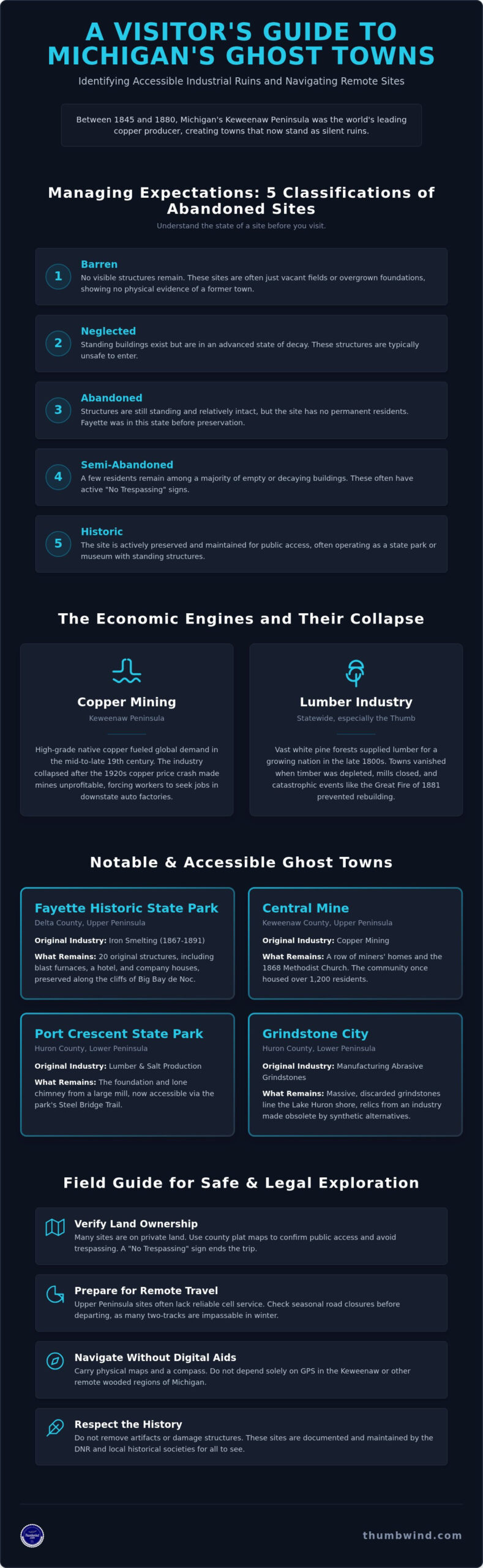
Most michigan ghost towns aren’t just empty spots on a map; they are categorized by their current state of decay. Historians typically use five classifications to describe these sites. Barren sites show no physical remains of the town. Neglected sites contain buildings that are falling apart. Abandoned sites have standing structures but no residents, while semi-abandoned places still have a few hardy locals. Finally, historic sites like Fayette are preserved for the public. Understanding the status of michigan ghost towns helps visitors know what to expect before they arrive.
The 19th-century lumber boom created hundreds of these settlements almost overnight. Companies cleared massive swaths of white pine, leaving behind “cut-over” lands that were often useless for farming. When the timber ran out, the mills stopped, and the workers moved on to the next stand of trees. You can see the early settlement patterns that preceded this boom on this 1837 Michigan map, which shows the state just as the industry began to take hold.
Copper mining in the Keweenaw Peninsula followed a similar cycle. While the region dominated the global market for decades, the 1920s copper price collapse devastated local economies. Mines that had operated for generations closed their gates. This economic shift turned thriving communities into silent relics as families left to find work in the growing automotive factories downstate.
The Rise and Fall of Resource Extraction
Iron smelting once anchored the economy in places like Delta County. As large-scale steel production centralized in cities like Gary and Pittsburgh, small Michigan blast furnaces became obsolete. The Fayette mill, for example, ceased operations in 1891. Many lumber mills in the Thumb followed suit by the late 1800s as the forests vanished.
Natural Disasters as Catalysts
Sometimes, nature accelerated the abandonment. The Great Fire of 1881 in Huron County erased entire lumber towns in a single afternoon. Because the timber was already thinning, companies chose not to rebuild their infrastructure. This lack of investment meant that once-busy ports and rail stops never recovered, leaving only charred foundations behind in the soil.
Notable Abandoned Towns in the Upper and Lower Peninsulas
Michigan’s geography is dotted with the remains of towns that once boasted thousands of residents. In Delta County, Fayette Historic State Park serves as one of the most intact michigan ghost towns. Between 1867 and 1891, the Jackson Iron Company operated a massive blast furnace here to produce charcoal pig iron. Today, visitors walk through the townsite to see the limestone furnace, the hotel, and several company houses that remain standing against the cliffs of Big Bay de Noc.
Central Mine in Keweenaw County offers a different perspective on the copper boom. Unlike many sites that were leveled for scrap, Central still features a row of miner’s homes and a Methodist Church built in 1868. This community once housed over 1,200 people during the peak of the Central Mining Company’s operations. It’s one of the few places where you can still feel the scale of a 19th-century mining village without looking through a fence.
Upper Peninsula Mining Settlements
Delaware Mine remains a significant stop in the Copper Country. While the mine itself offers underground tours, the surrounding area contains the ruins of the pump house and several stone foundations. These structures provide a visual record of the massive investment required to pull native copper from the earth. If you’re traveling through the region, checking live regional webcams can help you gauge current weather conditions before heading into these remote areas.
Lower Peninsula Lumber Towns
In the Lower Peninsula, Port Crescent in Huron County was once a bustling lumber and salt port that competed with Bay City for regional dominance. The town eventually vanished when the timber was exhausted and the sand was sold for glass making. Today, the site is part of Port Crescent’s Steel Bridge Trail, where hikers find the last remaining chimney from the local mill. Further east, Grindstone City remains a unique site because it produced abrasive wheels rather than just wood. Large discarded grindstones still line the shore, marking an industry that died when synthetic carborundum was invented.
Pere Chene in Crawford County is a more traditional ghost town experience. Established in the 1870s as a rail stop, it withered after the lumber industry moved north. Today, only a small cemetery and a few depressions in the ground mark the spot where a village once stood near Grayling. It serves as a stark example of how quickly a community can disappear once its primary economic engine fails.

Practical Considerations for Visiting Michigan Ghost Sites
Verify land ownership through county plat maps before you step out of your vehicle. Many michigan ghost towns sit on private property. Owners in these remote areas often strictly enforce trespassing laws. Checking these records ensures your trip remains legal and respectful of the local community.
Safety and Seasonal Access
Unstable ruins and open mine shafts pose real threats at neglected sites. Follow these safety protocols:
- Stay on marked trails and avoid entering wooden structures.
- Never walk on loose mine tailings or near fenced-off pits.
- Travel with a partner and tell someone your itinerary.
The Michigan Department of Natural Resources typically closes seasonal roads from December 1 through the end of April. Snow often remains on Upper Peninsula trails much later in the spring than in the southern counties. High-clearance vehicles are a requirement for many backroads, as deep ruts and washouts can easily strand a standard sedan.
Logistics and Connectivity
Expect a total lack of cell service in the Keweenaw and Huron Mountains. Don’t rely on your phone for live navigation when visiting remote michigan ghost towns. Download offline GPS maps while you still have a signal in larger towns. This ensures you can find your way back to main roads without a data connection.
Fuel and supplies are scarce in the deep woods. Identify nearby hubs like Houghton or Marquette before you depart. Always start your trip with a full tank of gas and extra water. Traveling between sites often takes longer than expected due to unpaved logging roads.
If you want to find physical relics, consider metal detecting in Michigan on approved public lands. It’s a legal way to connect with the industrial past without disturbing protected historic sites.
Preservation and Legal Ownership of Abandoned History
The Michigan Department of Natural Resources (DNR) manages several of the state’s most significant sites to prevent them from becoming barren ground. At Fayette, the DNR oversees the stabilization of limestone structures that would otherwise crumble into the bay. Local groups in Ironwood and Marquette also work to document buildings before the harsh northern winters claim them. These organizations rely on volunteers to photograph foundations and map out town layouts for future researchers.
The Role of State and Local Agencies
Specific programs like the Michigan State Historic Preservation Office (SHPO) provide grants to stabilize ruins rather than demolish them. These funds often help local societies keep roofs on old mine offices or churches. When a site is surveyed for the National Register of Historic Places, experts look for architectural integrity and a clear connection to industrial events. This official status helps protect michigan ghost towns from modern development and secures funding for long-term maintenance.
Ethical Visiting Practices
The rise of urbex, or urban documenting, often creates a conflict with preservation goals. While photographers want to record the decay, foot traffic and vandalism can destroy fragile sites overnight. Ethical visitors follow a “take only pictures, leave only footprints” policy to ensure these locations last for another century. If you find a loose artifact on public land, don’t keep it. Instead, contact regional museums in the Upper Peninsula that have the tools to preserve and display these items properly.
For those who enjoy industrial history, Michigan lighthouses offer another way to see how technology once served the state’s shipping and mining trades. Like the abandoned towns, these beacons are often managed by dedicated local boards working to keep Michigan’s physical past accessible for everyone.
Planning Your Investigation into Michigan’s Industrial Past
Michigan’s industrial remains offer a direct connection to the laborers who built this state from the ground up. By understanding the volatile economic cycles of lumber and copper, you can see why these once-thriving communities vanished so quickly. Successful trips to michigan ghost towns require more than just curiosity. They demand careful planning with offline maps, high-clearance vehicles, and a strict respect for private property boundaries. Whether you are walking through weathered foundations or locating a lone mill chimney in the woods, your presence helps keep this local heritage relevant for the next generation.
Not all Michigan place names match the landscapes visitors expect to find. If you have ever wondered whether the gritty prison setting of Kingstown, Michigan separates TV fiction from regional reality, the actual village of Kingston in Tuscola County offers a very different picture than the Paramount+ series suggests.
Thumbwind has provided independent Michigan journalism since 2009, offering detailed historical reporting on the Thumb and Upper Peninsula. We focus on accurate, fact-checked regional news to help you track the state’s complex history safely. Read more Michigan history and travel guides at Thumbwind to prepare for your next trip into the woods. Grab your gear and start your own search for the stories left behind in the soil.
Frequently Asked Questions
Are ghost towns in Michigan legal to visit?
Many michigan ghost towns are legal to visit because they sit within state parks or on public DNR land. However, others are located on private property where trespassing is strictly prohibited. You should check county plat maps or look for specific “No Trespassing” signs before you enter any abandoned structure. Respecting these boundaries prevents legal issues and ensures the safety of the remaining buildings for future researchers.
Which Michigan ghost town is the most intact?
Fayette Historic State Park in Delta County is the most intact abandoned settlement in the state. It contains over 20 standing structures, including the furnace complex, a hotel, and several townsite homes. Most other sites are barren or have only foundations remaining. Fayette provides a clear view of 19th-century industrial life because the state actively preserves the limestone buildings and town layout for the public to see.
What happened to the ghost towns in the Thumb region?
Towns in the Thumb like Port Crescent and Port Hope declined when the white pine forests were exhausted. The devastating fires of 1871 and 1881 accelerated this process by destroying mills and vital infrastructure overnight. Without timber to process or homes to live in, residents migrated to growing industrial hubs like Bay City or Detroit. These disasters turned busy ports into the quiet, sandy sites you see today.
Where is the highest concentration of ghost towns in Michigan?
The Keweenaw Peninsula in the Upper Peninsula holds the highest density of michigan ghost towns. This region served as the center of the 19th-century copper boom. Mining companies built dozens of small “location” towns near specific shafts to house their workers. When the ore ran out or prices collapsed in the 1920s, these communities were abandoned, leaving behind a high concentration of ruins in a relatively small geographic area.
Can you buy property in a Michigan ghost town?
You can buy land in semi-abandoned or neglected sites if a private owner lists the property for sale. Some locations, such as Central Mine, still have seasonal residents who own and maintain the original mining homes. It’s different for barren sites, which are often absorbed into protected state forests or parks. If you are interested in owning a piece of history, you must research the specific deed and local zoning laws first.
Disclaimer
Information published on Thumbwind.com is provided for general informational purposes. While we make reasonable efforts to keep articles accurate and current, details such as prices, hours, regulations, access conditions, and other information may change without notice. Readers should verify important details with the appropriate business, agency or official source before making travel, financial or other decisions. Thumbwind.com is not responsible for the content, availability or practices of third-party websites linked from our articles.