 by
by 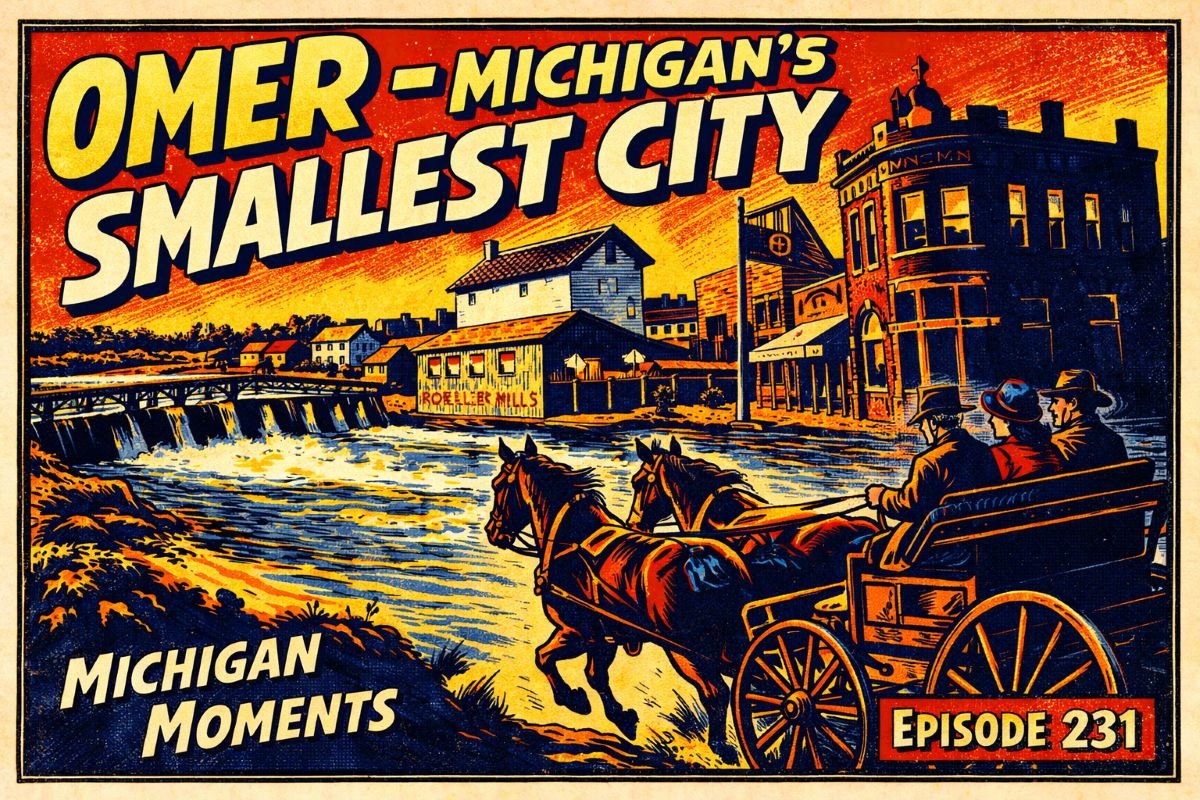
Omer, Michigan is easy to overlook on a map. With fewer than 300 residents, the city of Omer holds the distinction of being Michigan’s smallest city. Yet its past tells a much larger story—one shaped by lumber, river power, disaster, and persistence.
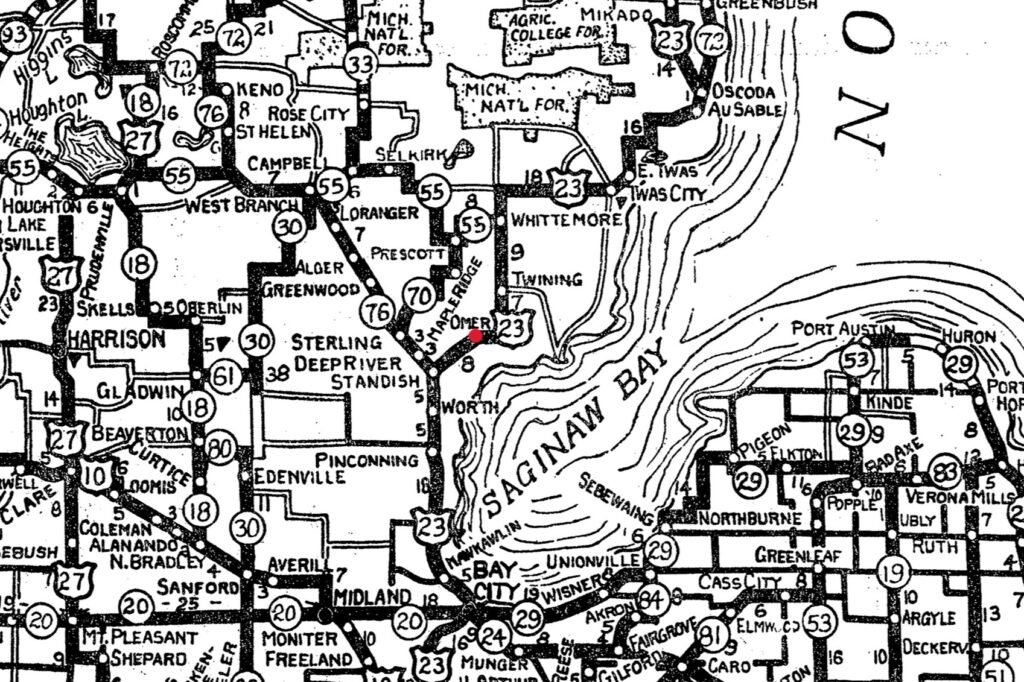
Understanding the history of Omer Michigan means following the Rifle River and the men who built a town along its banks.
Video – Omer Michigan History: 2 Brutal Events That Shrunk a City
History of Omer Michigan – A Lumber Town Takes Shape
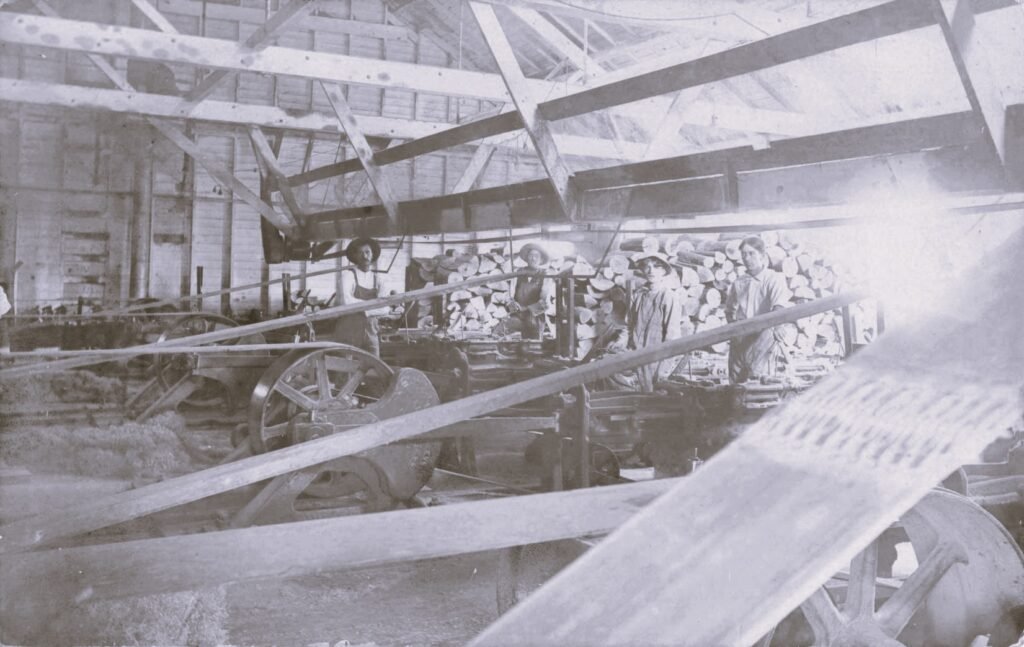
We begin our history of Omer michigan in about 1866 as Rifle River Mills. The location mattered. The Rifle River was a working river, carrying logs south to Bay City during Michigan’s lumber boom. Early settlers built sawmills along the water and rough homes nearby.
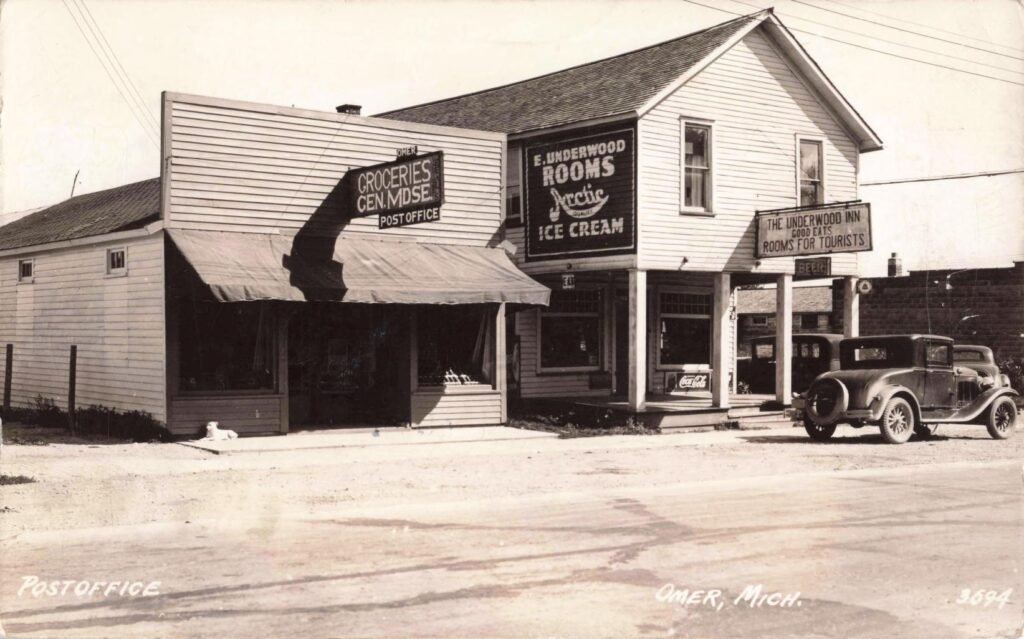
A post office opened soon after. When officials rejected the name Homer due to duplication, the “H” was dropped. Omer stuck.
By the 1880s, the town had a railroad connection, bringing supplies and people. Businesses followed. Omer briefly became the first county seat of Arenac County. In 1890, a brick courthouse was constructed—a sign of confidence in the town’s future.
Main Street at Its Peak
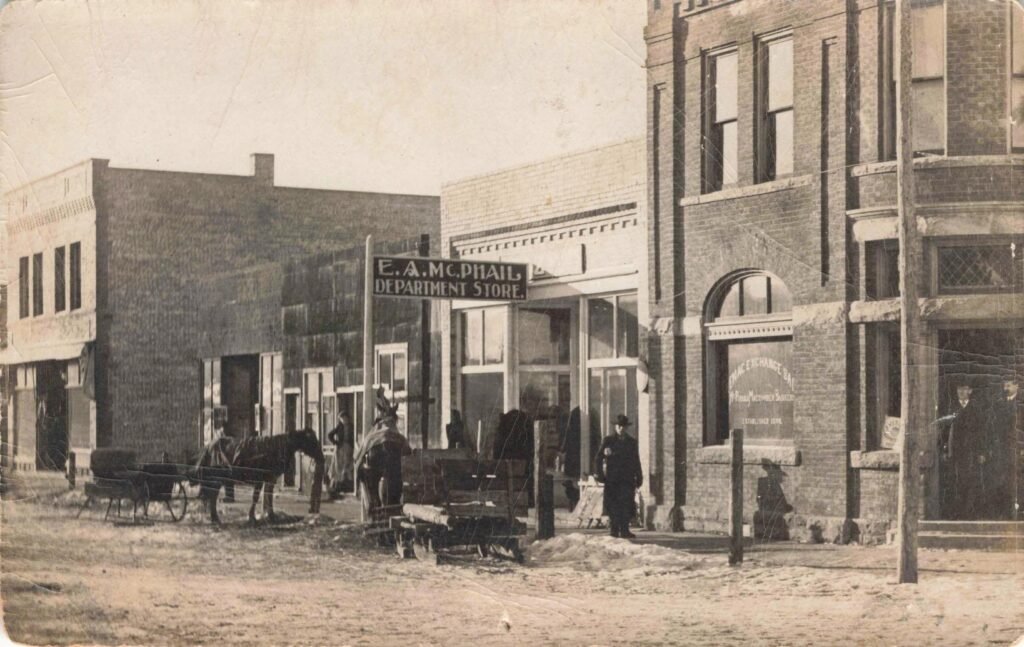
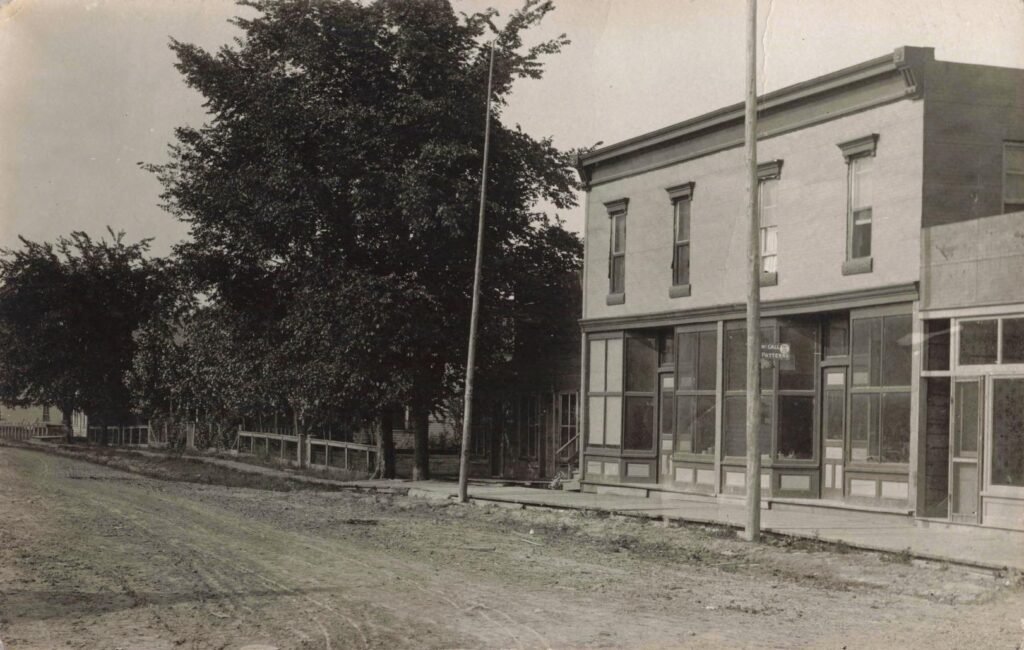
Postcards from the early 1900s show Omer at its busiest. Dirt roads ran between tightly packed wooden storefronts. A lunch counter advertised hot meals. The Arenac Exchange Bank stood on a corner, one of the few brick buildings downtown.
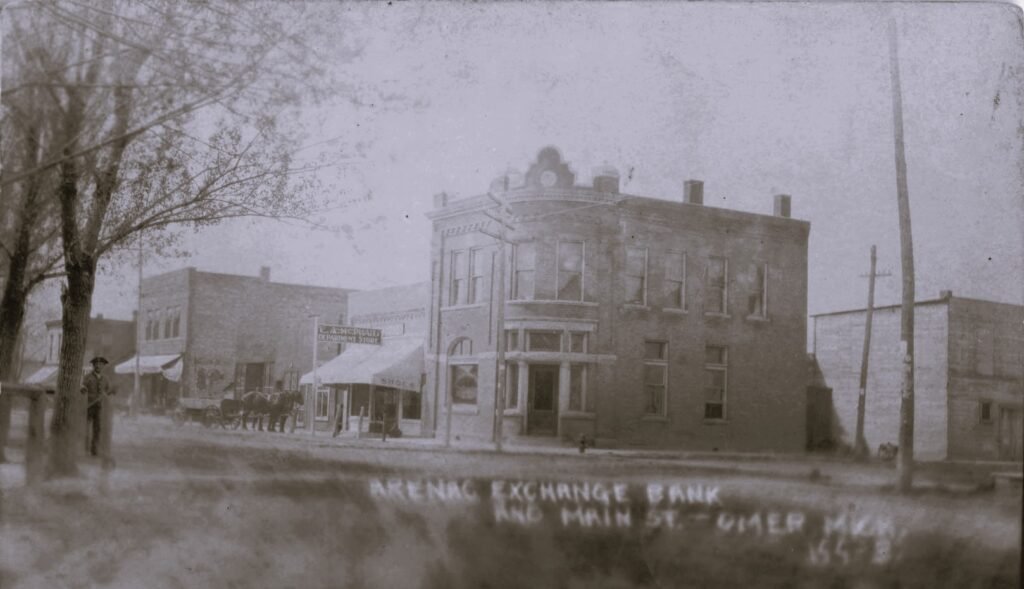
The town was small but active. Residents shopped locally. River workers spent wages in town. Farmers from surrounding land came in for supplies.
The Fire of 1914
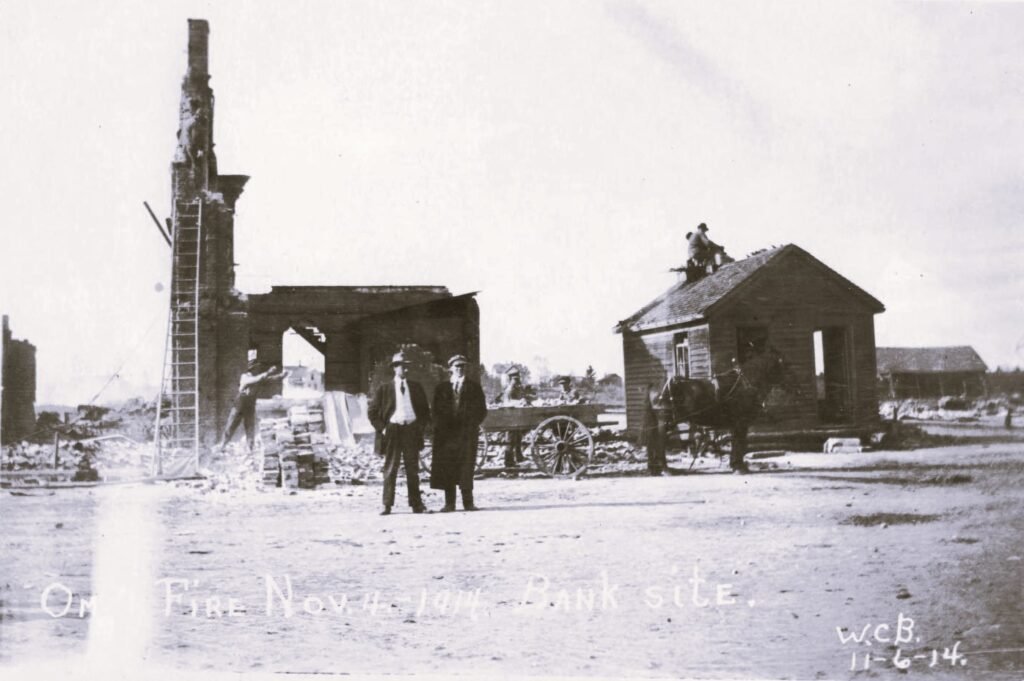
Everything changed on November 4, 1914.
A fire broke out in the business district and spread rapidly. Wooden buildings offered little resistance. By morning, roughly forty structures were destroyed. Nearly all of downtown was gone.
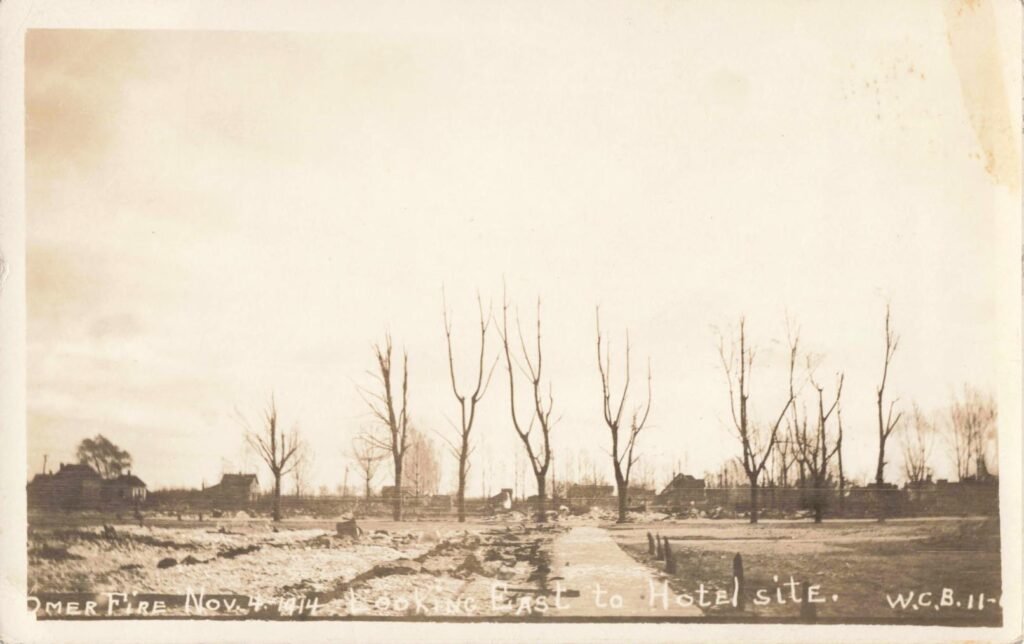
The Arenac Exchange Bank burned. Stores vanished. Many businesses never returned. The courthouse building survived, but the economic heart of Omer was permanently damaged.
This event stands as a turning point in the history of Omer Michigan.
Other Michigan Fire Disasters Worth Reading
Michigan’s fire history did not end with the 1908 Metz Fire. Across the state, hotels, schools, villages, forests and rail towns faced fires that reshaped local memory and public safety.
Fraser House Fire — Bay City, 1907
The Fraser House fire left Bay City with a stark reminder of how quickly a downtown hotel disaster could unfold in the early 1900s. The aftermath showed the limits of fire protection in dense commercial districts.
Read: Aftermath of the Fraser House Fire, Bay City, Michigan, 1907
Omer, Michigan — Fire, Flood and Survival, 1866-1940
Omer’s early history was marked by repeated disaster, including fire and flood. The small city’s story shows how vulnerable river communities were before modern infrastructure and emergency response.
Read: History of Omer Michigan — Fire, Flood and a Small City That Endured Disaster
Parisville Fire — 1881
The 1881 Parisville Fire destroyed much of a Thumb-area community and became tied to stories of faith, loss and survival. It remains one of Michigan’s most dramatic small-town fire accounts.
Read: 1881 Parisville Fire — Devastating Blaze Destroyed a Town and Brought Miracles
Elkton School Fire — 1930
The Elkton School Fire brought fear to a Huron County town and left a lasting mark on local memory. School fires forced Michigan communities to rethink building safety, exits and emergency planning.
Read: The Elkton School Fire — The Dreadful 1930 Blaze That Changed a Michigan Town
Caseville Forest Fire — 1924
Caseville faced a serious forest fire threat in 1924 as flames pushed toward the Lake Huron shore. The story stands out because local residents and responders fought to protect a community that could have suffered far greater damage.
Read: Flashback — The Heroic Battle to Save Caseville, Michigan from a Raging Forest Fire
Oscoda and AuSable Fire — 1911
The 1911 fire that struck Oscoda and AuSable became one of northern Michigan’s most destructive community disasters. It showed how lumber towns near Lake Huron remained exposed to fire long after the peak logging years.
Great Fires of 1871 — The Burning Great Lakes
The Great Fires of 1871 burned across several Great Lakes states during the same period as the Chicago Fire. Michigan communities were part of a wider regional disaster driven by drought, wind and heavily cut timberland.
1881 Michigan Fire — The Thumb Changed Forever
The 1881 Michigan Fire devastated the Thumb and became one of the state’s defining wildfire disasters. It destroyed farms, homes and settlements across a region still shaped by logging, land clearing and dry weather.
Mendon Fire — 1916
The 1916 Mendon Fire left behind the story of a Michigan village that was never the same. It is a reminder that fire could erase a community’s business district, homes and future plans in a matter of hours.
Hinckley Fire — 1894
The 1894 Hinckley Fire happened in Minnesota, but its smoke and fear reached Michigan. The event remains relevant to Great Lakes fire history because it showed how regional weather, timber waste and drought could create disasters felt far from the burn zone.
Read: 1894 Hinckley Fire — When the Sky Went Black — Michigan’s Day of Smoke and Fear
Metz Fire — 1908
The 1908 Metz Fire destroyed the village of Metz, Michigan, and killed 37 people. Hundreds were left homeless. The most painful chapter came when a Detroit & Mackinac Railway relief train derailed after intense heat damaged the rails near Nowicki’s Siding.
Read: History of The 1908 Metz Fire Michigan – The Shocking Day a Railroad Village Burned
Images on this page may contain affiliate links in which we may receive a commission. See our affiliate disclosure for details.
Historic Photos of Detroit in the 50s, 60s, and 70s
Historic Photos of Detroit in the 50s, 60s, and 70s documents what a Metro Detroiter would have experienced through those decades, from the commonplace to a visit from John F. Kennedy.
When the River Turned Against the Town
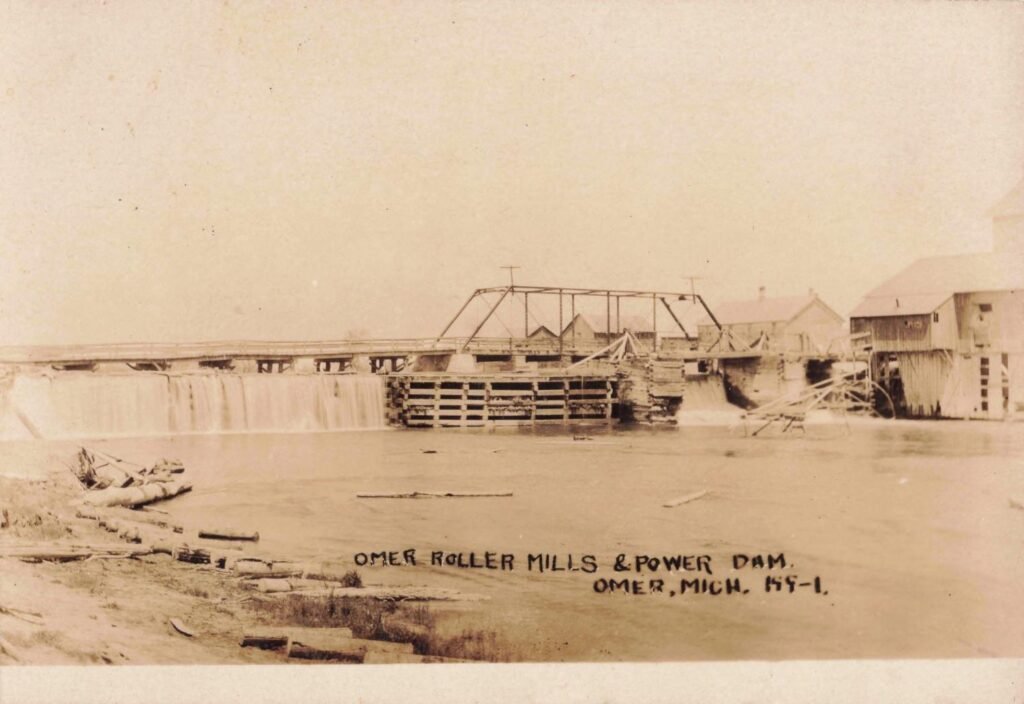
Two years later, nature struck again.
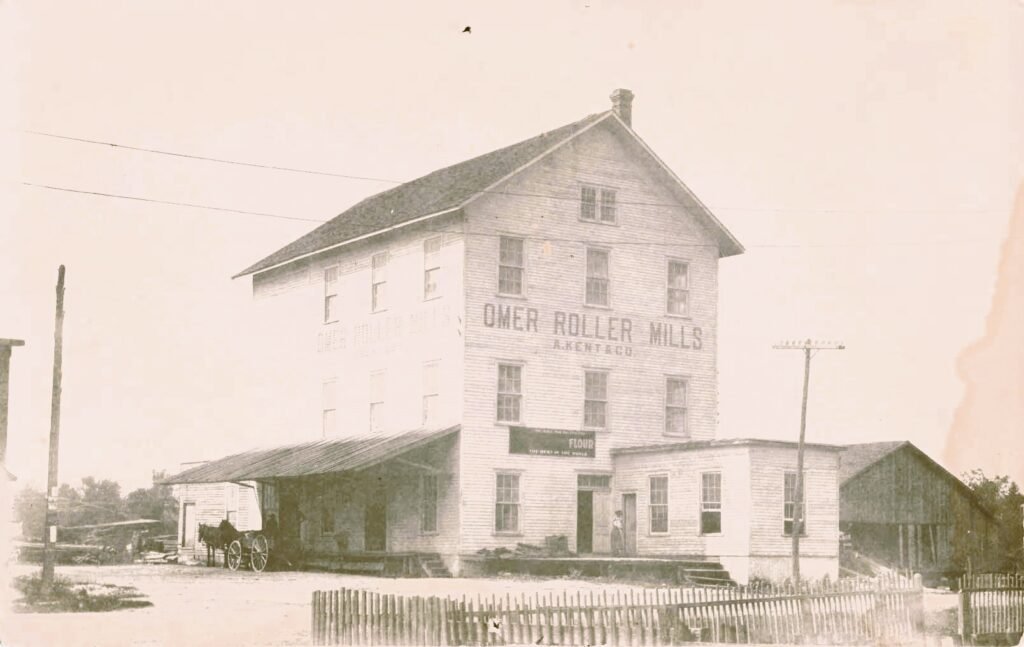
The Rifle River flooded in 1916. The dam that powered the Omer Roller Mills failed. Without it, milling operations stopped. Lumber jobs disappeared almost overnight.
With mills closed and downtown burned, residents began leaving. Omer’s population declined steadily through the 1920s.
History of Omer Michigan – Life Goes On
Despite losses, Omer did not vanish.
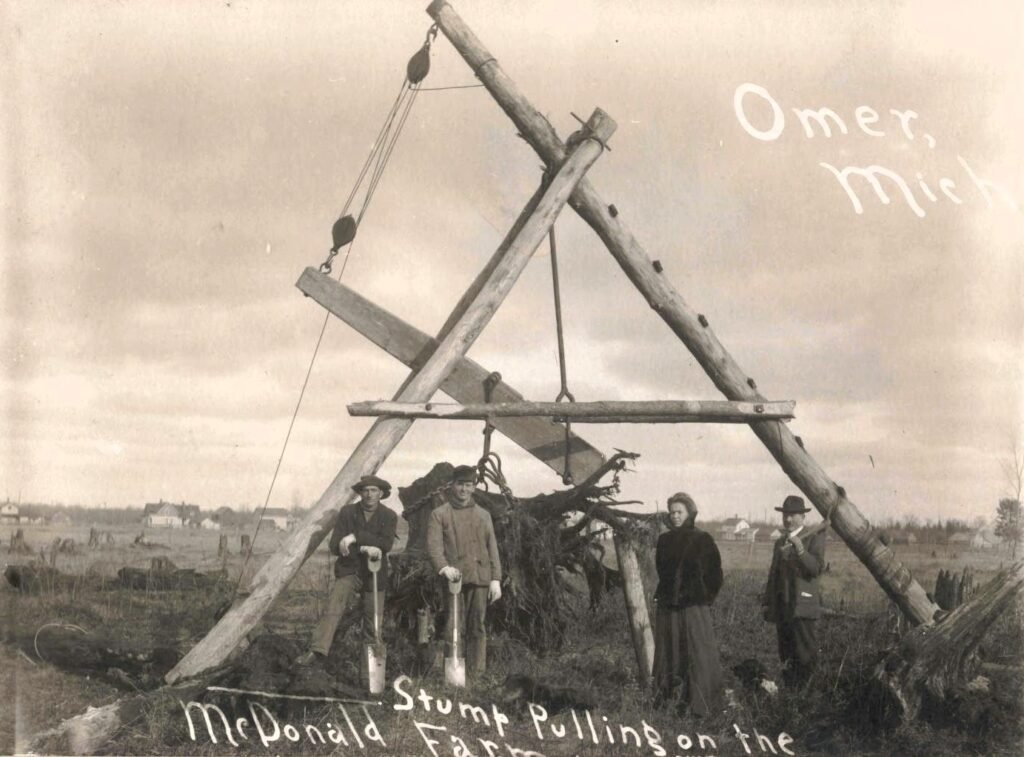
Farmers cleared land by hand and horse. One photograph shows a stump-pulling crew on the McDonald farm, just outside town limits.
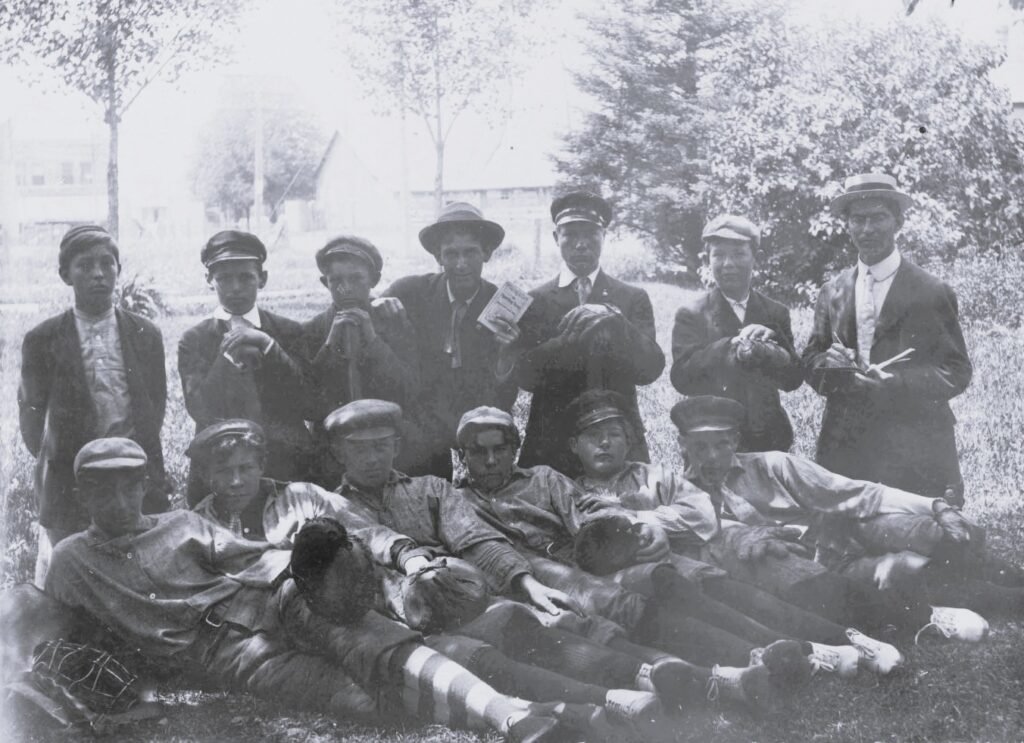
Children attended school. Community events continued. In the 1930s, students posed proudly with a basketball team on school steps.
These images show a town adjusting to reduced scale rather than surrendering.
A Small City with Big Stories
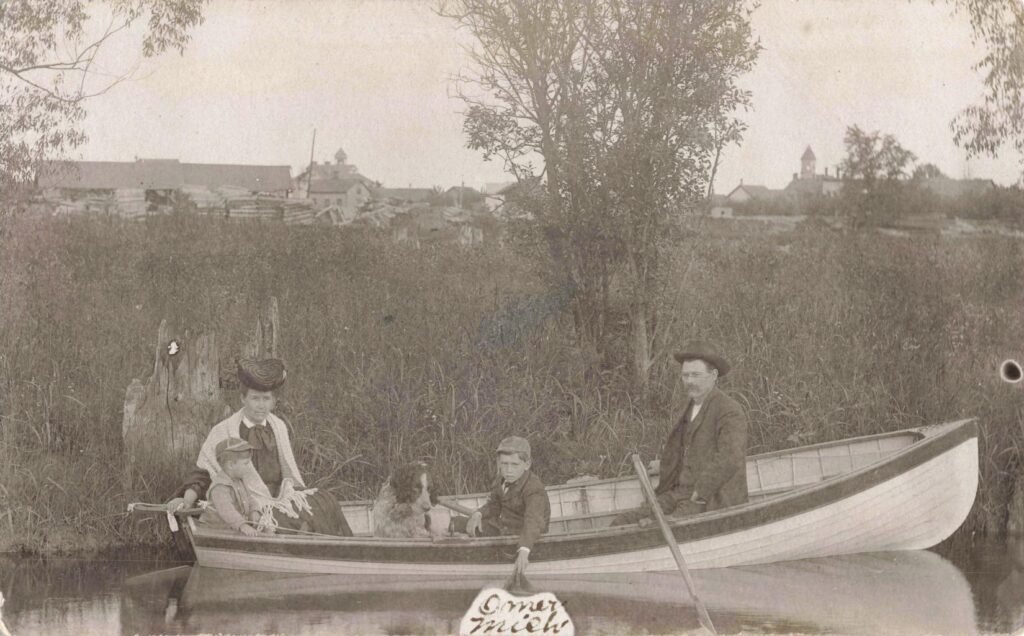
Omer gained attention for reasons beyond fire and flood. One unusual legal case involved a man fined for swearing after falling from a canoe, under an outdated Michigan law. The case later helped overturn the statute.
Such moments added to Omer’s reputation as a town that appeared small but carried outsized stories.
By the late 20th century, Omer reclaimed its title as Michigan’s smallest city. Census counts confirmed it.
Why the History of Omer Michigan Still Matters
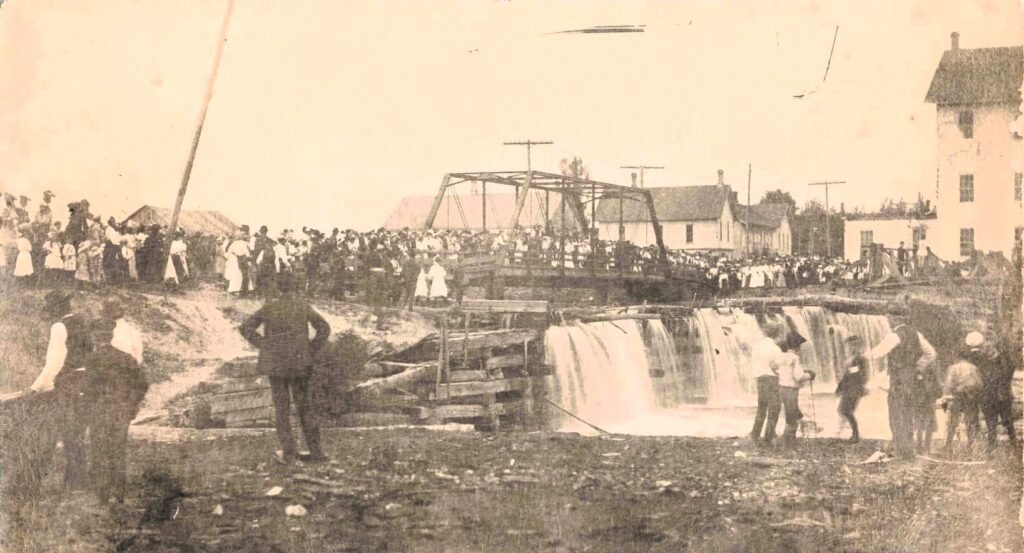
The history of Omer Michigan mirrors that of many Great Lakes lumber towns. Rapid growth. Sudden collapse. A quieter, enduring life afterward.
What makes Omer stand out is that it never fully disappeared. Its courthouse still stands. Its river still flows. Its streets still follow the same paths laid out over a century ago.
Omer’s story is not about revival. It is about staying.
Omer Michigan FAQs
What is Omer, Michigan known for?
Omer, Michigan is known for being a small city with a strong sense of community, its proximity to outdoor recreational activities such as fishing and hunting, and its location near the Au Sable River.
What is the oldest town in Michigan?
The oldest town in Michigan is Sault Ste. Marie.
What ethnicity is Omer?
Omer is a name common in various cultures, including Turkish and Arabic. The ethnicity may vary depending on the specific individual.
How did Omer, Michigan get its name?
Omer, Michigan was named after Omer H. Houghton, a local lumberman.
Works Cited for the history of Omer, Michigan

- “Omer, Michigan.” Wikipedia,
- “Second Arenac County Courthouse.” Wikipedia,
- David V. Tinder Collection of Michigan Photography. University of Michigan Library,
- “Rifle River.” Wikipedia,
- Arenac County Historical Society – Omer Digital Collection.