


History of Plainwell Michigan – 21 Remarkable Images of Island City
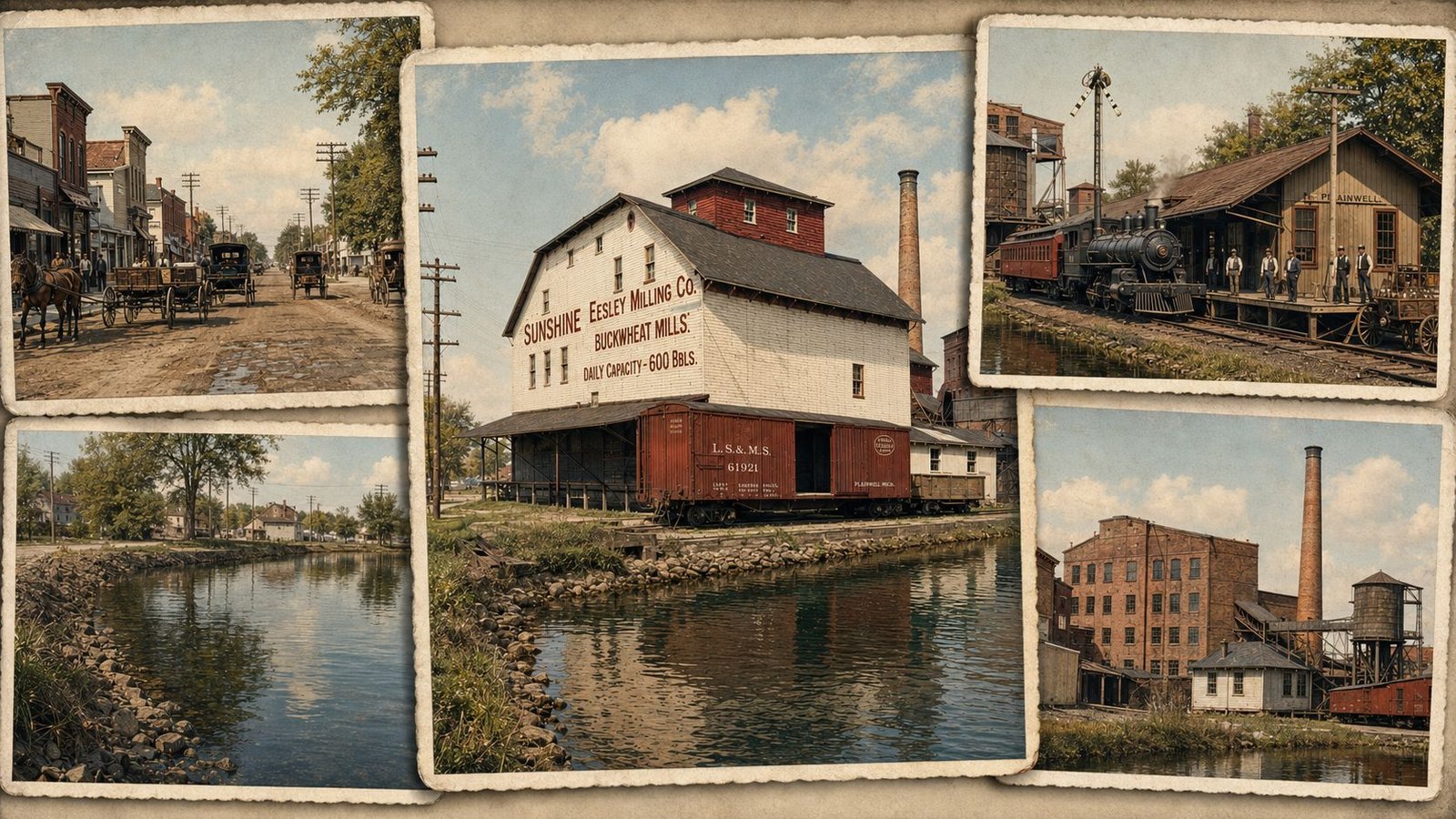
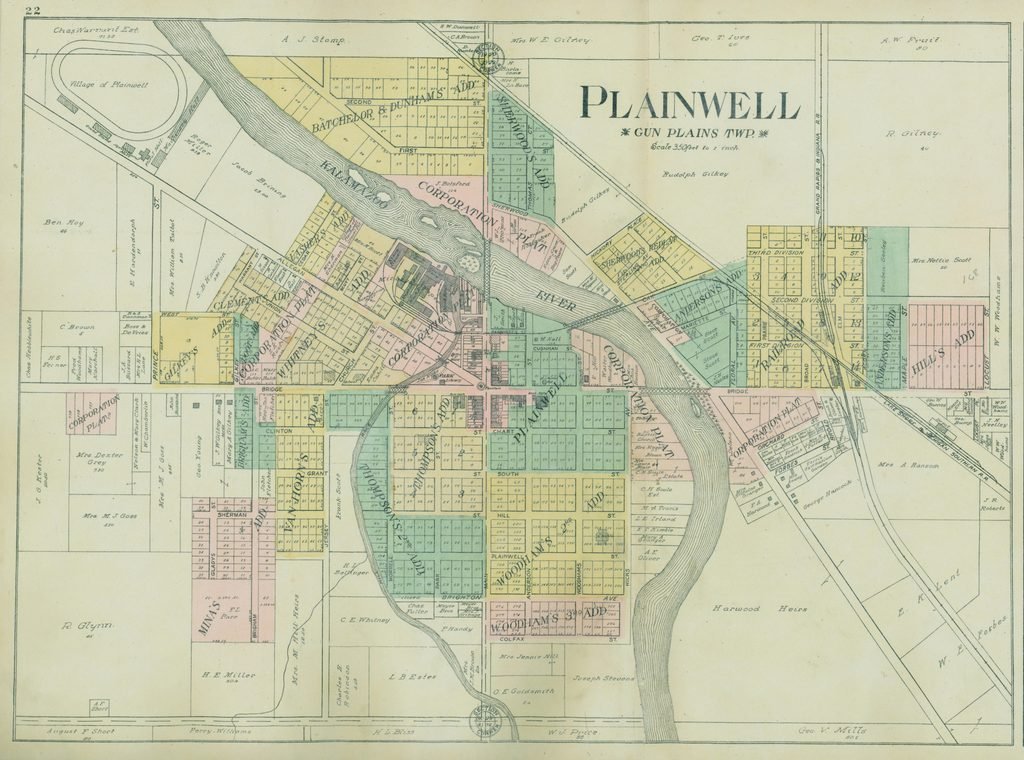
Plainwell, Michigan, owes its nickname to a construction project. In 1856, workers dug a 1½-mile mill race across a bend in the Kalamazoo River. The channel created the Island City and powered the mills that followed.
That fact gives the History of Plainwell Michigan an unusual starting point. Local investors and laborers made the island. Water, railroads, and roads then turned a rural junction into an industrial town.

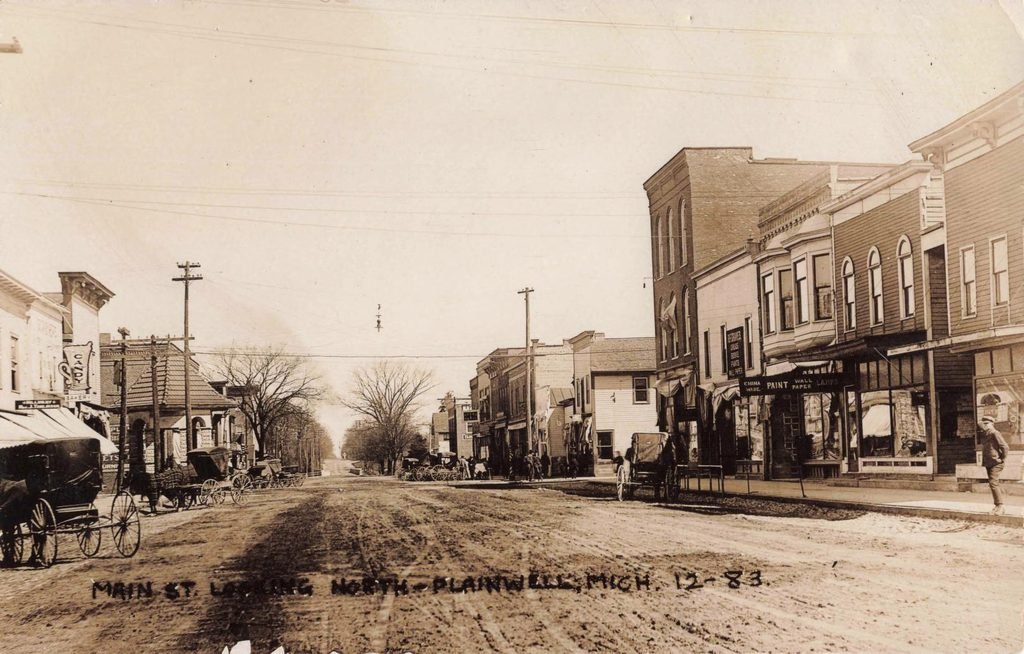
Table of Contents
Watch: Plainwell Michigan History – Trains, Paper and the Island City Story

A Town Forms at the Junction
A post office opened in 1833. By 1839, Bridge Street crossed the Kalamazoo River, but only three log cabins stood on the future city site. Growth quickened when plank toll roads met at today’s Main and Allegan streets between 1852 and 1854. Stage lines changed horses at the Junction, and the Plainwell House offered meals and lodging.

The village incorporated in 1869. Another Michigan community already used Plainfield, so Plainwell became the official name. Voters chose banker and businessman Joseph W. Hicks as the first village president.
History of Plainwell Michigan Begins With a Man-Made Island
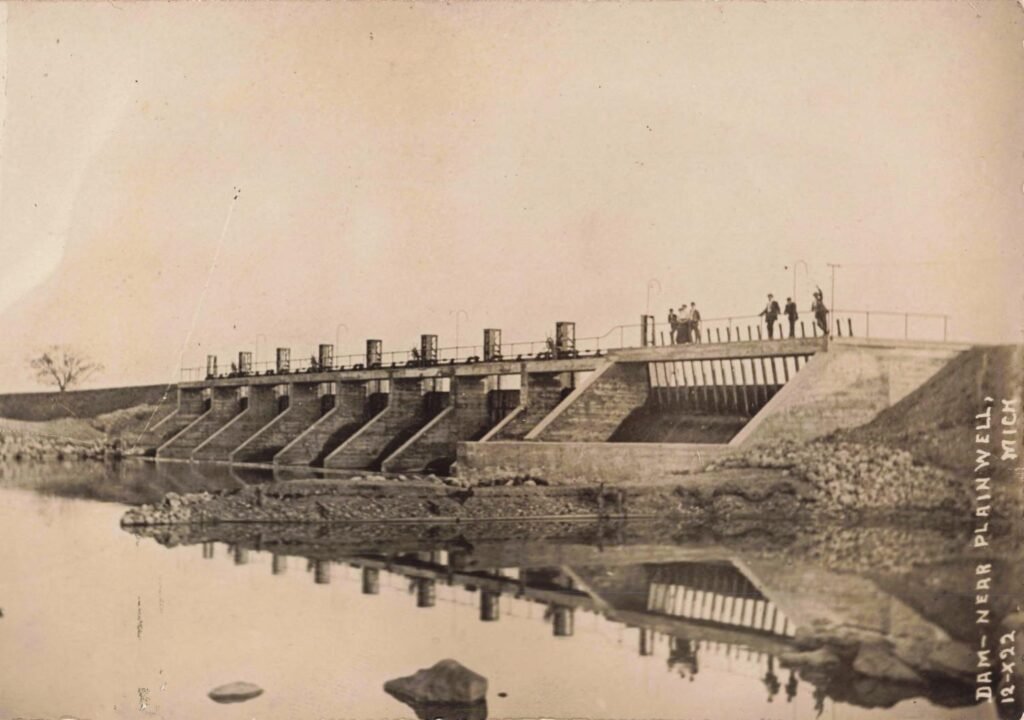
The river fell 16 feet over 1½ miles near the settlement. The Plainwell Water Power Company directed workers to cut a channel nine to 11 feet deep across the bend. The race became infrastructure for a sawmill, rake factory, grist mill, paper mill, public water system, fire protection and later electric generation.
Plainwell’s island identity came from industrial engineering. A channel built for machinery also shaped the street plan and civic center.

Two Railroads Open Four Directions

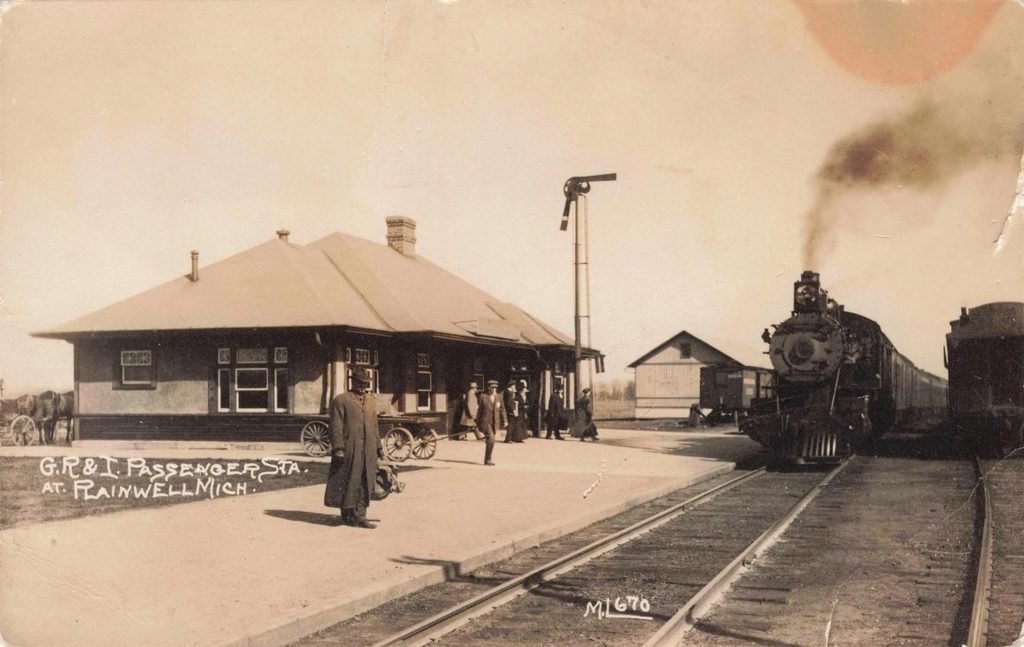
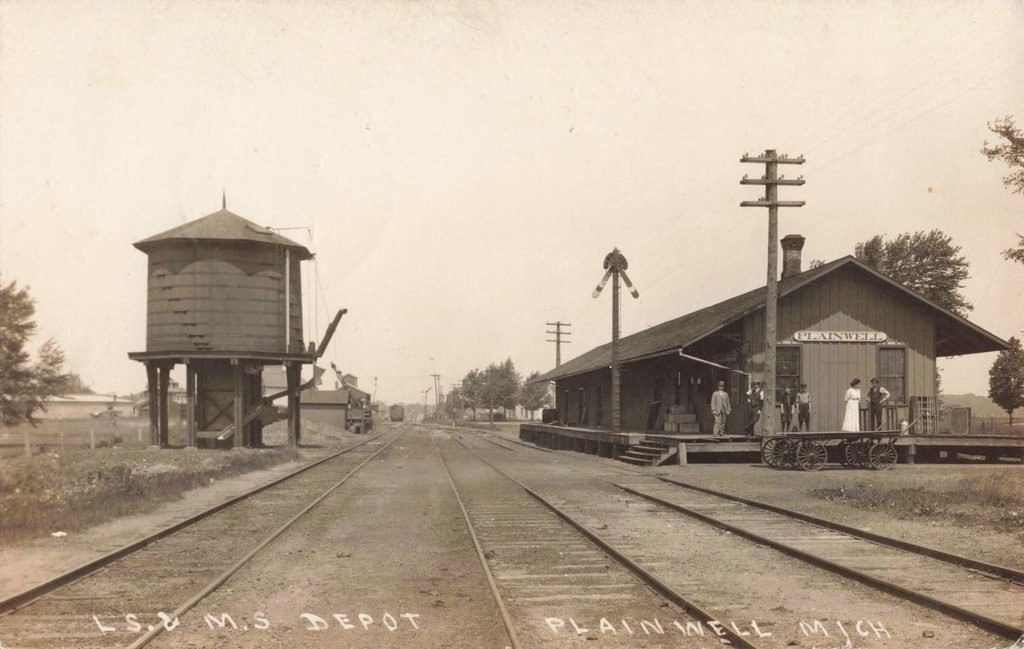
The Lake Shore and Michigan Southern arrived in 1868. The Grand Rapids and Indiana followed in 1870. Their tracks crossed east of the village, opening four directions of travel. Farmers shipped produce, mills moved supplies, and salesmen stayed at the three-story Lawrence House, built in 1874 and demolished in 1930.

The Eesley Mill Moved, and Plainwell Gained a Park
John F. Eesley came to Plainwell from Birmingham, Michigan, in 1881 and settled there in 1887. He bought a building erected about 1869, reportedly as a roller mill, and converted it into the Sunshine flour mill. He later bought the older steam-powered Merrill and McCourtie mill on North Main Street. The two Eesley mills were separate operations.
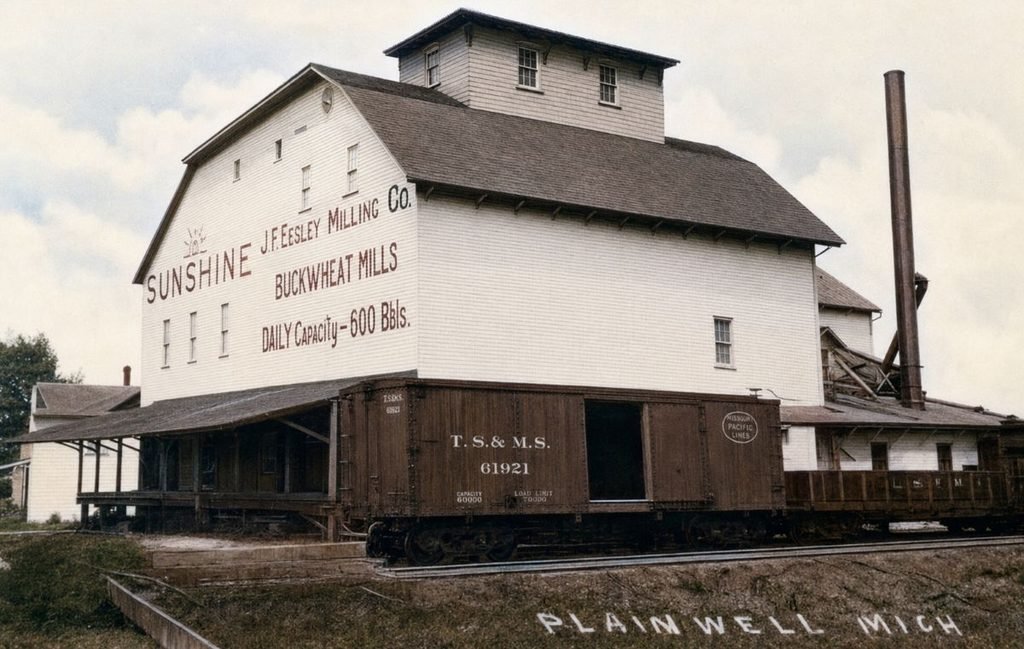
The Sunshine mill first stood at 119 West Bridge Street. In 1903, Eesley divided the building into two sections, moved it to 717 East Bridge Street, and connected it to an elevator erected there between 1870 and 1873. The National Register study dates the move to 1903; a City of Plainwell marker dates it to 1904.
At its height, the mill reportedly produced 600 barrels of buckwheat flour a day, ranking it second in the nation. Sunshine Brand flour traveled to eastern markets by rail. Eesley also established Eesley Power and Light Company in 1904. Its generator used water from the mill race, and a regulator added in 1912 helped prevent damaging voltage changes.

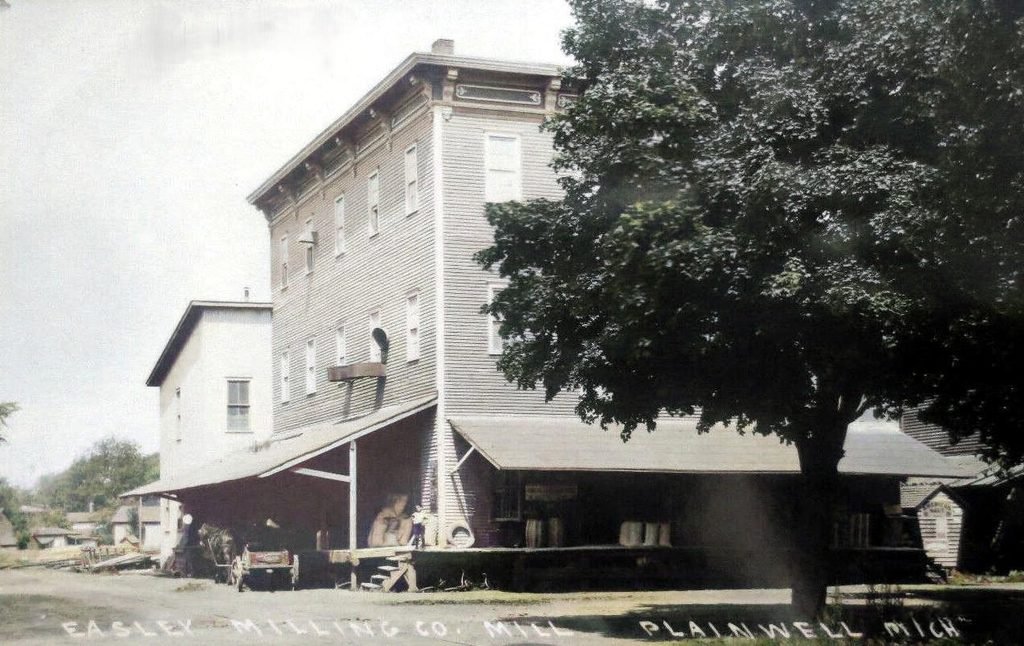
The move also changed downtown. Eesley traded land with implement dealers Ingraham and Travis, then donated the triangular Flat Iron property he received to the village. It became Hicks Park. The East Bridge mill survived, while the separate North Main mill burned in 1932. The City of Plainwell now lists Old Mill Brewpub and Grill at the historic 717 East Bridge Street complex.
The Paper Mill Becomes Plainwell’s Industrial Anchor
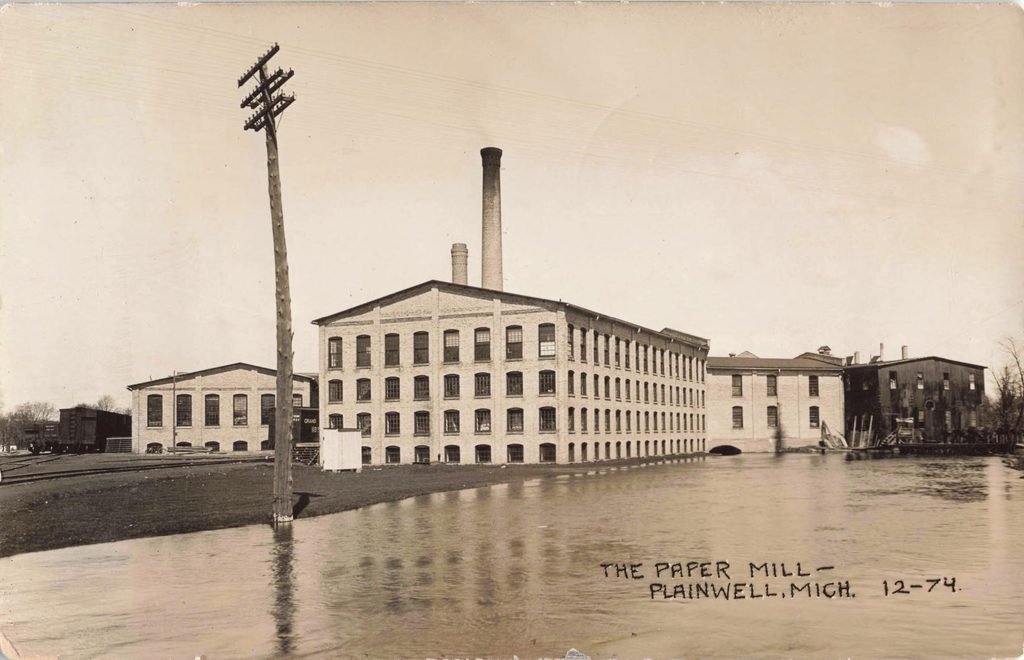
Michigan Paper Company was incorporated in 1886 by 25 local investors and began production at a rate of 8 tons per day in 1887. A rail spur reached the plant in 1905. Seven buildings went up in 1906 and four followed in 1910, when output reached about 50 tons a day.

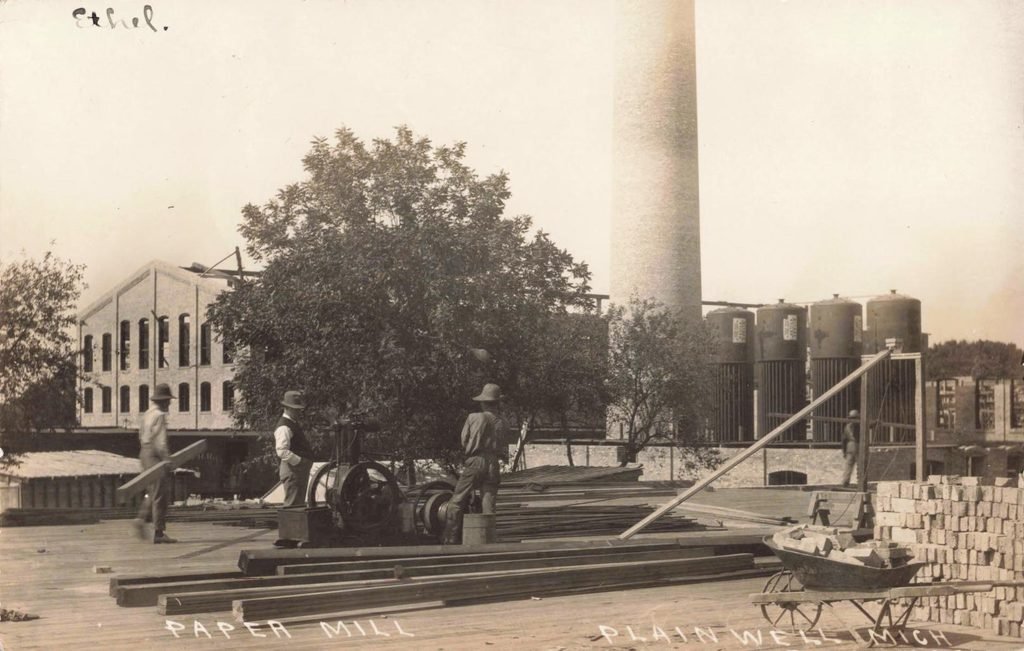
Its early buildings used heavy timber, thick floors, and brick walls in a system called slow-burning construction. The plant could still catch fire, but massive members were intended to weaken more slowly and reduce the chance of sudden collapse.

Main Street Trades Mud for Brick and Pavement

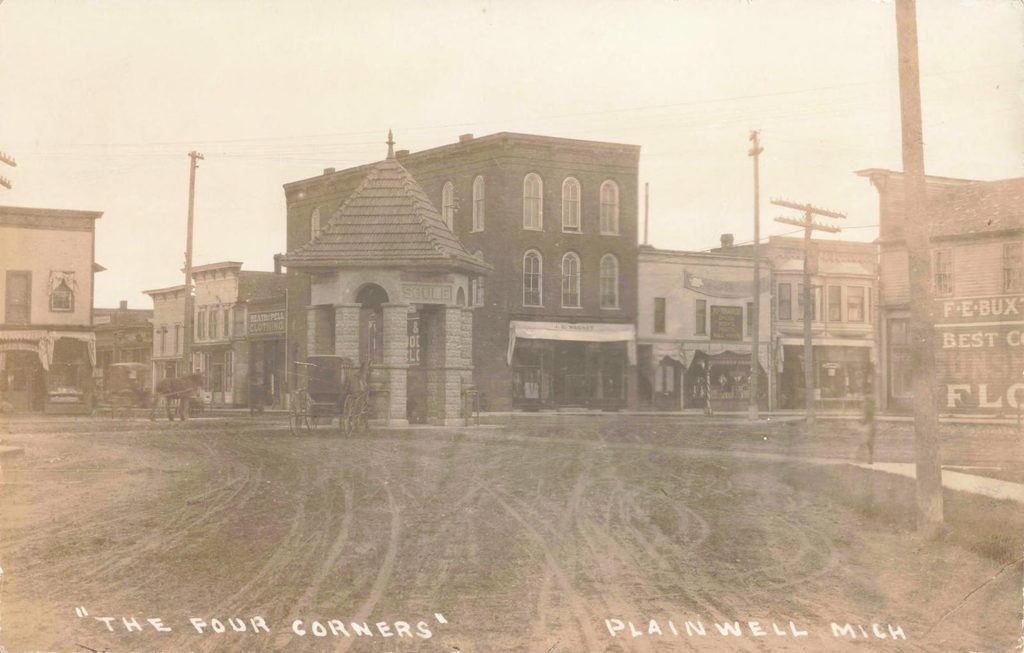
The History of Plainwell, Michigan, can be read in Main Street. Early views show ruts, dirt, and tethered horses. Merchants reportedly paid to have summer dust sprinkled. Concrete walks appeared around 1900, while wood fronts gave way to the 1904 Crispe Block and, in 1910, the three-story Spencer-Woodard Building.
A National Register study preserves a favored local tale from that period of construction. A circus elephant reportedly refused to cross a swaying bridge, but waded across the river, then entered the unfinished Spencer-Woodard Building and broke through its subfloor. The account is best treated as local lore rather than a complete incident record.

A Park Replaces a Mill
Hicks Park began with a 1903 land exchange. Mill owner John F. Eesley had his flour mill cut into sections and moved east, then gave the cleared triangle to the village. The park was dedicated during Plainwell’s 1907 homecoming and named for Joseph Hicks.

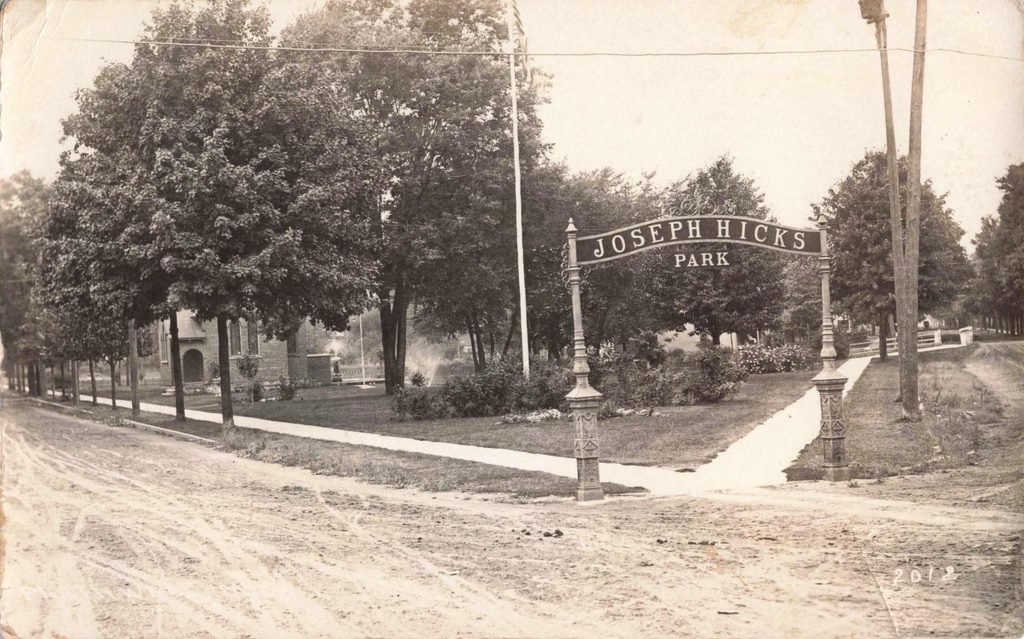
That year, Carrie Soule gave a memorial fountain for her late husband, banker George Gary Soule. Its basins served people, horses, and dogs. Cars later made its position hazardous. A 1953 collision destroyed much of it; a simpler 1970 replacement reused one of the original stones.

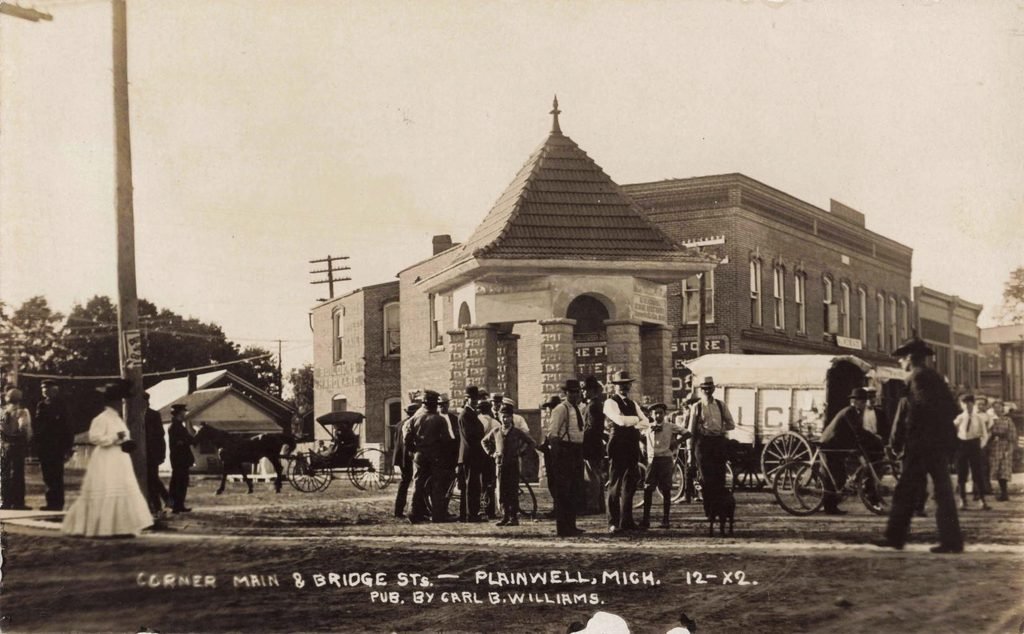
Cream, Music and Community Care

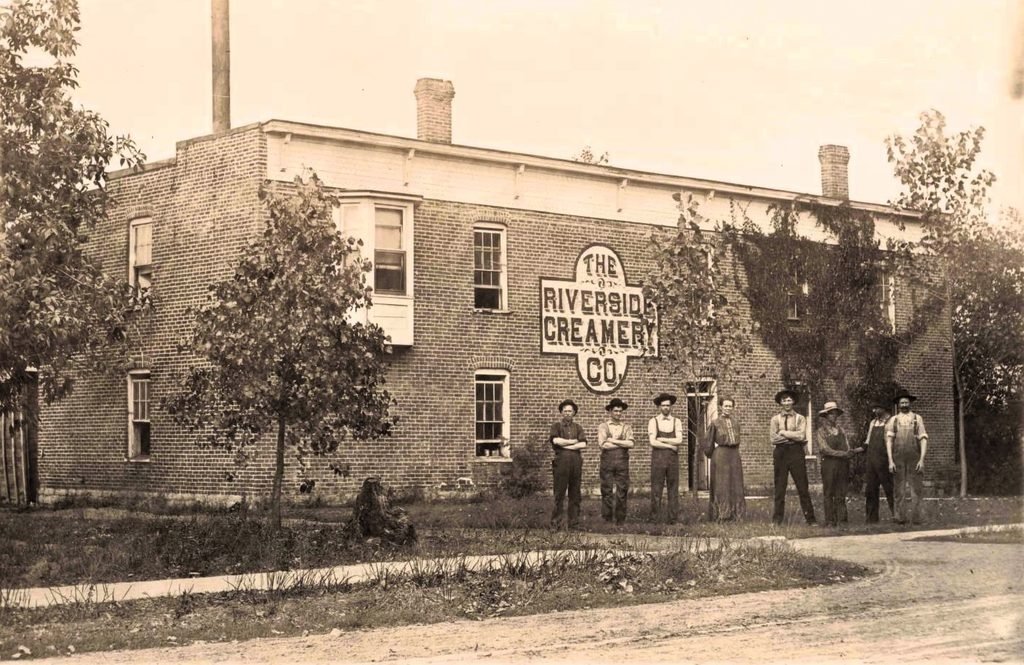
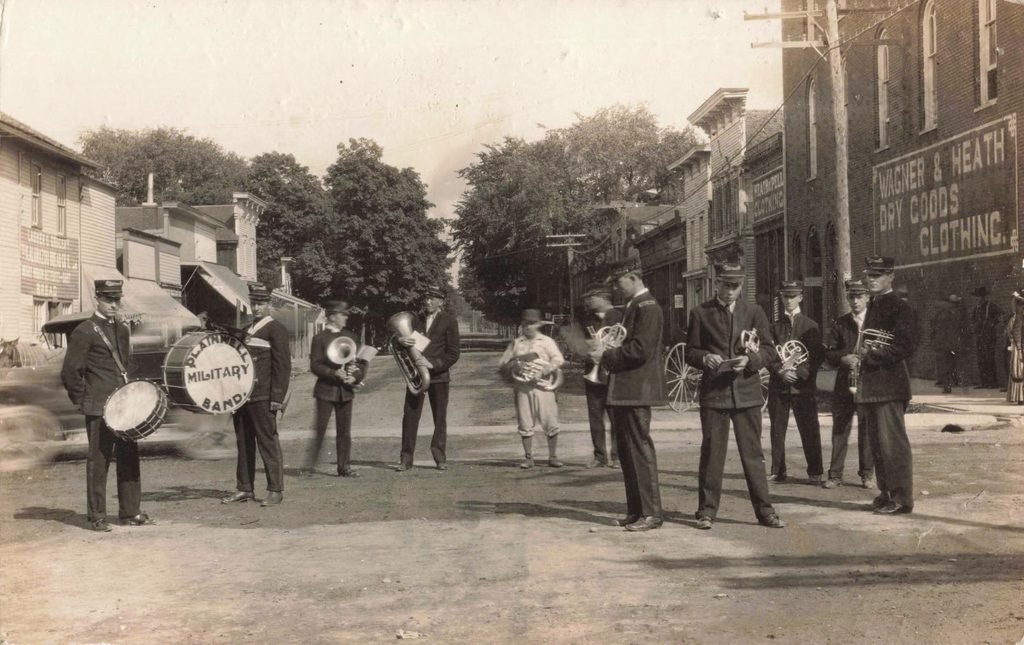
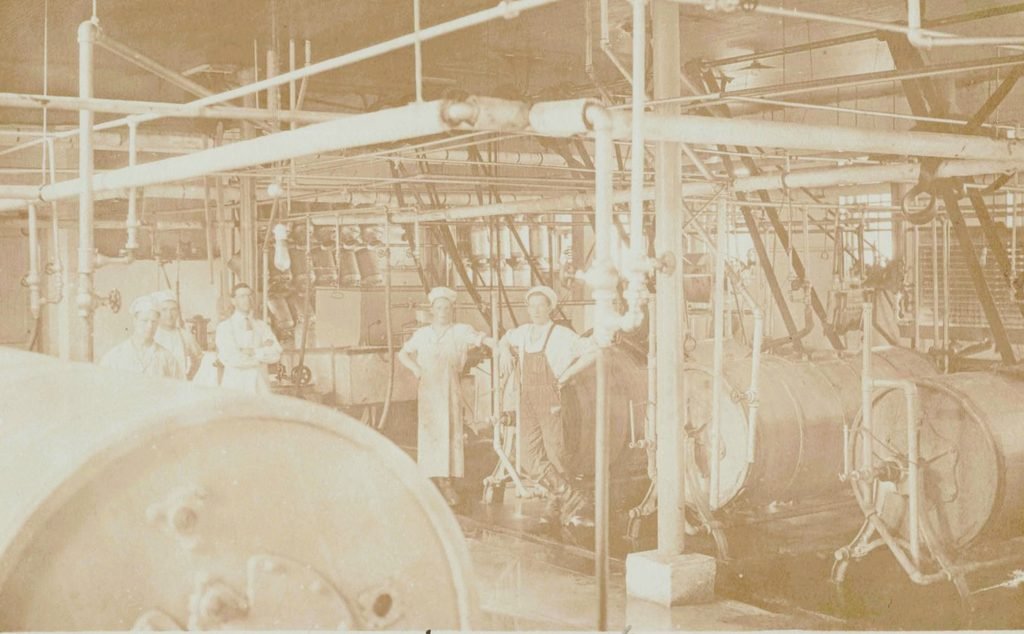
Albert Dean started Riverside Creamery in 1916 and became known for butter. Residents also formed bands, orchestras, lodges and reading groups. The Ladies Library Association began in 1868, while the Sun Theater opened in 1927 and enlarged its seating in 1940 for Gone With the Wind.

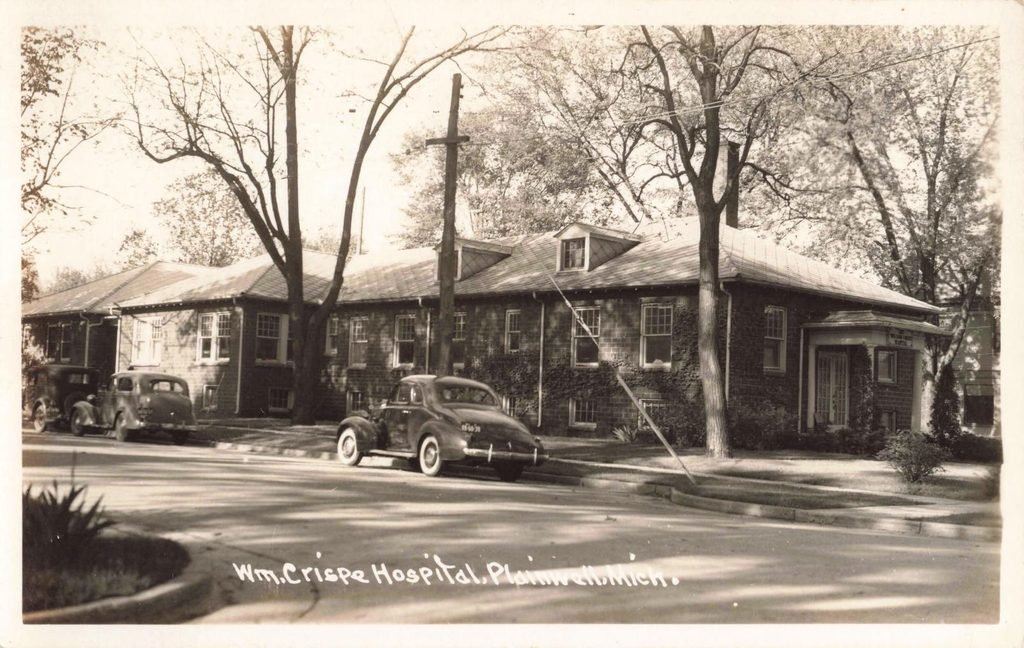
Local giving supported health care. The William Crispe Memorial Hospital opened with 10 beds in 1927, added laboratories through a 1938 Kellogg Foundation grant and completed a larger modernization in 1941.
The Automobile Changes the Junction Again
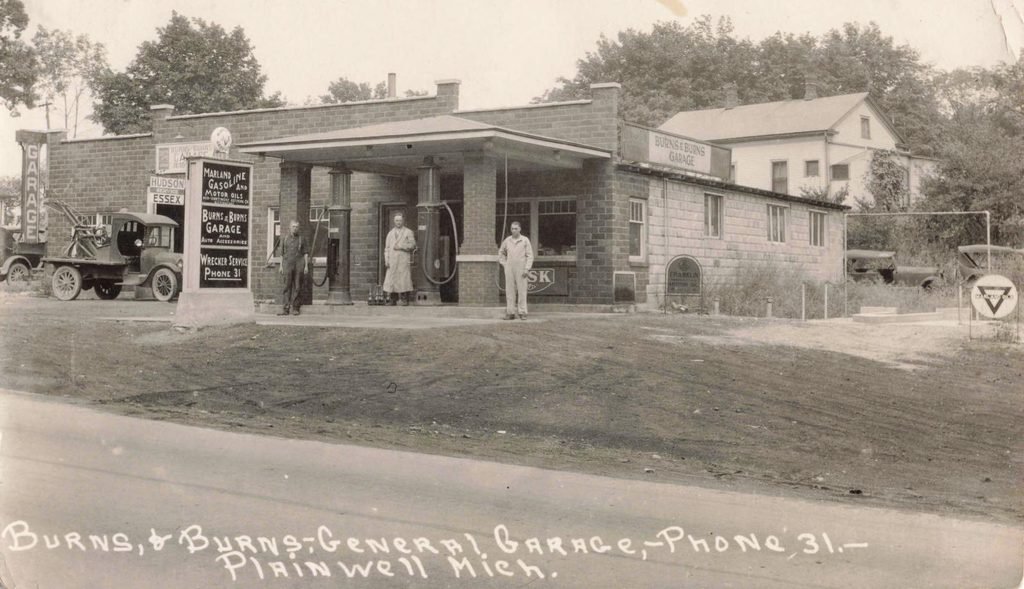
By the 1920s, Burns and Burns Garage sold fuel, oil, cars, repairs, and wrecking service. Later street views show pavement, traffic signals, and Michigan 131 and M-89 markers. Plainwell remained a junction, but motorists replaced most horse traffic.

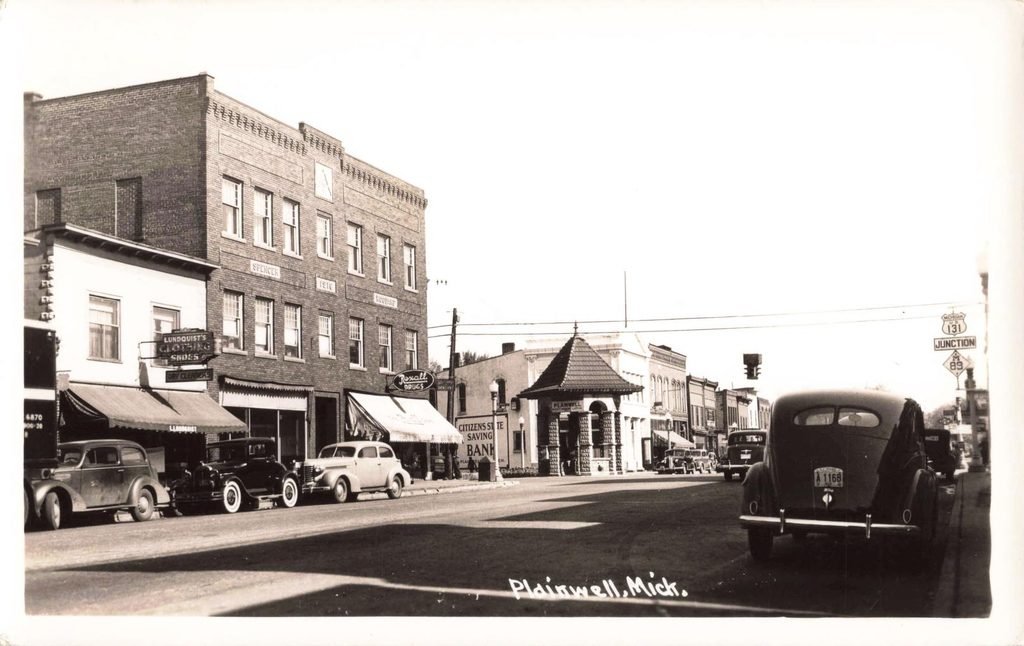
A late-1930s view captures both eras at once. Cars line the curb, route signs direct highway traffic and the Soule Fountain still occupies the old junction. The town had modernized without clearing away every feature of the horse age. That overlap makes the scene more useful than a simple before-and-after comparison.
Plainwell Reaches the 1940 Turning Point
Fire destroyed two North Main Street feed mills in 1932. The Michigan city of Plainwell became a fifth-class city in 1934 and elected Gerald Brown as its first mayor. By 1940, it had a modernized theater, a larger industrial base and streets built for cars.
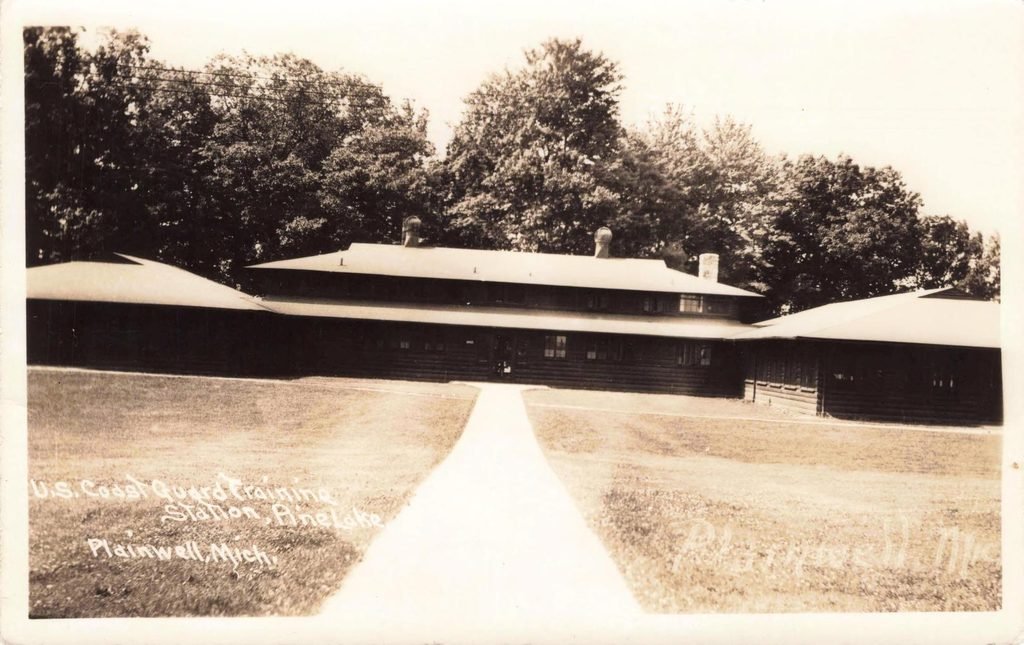
One wartime card extends past the article’s limit. It identifies a Coast Guard station at Pine Lake near Doster, using a Plainwell postal address. The site was outside downtown and operated during World War II. The distinction shows why historians must separate visible evidence from postcard labels and later assumptions.
People Who Shaped the Story
Joseph W. Hicks: Plainwell’s first village president, a banker and Michigan Paper Company director who also taught and served as a Kalamazoo College trustee.
John F. Eesley: A mill owner who exchanged land, moved his flour mill in sections and gave the triangular site that became Hicks Park.
George Gary and Carrie Soule: George helped found the local bank. After his death, Carrie gave Plainwell its 1907 memorial drinking fountain.
John Crispe and Katherine Crispe Havens: John, identified in the National Register study as Plainwell’s first local Civil War enlistee, later ran a shoe factory. Family gifts helped create the William Crispe Memorial Hospital.
Albert Dean: Founder of Riverside Creamery in 1916, first known for butter and later linked to a long local ice-cream tradition.
Gerald Brown: Plainwell’s first mayor after voters approved city status in 1934.
Why the History of Plainwell Michigan Still Holds Attention

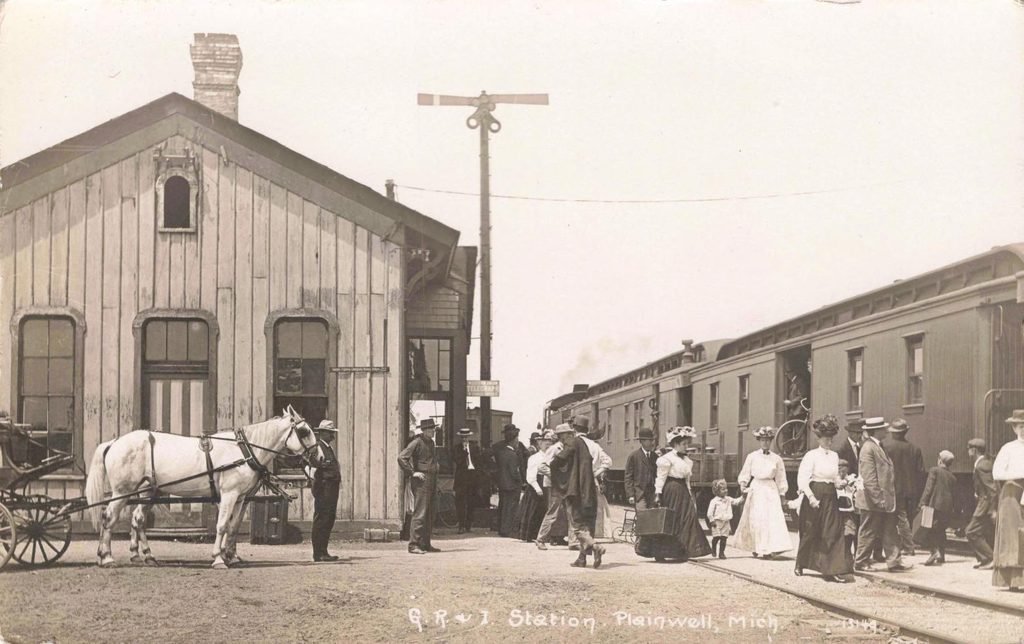
The history of Plainwell Michigan follows one engineered waterway through its many uses. The mill race created the island, powered factories, and helped supply public water. Railroads carried products outward. Citizens added a park, a fountain, a library, a theater, and a hospital. Plainwell’s distinction came from practical decisions that accumulated into a civic identity made by its own people.
Works Cited for the History of Plainwell Michigan
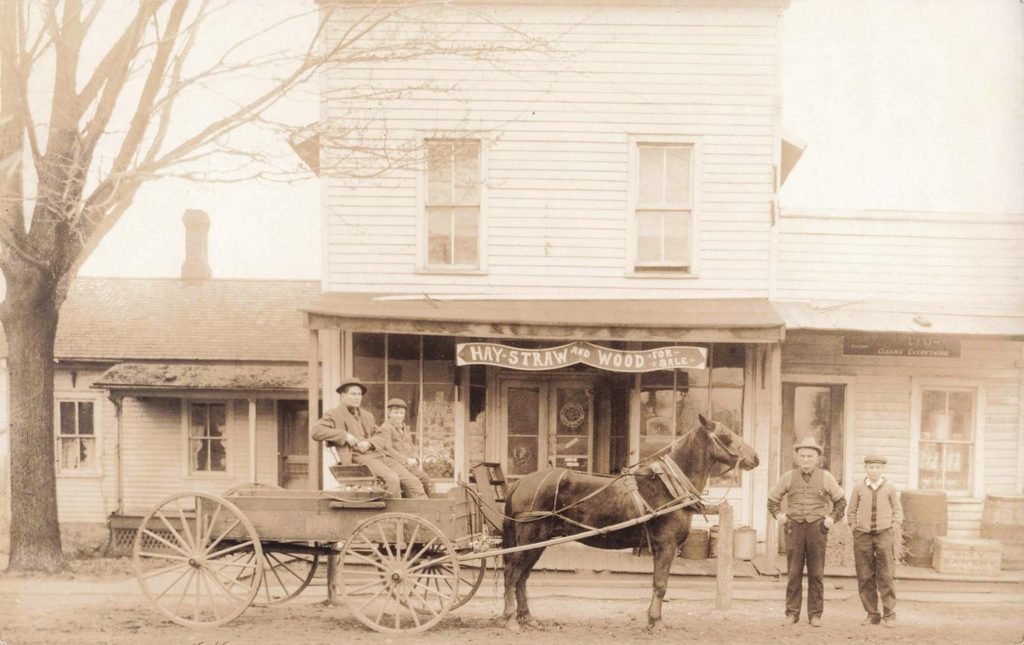
That is why the history of Plainwell Michigan remains more than a list of dates. The town’s old structures show how water, work, and civic ambition met in one small place. Plainwell still carries that pattern in its streets, its mill buildings and the green triangle at its center.
- City of Plainwell. Parks and Recreation. City of Plainwell, accessed 30 Aug. 2026.
- Daily Globe. Coast Guard Training Station at Doster Near Pine Lake. 22 Sept. 1942, p. 3.
- Historical Marker Database. Early History of Plainwell. Marker erected by the City of Plainwell, accessed 30 Aug. 2026.
- Historical Marker Database. Soule Memorial Fountain. Marker text, accessed 30 Aug. 2026.
- Michigan Department of Labor and Economic Opportunity. Mission, Values & History. Michigan Career and Technical Institute, accessed 30 Aug. 2026.
- Michigan Economic Development Corporation. Dean’s Ice Cream. Michigan.org, accessed 30 Aug. 2026.
- MichiganRailroads.com. Station: Plainwell, MI. Accessed 30 Aug. 2026.
- Weir, Lynne B., and Mary Grace York. Historic Resources of Plainwell, Michigan. National Register of Historic Places Multiple Property Documentation Form, National Park Service, Sept. 1990.
- WWMT. City of Plainwell Celebrates 150 Years of History. 16 Jan. 2019.

