


Barnes-Hecker Mine Disaster – 51 Men Lost in Michigan’s Deadliest Underground Catastrophe
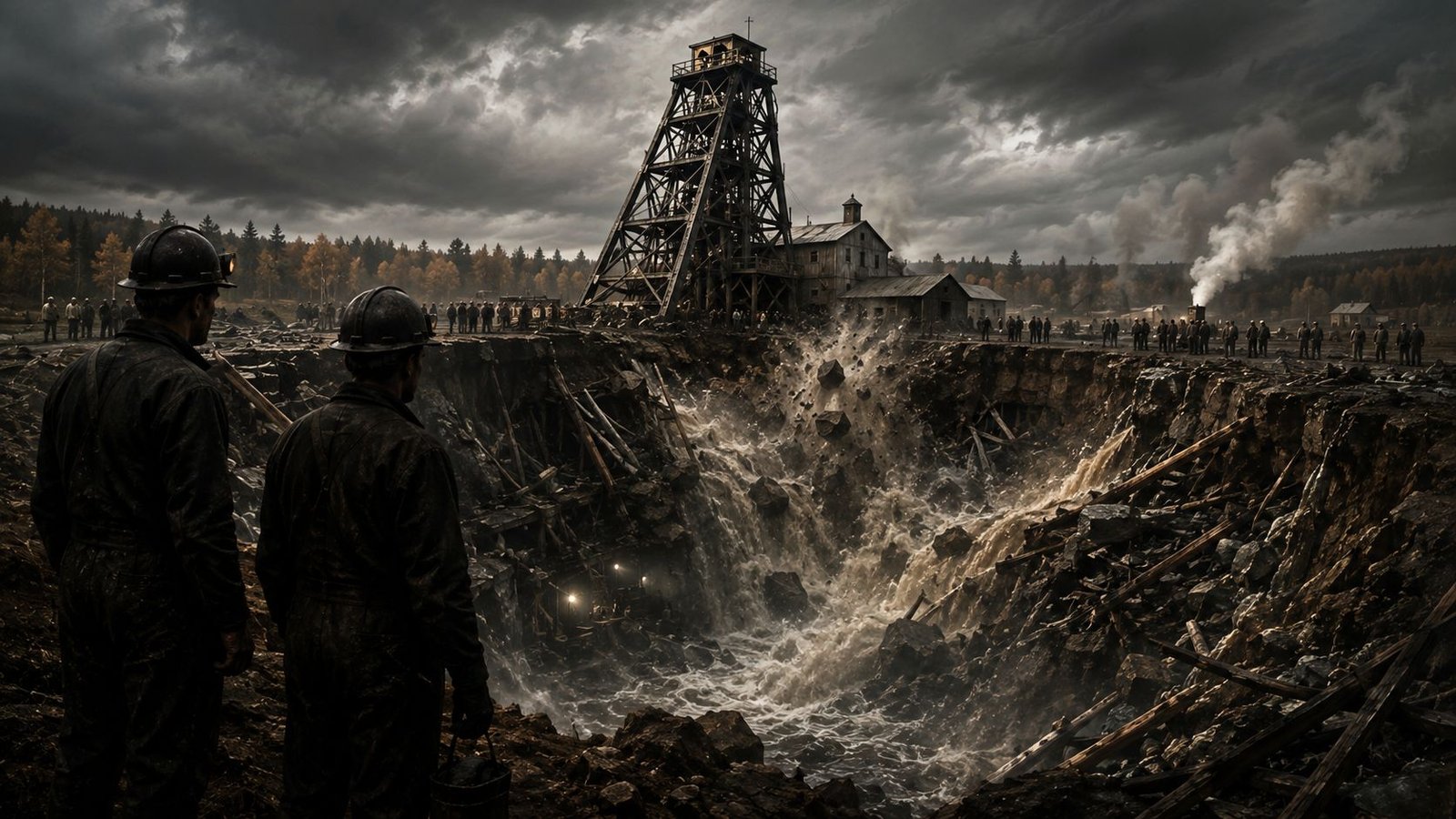
A routine blast triggered a violent collapse of a mine near Ishpeming in 1926. The Barnes-Hecker mine disaster killed Fifty-one men, and 41 remain beneath the flooded mine.
At 11:20 a.m. on Nov. 3, 1926, Rutherford “Wilfred” Wills was operating a small electric locomotive 800 feet beneath Michigan’s Upper Peninsula.
A scheduled blast had just sounded in another section of the Barnes-Hecker Mine, about 4 miles west of Ishpeming. Such blasts were part of the daily routine. Crews broke loose the iron ore shortly before lunch, then returned to the surface while the dust cleared.
This blast was different.

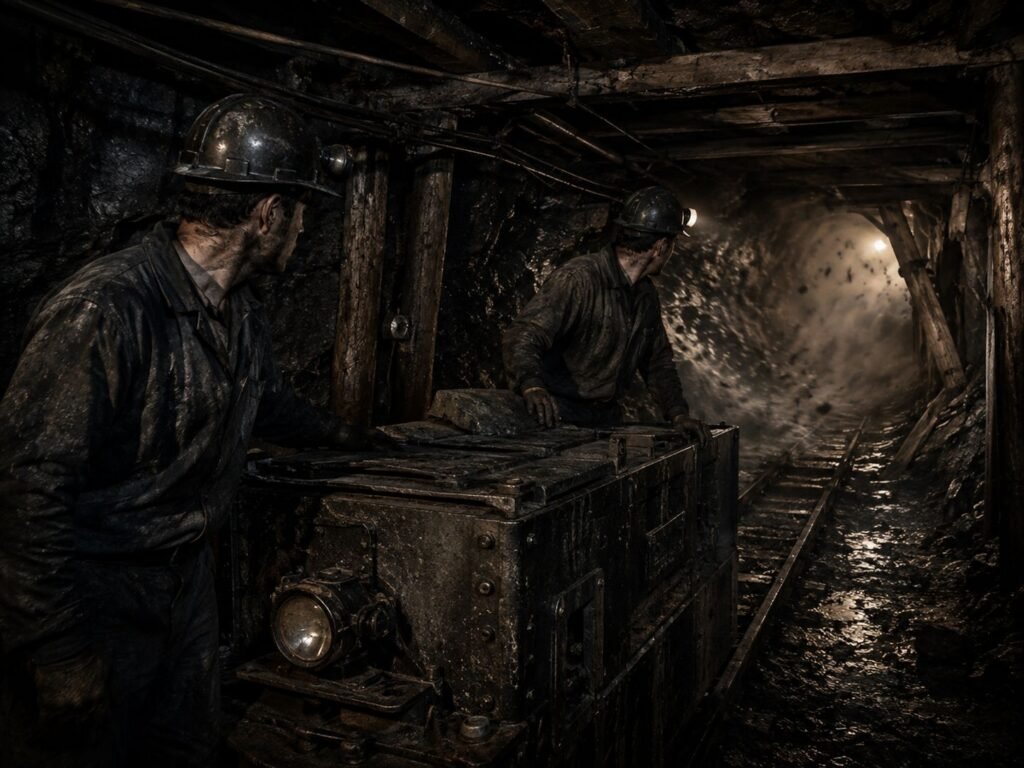
Wills felt pressure against his ears. A powerful gust rushed through the tunnel and extinguished the carbide lamp on his helmet. The electric lights along the track dimmed, flickered and went out.
Then came the sound of the earth moving.
Within minutes, water, mud, trees, boulders, sand and gravel poured into the underground workings. Fifty-one men died in what the Historical Society of Michigan identifies as the deadliest mining disaster in state history. Ten bodies were recovered. The other 41 remain inside the mine nearly a century later.
Only Wills escaped.
Table of Contents
Listen: Buried Alive: Michigan’s Deadliest Mine Disaster | The Barnes-Hecker Mine Collapse of 1926
A Mine Built Beneath Unstable Ground
The Barnes-Hecker Mine was part of the Marquette Iron Range, where mining had driven the growth of Ishpeming, Negaunee and nearby settlements since the 19th century.
Iron ore from the region traveled by rail to Lake Superior docks. Freighters carried it through the Great Lakes to steel mills that supplied the nation’s factories, railroads, shipyards and construction industry.
The industry offered steady work, especially to immigrant families who arrived from Finland, Italy, Cornwall, Sweden and other parts of Europe. But the work placed miners hundreds of feet underground, where darkness, falling rock, explosives and water were constant threats.
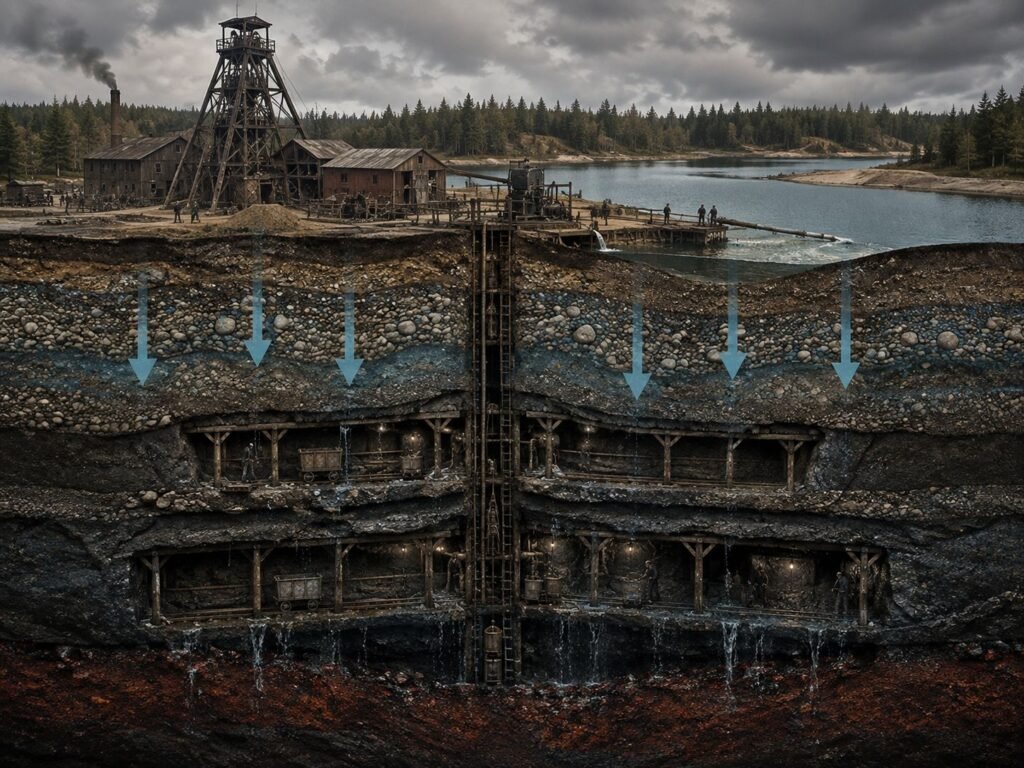
Development of the Barnes-Hecker Mine began in 1917 under the Cleveland-Cliffs Iron Co. The ore deposit appeared valuable, but it sat beneath as much as 200 feet of waterlogged glacial sand and gravel. Early mining records described the saturated material as quicksand.
Engineers placed the main shaft northwest of the ore body, where the unstable surface layer measured about 36 feet thick. Even there, groundwater and loose material repeatedly slowed construction.
The shaft was completed in 1919 and reached a depth of 1,016 feet. Miners drove three main tunnels toward the ore body at depths of approximately 600, 800 and 1,000 feet.
Water remained a major problem throughout the mine’s short life. Surface pumps drained North Lake, which sat above part of the underground ore deposit. By the end of October 1926, the company had pumped more than 2.5 billion gallons of water from the active mine workings.
Barnes-Hecker reached full production in 1926.
Days later, it collapsed.
An Ordinary Morning in Iron Country
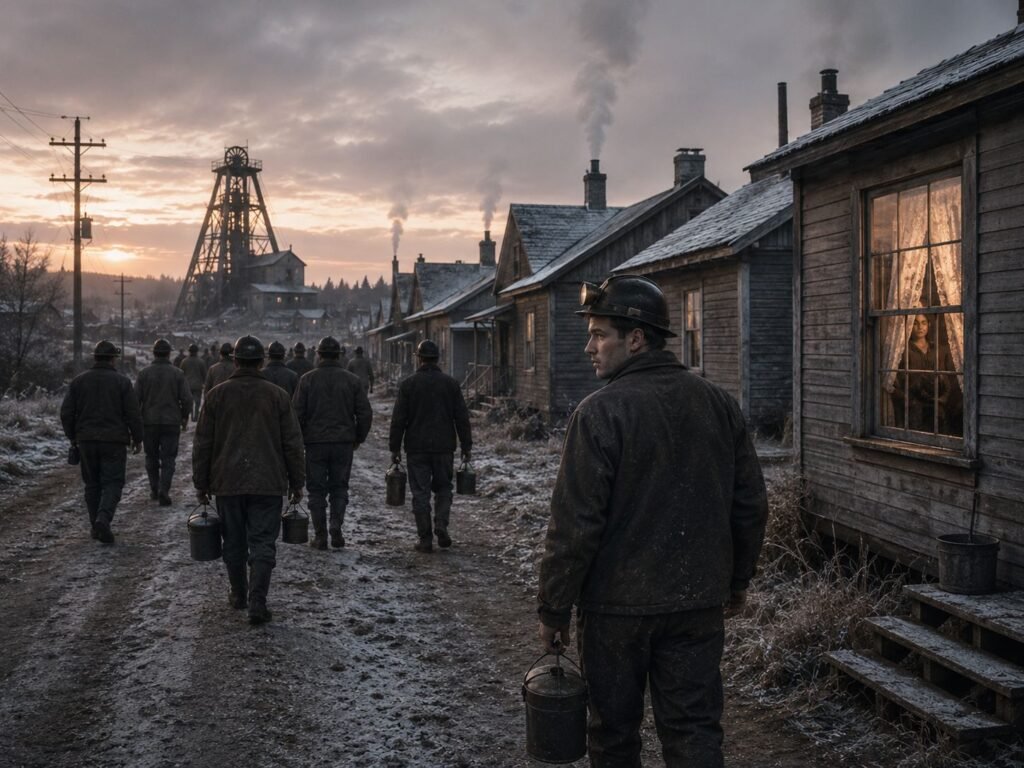
The disaster began as a normal Wednesday morning.
Wills was 22 and had been married for less than two months. His wife, Bruna, was 17. She had immigrated from Italy in 1919 and was still learning English. After breakfast, Wills walked from his home in the small Barnes-Hecker Location settlement to the mine’s changing house. Several relatives and friends went with him.
They included his stepbrother and mine captain, William Tippett; his best friend and wedding attendant, Joe Mankee; and his father-in-law, Sam Phillippi. Another stepbrother, Walter Tippett, was starting his first day at Barnes-Hecker. Tippett had worked as a Marquette police officer and a guard at the state prison. With a growing family, he wanted employment closer to home.
He also believed mining would be safer.
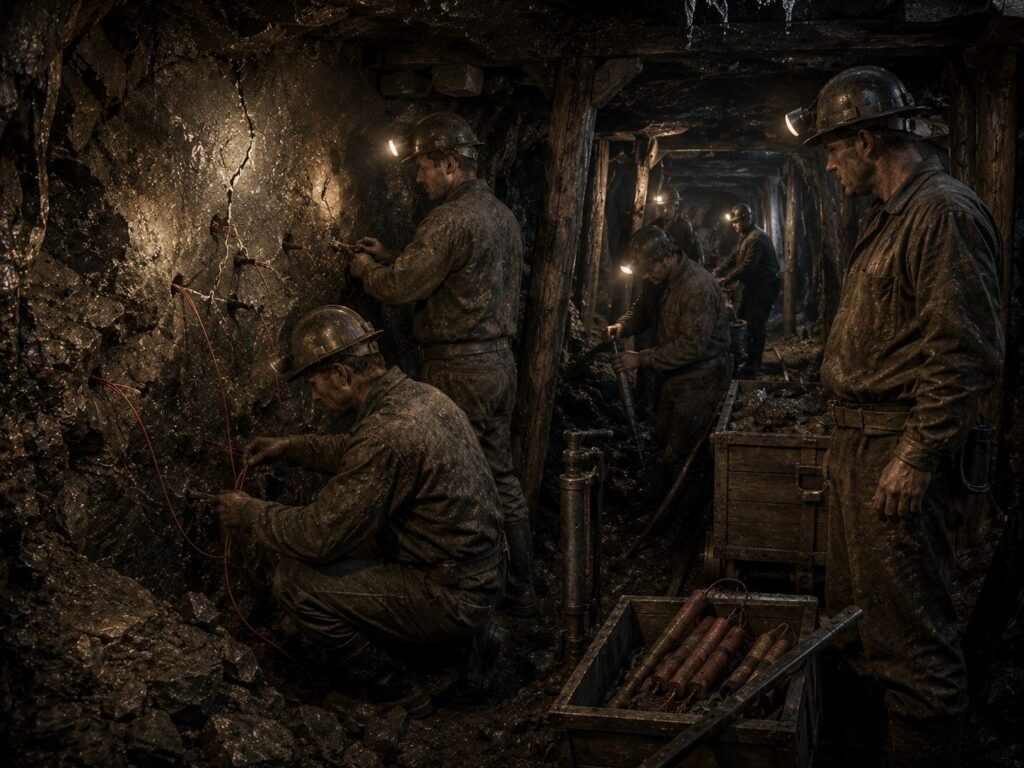
The men changed into work clothes, put on their boots and entered the cage that carried them down the shaft. Nothing unusual was reported during the morning shift. Shortly before lunch, workers prepared a routine blast in an upper section of the mine.
At 11:20 a.m., the charges went off.
The Mine Begins to Collapse
The precise chain of events could never be reconstructed because no one survived in the area where the collapse began. Official historical accounts indicate that the blast was followed by a massive cave-in in the western workings. Other records indicate that nearby drilling may have precipitated the collapse. Nevertheless, the underground collapse moved upward until the surface broke open, creating a large sinkhole.
Trees, rocks, and saturated earth dropped into the opening. Water rushed through the broken ground and flooded the mine.
Wills and brakeman Jack Hanna were between the working area and the main shaft. They ran through the dark tunnels from memory. At the shaft, they found skip tender Joe Mankee. The electrical system had failed, leaving the mine cage inoperative.
Their only route out was a wooden emergency ladder. It extended 800 feet to the surface.
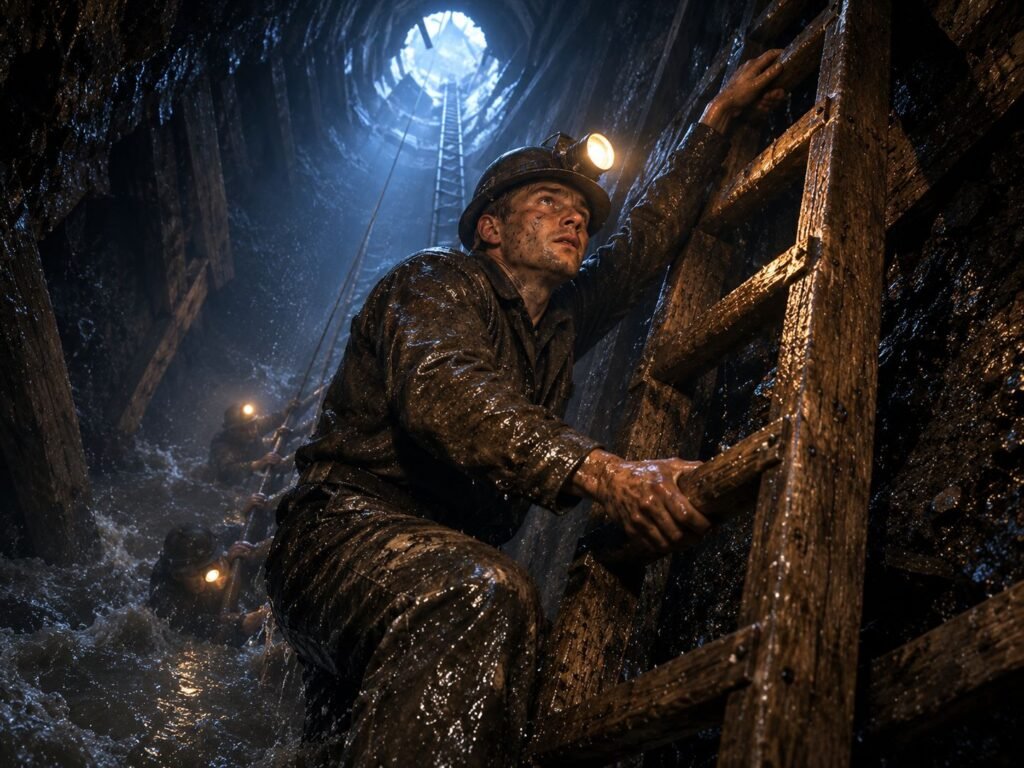
Wills, Hanna, and Mankee began climbing. At the 600-foot level, another miner, John Kirby Jr., joined them.
Four men started up the ladder. Only one reached the top.
The rising water overtook Hanna, Mankee and Kirby. Wills continued climbing through the dark, pulling himself upward as the flood filled the shaft below him. Historical accounts place his climb at slightly more than 10 minutes. When he reached the surface, he collapsed with exhaustion and severe leg cramps.
The mine reportedly filled to within 185 feet of the surface in about 15 minutes. There was no time for an organized evacuation.
The Whistle Calls the Families
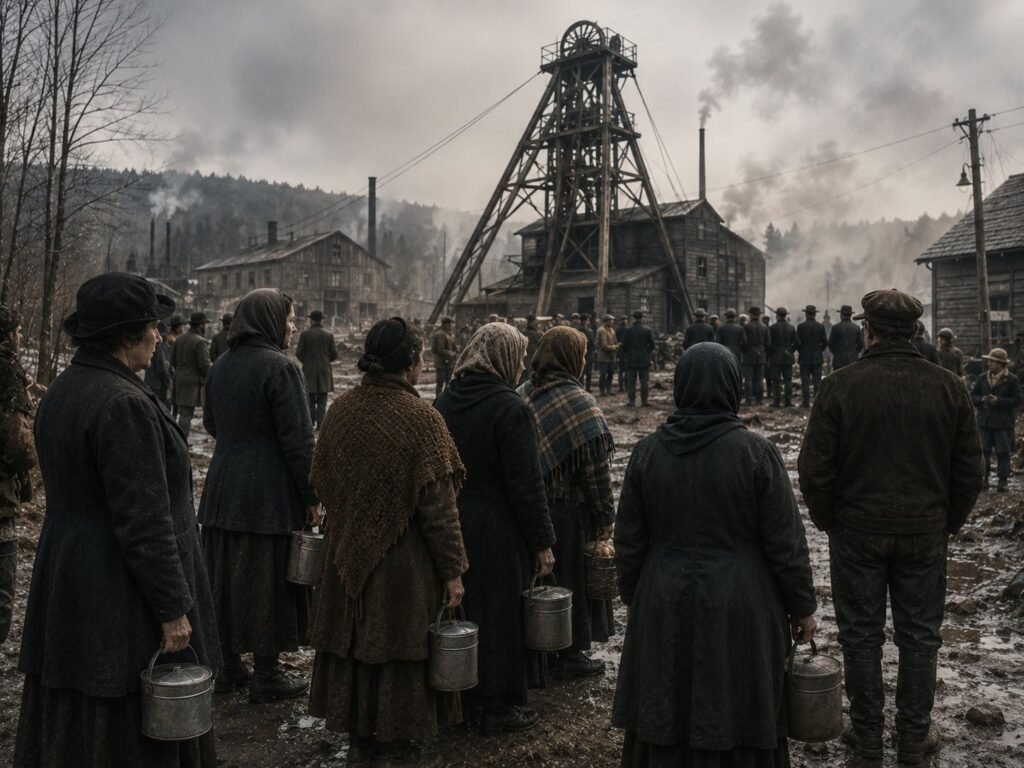
On the surface, the mine whistle began sounding an emergency. Families in mining communities understood its meaning. The whistle did not merely signal trouble at the mine. It told wives, parents, and children that someone they loved might not be coming home. Bruna Wills was walking toward Barnes-Hecker carrying lunch pails for her husband and her father. A neighbor drove past and shouted that the mine had caved in.
She ran toward the shaft house with the lunch pails still in her hands. There, she learned that Wilfred had survived. Her father had not.
Dozens of families gathered near the mine, waiting for information. The crowd included women who had been bringing fresh lunches to the day-shift workers, a common practice at Barnes-Hecker. At first, some hoped men had found an air pocket or reached a connecting passage. The mine had a tunnel leading toward the nearby Morris Mine, offering a possible escape route.
Seven men apparently tried to use it, including Marquette County Mine Inspector William Hill. They were overtaken before reaching safety.
Michigan Public reported that the disaster sent “ripples of shock” through the surrounding communities as families gathered near the mine hoping for a rescue. Photographs taken that evening show men, women and children standing near the headframe, waiting in the cold for news.
The news did not improve.
Recovery Efforts Bring Back Only 10
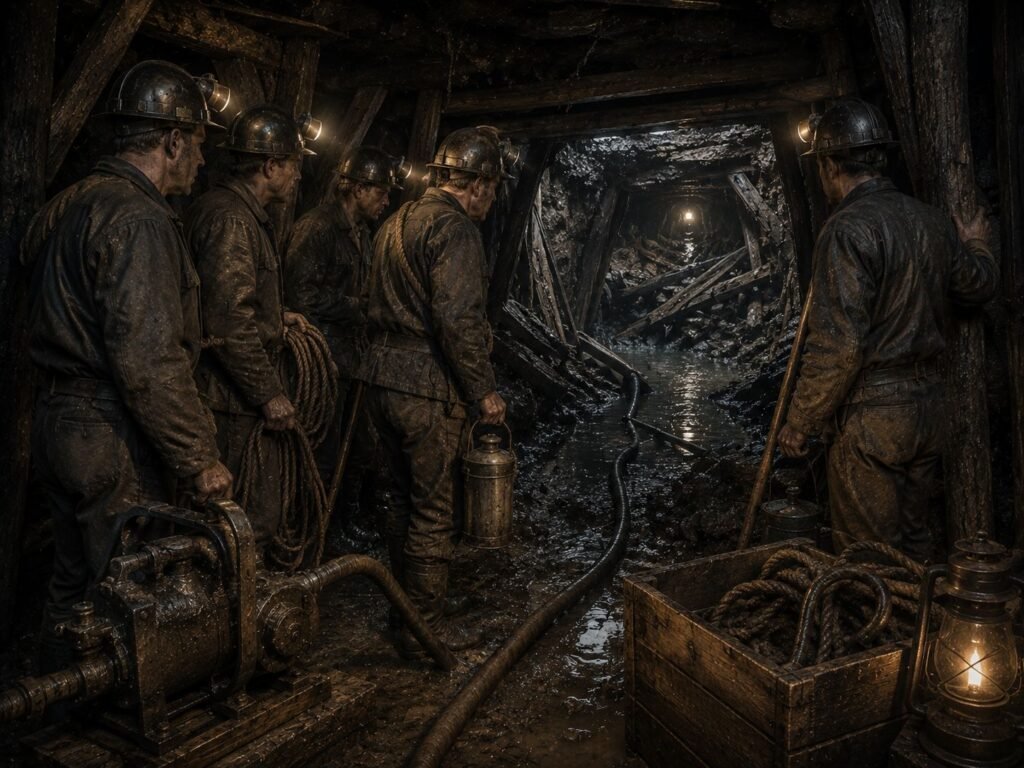
Crews recovered three bodies near the main shaft and seven from the tunnel leading toward the Morris Mine. The condition of the mine made further recovery impossible. Water, sand, ore and collapsed rock had destroyed the underground passages. Reentering the workings would have placed more men at risk.
The Barnes-Hecker Mine was abandoned. Forty-one victims were left underground. The dead left behind 41 widows, including five pregnant women, and 132 children. The loss spread through the small mining settlements west of Ishpeming, where families were connected by work, marriage, school and church.
Children struggled to understand why their fathers had vanished. Clifford Trudell was walking home from school when someone told him the mine had collapsed. His father, Louis Trudell, was working the day shift.
Clifford sat on the family fence and waited as he had done on other afternoons. His father never came home.
“You were so young you didn’t realize death,” he later recalled.
Was the Disaster Preventable?
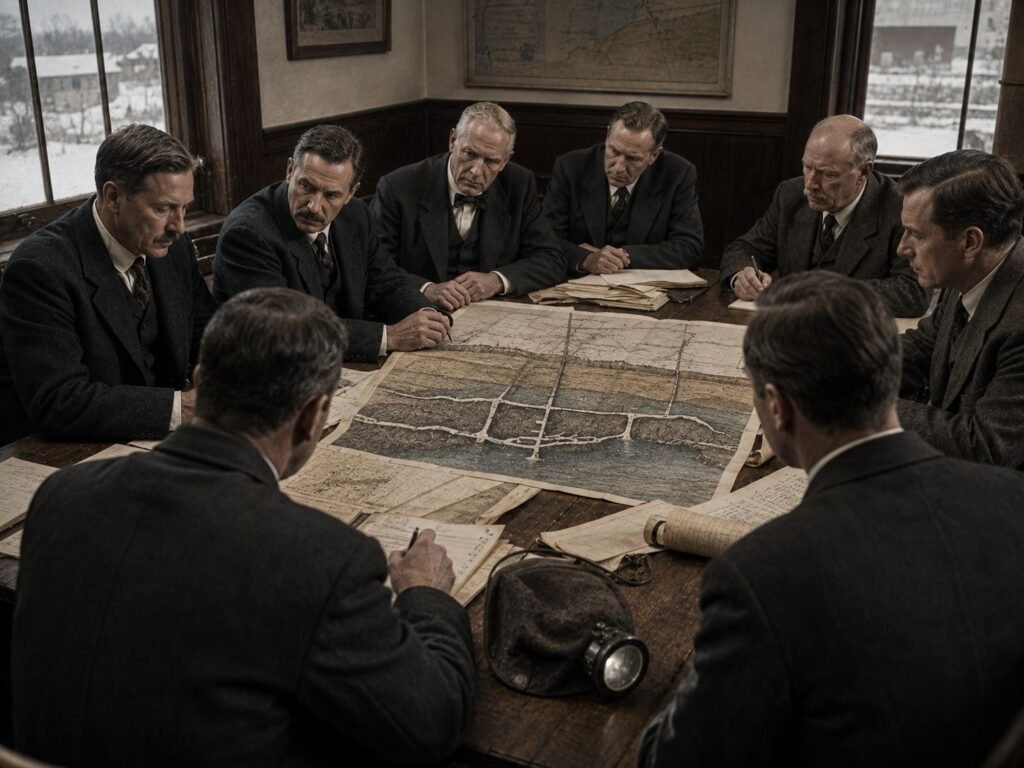
The official investigations did not hold Cleveland-Cliffs legally responsible.
Company reports described the collapse as “unavoidable” and “non-preventable.” The deaths were classified as a risk of the occupation. The state geologist and the Marquette County coroner’s office also concluded there had been no company negligence.
Those findings settled the legal question at the time. They did not end the historical debate.
The company knew the ore body sat beneath deep layers of saturated glacial material. Water and unstable rock had slowed the mine’s construction. Pumps had removed billions of gallons from underground areas before the collapse.
None of those facts proves that company officials knew a catastrophic failure was about to occur. However, they show that Barnes-Hecker was never an ordinary mine. It was an operation built beneath unstable, water-soaked ground. Its success depended on holding back forces that miners could not see and engineers could not fully measure.
The troubling point is that the mining method used at Barnes-Hecker was considered an accepted approach for extracting soft iron ore. Michigan’s deadliest mine disaster did not necessarily begin with an obviously reckless decision. It occurred while the mine was following practices the industry considered reasonable.
That may be the most important lesson of Barnes-Hecker. Accepted practice is not the same as proven safety. The federal Mine Safety and Health Administration notes that large mine disasters became less common through improved research, technology, enforcement and prevention programs. The agency also warns that preventing another disaster requires continued attention from companies, workers and government.
Compensation Could Not Replace the Dead

Cleveland-Cliffs paid compensation to eligible widows and dependent families under Michigan law. Company President William Mather ordered the weekly payments doubled. The money helped families cover food, housing and other immediate needs. Some victims’ sons later received offers of work when they became old enough.
Still, the compensation system reduced a permanent human loss to a payment schedule. A family had lost its wage earner. Children had lost their father. A widow was left to raise several children alone.
The company issued checks. The mine stayed closed.
The Survivor Never Fully Escaped

Wills never returned to underground mining. He and Bruna moved to Flint, where he worked in security at a Buick plant for 32 years. He lived until 1973, but memories of the disaster followed him.
In a 1962 interview, he described the nightmares and the sound of the flood returning in his mind. “I guess I climbed out of that mine a hundred times,” he said. Wills had escaped the water, but he carried the mine with him.
He had watched three men begin the ladder climb and vanish below. His father-in-law, best friend and relatives died underground. As the sole underground survivor, Wills also became the only person able to describe the first moments of the disaster from inside the mine.
His account tells what happened near the shaft. It cannot tell what happened farther below. No one survived there to explain what the miners saw, where they ran or whether they understood the scale of the flood before it reached them.
Barnes-Hecker Becomes a Burial Ground
The mine site remained on private property for years. The sinkhole filled with water, and the former industrial site became quiet.

But the water-covered opening was not simply an abandoned mine. It was a grave.
The Marquette Regional History Center and other local organizations have worked to preserve family photographs, letters and records as the disaster approaches its 100th anniversary. The History Center held digitization events in March 2026 so descendants could add family materials to the Longyear Research Library’s collections.
In May 2026, officials broke ground for Barnes-Hecker Memorial Park at the former mine site. Plans call for a walkway to the water lined with 51 plaques, one for each man. The park also is expected to include statues honoring Wills, the miners and the families who arrived carrying lunch pails on the day of the collapse.
A dedication ceremony is scheduled for Sept. 5, 2026.
The memorial comes nearly 100 years after the disaster. For descendants, it will provide something many families lacked: a public place to mourn beside the ground where their relatives remain.
The Mine That Never Gave Them Back
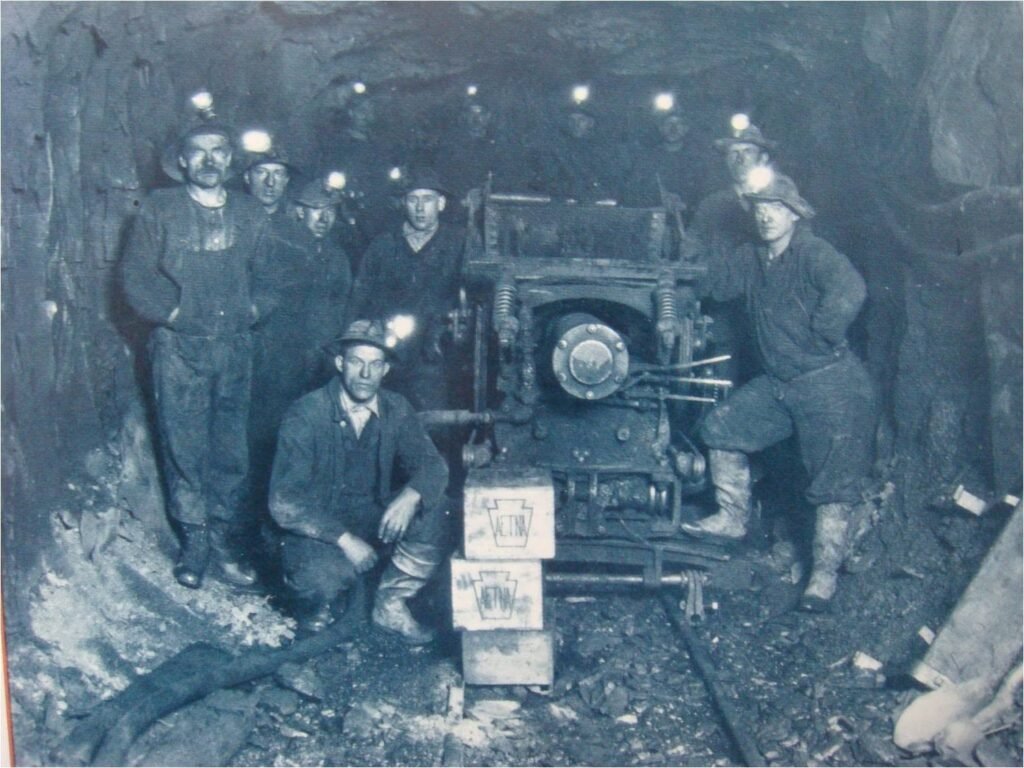
The Barnes-Hecker Mine produced iron ore for only a few years. Its disaster has lasted for generations.
Fifty-two men were underground when the mine began to collapse. One climbed out. Fifty-one died. Ten were recovered. Forty-one never came home. It was, and still is, considered one of the worst industrial disasters in Michigan history
Their names appear in records and memorials about the Barnes Hecker Mine Disaster, but their final workplace remains their burial site. Beneath the water and collapsed earth are the remains of men who left home expecting to return for lunch. Their wives and children waited near the mine whistle.
The wait never truly ended.
Works Cited – Barnes-Hecker Mine Disaster
Anderson, Antonio. “Ground Broken at Barnes-Hecker Memorial Park.” The Mining Journal, 23 May 2026. Accessed 6 Aug. 2026.
Anderson, Antonio. “Ely Township Buys Barnes Hecker Mine Property.” The Mining Journal, 20 Nov. 2025. Accessed 6 Aug. 2026.
“Barnes-Hecker Mine Disaster 100th Anniversary Events Announced.” The Mining Journal, 12 Feb. 2026. Accessed 6 Aug. 2026.
“Digitization Days Will Be Held at the Marquette Regional History Center.” Historical Society of Michigan, 2026. Accessed 6 Aug. 2026.
“Enduring Legacies: Revisiting the Barnes-Hecker Mine Disaster of 1926.” Upper Peninsula Publishers and Authors Association, 15 June 2025. Accessed 6 Aug. 2026.
Mine Safety and Health Administration. “Historical Data on Mine Disasters in the United States.” U.S. Department of Labor. Accessed 6 Aug. 2026.
Mine Safety and Health Administration. “Federal Mine Safety and Health Act of 1977: Legislative History.” U.S. Department of Labor. Accessed 6 Aug. 2026.
Paquette, James R. “The Buried and the Bereaved: The Barnes-Hecker Mine Disaster.” Michigan History, Mar.-Apr. 2025. Historical Society of Michigan. Accessed 6 Aug. 2026.
Stateside Staff. “Granddaughter of Victim Memorializes Michigan’s Largest Mining Disaster.” Michigan Public, 4 Nov. 2016. Accessed 6 Aug. 2026.
Marquette Regional History Center. “Education and Field Trips.” Marquette Regional History Center. Accessed 6 Aug. 2026.
Marquette Regional History Center. “In-Depth Research Resources.” Marquette Regional History Center. Accessed 6 Aug. 2026.

