


Famous Ontario Foods: 15 Canadian Classics in the Ultimate Provincial Guide
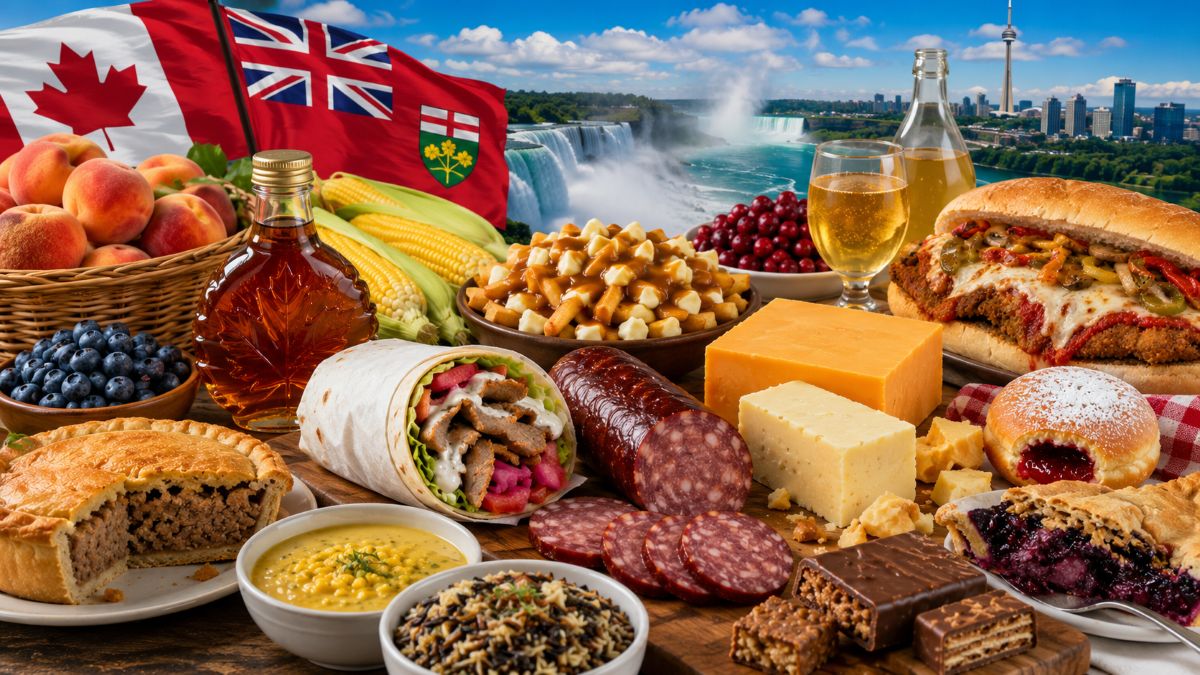
Ontario’s food identity cannot be reduced to one dish. Famous Ontario foods come from Toronto markets, Windsor pizzerias, Thunder Bay bakeries, Niagara vineyards, rural dairy farms and Great Lakes fishing ports. Together, they reflect agriculture, immigration, Indigenous food knowledge and strong regional habits.
This Ontario cuisine guide includes foods created in the province, dishes closely tied to a particular city and ingredients that remain important to local farming and fishing. Some Ontario food specialties, including Hawaiian pizza and BeaverTails, later reached far beyond the province. Others, such as Thunder Bay Persians and Windsor-style pizza, remain closely tied to the communities that made them famous.
Table of Contents
Ontario Foods Offer a Delicious Variety
Traditional Ontario dishes do not come from one cultural source. Lebanese immigration helped make shawarma a defining Ottawa meal, while Italian communities shaped Toronto’s veal sandwich. Finnish immigrants influenced Thunder Bay breakfasts, and Mennonite farming communities maintained summer sausage traditions in Waterloo Region.
The following iconic Ontario foods include provincial inventions, regional favorites and agricultural products that remain part of everyday life. These 15 famous Ontario foods show how geography, settlement, farming and local tastes shaped the province’s menu.
1. Why Butter Tarts May Be Ontario’s Most Famous Dessert

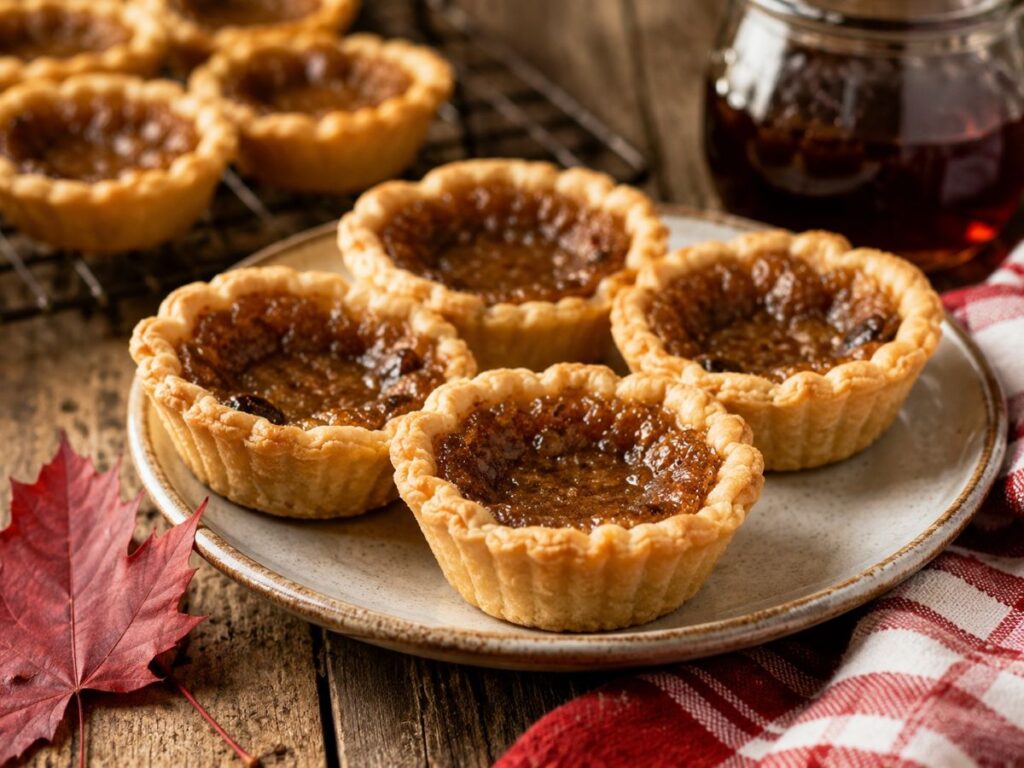
Few foods stir as much provincial pride — or as much disagreement — as the Ontario butter tart. The small pastry has a flaky shell filled with a rich mixture typically made from butter, brown sugar, syrup and eggs. When baked, the filling may remain loose and runny or become firm enough to hold its shape.
The biggest debate is whether a butter tart should contain raisins. Traditional versions often include them, but many bakers insist the filling alone is enough. Over time, variations have multiplied, with pecans, walnuts, maple, bacon and chocolate all appearing in modern interpretations.
Butter tarts are found across Canada, but Ontario has embraced them with particular enthusiasm. The province promotes butter tart routes that connect bakeries and small shops, including long-running trails in the Kawarthas and Wellington County. These routes have turned a simple pastry into a culinary road trip.
The most famous celebration is the Butter Tart Festival in Midland, which draws thousands of visitors and features competitions for both traditional and creative versions. It is widely recognized as the largest event of its kind in Canada.
Part of the butter tart’s appeal is its simplicity. It requires no decoration or elaborate presentation and can be eaten easily on the go, whether at a farmers’ market or beside a lake. That accessibility has helped it become one of Ontario’s most recognizable foods.
At the same time, making a good butter tart is surprisingly difficult. The pastry must stay crisp without becoming heavy, and the filling must be sweet without turning overly sticky or grainy. When done well, it achieves a balance of caramel richness and light saltiness that defines the best versions.
2. Peameal Bacon – The Toronto Sandwich Often Mistaken for Canadian Bacon
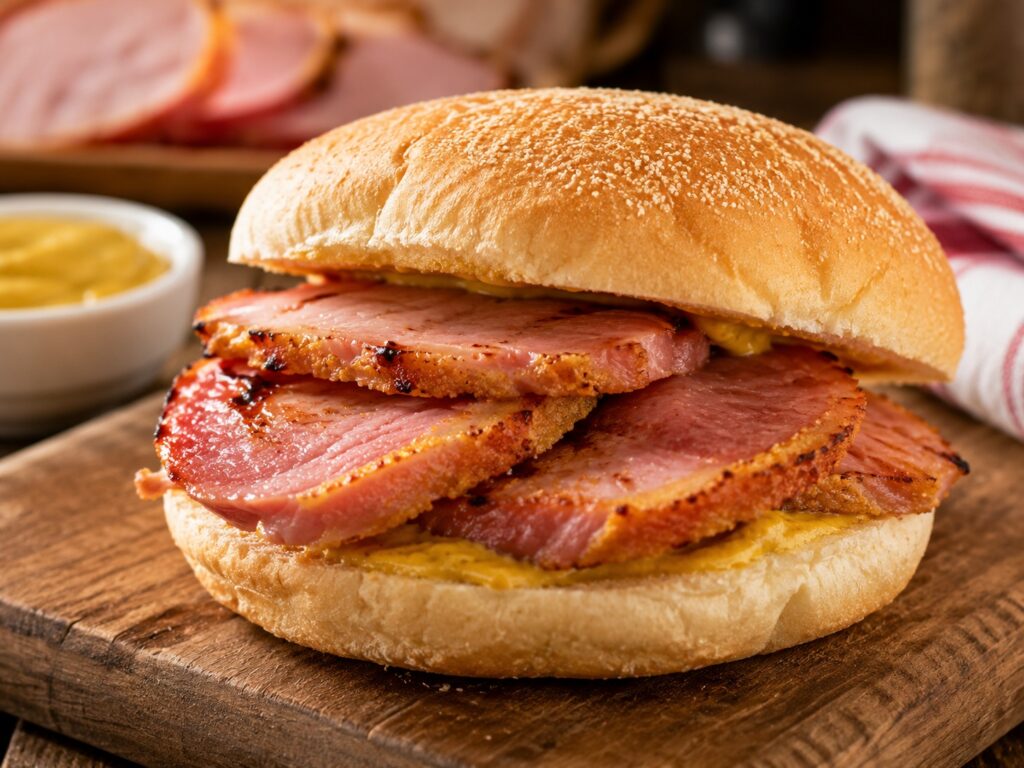
Toronto’s most famous sandwich begins with peameal bacon, a product often confused with American-style Canadian bacon. It is made from wet-cured pork loin coated in cornmeal before cooking, giving it a distinctive texture and appearance.
The name comes from an older preservation method in which cured pork was rolled in ground dried peas, known as peameal. Cornmeal eventually replaced the peas, but the original name remained in use.
When cooked, peameal bacon is tender and mildly salty, with a browned exterior rather than a smoky flavor. It is typically grilled or fried and served on a simple bun, often with just mustard to highlight the meat itself.
The sandwich is most closely associated with Toronto’s St. Lawrence Market, where vendors like Carousel Bakery have served it for decades. It has become a defining market food and a common stop for locals and visitors alike.
Its popularity reflects Toronto’s history as a major pork-processing center, which once earned the city the nickname “Hogtown.” While the industry has changed, the sandwich remains a lasting reminder of that past.
Today, the peameal bacon sandwich is considered a Toronto staple. It is affordable, filling, and widely available, and it continues to be eaten by residents as much as tourists.
3. What Makes Windsor Pizza Different?
Windsor-style pizza is one of Ontario’s most distinctive regional foods, and locals treat it as a point of pride rather than a variation of a broader style.
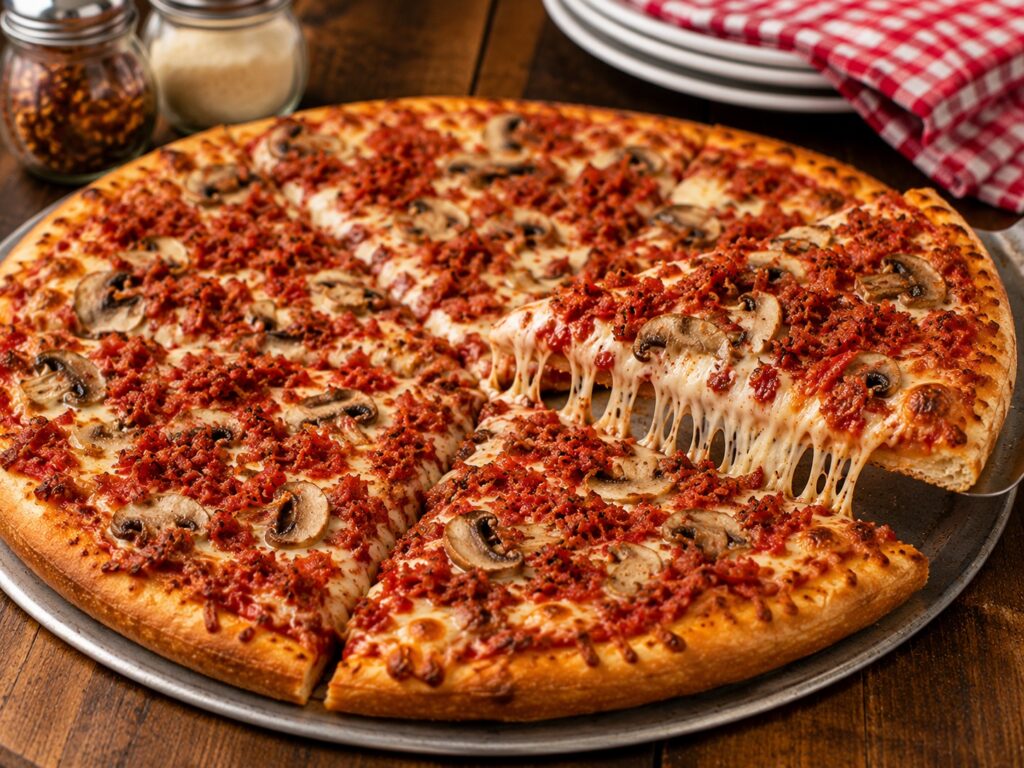
At first glance, it resembles a thin-crust pizza, but several details set it apart. The crust is thin yet sturdy, the sauce is slightly sweet, and the toppings are placed over the cheese rather than beneath it.
One of its defining features is shredded pepperoni. Instead of round slices, the meat is cut into thin strips that spread evenly across the pizza, ensuring consistent flavor in every bite.
Canned mushrooms are another hallmark ingredient. They are used for their consistent texture and lower moisture content, which helps preserve the crust. Many local pizzerias consider them essential to the traditional style.
Cheese also plays a key role, with many shops using mozzarella from Windsor’s Galati Cheese Company. The combination of cheese, sauce and toppings creates a layered but balanced structure that defines the local approach.
Windsor-style pizza developed through multiple family-run pizzerias rather than from a single origin. Over time, shared techniques and customer expectations shaped a consistent citywide style.
Today, it remains a deeply local food tradition. Residents debate details like sauce sweetness, crust thickness, and pepperoni distribution, while former locals often seek it out after leaving the city.
The style works because its differences are functional. Shredded pepperoni spreads flavor evenly, toppings placed above the cheese brown more effectively, and the thin crust supports the structure without becoming soggy. It is a practical approach that has become a regional identity.
4. Hawaiian Pizza – The Controversial Pie Created in Chatham, Ontario
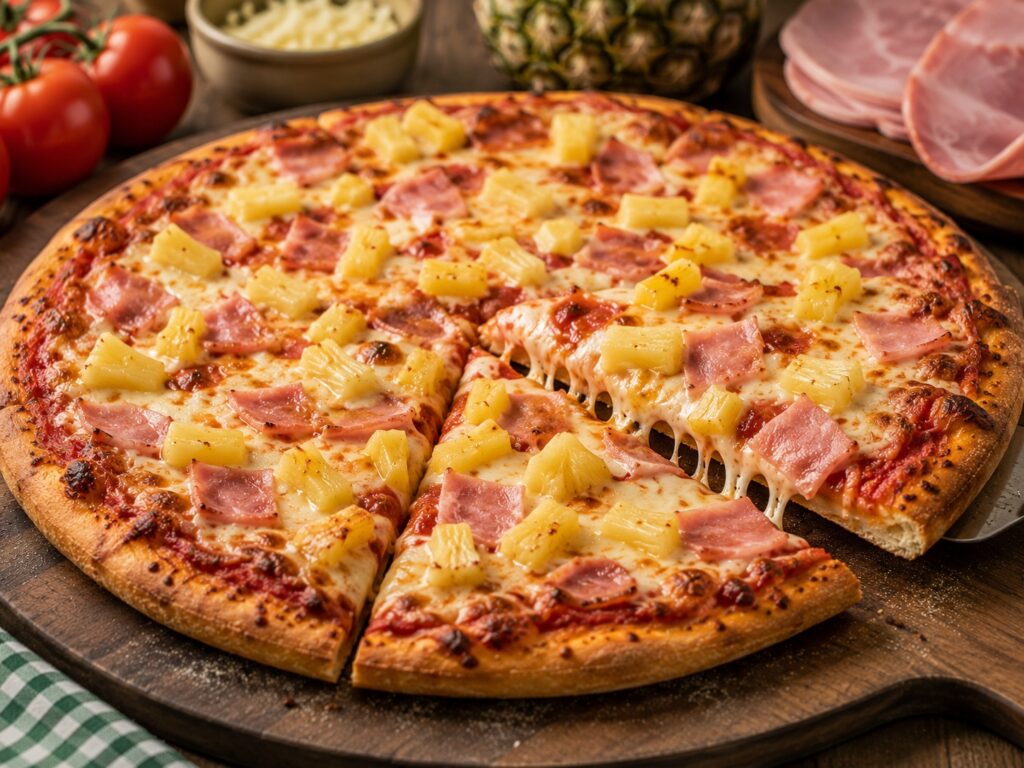
Despite its tropical name, Hawaiian pizza was created in southwestern Ontario. The combination of pineapple and ham is widely credited to Sam Panopoulos, a Greek-born restaurateur who operated the Satellite Restaurant with his brothers in Chatham.
Panopoulos added canned pineapple to a pizza in 1962 while experimenting with sweet and savory flavors. At the time, pizza was still relatively new to many Canadian diners, and restaurant owners often adjusted recipes to suit changing tastes. The pineapple offered a sharp contrast to the salty ham, cheese and tomato sauce. The pizza was reportedly named after the brand of canned pineapple used in the original preparation rather than the Hawaiian Islands. What began as a restaurant experiment soon spread far beyond Chatham and became one of the world’s most recognized pizza combinations.
Few foods inspire such strong reactions. Supporters argue that pineapple adds sweetness and acidity, which balance the salt and fat in the cheese and meat. Critics consider fruit an unwelcome addition to pizza and often treat Hawaiian pizza as evidence that culinary experimentation can go too far. That argument has helped keep the pizza in public view, with political leaders, chefs and online commentators repeatedly joining the debate.
The original version was simple, generally combining tomato sauce, cheese, ham and canned pineapple. Modern versions may use bacon, hot peppers, barbecue sauce or several kinds of meat. Some restaurants also replace canned pineapple with fresh or roasted fruit, although traditionalists may question whether those variations still qualify. Hawaiian pizza is now sold around the world, but its Ontario origin is often overlooked, giving it a firm place among famous Ontario foods.
5. Beaver Tails – Ottawa’s Famous Fried Pastry Has Nothing to Do With Meat
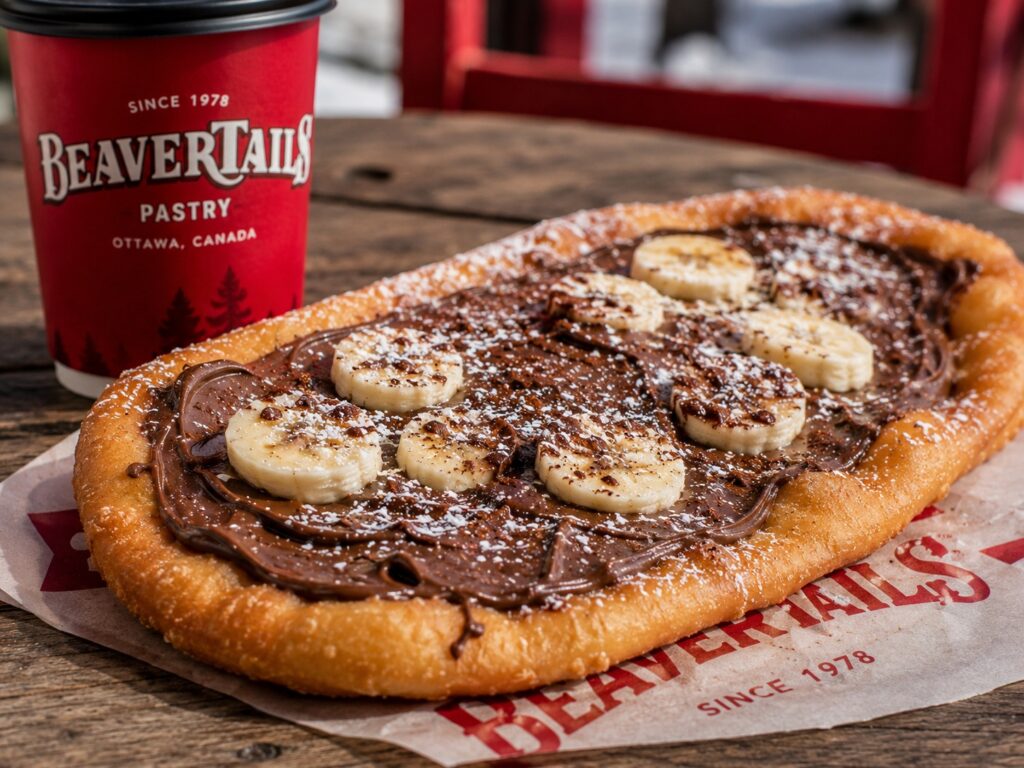
BeaverTails are flat pieces of fried dough stretched into the broad, oval shape of a beaver’s tail. They are usually served hot and covered with sweet toppings such as cinnamon sugar, maple spread, chocolate, fruit, or crushed candy.
The pastry began as a family recipe made by Grant Hooker’s grandmother. Grant and Pam Hooker first sold the pastries publicly at the Killaloe Craft and Community Fair in the Ottawa Valley in 1978. The first permanent BeaverTails stand opened in Ottawa’s ByWard Market the following year. The name occasionally confuses visitors, but the pastry contains no beaver meat. It refers only to the dough’s long, flattened shape, fried until the outside turns golden while the center remains soft and chewy.
The earliest and simplest topping is cinnamon sugar with a squeeze of lemon. Other versions have become increasingly elaborate, including chocolate-hazelnut spread, maple flavoring, bananas, cookies and candy pieces. Savory versions have also appeared, although the sweet pastry remains the best-known form. Ottawa helped turn BeaverTails into a national brand, and its ByWard Market kiosk became a popular stop for tourists, residents and visiting public figures. President Barack Obama bought one during his first official visit to Canada in 2009, drawing international attention to the pastry.
BeaverTails are also strongly associated with winter. The hot fried pastry is sold at skating rinks, festivals and outdoor events, where it can be eaten by hand without utensils. That connection with cold weather, public skating and Ottawa tourism has made it appear more traditional than its relatively recent commercial history might suggest. The pastry is now sold in several provinces and other countries, but Ottawa remains its best-known home.
6. Thunder Bay Persians – The Pink-Frosted Pastry Found Almost Nowhere but Thunder Bay

The Persian is Thunder Bay’s signature pastry, but it is not Persian in the geographic or cultural sense. It is a soft, fried, cinnamon-flavored pastry topped with a thick layer of bright pink berry frosting. Its appearance falls somewhere between a cinnamon roll and a doughnut, with the dough generally twisted or rolled rather than formed into a ring.
The Persian is believed to have been created in Thunder Bay during the 1940s, when the present-day city was still divided between Port Arthur and Fort William. Local tourism sources describe it as a Thunder Bay creation and the city’s most famous food. The origin of the name is less certain, with several stories circulating, including claims that it was named after a military officer or inspired by an image of a Persian figure. Firm documentation is limited, so the name’s exact origin remains unresolved.
The pink frosting is commonly described as raspberry- or berry-flavored, although recipes vary among bakeries and home cooks. Some versions use raspberry extract, while others rely on fruit flavoring or closely guarded mixtures. Persians are commonly eaten at breakfast, during coffee breaks, or as an afternoon snack, and are sold at bakeries, grocery counters, cafes, and community events across Thunder Bay. Local businesses have also adapted the flavor into cakes, cheesecakes, and other desserts.
For residents who grew up in the city, the pastry carries a strong sense of place. Former Thunder Bay residents often seek them out during return visits, while travelers regularly add a bakery stop to their itinerary. Its uncertain name, pink frosting, and fiercely local following make the Persian one of the most distinctive famous Ontario foods, and few visitors leave Thunder Bay without remembering it.
7. Finnish Pancakes – A Thunder Bay Tradition
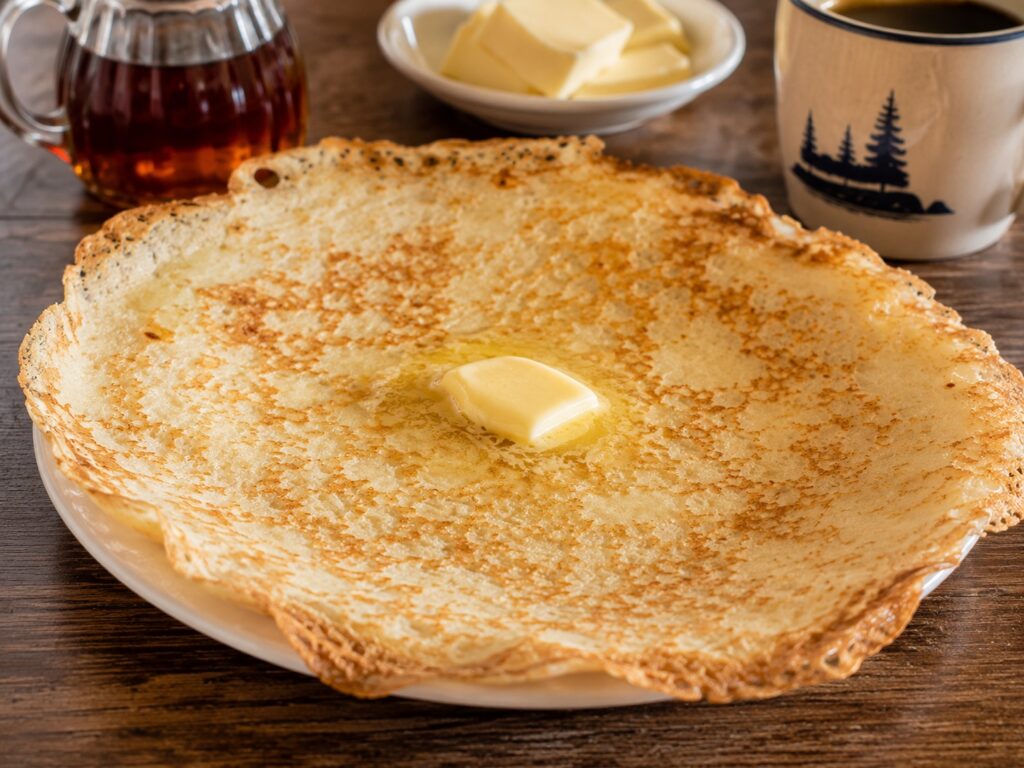
Thunder Bay’s Finnish pancakes are thin, buttery, and wide enough for their crisp edges to hang over the sides of a plate. They are softer and richer than crepes but much thinner than the fluffy pancakes commonly served in American diners.
The dish reflects the strong Finnish influence in Thunder Bay, where immigrants began arriving in significant numbers during the late 19th and early 20th centuries. Many came to work in logging, mining, construction, and Great Lakes shipping. Over time, Finnish halls, saunas, bakeries, and restaurants became part of the city’s identity.
The best-known pancakes were long served at the Hoito Restaurant, which opened in 1910 in the Finnish Labour Temple. The restaurant became a local institution, drawing workers, families, and travelers to its communal tables. Its pancakes were known for their golden edges, thin centers, and simple preparation. Thunder Bay Tourism continues to list Finnish pancakes among the city’s signature foods, and they are still served at locations in the city today.
8. Fresh Lake Erie Perch Remains a Southwestern Ontario Favorite

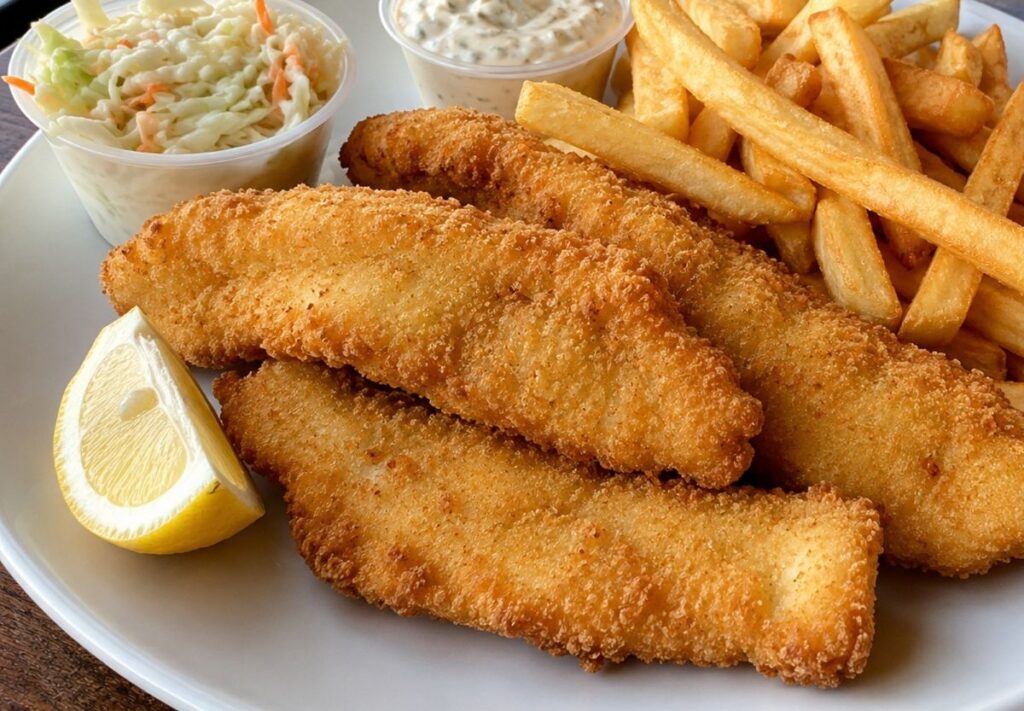
Yellow perch is one of the defining foods of Ontario’s Lake Erie shoreline. The small freshwater fish has mild, slightly sweet white meat that cooks quickly and works especially well when lightly breaded and fried.
Perch is commonly served as fillets with fries, coleslaw, lemon, and tartar sauce. Some restaurants offer it in sandwiches, tacos, or dinner baskets, but the traditional fish-fry presentation remains the most recognizable. When properly prepared, the coating stays crisp while the thin fillet remains moist and tender.
The dish is strongly associated with communities along the north shore of Lake Erie in Ontario, including Port Dover, Wheatley, Leamington, Kingsville, and the Windsor-Essex region. Waterfront restaurants, fish markets, and community dinners have helped turn locally caught perch into a regional standard. Ontario also identifies Lake Erie as a major commercial fishery, supporting both yellow perch and walleye, though availability can vary with seasons, quotas, and conditions.
9. Great Lakes Pickerel – Why Ontario Menus Call Walleye “Pickerel”
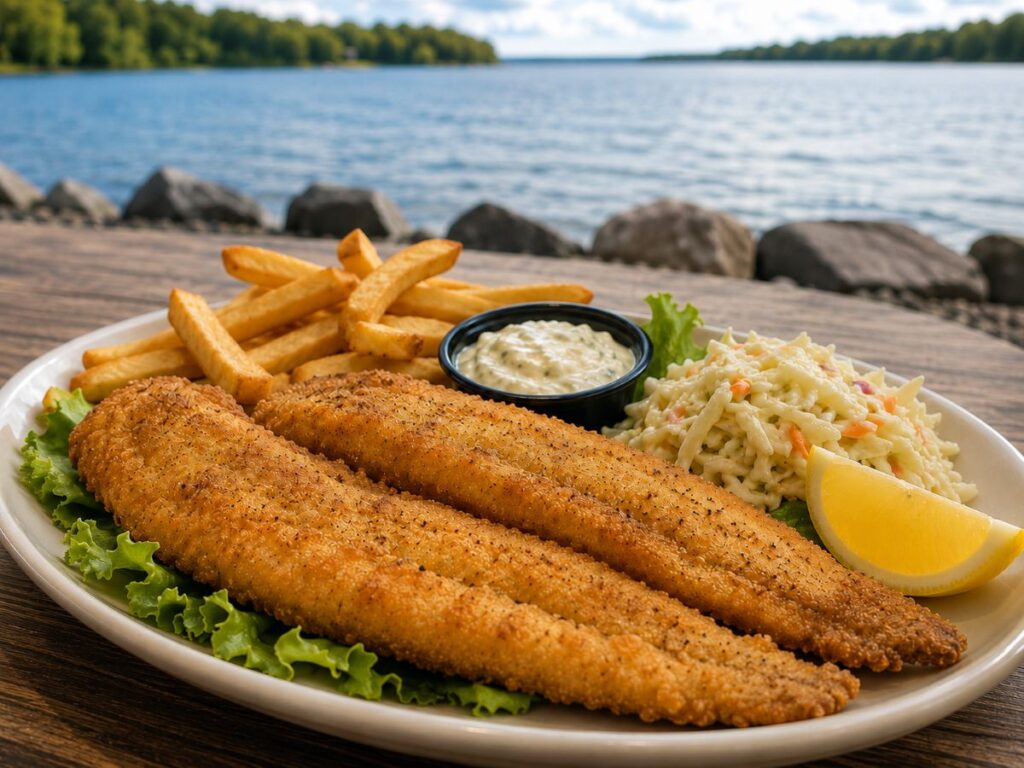
Pickerel appears on menus across Ontario, but the name can confuse visitors. In most restaurants and fishing communities, “pickerel” refers to walleye, not the separate fish species known as chain pickerel.
Walleye is one of Ontario’s most popular game fish and an important commercial species. It has firm, pale flesh, few large bones, and a clean flavor that appeals even to diners who normally avoid stronger-tasting fish. It can be pan-fried, grilled, baked, or battered, and is often served with potatoes, vegetables, lemon, and tartar sauce. At fishing camps, it is also central to the traditional shore lunch, where freshly caught fillets are cooked outdoors.
The fish is found across much of the province, including the Great Lakes, northern inland lakes, Lake Nipissing, and Lake of the Woods, making it a familiar menu item in lodges, small towns, and cities alike. Pickerel and perch are often compared because both are mild and lean, though pickerel fillets are typically larger and thicker. Not all restaurant pickerel is locally caught, so sourcing can vary.
10. Ontario Maple Syrup – Maple Season Marks the Arrival of Spring in Ontario
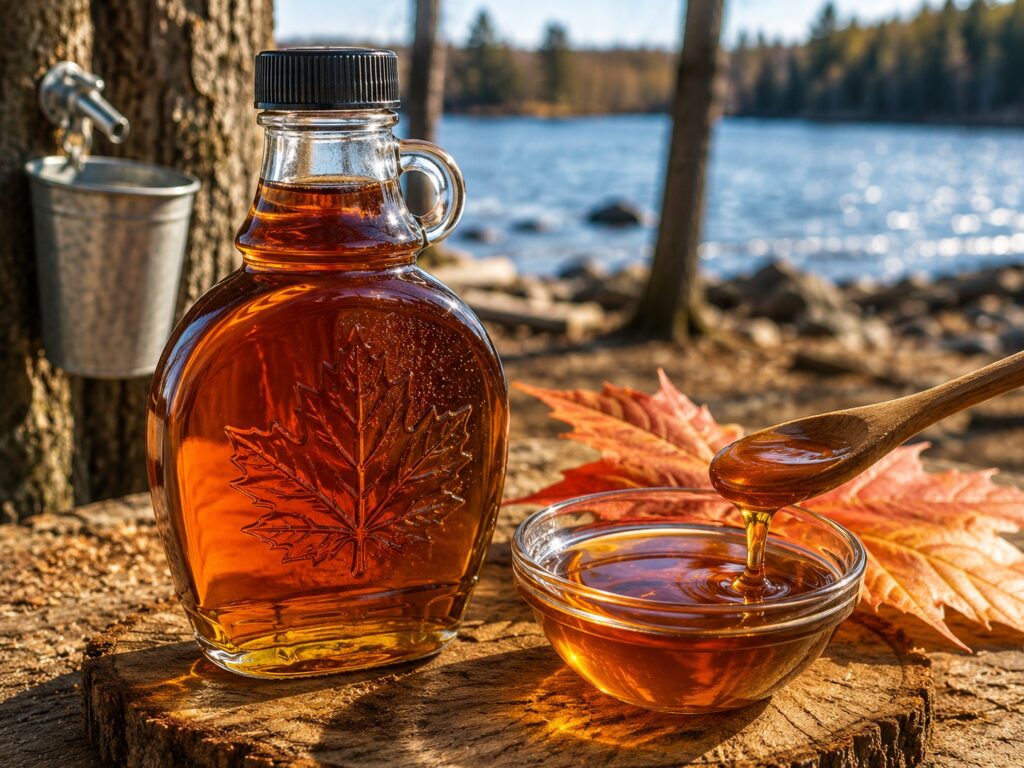
Maple syrup is one of Ontario’s oldest foods, with roots that long predate European settlement. Algonquin and other First Nations peoples tapped maple trees for sap and used the resulting sugar to flavor meats, porridge and other foods. European settlers later adopted and changed the process, using metal containers and larger boiling operations as maple production developed into a commercial industry.
The season begins when cold nights are followed by warmer days. Those temperature swings create pressure inside maple trees, causing sap to flow through drilled tap holes. Producers collect the clear liquid and boil away much of its water until it becomes concentrated syrup. Ontario’s maple season usually runs for only a few weeks in late winter or early spring. The timing varies across the province, beginning earlier in southwestern Ontario and moving north and east as temperatures change. A poor stretch of weather can shorten the season, while steady freezing nights and mild days can improve sap flow.
The finished syrup is classified by color and flavor. Ontario maple syrup may be labeled Golden, Amber, Dark or Very Dark, with lighter syrup offering a delicate taste and darker syrup carrying a stronger maple flavor. Buyers looking for the real product should check the label for “maple syrup” or “pure maple syrup” rather than imitation pancake syrup. Although pancakes are the most familiar use, maple syrup is also used in baked goods, sauces, marinades, desserts, and other products like maple sugar, candy, and butter. Sugar-bush visits and spring festivals have also become popular seasonal traditions across the province.
11. Niagara Icewine – How Frozen Grapes Built Niagara’s Icewine Reputation

Niagara icewine is made from grapes that remain on the vine after the regular fall harvest and freeze naturally during winter. When temperatures drop low enough, workers pick and press the frozen grapes, producing a small amount of intensely sweet juice. Ontario’s wine rules define icewine as wine made from grapes frozen naturally on the vine, and for VQA certification, harvesting must occur below minus 8°C. Wine made by artificially freezing grapes cannot be sold as VQA icewine.
The freezing process removes much of the water, leaving behind concentrated sugars, acids and flavors. Because frozen grapes yield very little juice, icewine is usually sold in smaller bottles and at higher prices than standard wine. Niagara’s climate makes this production possible, with Lake Ontario and the Niagara Escarpment helping moderate temperatures so grapes can fully ripen before winter. The region is also home to more than half of Ontario’s VQA wineries, making it the heart of the province’s wine industry.
Vidal is one of the most common grapes used for icewine because it withstands cold weather while keeping strong acidity. Riesling and Cabernet Franc are also used, creating flavors of peach, apricot, citrus, berries, honey, and spice. Icewine is very sweet, but good examples are balanced by acidity so they do not taste syrupy. It is usually served chilled in small portions and pairs well with blue cheese, aged cheddar, fruit desserts, pâté, and chocolate, though some prefer it on its own.
12. Ontario Cheddar Cheese – Ontario’s Dairy Farms Produce Cheddar With Serious Bite
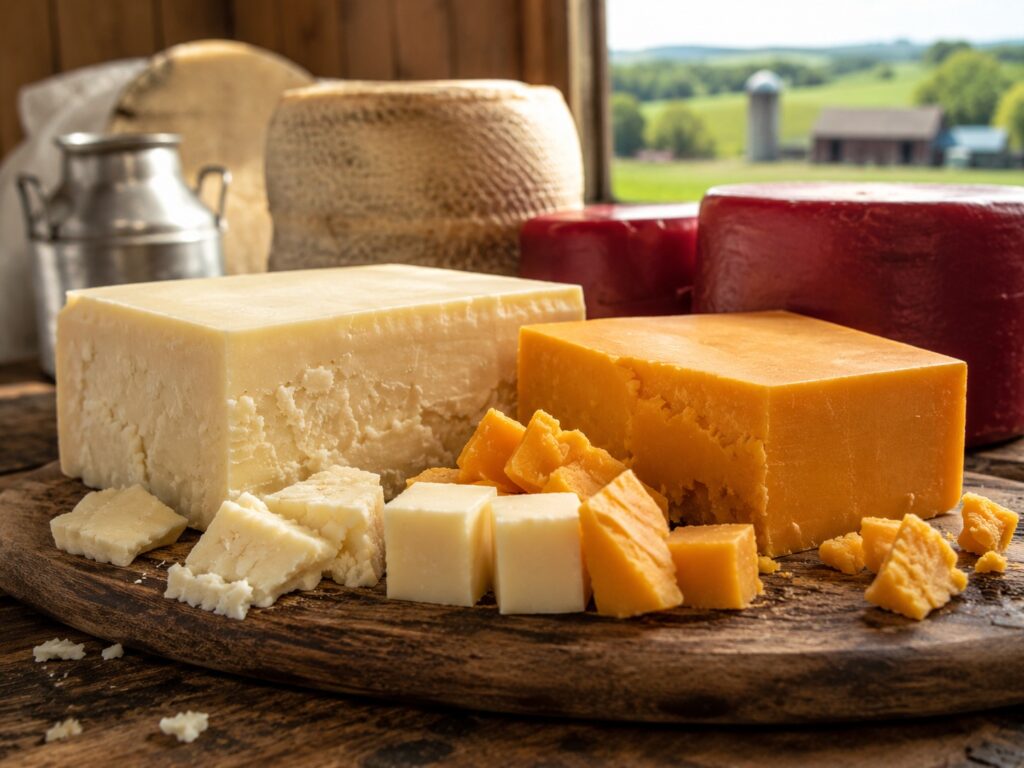
Ontario cheddar reflects the province’s long history of dairy farming and rural cheese production. Made from cow’s milk, cheddar can range from mild and creamy to sharp, crumbly and strongly flavored depending on how long it is aged. Young cheddar is smooth and mild, while older varieties become firmer, sharper and sometimes develop crystals that form during aging.
Cheddar production became important in Ontario during the 19th century as dairy farming expanded and small cheese factories opened in rural communities. Farmers were able to turn milk into a longer-lasting product that could be transported more easily than fresh dairy. This helped cheese factories become a key part of agricultural life in eastern and southwestern Ontario. That tradition continues today in places like St-Albert, where a farmer-owned cooperative founded in the late 19th century remains a major producer of cheddar and cheese curds.
Ontario cheddar is commonly sold in white and orange forms, but the color does not affect quality or strength. Orange cheddar is coloured with annatto, while white cheddar is left natural. Modern Ontario cheese makers now produce many variations, including cloth-bound, waxed, raw milk and flavored cheddars. Foodland Ontario standards also require that more than 90% of the milk used in Ontario-labeled cheese comes from provincial dairy farms.
Cheddar pairs well with many local foods such as apples, bread, mustard, cider and maple products. Aged cheddar can also complement the sweetness of Niagara icewine. While it may not be as debated as some other iconic foods, Ontario cheddar remains an important part of the province’s agricultural identity and a staple among famous Ontario foods.
13. Ottawa Shawarma – This Lebanese Staple Became One of Ottawa’s Defining Foods
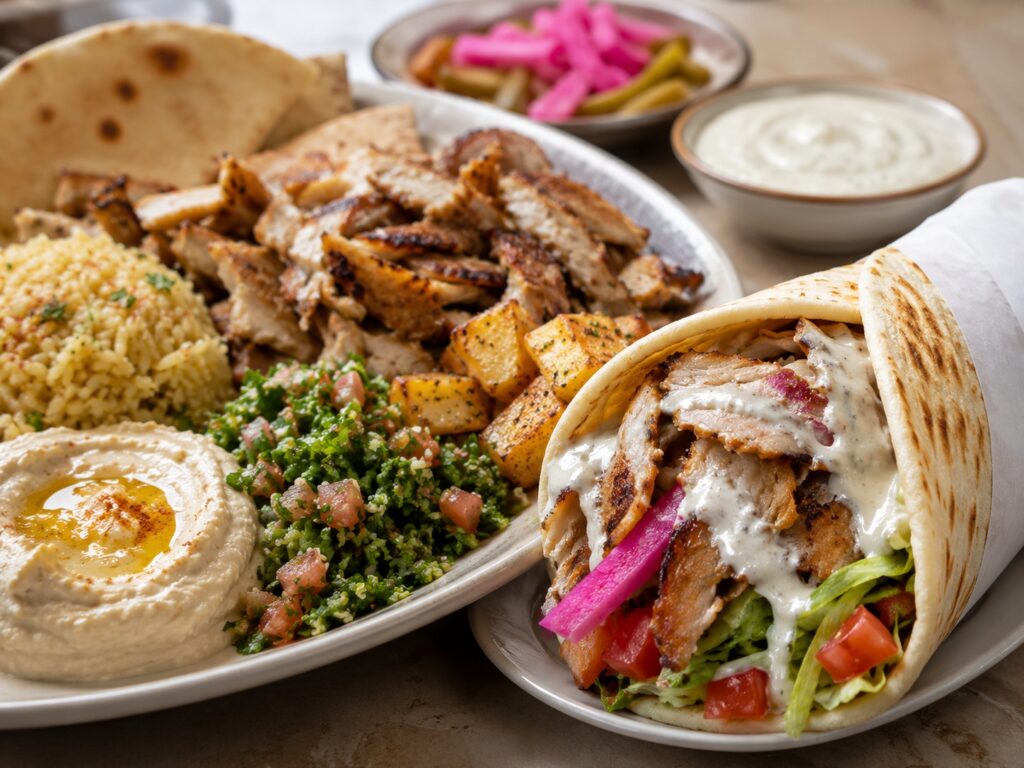
Shawarma did not originate in Ontario, but Ottawa has adopted it as one of the capital’s defining foods. The dish consists of seasoned chicken, beef or lamb cooked slowly on a vertical spit, then shaved into thin pieces and served in a wrap or on a platter. An Ottawa shawarma wrap commonly includes garlic sauce, pickled turnips, lettuce, tomatoes and other vegetables, while platters are often served with rice, roasted potatoes, hummus, tabbouleh and pita bread. Garlic sauce is especially important, adding a sharp, creamy flavor that distinguishes the finished meal.
Ottawa’s shawarma culture grew alongside the city’s large Lebanese community. Immigration from Lebanon increased during the second half of the 20th century, and Lebanese-owned restaurants, bakeries and grocery stores became fixtures across the capital. Ottawa Tourism says the city has more shawarma restaurants than any other Canadian city and is widely known as the “Shawarma Capital of the World.” Shawarma shops now operate in downtown Ottawa, suburban shopping centers and neighborhood plazas, and the food is popular with office workers, students, families and late-night diners because it is filling, relatively inexpensive and easy to carry.
Ottawa did not invent shawarma, and it would be misleading to present it as a traditional Canadian recipe. Its place on this list stems from how Lebanese immigrants and later generations turned it into an everyday capital-city meal. Few foods now represent modern Ottawa more clearly.
14. Mennonite Summer Sausage – Waterloo Region’s Sausage Tradition
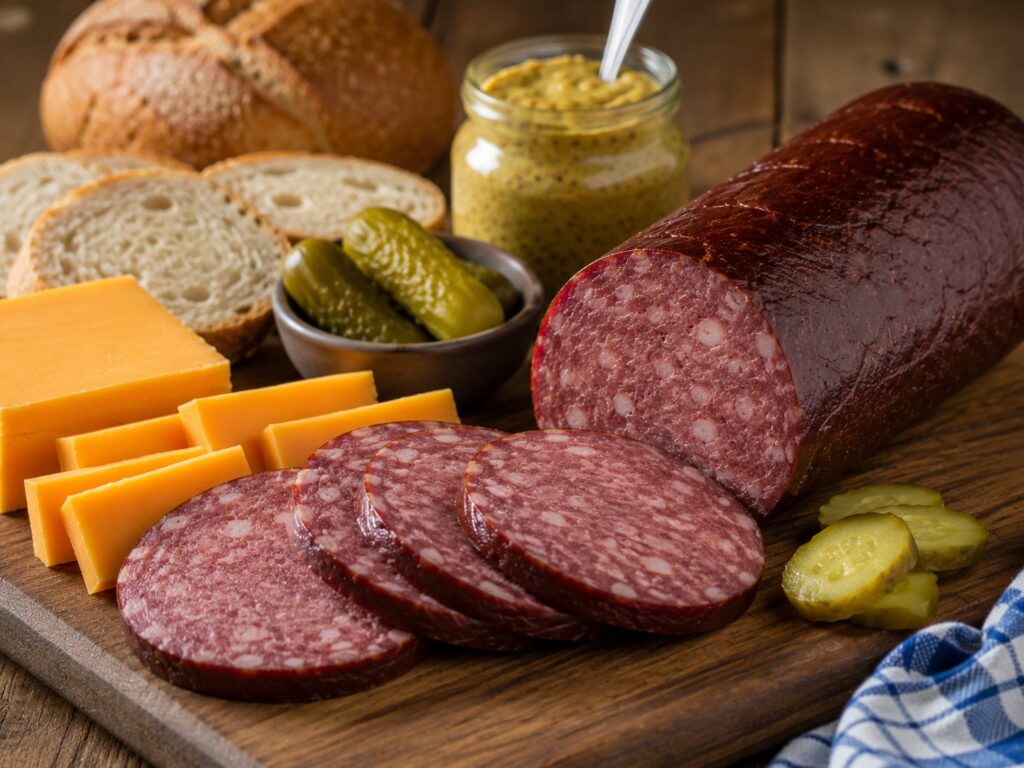
Mennonite summer sausage is strongly associated with Waterloo Region and the surrounding farming communities of southwestern Ontario. It is a firm, cured sausage traditionally made to keep for long periods without immediate refrigeration. The sausage is generally prepared with beef or a mixture of meats, salt, and spices, and may be smoked, fermented, or air-dried depending on the maker and family recipe, resulting in a dense, slightly tangy, and often smoky texture suited to slicing thinly.
The term “summer sausage” refers to its traditional ability to remain stable during warmer months, not to a food eaten only in summer. Before modern refrigeration, curing and smoking allowed farming families to preserve meat after slaughter and store it for later use. Mennonite communities have farmed in Waterloo County for generations, and summer sausage remains common at farm stands, butcher shops and local markets. Regional tourism officials list it among the foods sold at rural farm gates, along with baked goods, honey, produce and other local products.
Recipes vary considerably, with some sausages heavily smoked and dry and others softer and more mildly seasoned. Production methods may reflect family traditions, butcher preferences and food-safety requirements, meaning there is no single recipe that represents every Mennonite producer. Summer sausage is often served cold with bread, mustard, pickles and Ontario cheddar, and its long connection to farming and preservation gives it a clear place among famous Ontario foods.
15. Toronto’s Italian Veal Sandwich Became a Local Institution
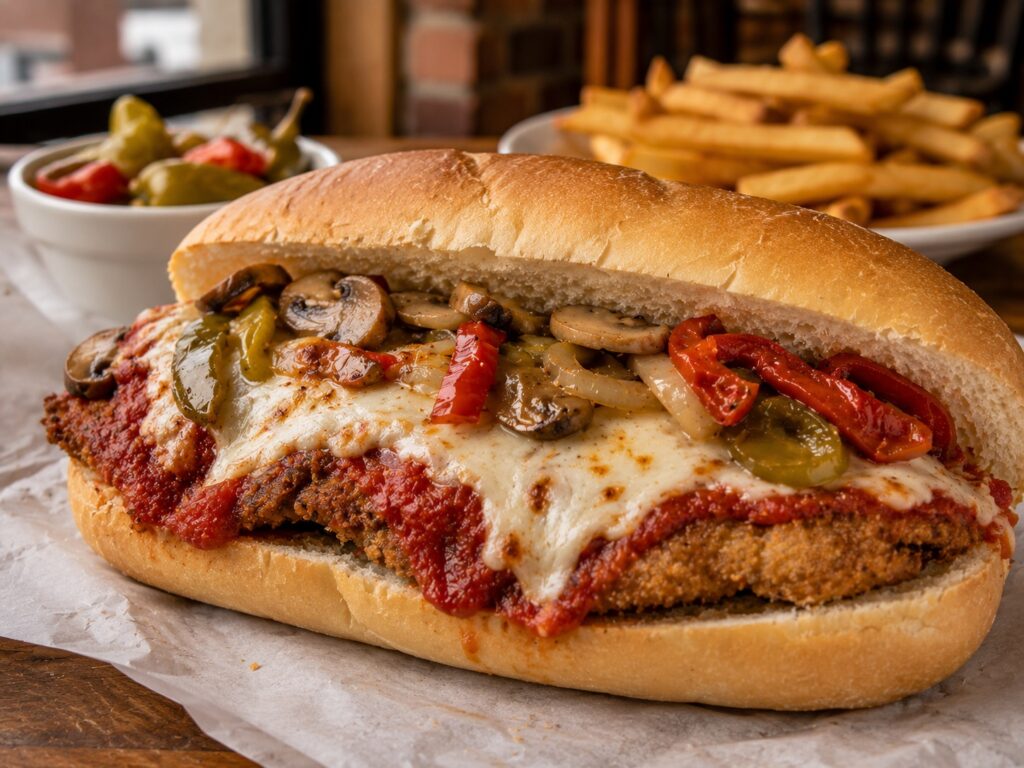
Toronto’s veal sandwich grew from the city’s postwar Italian immigrant communities. It consists of a breaded veal cutlet placed inside a soft Italian roll and covered with tomato sauce, with hot or sweet peppers, onions, mushrooms, and cheese added depending on the restaurant and customer. The sandwich is closely related to veal cutlet dishes made in Italian homes, but Toronto shops adapted it into a portable, inexpensive meal for workers and families served in bakeries, lunch counters and neighborhood restaurants.
San Francesco Foods, which opened in Toronto’s Little Italy in 1954, claims it was the first business to serve the veal sandwich in the city. That claim is part of the restaurant’s own history and is difficult to confirm independently, but the business is widely recognized as one of the sandwich’s earliest and most influential Toronto sellers. Other Italian sandwich shops soon developed their own versions, including California Sandwiches, which began in Toronto in 1967 and helped spread the style across the Greater Toronto Area.
A traditional Toronto veal sandwich is rarely neat. The tomato sauce soaks into the bread, peppers spill from the sides, and the cutlet may extend beyond the roll. That excess is part of its identity, reflecting a broader Toronto pattern in which immigrant foods became part of the city’s shared identity. It is Italian in origin but Toronto in form, shaped by local restaurants, working-class neighborhoods and decades of customer demand, making it a fitting final entry among Ontario’s famous foods.
Other Ontario Foods Worth Mentioning
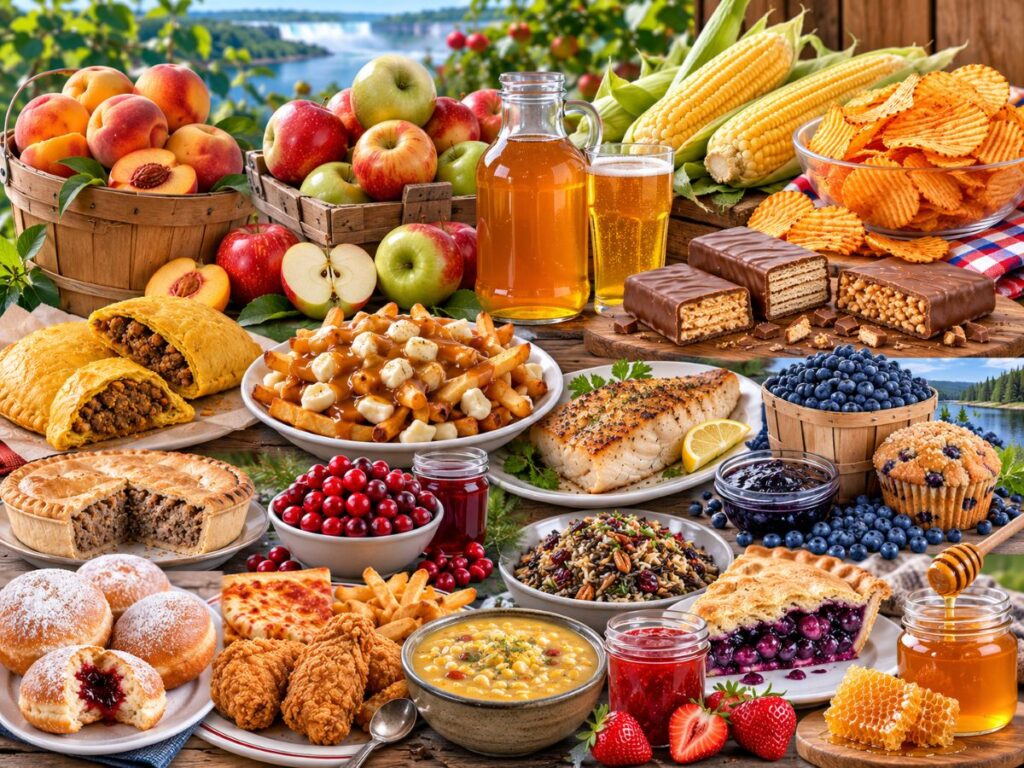
Ontario’s size and cultural variety make it impossible to represent the province with only 15 foods. These additional dishes, ingredients and snacks also have strong regional connections.
- Niagara peaches: The Niagara Peninsula’s warm growing season and moderated climate support sweet, juicy peaches sold at farm stands, markets and summer festivals.
- Ontario apples: Orchards across southern Ontario produce many apple varieties used for fresh eating, pies, cider, apple butter and baked desserts.
- Ontario craft cider: Made mainly from locally grown apples, hard cider has become increasingly common at rural cideries, restaurants and farmers markets.
- Essex County sweet corn: Southwestern Ontario’s warm summers and fertile farmland make fresh sweet corn a familiar roadside and summer-table favorite.
- Ketchup chips: This sweet, salty and tangy potato chip flavor is strongly associated with Canada and remains especially popular in Ontario convenience stores.
- Coffee Crisp: The Canadian candy bar combines layers of vanilla wafer and coffee-flavored filling covered in milk chocolate.
- Crispy Crunch: Created in Canada, this chocolate bar contains a hard, flaky peanut center covered with milk chocolate.
- Toronto Jamaican patties: Jamaican bakeries helped make spicy beef patties a standard Toronto snack, especially around transit stations, shopping areas and neighborhood restaurants.
- Ottawa poutine: Although poutine originated in Quebec, it is widely served in Ottawa because of the capital’s close geographic and cultural ties to its neighboring province.
- Wild blueberries: Northern Ontario’s smaller wild blueberries are prized for their concentrated flavor and are used in pies, jams, sauces and baked goods.
- Tourtière: This seasoned meat pie is most closely associated with Quebec but is also common in eastern and northern Ontario’s French-speaking communities.
- Lake Huron whitefish: Mild, firm whitefish has long been part of the food culture around Lake Huron, Georgian Bay and Manitoulin Island.
- Muskoka cranberries: Cranberry farms near Bala have made the tart red fruit part of Muskoka’s regional identity through juice, preserves, baked goods and wine.
- Windsor paczki: These rich Polish doughnuts are especially popular before Lent and are sold by bakeries across Windsor and other southern Ontario communities.
- Windsor Chicken Delight: Broasted chicken, ribs and pizza from local Chicken Delight restaurants have developed a loyal following in Windsor-Essex.
- Indigenous corn soup: Corn soups remain important within several First Nations food traditions, though ingredients and methods differ among nations, families and communities.
- Wild rice dishes: Manoomin, often called wild rice, is an Indigenous grain harvested in parts of Ontario and used in soups, side dishes, stuffing and other meals.
- Ontario strawberry jam: Fresh provincial strawberries are commonly preserved as jam and sold at farm markets, roadside stands and small-town bakeries.
- Niagara grape pie: This regional dessert uses dark, strongly flavored grapes grown in the Niagara area and is closely associated with fall harvest season.
- Ontario honey: Clover, wildflower and other local honeys reflect the plants grown in different parts of the province and are used in baking, sauces, tea and preserves.
Ontario Famous Foods FAQs
What food is Ontario most famous for?
Butter tarts and peameal bacon sandwiches are among the province’s best-known foods. Windsor pizza, Great Lakes fish, maple syrup and Niagara icewine also have strong Ontario connections.
Which foods were invented in Ontario?
Hawaiian pizza was created in Chatham, while BeaverTails grew from an Ontario family recipe and became closely associated with Ottawa. Several other foods, including the Persian and Windsor pizza, developed strong local identities within the province.
What foods should visitors try in Toronto?
Visitors should consider a peameal bacon sandwich, veal sandwich, Jamaican patty and foods representing the city’s many immigrant communities.
Which Famous Ontario Food Should You Try First?
The best place to begin depends on where you are traveling. Toronto visitors should consider a peameal bacon sandwich or Italian veal sandwich. Windsor is the place for shredded-pepperoni pizza, while travelers along Lake Erie should look for fresh perch. Ottawa offers BeaverTails and shawarma, and Thunder Bay is known for Finnish pancakes and pink-frosted Persians.
Rural Ontario offers butter tarts, aged cheddar, maple syrup, summer sausage, apples and cider. Niagara adds icewine, fruit and regional farm products, while northern restaurants and fishing lodges continue to serve pickerel from Ontario’s lakes.
Among all the famous Ontario foods, the butter tart may be the easiest starting point. It is portable, widely available and strongly associated with the province. The best choices after that are usually regional: Windsor pizza in Windsor, pickerel in northern Ontario, shawarma in Ottawa and icewine in Niagara.
Which Ontario food would you try first? Share your choice — or the regional favorite we missed — in the comments.

