


Top Ports Visited By The Best Great Lakes Cruises
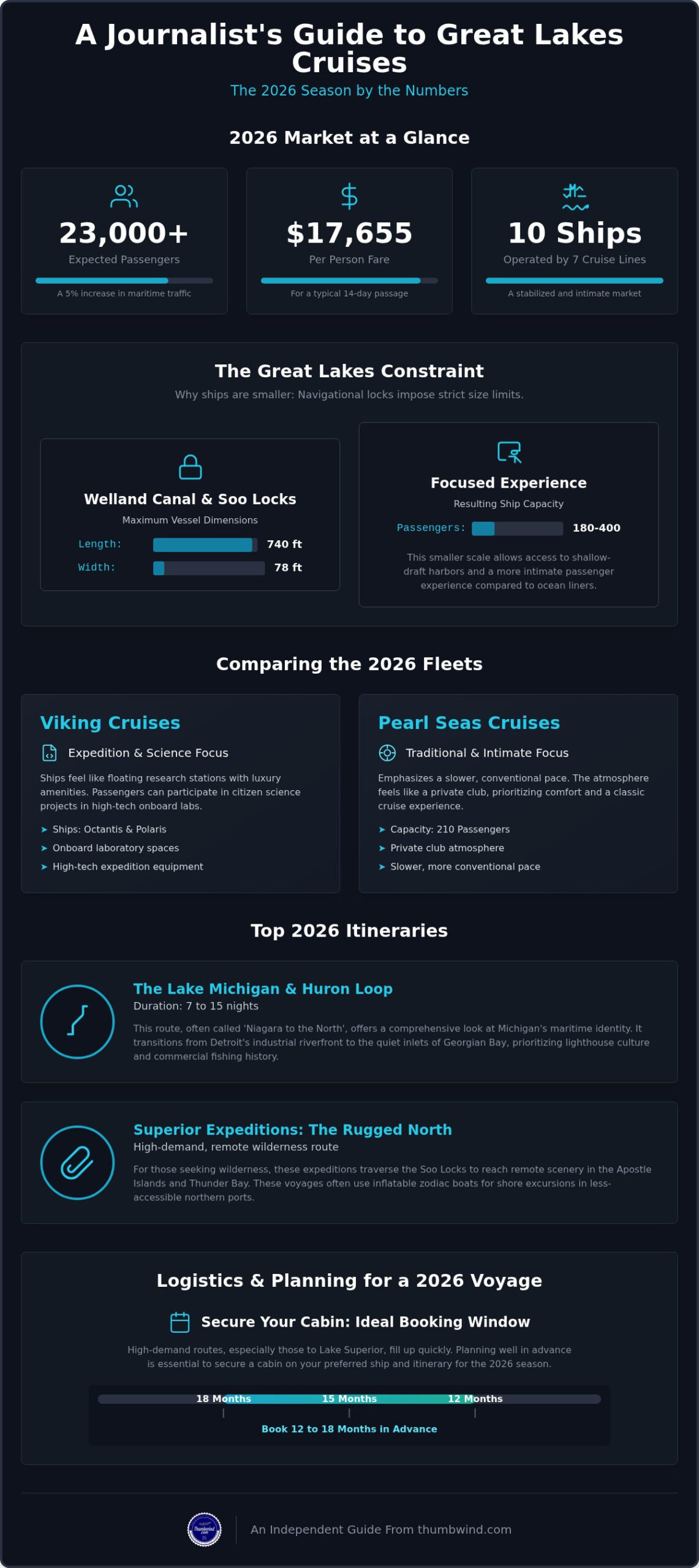
By the summer of 2026, more than 23,000 passengers are expected to sail through the Great Lakes, marking a 5% increase in maritime traffic. Many of these travelers will pay as much as $17,655 per person for a 14-day passage on the newest small ships. You’re right to be skeptical about the value when searching for the best great lakes cruises, especially when navigating the confusing logistics of lock restrictions and varying ship sizes.
It’s hard to tell which Michigan ports offer genuine maritime history and which are just tourist traps. This journalist’s guide breaks down the 2026 season by focusing on the new all-U.S. itineraries from American Cruise Lines and the expanded offerings from Victory Cruise Lines. We examine specific Michigan ports of call, from the busy docks of Mackinac County to the quiet shores of the Upper Peninsula. This analysis helps you plan a trip that prioritizes authentic local stories over marketing fluff.
Key Takeaways
- Understand how the physical limits of the Soo Locks and Welland Canal keep Great Lakes ships smaller and more intimate than ocean liners.
- Compare the frequent Niagara to the North route with the more remote Lake Superior expeditions to pick your ideal path.
- Review which companies offer the best great lakes cruises in 2026 based on their access to shallow-draft Michigan harbors.
- Evaluate port stops in Detroit and Mackinac Island using practical tips to avoid crowds and find authentic maritime history.
- Secure your 2026 cabin by following a 12 to 18-month booking window and choosing the best seasonal weather for sailing.
The 2026 Great Lakes Cruise Market: Ships and Scale
The 2026 season marks a period of stabilization for the Great Lakes cruise market. After years of rapid growth in the early 2020s, the industry has settled into a steady rhythm with seven lines operating ten ships. Major players like Viking, Pearl Seas, and Victory Cruise Lines have finalized their deployments to meet a 5% projected increase in passenger numbers. Unlike the massive vessels found in the Caribbean, these ships are built for the specific geography of the Great Lakes Waterway.
Most vessels in this region carry between 180 and 400 passengers. This smaller scale is a necessity, not a choice, because every ship must navigate the narrow passages and locks connecting the lakes. These shallow-draft ships ensure access to smaller harbors that larger ocean liners can’t reach. For travelers, this means the best great lakes cruises offer a more focused look at regional history rather than the generic experience of a mega-ship.
Ship Size and the Welland Canal Constraint
The Welland Canal and the St. Lawrence Seaway impose strict physical limits on every vessel entering the system. Ships cannot exceed 740 feet in length or 78 feet in width. These dimensions prevent massive ocean-going vessels from ever entering Lake Erie or Lake Huron. While this limits total capacity, it allows ships to dock directly in downtown areas. In places like Mackinac Island, passengers step off the ship and immediately enter the village center. Understanding Great Lakes names and geography helps travelers see why these physical constraints define the entire cruising experience.
Viking vs. Pearl Seas: Comparing the 2026 Fleets
Choosing a ship in 2026 often comes down to the style of travel. Viking’s expedition ships, the Octantis and Polaris, feature high-tech laboratory spaces where passengers participate in citizen science projects. These ships feel like floating research stations with luxury amenities, often featuring a clean, minimalist interior design similar to the modern collections found at elevenpast. In contrast, Pearl Seas Cruises operates with a more traditional focus. Their ships carry only 210 passengers, creating an intimate atmosphere that feels like a private club. While Viking leans into the expedition label, Pearl Seas prioritizes a slower, more conventional pace. Both options represent the best great lakes cruises for those who value access over sheer ship size.
Top Great Lakes Cruise Itineraries for 2026
Most 2026 voyages follow the ‘Niagara to the North’ route, which spans the distance from Lake Ontario to Lake Michigan. These trips typically last between 7 and 15 nights and often use Detroit as a central hub for passenger transfers. According to data from Cruise the Great Lakes, these routes remain the primary choice for travelers seeking a mix of metropolitan culture and coastal scenery. Selecting from the best great lakes cruises requires deciding between the industrial history of the lower lakes and the isolation of the northern wilderness.
The Lake Michigan and Lake Huron Loop
This route provides a comprehensive look at Michigan’s maritime identity. Travelers move from the revitalized riverfront in Detroit toward the historic docks of Mackinac Island and Little Current. The transition is stark. You leave behind the heavy industry of the St. Clair River and enter the quiet, rocky inlets of the Georgian Bay. These itineraries are frequently ranked among the best great lakes cruises because they prioritize lighthouse culture and the legacy of the commercial fishing industry. It’s a practical way to see the variety of Michigan’s coastline in a single trip.
Superior Expeditions: The Rugged North
For those seeking true wilderness, Lake Superior expeditions offer the most remote scenery in the region. These high-demand routes traverse the Soo Locks to reach the Apostle Islands and Thunder Bay. Navigating this passage is a highlight of the trip, though it carries a heavy history. Understanding the history of the 1909 Soo Locks disaster provides essential context for how dangerous these waters were before modern navigation. These expeditions often include smaller ports where passengers use inflatable zodiac boats to reach shore. You can check live regional webcams to see current weather conditions at these northern ports before finalizing your 2026 plans.

Michigan Ports of Call: History and Shore Excursions
Michigan’s coastline offers a diverse array of stops for the 2026 season. While many national travel sites focus on shipboard luxury, the true value of the best great lakes cruises lies in the shore excursions that reveal the region’s industrial and cultural roots. From the deep-water docks of Detroit to the copper-stained shores of the Keweenaw Peninsula, these ports serve as living museums of Michigan’s growth.
Detroit and the Maritime Gateway
Detroit serves as a major embarkation point for 2026 voyages. The Port Authority terminal sits on the revitalized riverfront near the Renaissance Center, providing immediate access to the city’s core. Many itineraries include excursions to the Henry Ford Museum in Dearborn or the Detroit Institute of Arts. To make the most of your time in the city before or after your voyage, Detroit Furnished Rentals provides curated accommodations and local guides to help you navigate Detroit’s top attractions. The logistics of moving these vessels through the interconnected system are overseen by the Great Lakes St. Lawrence Seaway Development Corporation, which manages the critical infrastructure allowing cruise ships to reach the heart of the continent.
The Upper Thumb and Lighthouse Heritage
As ships move north through Lake Huron, they pass the rugged tip of Michigan’s Thumb. This area is famous for its treacherous shallows and the lighthouses of the Upper Thumb that once guided steamships toward the Soo Locks. Passengers often see the white tower of the Pointe aux Barques lighthouse from the deck. These views provide a nostalgic look at the 19th-century maritime infrastructure that built the state.
Northern Engineering and Mining History
Sault Ste. Marie remains a favorite stop because it offers a front-row seat to the Soo Locks. Watching a ship rise or fall 21 feet in the lock chamber is a unique engineering spectacle. Further west, ports like Houghton and Muskegon provide a different perspective. In Houghton, excursions focus on the copper mining boom of the 1800s, while Muskegon highlights the lumber era that once dominated the shoreline. These stops are essential for travelers seeking the best great lakes cruises with a focus on genuine regional history. You can find more details on these historic locations in our collection of Michigan moments.
Mackinac Island remains the most famous stop on any Great Lakes itinerary. Most ships dock at the island for a full day, offering tours of Fort Mackinac and the Grand Hotel. However, crowds are a significant factor during the peak months of July and August. Experienced travelers often skip the busy main street to find quieter historical markers on the island’s interior trails.
Logistics and Planning for a 2026 Voyage
Planning a trip on one of the 2026 Great Lakes voyages requires more lead time than a standard ocean cruise. Space is tight. Because these vessels carry only 180 to 400 passengers, cabins fill up quickly. Most industry experts recommend booking 12 to 18 months in advance to secure a preferred itinerary. This timeline is a significant shift from the last-minute deals often found in the Caribbean.
Travelers looking for the best great lakes cruises should prepare for a digital disconnect. Service is spotty. Cellular signals often disappear entirely when the ship reaches the middle of Lake Superior or Lake Huron. While most lines provide satellite Wi-Fi, the connection is frequently slow and unreliable for streaming. Additionally, parking at major embarkation ports like Detroit or Milwaukee requires early coordination. Secure lots near the terminals can be expensive, so many local travelers prefer using shuttle services from regional airports instead.
When to Go: Seasonal Weather Realities
Timing your voyage is a trade-off between comfort and scenery. June offers the longest daylight hours, but the water remains cold enough to chill the air. July and August provide the most stable weather for those looking for the best great lakes cruises with calm waters. By late August and September, the gales often arrive early. These sudden storms can force captains to bypass smaller ports or alter routes for safety.
Packing for the Great Lakes Climate
Great Lakes microclimates require a practical approach to packing. Temperatures on the open water can drop 20 degrees lower than the temperature at the dock. Bringing multiple layers is essential for staying comfortable during evening deck walks. You will need sturdy walking shoes for the uneven cobblestone streets of Mackinac Island and the rocky terrain of the Upper Peninsula. Comparing these requirements to our Great Lakes Cruises 2025 comparison shows that while ships change, the lake’s unpredictable nature stays the same.
Navigating Your 2026 Great Lakes Voyage
The 2026 season offers a rare chance to see Michigan from the water on ships designed to navigate our narrow locks and shallow channels. You’ve learned that the physical limits of the St. Lawrence Seaway keep these voyages intimate, carrying only a few hundred passengers at a time. This small scale ensures you can dock in the heart of historic ports like Detroit and Mackinac Island. Because these ships are small, you’ll need to book your passage 12 to 18 months in advance to secure a spot on the best great lakes cruises.
Planning requires a practical mind, especially when considering the unpredictable weather and spotty cellular service of the northern lakes. However, the reward is a front-row seat to the engineering marvels and maritime heritage that built our region. We’ve provided independent Michigan journalism since 2009 with a deep focus on Great Lakes maritime history. You can read more regional history and travel updates at Thumbwind to stay informed on local developments. The Great Lakes remain a powerful link to our past, and seeing them from the deck of a ship is an experience you won’t soon forget.
Frequently Asked Questions
How much does a Great Lakes cruise cost in 2026?
Prices for the 2026 season vary based on the cruise line and the length of the voyage. A 14-day American Great Lakes cruise on American Cruise Lines ranges from $14,970 to $17,655 per person. More affordable options exist, such as Victory Cruise Lines’ 10-night trips, which start as low as $4,599 for select late-summer departures. These rates are significantly higher than ocean cruises because the small ships have limited capacity and high operating costs.
Do I need a passport for a Great Lakes cruise?
You will need a passport for most itineraries because they include Canadian ports like Toronto, Windsor, or Little Current. Even if you don’t plan to leave the ship, crossing the international border requires proper documentation. The exception in 2026 is the new all-U.S. itineraries offered by American Cruise Lines. These domestic voyages stay entirely within American waters, allowing citizens to travel without a passport.
What is the best month to cruise the Great Lakes?
July and August provide the most stable weather and the calmest water for the best great lakes cruises. June offers the most daylight, but the lakes are still very cold, which can lead to chilly breezes and fog. If you choose to sail in September, you’ll see the beginning of the fall colors, but you also face a higher risk of gales that can lead to cancelled port visits in places like Mackinac Island.
Are Great Lakes cruises all-inclusive?
Most premium lines in this region use an all-inclusive pricing model to simplify the experience. For the 2026 season, companies like Victory Cruise Lines and American Cruise Lines include shore excursions, alcoholic beverages, Wi-Fi, and even pre-cruise hotel stays in their base fare. This helps travelers avoid the “nickel and diming” common on larger ocean liners, though you should always verify if premium excursions or port taxes are extra.
Is there a risk of seasickness on the Great Lakes?
Seasickness is a real possibility because these ships are much smaller than traditional ocean vessels and feel the motion of the waves more acutely. While modern stabilizers help, the Great Lakes can produce short, choppy waves that are different from the long swells of the ocean. Lake Superior and Lake Huron are known for sudden weather shifts, so it’s practical to bring motion sickness medication even if you don’t typically get ill.
Disclaimer
Information published on Thumbwind.com is provided for general informational purposes. While we make reasonable efforts to keep articles accurate and current, details such as prices, hours, regulations, access conditions, and other information may change without notice. Readers should verify important details with the appropriate business, agency or official source before making travel, financial or other decisions. Thumbwind.com is not responsible for the content, availability or practices of third-party websites linked from our articles.