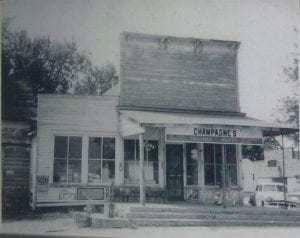
Pigeon Michigan Amusement Parlor c1900
This picture of a street scene in Pigeon, Michigan is thought to be taken right around 1900. The amusement parlor
Continue readingOur best Michigan history posts are found below.
This picture of a street scene in Pigeon, Michigan is thought to be taken right around 1900. The amusement parlor
Continue readingThis historical Drugstore is deemed as being Michigan’s longest family owned continuously operating pharmacy in Michigan. It stands today as a boutique shop in Port Sanilac.
Continue readingf Cass City Road in Cass City has stayed somewhat unchanged for the past 90 years. Some of the buildings remain, many have been remodeled. However, the ornate trim and front facades and balconies are long gone.
Continue readingKinde was once renowned as the “Bean Capital of the World“. Michigan white navy bean soup has been a staple for over one hundred years in the U.S. Senate dining room in the form of Senate bean soup
Continue readingThe picture post on our sister site about the huge dock in Forrestville gives rise to the question. Why did they name the boathouse the Iron Chief? A little exploring showed that there indeed was a ship with this unusual name but she was not made out of iron. Today, she lays in over a hundred feet of water off the shore of the Grindstone City in the Thumb Area Bottomland Preserve
Continue readingThe Coast Guard Station at Harbor Beach, originally built in 1910 and relocated in 1935, served as a training facility during WWII before closing in 1987. Despite preservation efforts, the station was demolished in 2004. It played a significant role in the Great Lakes waterway system and local maritime history.
Continue readingWhile neglected, with broken windows, faded peeling paint and vines almost covering one end, this historic depot helped make the region an economic powerhouse for the eastern shore of the Thumb for decades
Continue readingIn October of 1871, a great forest fire swept across much of the Thumb region including the section of Michigan that included the lands of the former colony of Ora Labora. The colony was in the process of being disbanded and the lands sold off, but large holdings remained including some cabins and buildings. The colony’s benefactor and primary landowner, the Harmony Society immediately sent $200 for distribution among the needy.
Continue readingIn spring, the winter logging operations ended, and the long run to the sawmill began. In this picture, two men, called River Hogs, worked to keep the logs moving along the Pigeon River to the sawmill in Caseville. The work took skill and was dangerous. River Hogs were paid up to $3.50 per day.
Continue readingFrom the 1830s until the 1910s, Grindstone City Michigan produced the premier grinding wheels in the United States. In 1888, the Cleveland Stone Co. Purchased the property owned by Worthington and Sons and became the sole owner of all quarry properties.
Continue reading