


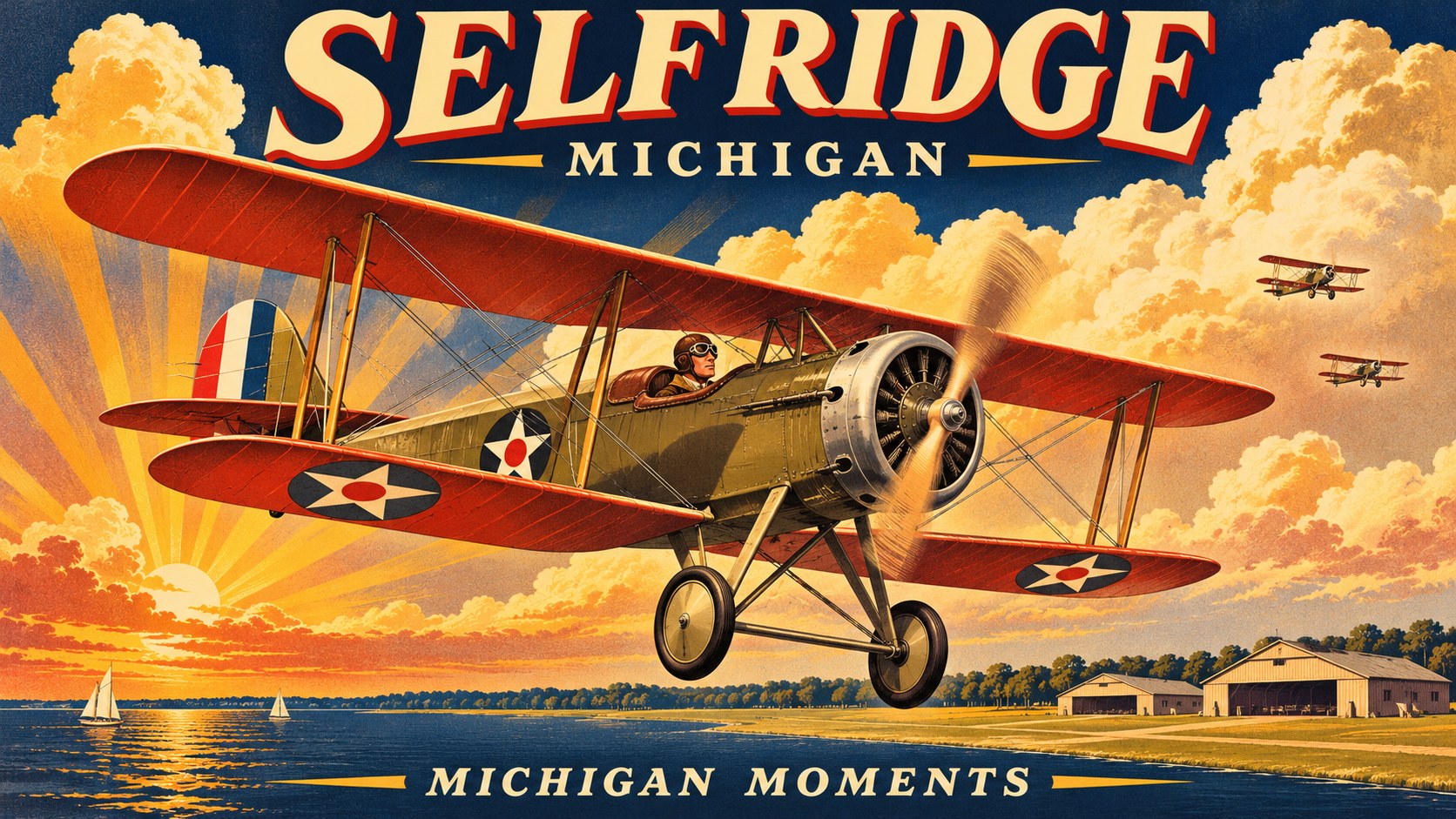
History of Selfridge Field – The Michigan Home to One of the Oldest Continuously Operating Military Airfields in the United States
The History of Selfridge Field includes a landing ground that Michigan supplied each winter: frozen Lake St. Clair. In March 1923, some pilots tested auxiliary fuel tanks while others operated aircraft fitted with skis. Weather had become part of the Army’s classroom.
In March 1923, pilots at Selfridge, Michigan, tested auxiliary fuel tanks while other aircraft landed on frozen Lake St. Clair using skis. Selfridge, Michigan, has a history of experiments that sound unusual now but addressed immediate problems: limited range, winter weather, and the need to operate away from an ideal airfield. At this lakeshore installation near Mount Clemens, the Army had room to try things.

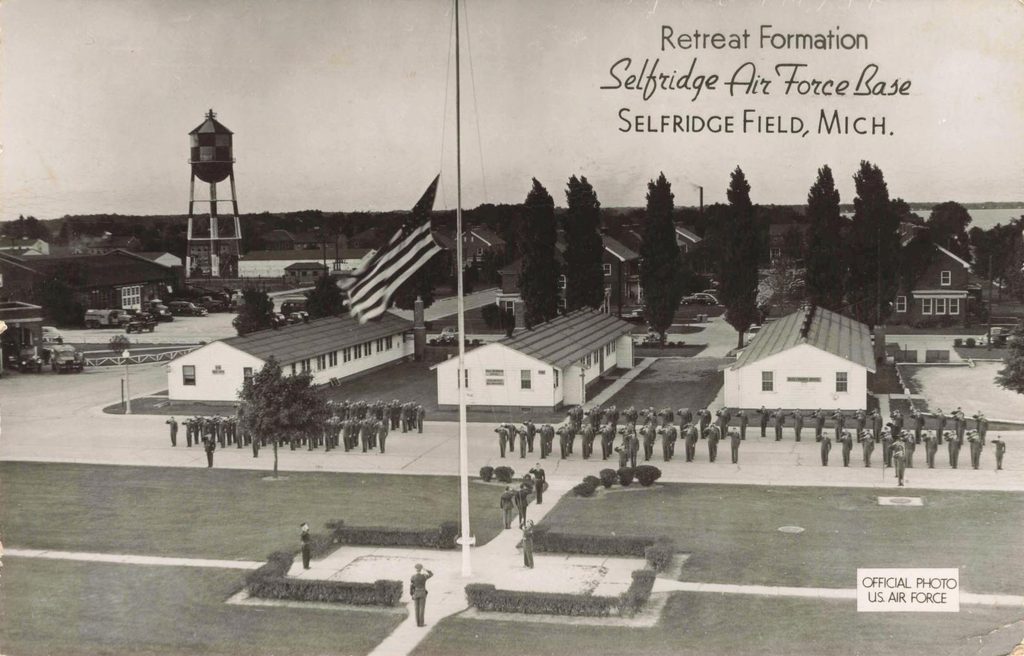
Selfridge sits in Harrison Township, Macomb County. Its development merged Detroit’s automotive expertise with military aviation, creating a community centered on aircraft. The airplanes attracted attention, but the barracks, kitchens, and maintenance buildings explain how the place functioned.

History of Selfridge Field – Packard’s Connection to a New Airfield
In 1916, Packard acquired lakeshore land at the urging of company president Henry B. Joy, an aviation enthusiast. Aircraft engines offered a new application for manufacturing skills already concentrated around Detroit. The following spring, Joy and local business interests supported establishing a military airfield at the site.

American entry into World War I accelerated the work. According to the Mount Clemens Public Library’s account of the field’s founding, Joy Boulevard connected the property with Gratiot Avenue, while Grand Trunk extended railroad access from the sugar mill. Before aircraft could operate, the installation needed a dependable way to receive materials and equipment.
Selfridge Field opened July 1, 1917. Lt. Byron Q. Jones made its first military flight in a Curtiss Jenny on July 8, and formal flying operations began July 16. The field honored Lt. Thomas Etholen Selfridge, who had died after a Sept. 17, 1908, crash while flying with Orville Wright at Fort Myer, Virginia.
Lake St. Clair Became Part of the Training Ground
Military flying required more than pilots. Mechanics needed to maintain unfamiliar machines, while aerial gunners had to learn to fire from moving aircraft. In 1918, Frank Lackland established an aerial gunnery school at Selfridge, with Capt. William Pedrick overseeing its daily operation.

Instruction extended onto Lake St. Clair. Trainees fired from a floating platform at targets on the water, introducing movement into their practice before they faced the difficulties of shooting in flight. The lake gave this southeastern Michigan post a training resource that an inland field could not offer in the same way.
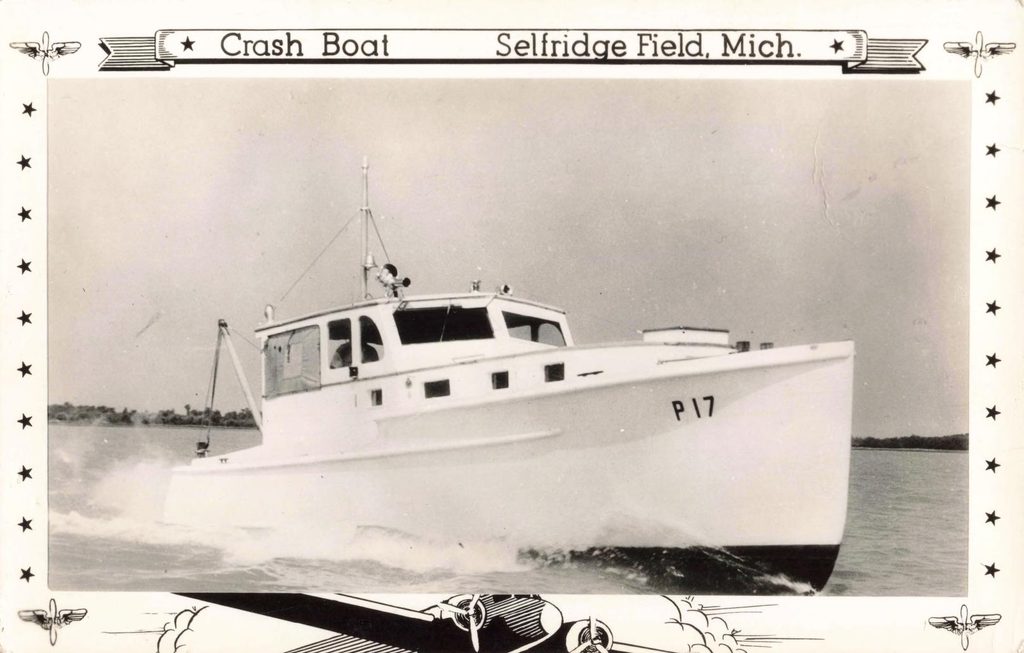
Water also required its own supporting equipment. The supplied crash-boat postcard places a powered rescue craft within the airfield’s story. Its caption and the boat’s identification, P17, preserve a connection easily overlooked when attention stays on the airplanes.
Pursuit Pilots Returned in 1922
The end of World War I brought reductions and uncertainty. The 1st Pursuit Group organized at Selfridge in 1919, then transferred to Texas. The federal purchase of the airfield property in 1921, and the group’s return on July 1, 1922, began a long period of fighter training and experimentation.
That October, Selfridge hosted the National Air Races. Lt. Donald Stace won the inaugural John L. Mitchell Trophy Race at about 148 miles an hour. Billy Mitchell established the competition in memory of his brother; it encouraged the development of pursuit aircraft and gave pilots a demanding public test.
Selfridge, Michigan, also has a history of less theatrical experiments. On March 5, 1923, pilots tested auxiliary fuel tanks while other aircraft used skis on frozen Lake St. Clair. The 127th Wing’s account of those trials connects the field with early efforts to extend fighter range.
The Working Day Continued Beyond the Flight Line
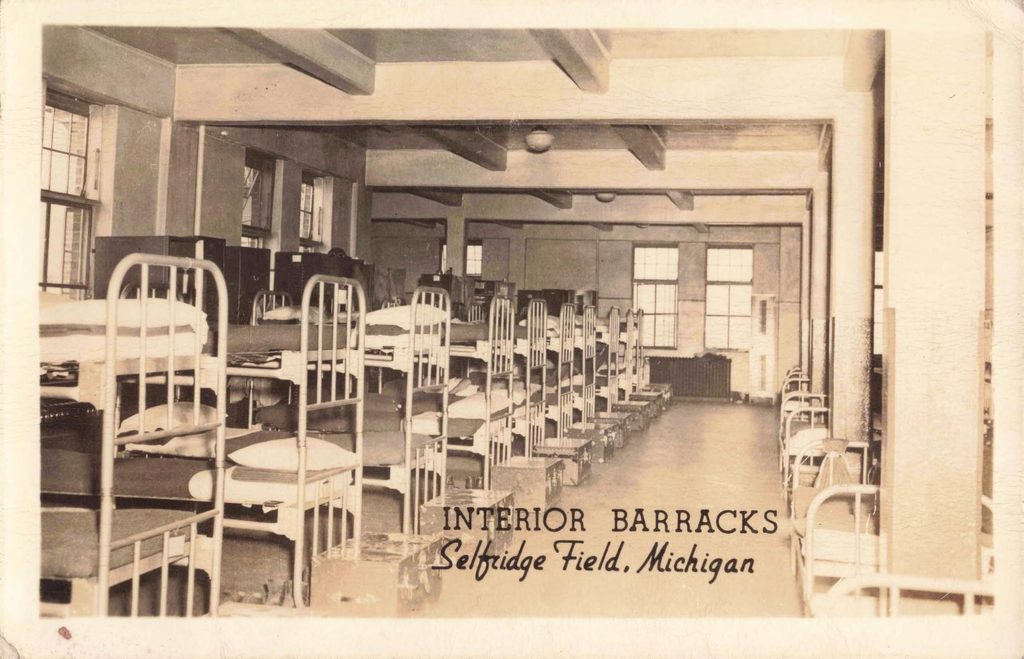
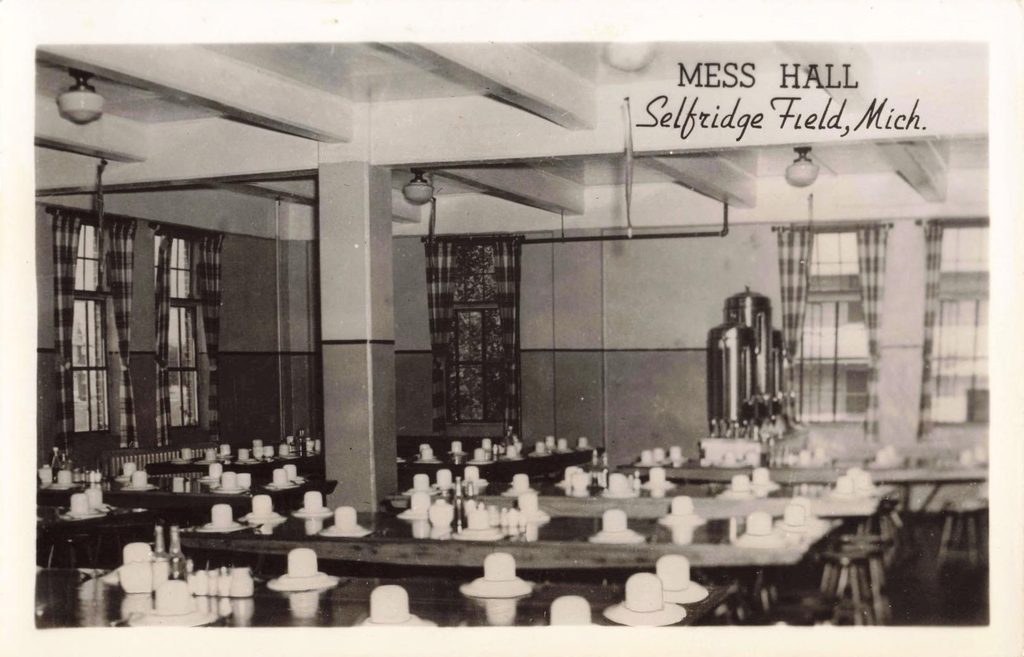
The surviving postcards give historic Selfridge a more familiar scale. A barracks interior contains closely arranged metal beds beneath exposed ceiling beams. The mess hall has long tables prepared for meals, making clear that feeding and housing personnel were substantial parts of the operation.

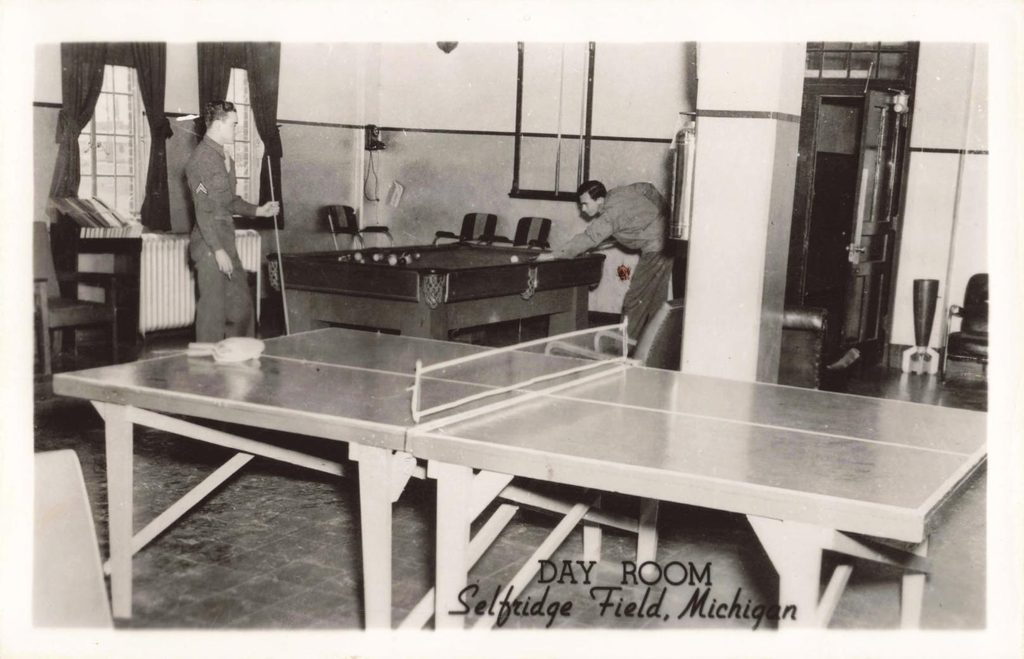
Recreation also had a place inside the post. A day-room view shows table tennis in the foreground and a pool table farther back. These spaces gave personnel somewhere to spend free time without traveling into town, and they offer a useful counterpoint to the formal aircraft portraits.
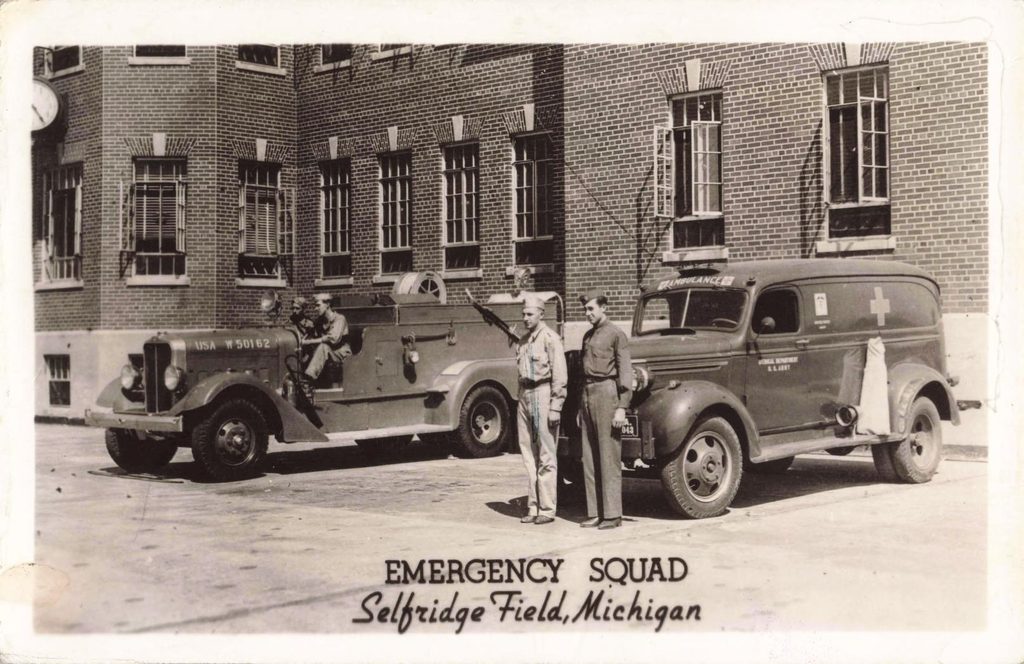
The emergency-squad card adds another occupation to the record. Uniformed personnel stand with a fire engine and an ambulance outside a brick building. Their vehicles show that the installation provided its own emergency response alongside specialized flying and aircraft maintenance.

Brick Buildings and Pavement Replaced Temporary Arrangements
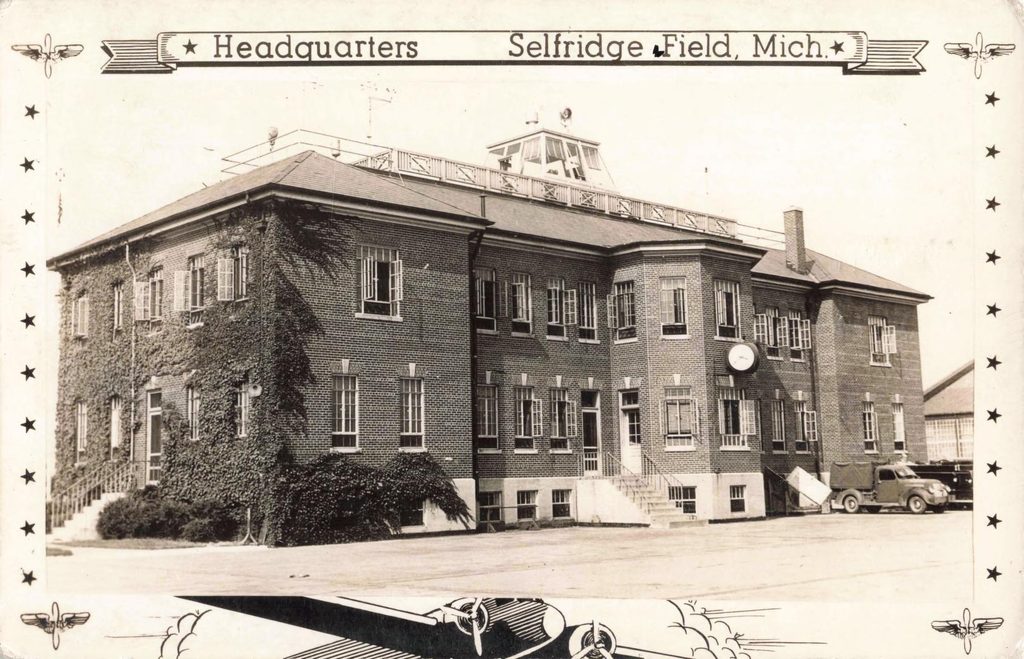
Selfridge historical buildings reflect the movement toward a permanent post in the late 1920s and early 1930s. A 1931 Air Corps report described four new hangars under construction and work on headquarters. The post exchange moved into a former officers’ club, closer to the barracks, while a Mount Clemens water connection was planned.
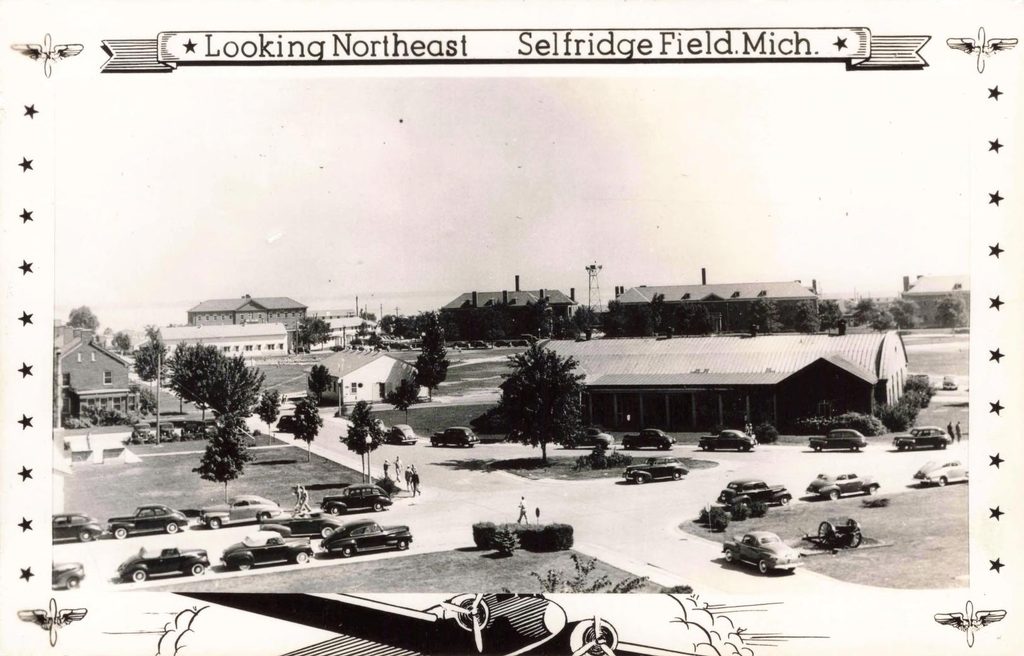
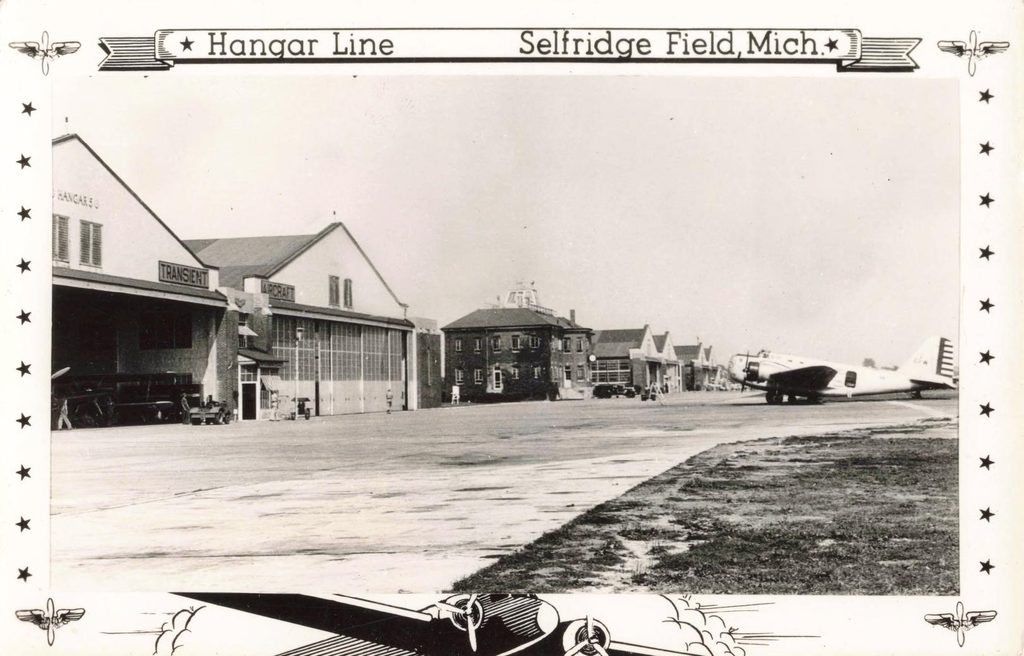
Federal recovery funding supported further improvements in 1933. Two paved strips promised relief from muddy aircraft movements in bad weather. For mechanics responsible for keeping machines ready, that practical change belonged alongside the more celebrated advances in speed and range.
From World War II Training to the Jet Age
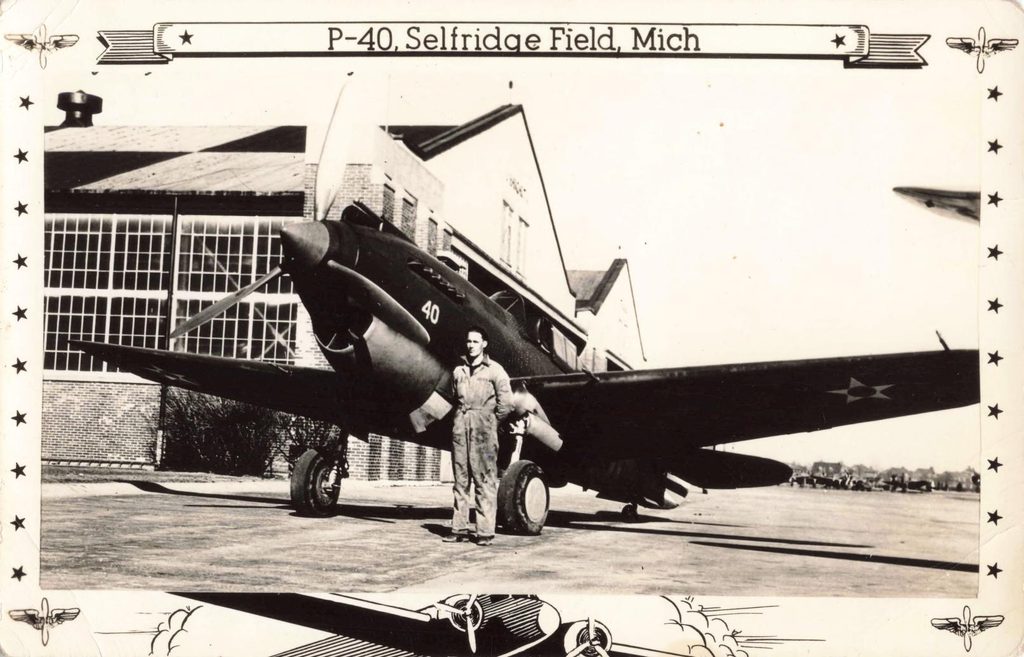
The P-40 postcard marks another stage in the history of Selfridge Michigan. Production began in 1940, bringing the story into an era of enclosed cockpits and metal monoplanes. The field’s duties expanded again as the United States prepared for and entered another world war.
In 1943, the 332nd Fighter Group trained at Selfridge and Oscoda before overseas service. Its Tuskegee Airmen included mechanics and support personnel as well as pilots, all working within a segregated military. Their preparation in Michigan belongs to the installation’s history of both technical training and unequal treatment.
In July 1948, sixteen F-80s of the 56th Fighter Group completed the first west-to-east transatlantic jet crossing. Selfridge transferred to Michigan Air National Guard control in 1971, and the museum and its historical association were formed in 1975. The preserved records now give voice to the people who lived in the barracks and worked around the hangars, alongside the aircraft that carried Selfridge’s name overseas.
Two Details Behind the Aviation Terms
What did “pursuit” mean?
Pursuit was the Army’s earlier designation for the fighter role. The 1st Pursuit Group trained to engage enemy aircraft and tested the equipment and tactics needed for that work.
Why carry an external fuel tank?
An auxiliary tank increased the fuel available beyond the aircraft’s internal supply. Selfridge’s 1923 tests belong to the early development of equipment intended to extend fighter range.
Selfridge, Michigan: Historical Timeline
Michigan Moments · 1908–1975
Selfridge, Michigan:
Historical Timeline
From the first generation of Army aviators to jets crossing the Atlantic. Follow 14 turning points at the Lake St. Clair airfield.
Explore the timeline — open a year for its story
-
1908The name before the field
Lt. Thomas E. Selfridge dies after a Sept. 17 crash with Orville Wright at Fort Myer, Virginia.
Historical source: National Archives
-
1916An aviation site takes shape
Packard acquires lakeshore land at Henry B. Joy’s urging as the company develops aircraft engines.
Historical source: Mount Clemens Public Library
-
1917Military flying begins
Selfridge Field opens July 1. Byron Q. Jones makes its first military flight July 8; formal flying operations begin July 16.
Historical source: 127th Wing historical account
-
1918Learning aerial gunnery
Frank Lackland establishes an aerial gunnery school, with training on land, on Lake St. Clair and in the air.
Crash boat P17, undated. The postcard records the water-rescue work that accompanied flying at a lakeshore installation. Michigan Moments supplied collection · Tinder filename ID 075079. Click the image to enlarge. Historical source: 127th Wing: the gunnery school
-
1919A brief first stay
The 1st Pursuit Group organizes at Selfridge, then transfers to Texas.
Historical source: U.S. Air Force station history
-
1921Federal purchase
The federal government purchases the airfield property.
Historical source: Selfridge Military Air Museum
-
1922Pursuit pilots return
The 1st Pursuit Group returns July 1. The National Air Races follow in October.
Historical source: 1st Fighter Wing Association
-
1923Fuel tanks and frozen water
On March 5, Selfridge tests auxiliary fuel tanks while ski-equipped aircraft operate from frozen Lake St. Clair.
Historical source: 127th Wing: auxiliary fuel tanks
-
1931A more permanent post
An Air Corps report describes four new hangars, headquarters construction and plans for a Mount Clemens water connection.
Headquarters, undated postcard. The completed brick building reflects the development of a more permanent military post. Michigan Moments supplied collection · Tinder filename ID 075047. Click the image to enlarge. Historical source: 1931 Air Corps construction report
-
1933Paving over the mud
Federal recovery funds support two paved strips to improve aircraft ground operations.
Hangar line, undated postcard. Paved working areas helped crews move and service aircraft beside the hangars. Michigan Moments supplied collection · Tinder filename ID 075057. Click the image to enlarge. Historical source: 1933 Air Corps construction report
-
1943The 332nd trains in Michigan
The 332nd Fighter Group trains at Selfridge and Oscoda before departing for overseas service. These Tuskegee Airmen include pilots, mechanics and the support personnel needed to operate a combat unit.
P-40 at Selfridge, 1940s-era postcard. This view places the field within the wartime generation of enclosed-cockpit fighter aircraft. Michigan Moments supplied collection · Tinder filename ID 075091. Click the image to enlarge. Historical source: Air Force Historical Research Agency
-
1948Jets cross the Atlantic
In July, sixteen F-80 jets from Selfridge’s 56th Fighter Group complete the first west-to-east transatlantic jet crossing.
The 56th Fighter Group’s jet era. This undated postcard is labeled “56th Fighter Group P-80s in Flight.” Michigan Moments supplied collection · Tinder filename ID 075077. Click the image to enlarge. Historical source: Selfridge Military Air Museum
-
1971The Guard takes charge
Selfridge transfers to Michigan Air National Guard control July 1.
Historical source: U.S. Senate centennial resolution
-
1975A museum begins
The Michigan Air Guard Historical Association and Selfridge Military Air Museum are formed to preserve the installation’s aviation history.
Historical source: Selfridge Military Air Museum


Selfridge is in Harrison Township, Macomb County, near Mount Clemens. Archival postcards illustrate the airfield and its equipment; event dates are supported by the linked historical sources.
Questions About Selfridge’s History
Is Selfridge a town in Michigan?
Selfridge is a military installation in Harrison Township, Macomb County, near Mount Clemens and Lake St. Clair.
When did Selfridge Field open?
Selfridge Field opened July 1, 1917. Its first military flight followed July 8, and formal flying operations began July 16.
Who was Thomas Selfridge?
Lt. Thomas E. Selfridge was an Army aviation pioneer who died after a Sept. 17, 1908, crash with Orville Wright at Fort Myer, Virginia.
Did the Tuskegee Airmen train at Selfridge?

Yes. The 332nd Fighter Group trained at Selfridge and Oscoda in 1943 before overseas service.
Do You Have a Selfridge Connection?
The History of Selfridge Field is also recorded in its postcards: beds arranged in a barracks, dishes waiting in a mess hall, and vehicles ready outside an emergency station. They show the working community that kept the field operating between its better-known moments.
If someone in your family served or worked at Selfridge, share what you know. Letters, dated postcards and names connected with these buildings can help add detail to the record.
? Works Cited
Air Force Historical Research Agency. “332 Expeditionary Operations Group (ACC).” Department of the Air Force History and Heritage. Accessed 3 Nov. 2026.
Coleman-Foster, Matthew. “Mitchell Trophy Air Race Returns: Honoring 1 FW Legacy and Innovation.” Air Combat Command, 25 Oct. 2024.
Heaton, Dan. “Chronology Highlights Tuskegee Airmen History at Selfridge.” 127th Wing, 27 Feb. 2013.
Heaton, Dan. “Heritage Series: Lackland Established Selfridge as Training Site.” 127th Wing. Accessed 3 Nov. 2026.
Heaton, Dan. “Selfridge ANGB: Home of the Drop Tank.” 127th Wing, 12 Jan. 2014.
Michigan Moments. “Selfridge.” Supplied historical image collection, Google Drive. Accessed 3 Nov. 2026.
Mount Clemens Public Library. “The Founding of Selfridge Field.” Local History Sketches, 2008.
National Archives. “Fatal Crash.” Education Updates, 21 July 2015.
National Air and Space Museum. “Curtiss P-40E Warhawk (Kittyhawk IA).” Smithsonian Institution. Accessed 3 Nov. 2026.
Selfridge Military Air Museum. “History of Selfridge Air National Guard Base and the Selfridge Military Air Museum.” Accessed 3 Nov. 2026.
United States Air Force. “1st Fighter Wing Units Have Traveled the World.” Accessed 3 Nov. 2026.
United States Army Air Corps. “Construction Work at Selfridge Field Well Under Way.” Air Corps News Letter, 1931.
United States Army Air Corps. “New Air Corps Construction.” Air Corps News Letter, 1933.

