


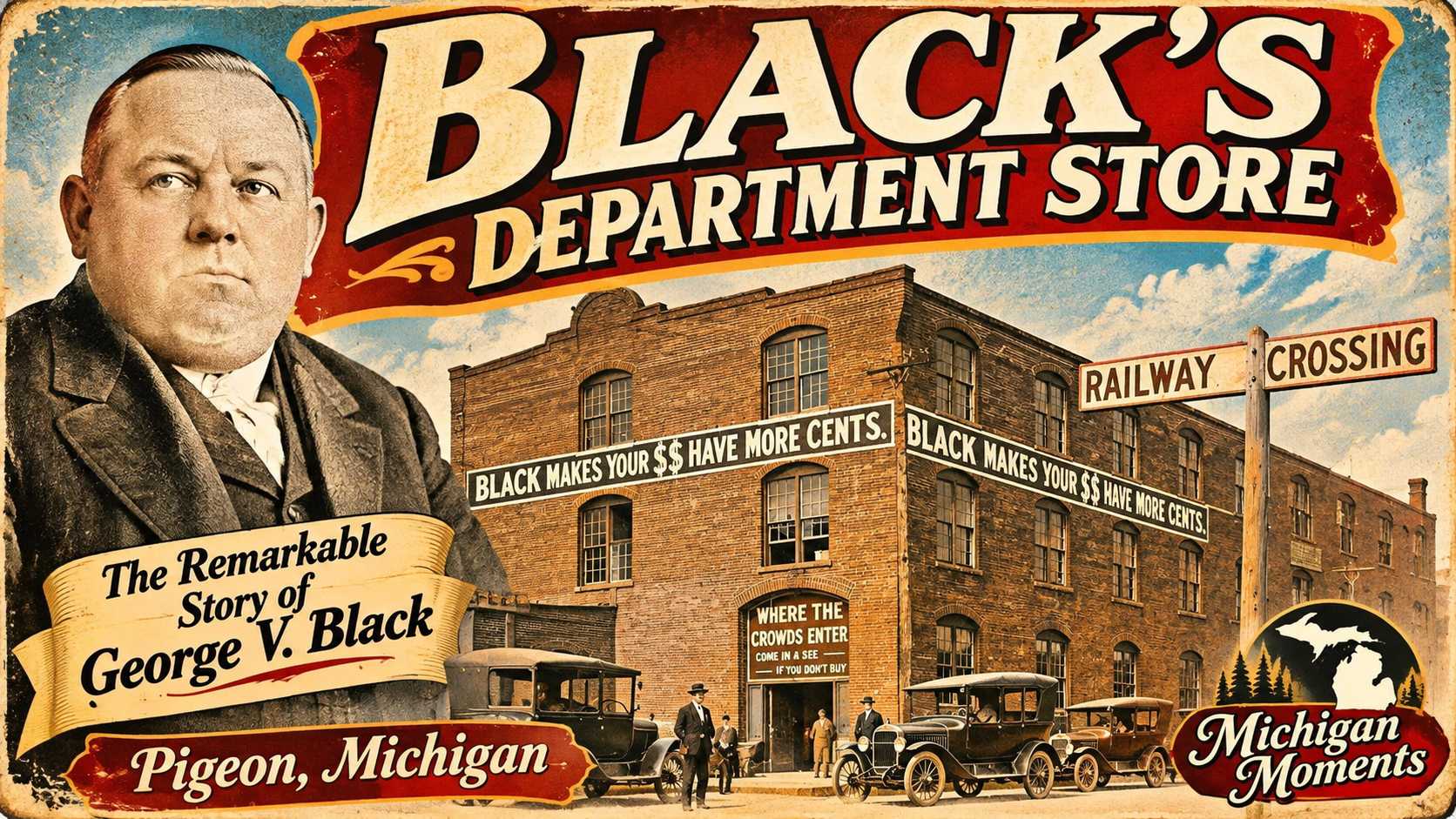
Black’s Store in Pigeon Michigan – The Remarkable Rise and Fiery Fall of a Retail Empire
Long before Walmart and modern shopping centers, a Michigan merchant built a three-story department store in the small Thumb village of Pigeon. George V. Black attracted customers from across the state with bargain prices, unusual advertising, and even free railroad fares. His success made him a local celebrity, but a devastating fire brought his retail empire to an abrupt end.

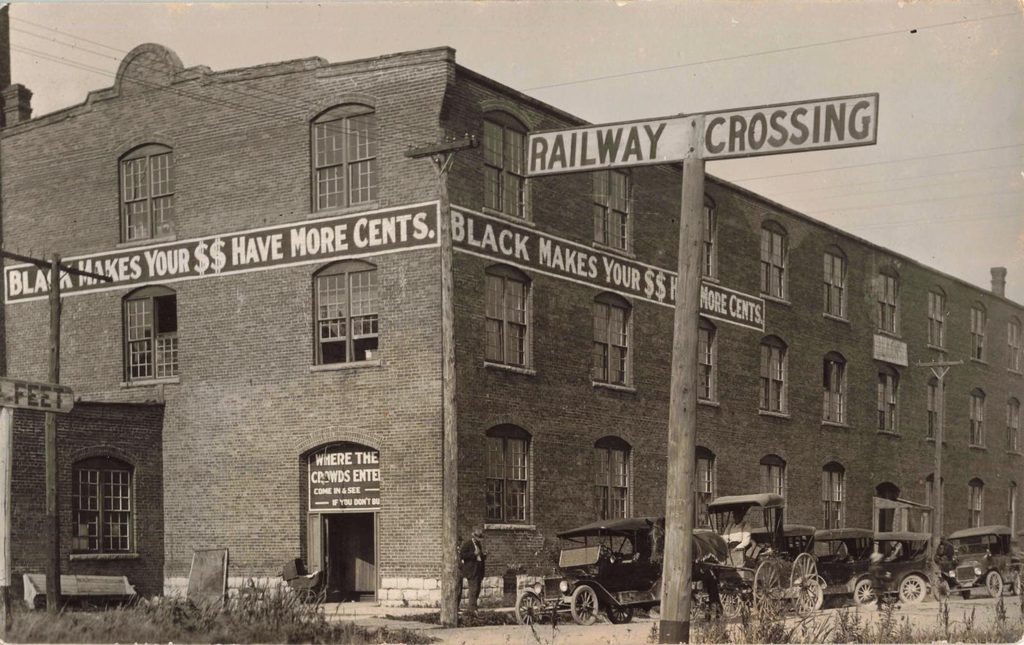
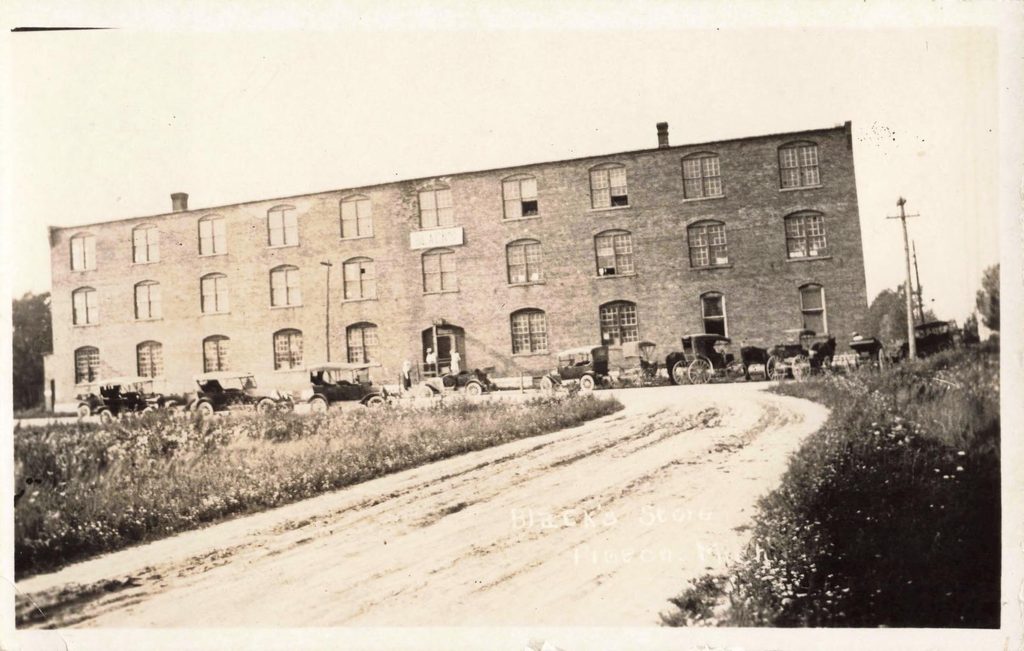
In the early 1920s, shoppers arriving in Pigeon, Michigan, encountered an enormous three-story brick building near the railroad crossing. Bold advertising stretched across its exterior, promising customers something every farmer and working family could appreciate: “BLACK MAKES YOUR $$ HAVE MORE CENTS.” Outside, automobiles and horse-drawn vehicles lined the unpaved road as customers arrived to shop at one of rural Michigan’s most unusual department stores.
The building was Black’s Department Store, a retail operation containing nearly 50,000 square feet of merchandise and storage space. Its owner, George V. Black, had transformed a former buggy factory into a regional shopping destination offering everything from groceries and work boots to farm equipment, furniture, and pianos. In a village of roughly 800 residents, Black built a business that drew shoppers from across Michigan’s Thumb and beyond.
His remarkable career began decades earlier with an egg crate, a homemade wagon, and just $2 worth of merchandise. By the time his business peaked, Black had become one of the region’s best-known merchants, using sales techniques that anticipated late-20th-century big-box retailers.

From a $2 Investment to a Growing Retail Business
George V. Black was born in Canada on Dec. 18, 1869, and moved to Michigan with his family when he was three years old. Growing up in Lapeer County, he received only about two years of formal schooling but developed an early interest in business. Around 1882, he began traveling through rural communities selling inexpensive jewelry and small household items from a homemade wagon.

Money was often scarce in farming communities, so Black accepted eggs in exchange for merchandise and later resold them for a profit. As his business expanded, he acquired a horse, buggy, and accordion, adding entertainment to his sales routine. His musical performances earned him the nickname “Peddling Troubadour,” and his ability to entertain customers helped build a reputation that followed him throughout his career.
Black eventually opened a store in Souletown before moving his business to Berne, just north of Pigeon, in 1897. Over the next years, he built a reputation for buying surplus merchandise and selling products other merchants considered difficult to market. He relied on buying goods at unusually low prices and moving large quantities through aggressive promotion.
The young merchant had little interest in conventional retail practices. Instead, he sought opportunities in overstocked factories, bankrupt businesses, and merchandise other retailers wanted to clear from their shelves. His willingness to purchase unconventional goods would eventually become the foundation of his success in Pigeon.
How Pigeon Became a Regional Shopping Center
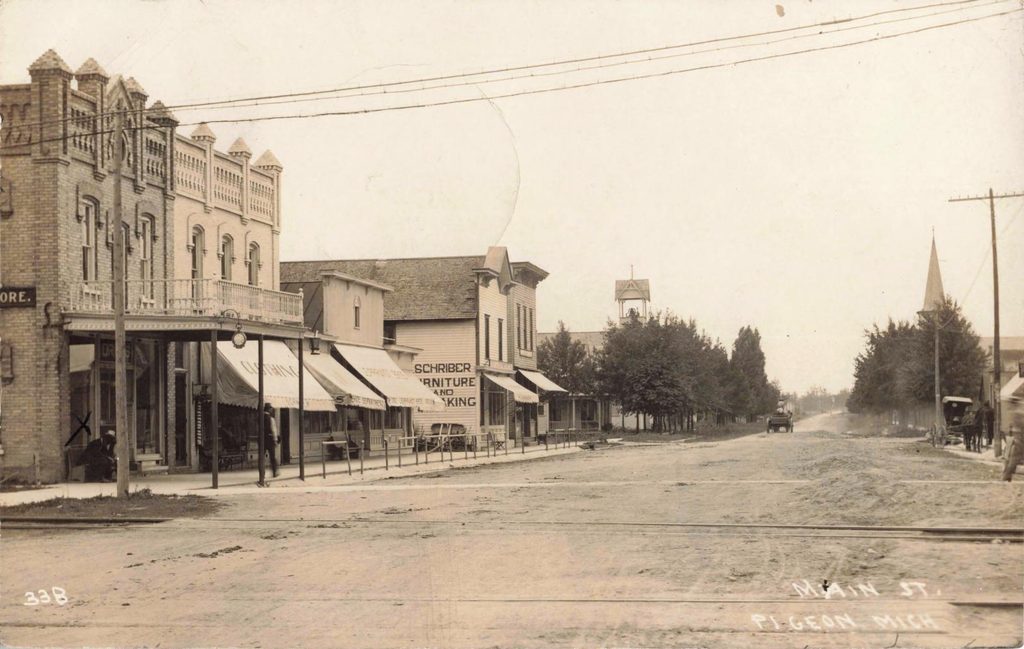
When Black moved his operation to Pigeon in 1914, the village was already an important commercial center in Huron County. Its location at the intersection of two railroad lines connected it to communities throughout the Thumb and larger Michigan cities. Farmers brought agricultural products into town while local businesses supplied machinery, clothing, furniture, and household necessities.

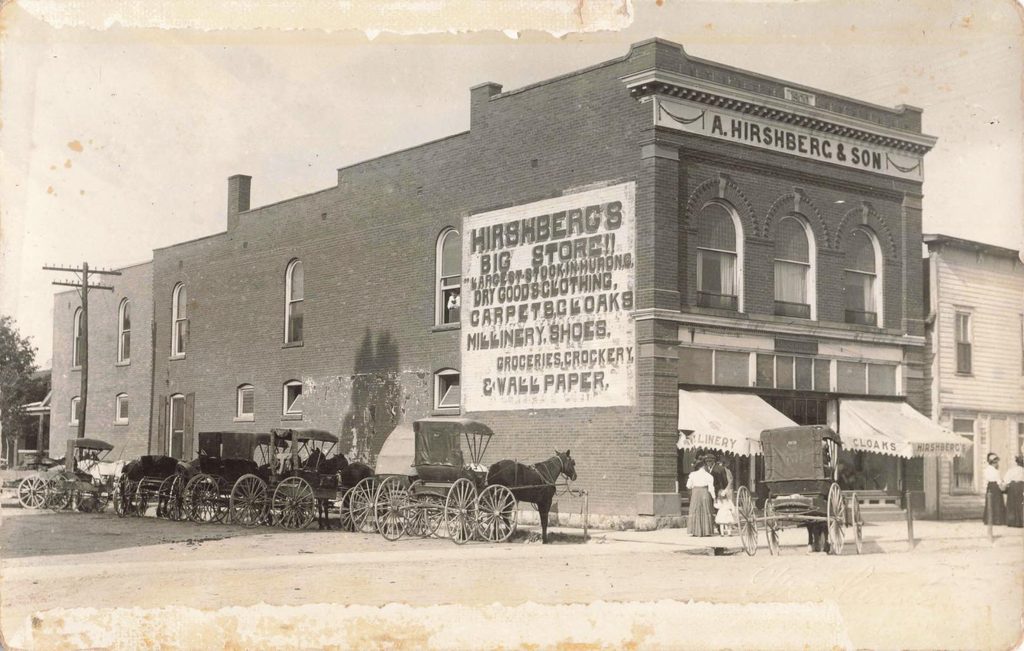
Pigeon supported banks, hotels, blacksmiths, hardware dealers, clothing stores, and other businesses serving the surrounding agricultural community. Among its established merchants was Hirshberg’s Big Store, which opened in 1897 and offered an extensive selection of clothing and household goods. Competition was substantial, but the village had developed a reputation as a convenient place for rural families to conduct business.
Black recognized the advantages of Pigeon’s railroad connections and growing commercial activity. In 1914, he purchased the former Gould buggy factory and converted the imposing three-story building into a department store. The structure provided the enormous floor space he needed to expand his inventory and attract customers who otherwise might have traveled to Saginaw, Bay City, or another larger community.
Historic photographs show a substantial brick building with tall arched windows, prominent advertising signs, and a steady collection of automobiles parked outside. The railroad crossing stood directly beside the business, reinforcing the importance of passenger and freight trains to its success. For a community of Pigeon’s size, Black’s Store was an extraordinary commercial undertaking.
A Department Store That Sold Almost Everything
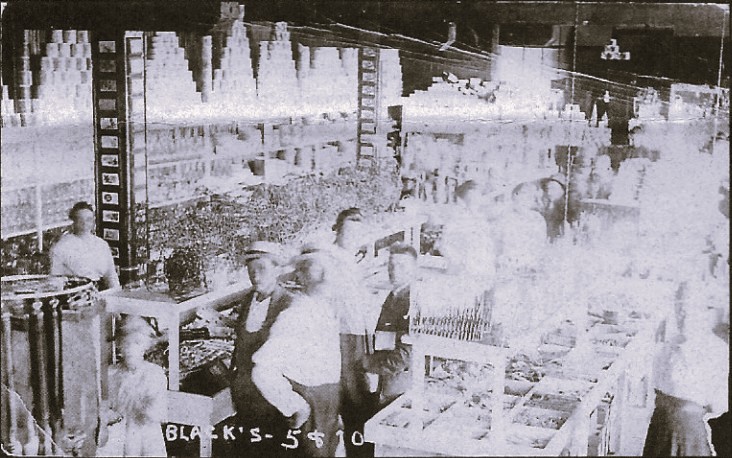
Inside Black’s Store, customers encountered an assortment of merchandise that rivaled businesses in much larger towns. The inventory included groceries, men’s and women’s clothing, children’s garments, boots, hats, gloves, hardware, farm tools, stoves, books, and household supplies. Shoppers could also find pianos, talking machines, and many other products becoming popular in American homes.
Black traveled regularly by railroad to purchase surplus goods from manufacturers, business liquidations and other sources. His buying strategy allowed him to acquire merchandise at prices that supported the bargain sales featured in his advertising. Freight shipments arrived by the boxcar, providing enough merchandise to keep the enormous building stocked.
His sales tactics reflected an understanding of rural consumers, who often had limited disposable income and valued the opportunity to stretch their household budgets. By pairing inexpensive necessities with unusual merchandise, Black gave customers reasons to return. A family might arrive for groceries and work clothes but leave with a bargain on furniture, cookware, or another household item.
The store also reflected the Thumb’s changing economy in the early 20th century. Farmers increasingly purchased manufactured equipment and household products rather than relying entirely on local craftsmen or homemade goods. Black’s business helped bring the expanding national consumer market into a rural Michigan village.
The Merchant Who Paid Customers to Ride the Train
George Black understood that low prices meant little if potential customers never heard about them. He became an enthusiastic advertiser, using local newspapers, promotional catalogs, contests, coupons, and giveaways to attract attention. His advertising often used humor, unconventional sales offers, and memorable slogans to set his business apart from competitors.

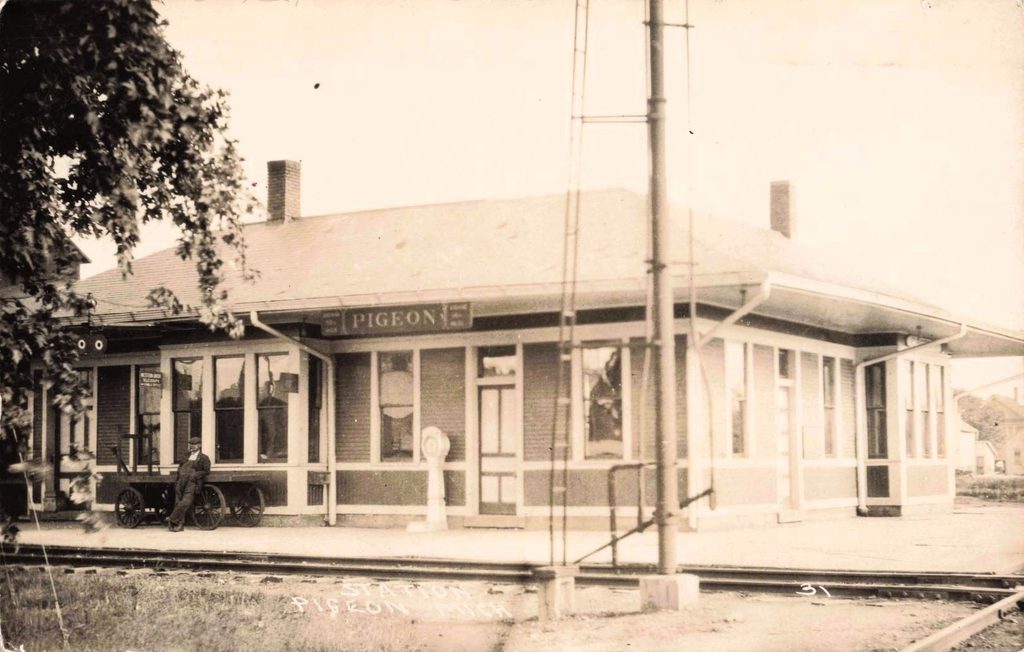
One of his most ambitious promotions involved paying railroad fares for customers traveling to Pigeon. Black advertised the offer in surrounding communities and greeted arriving passengers, reimbursing qualifying shoppers for their transportation expenses. The promotion encouraged people from beyond Pigeon’s immediate trading area to travel to his store.
Special trains brought shoppers from cities including Saginaw, Port Huron and Pontiac, while regular passenger service connected Pigeon with smaller communities throughout the region. Black’s promotional efforts helped make the village a shopping destination rather than simply a place where nearby residents purchased necessities. His willingness to pay transportation costs demonstrated just how valuable he considered attracting additional customers.
Black also distributed catalogs throughout the Thumb, with an early mailing reaching approximately 1,500 postal customers. Later, he published a promotional newspaper called The Live Wire, reportedly distributing 10,000 copies across Michigan and beyond. The publication allowed him to reach shoppers who might otherwise have known little about his enormous store.
His advertisements frequently relied on humor. One offered damaged dishes at bargain prices with “no extra charge for cracks,” while another encouraged shoppers to “FOLLOW THE CROWDS.” Such advertising made Black a recognizable personality and gave residents something to talk about even when they were not planning a shopping trip.
Shopping in Michigan’s Thumb Before Modern Highways
Black’s success is especially interesting against the backdrop of the everyday challenges rural families faced in the early 1900s. Most roads outside Michigan’s larger cities were unpaved, and seasonal mud, snow, and flooding could make travel difficult. Horse-drawn wagons remained common even as automobiles began appearing throughout the countryside.
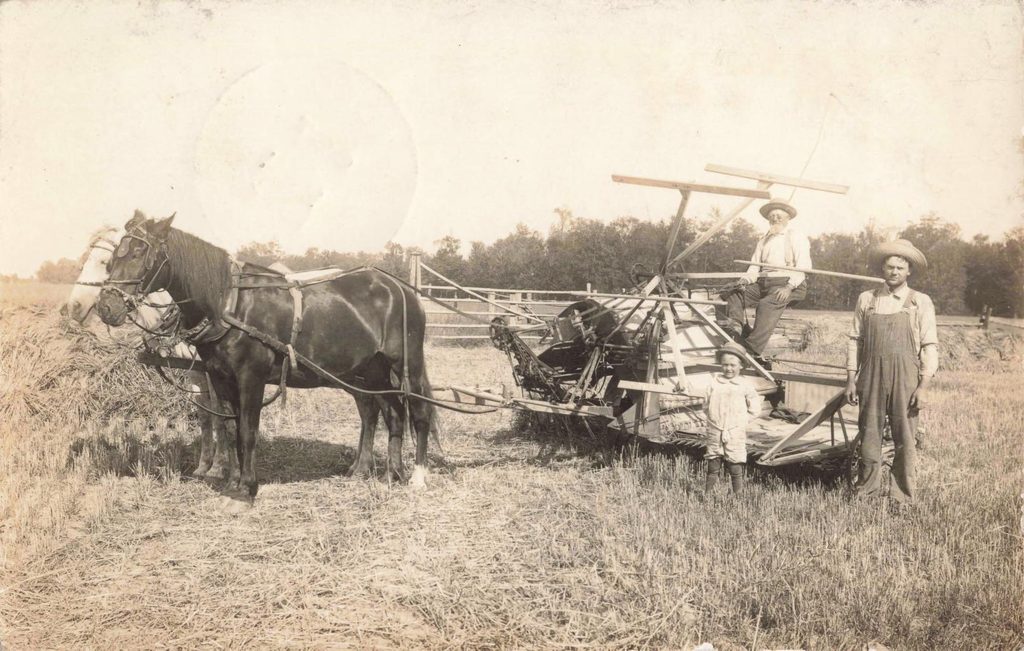
A shopping trip to Pigeon could require considerable planning, especially for families living several miles from town. Farmers often combined their visits with banking, equipment purchases, deliveries, and other business, while families used the opportunity to purchase clothing and household supplies. Shopping was also a social occasion, giving neighbors an opportunity to exchange news and maintain friendships.
The village offered a variety of services that reflected changing standards of living. Local merchants sold everything from sewing machines and windmills to gasoline stoves and automobiles, while doctors, dentists, barbers, and blacksmiths served the surrounding population. Pigeon even had a public bathhouse offering tubs, showers, and designated bathing days for women.
Black’s Department Store fit into this busy commercial environment by offering an unusually broad selection of goods in one location. Its extensive inventory appealed to farming families who wanted to accomplish as much as possible during a single trip. The store’s success showed that rural shoppers valued convenience long before supermarkets and national discount chains arrived.
The Families Behind Black’s Retail Success
Although George Black became the public face of the business, employees who stocked merchandise, assisted customers, and handled accounts ran its daily operations. One was Veronica “Fannie” Gascho, a widow raising five children after her husband died in 1916. Her experience provides a personal view of how the department store affected working families in Pigeon.

Gascho supported her children through a variety of jobs, including washing clothes, cleaning, sewing, carpet rags, and picking beans. She eventually found employment as a clerk at Black’s Department Store and later moved into office work, where Mrs. Black taught her bookkeeping. The position provided a valuable income source when employment opportunities for widowed mothers were limited.
The Black and Gascho families also developed personal connections. According to a family history preserved by the Pigeon Historical Society, Gascho’s daughter Nancy and Black’s son Gerald were childhood companions. Their relationship illustrates how the store’s business activities extended into local residents’ everyday lives.
For employees like Gascho, Black’s Store was more than an impressive building filled with merchandise. It provided income, stability, and community connections. Its eventual destruction would affect not only its owner but also the families who depended on the business.
The Devastating Fire That Destroyed Black’s Store
By 1925, Black’s Department Store had reportedly reached annual sales exceeding $300,000, an extraordinary figure for a business operating in a small rural village. Its enormous inventory and steady customer flow made it one of Pigeon’s most prominent commercial enterprises. Then, on Feb. 1, 1925, a fire swept through the building and brought the operation to a sudden end.
Flames destroyed the three-story structure and the merchandise inside, leaving behind a heap of smoldering ruins. According to the Pigeon Historical Society, the inventory loss alone exceeded $150,000, while the building and fixtures represented another $40,000 or more. Insurance reportedly covered approximately $100,000, leaving Black with a substantial financial loss.
As residents watched the destruction, someone reportedly asked Black what he intended to do next. His response reflected the determination that had characterized his business career: “I still have a kick, and I’m a long way from being licked.” The statement became part of the local history surrounding the famous merchant and his ruined department store.
The fire ended Black’s retail operation in Pigeon, and the enormous building was never rebuilt. Its loss also raised questions about the village’s commercial future, particularly for businesses that benefited from the customers he attracted. Whether competing merchants welcomed his departure or regretted losing a major regional draw remains a matter of historical speculation.
Another Fire Strikes Black’s Business
Despite his losses, Black continued operating retail businesses elsewhere in Huron County. He established a store in Colling, hoping to rebuild his commercial operations on a smaller scale. Unfortunately, another destructive fire followed.
On Feb. 5, 1926, the Cass City Chronicle reported that Black’s general store in Colling had burned the previous Sunday night. The newspaper estimated the loss at $75,000, with insurance covering only about $25,000. An overheated stove was suspected of starting the blaze, although the report did not establish a final cause.
The fire also endangered several people occupying apartments above the store. With the stairway blocked by flames, some residents escaped by jumping from the building, according to the newspaper account. Remarkably, those involved reportedly survived without serious injuries.
The Colling disaster marked Black’s second major store fire in about a year, yet he kept trying to rebuild his business. In October 1926, he established another store in Owendale, promoting it as a distinctive retail operation. His days of operating an enormous department store were over, but his interest in merchandising remained.
George V. Black’s Final Years and Lasting Influence

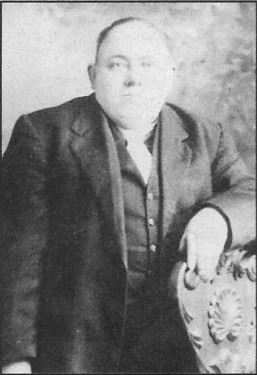
George Black suffered declining health during the summer of 1928 and died Sept. 5, 1928, at age 58. His career spanned from horse-drawn peddler wagons to the early automobile era, reflecting the rapid commercial changes across rural Michigan. Following his death, the Owendale business was sold to Louis Levinsohn of Bay City, according to the Pigeon Historical Society.
The destruction of Black’s Department Store ended an unusual period in Pigeon’s commercial history. The village continued to serve its surrounding agricultural communities, but the era of special shopping trains and a massive department store run by one energetic merchant had passed. Later changes in transportation and retailing gradually shifted shoppers toward larger regional centers and, eventually, national chains.
Looking back, Black’s methods appear remarkably familiar. He purchased merchandise in bulk, offered aggressive discounts, relied heavily on advertising, and used promotions to encourage customers to travel considerable distances. His store combined the convenience of a department store with bargain-pricing strategies that would become central to modern discount retailing.
His success also presents an interesting question about small-town commerce. Black’s business undoubtedly brought customers into Pigeon, but its size and pricing power may have challenged nearby merchants. More historical evidence would be needed to determine how local competitors viewed his influence on the village economy.
More than a century later, surviving photographs show the building’s imposing brick walls, rows of early automobiles and the oversized advertising signs that made Black’s Department Store instantly recognizable. The images preserve a time when a railroad junction and an inventive merchant could turn a small Michigan village into a regional shopping destination.
George V. Black never lived to see the rise of modern discount chains, but many of his business practices would eventually become standard in American retail. His story remains an important chapter in Pigeon’s history and a reminder of how ambitious local entrepreneurs helped shape the commercial life of Michigan’s Thumb.

