


History of Willis Michigan – The Walbash Railroad Town Built on Milk, Farming and Main Street
Subtitle: A railroad station, a busy creamery, and the surrounding farms transformed Willis into an important agricultural center in Washtenaw County during the early 1900s.
In 1909, horse-drawn wagons crowded the grounds of the Willis Creamery in Washtenaw County. Farmers had arrived with their daily milk deliveries, hauling large metal cans from farms scattered across Augusta Township. The operation was busy for a village that barely existed 30 years earlier.
At its peak, the creamery reportedly handled an astonishing 50,000 pounds of milk and 4,000 pounds of cottage cheese daily. The figures, preserved in Augusta Township’s historical records, suggest a substantial business serving farmers well outside the village.
Willis, Michigan, has a history closely tied to agriculture and a railroad that changed where people lived and worked. A collection of early photographs, many dating from 1909 through the 1920s, provides a good look at the community during its busiest years.
Watch – Willis, Michigan: The Railroad That Built a Farming Town

Willis Began When the Railroad Bypassed Another Town
Before Willis developed, Paint Creek was one of Augusta Township’s early settlements. By about 1832, the community had a post office and served travelers along a mail route between Monroe and Ypsilanti. Local farmers relied on nearby stores for supplies and business.
The first postmaster, David Hardy, reportedly had an unusual mail delivery system. According to Augusta Township’s history, he carried letters in his hat and handed them out whenever he encountered the intended recipients. It was a practical arrangement for a sparsely populated farming district.
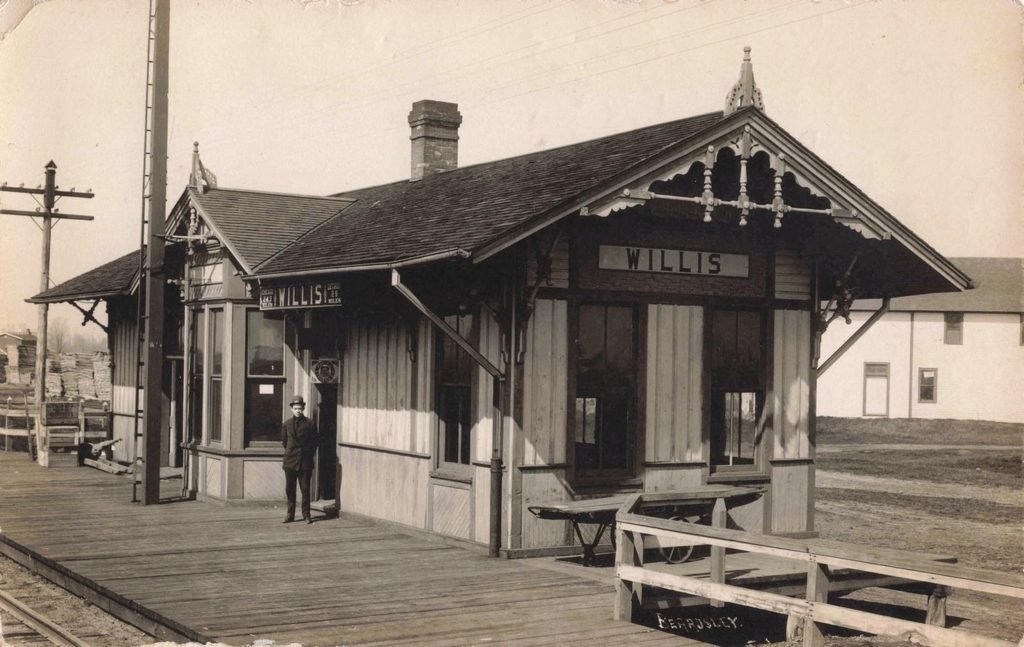
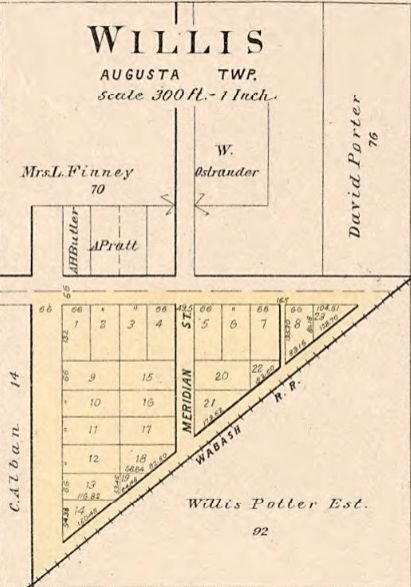
Everything changed in 1880, when railroad surveyors arrived to establish a route between Detroit and St. Louis. The proposed tracks bypassed the established settlement near Paint Creek and instead crossed land owned by local farmer Willis L. Potter.
Potter donated property for a railroad station, while township residents contributed $1,500 toward construction materials. The railroad was completed through the area in 1881. Businesses soon had a strong reason to relocate near the tracks.

The village initially went through several names, including Newcomb and Pottersville. Mary Potter, Potter’s wife, was born Newcomb.
Some sources disagree about when Willis received its official name. Augusta Township records date it to 1889, while the Washtenaw County Historical Society dates the village’s establishment to 1887. The historical society even recognized the community’s centennial in September 1987.
The exact administrative timeline may be unclear, but the reason Willis developed is not. The railroad made this location more attractive to farmers and merchants than the older crossroads settlements.
The Willis Creamery Became a Major Agricultural Business
Dairy farming became a foundation of the Willis economy. Farmers needed a dependable place to deliver their milk, and the creamery provided that service. The railroad offered access to markets beyond the immediate farming community.
An especially interesting 1909 photograph shows the Willis Creamery surrounded by horse-drawn wagons. Several are loaded with tall metal milk cans. Men stand near their wagons, apparently waiting or preparing for the day’s business.

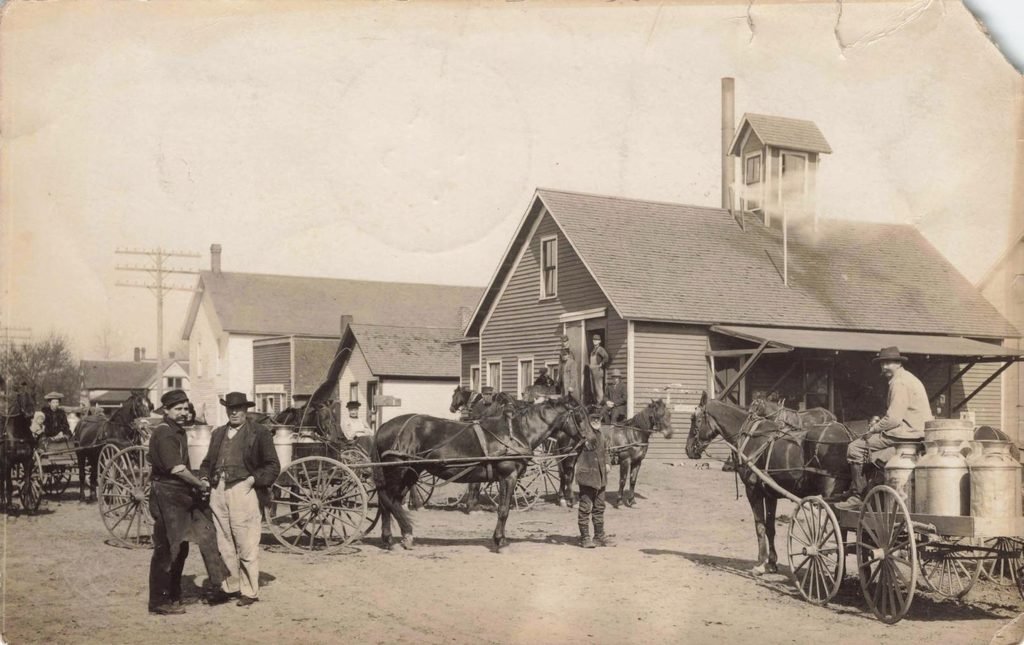
The creamery’s reported production figures deserve attention. Augusta Township’s historical account states that the business took in as much as 50,000 pounds of milk and 4,000 pounds of cottage cheese daily.
The account does not identify the year those volumes were reached. Nevertheless, it indicates that the creamery operated on a scale considerably larger than one might expect from a small farming village.
The creamery also brought regular business into Willis. Farmers delivering milk could stop at local stores to buy supplies or arrange repairs before returning home. These daily visits helped support merchants who depended on customers from the surrounding countryside.
An interesting connection links to Michigan Agricultural College, now Michigan State University. A January 30, 1906, issue of The M.A.C. Record lists Roy E. Smith of Willis among students enrolled in a creamery management course. We aren’t sure whether Smith worked at the Willis Creamery. However, his enrollment shows that at least one local resident was studying the increasingly technical business of dairy processing.
Farming Supported Businesses Beyond the Creamery
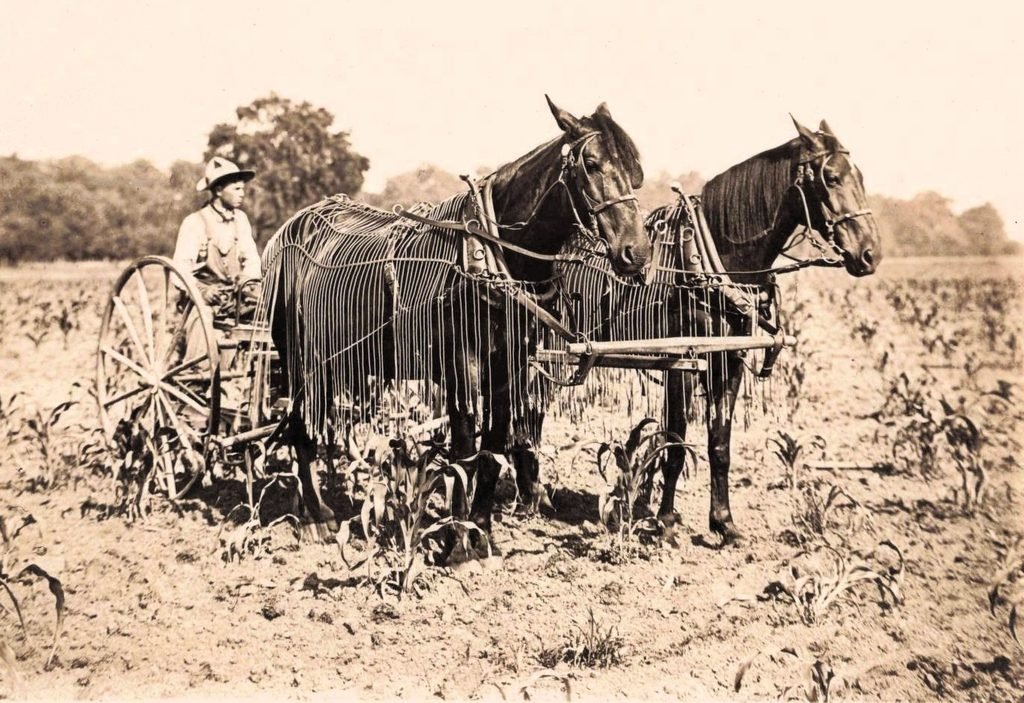
Milk processing was important, but Willis also served farmers who raised crops and livestock. The village supported an agricultural implement business that supplied equipment for working the surrounding fields.
Augusta Township’s historical account reports that the local implement dealer sold as many as 119 grain binders in a single year. These machines cut standing grain and tied it into bundles, greatly reducing harvest labor.
That was a substantial number of machines for a small community. This suggests Willis merchants served a farming district that extended well beyond the village itself.

The Milan Area Historical Society also documents a pickle-processing operation in Willis. Its presence provides another example of local businesses serving agricultural production.
Farm equipment, food processing, and railroad transportation made Willis a convenient destination for nearby farmers. The village’s economy depended heavily on the surrounding farms’ success.
A Look at Main Street When Horses Ruled the Roads
One of the more interesting views of Willis shows a dirt street lined with wooden buildings. Horse-drawn wagons line the road, including vehicles carrying what appear to be milk cans.
This was the Willis that farmers and merchants knew during the early 1900s. Business often required a trip into town, and local road conditions could determine how long that journey took.


Travelers needed services that have largely disappeared from today’s small towns.
A hotel, livery stable, and feed barn operated along Main Street. Another early view shows a sign advertising these services, providing evidence of the businesses that supported travelers and their horses.
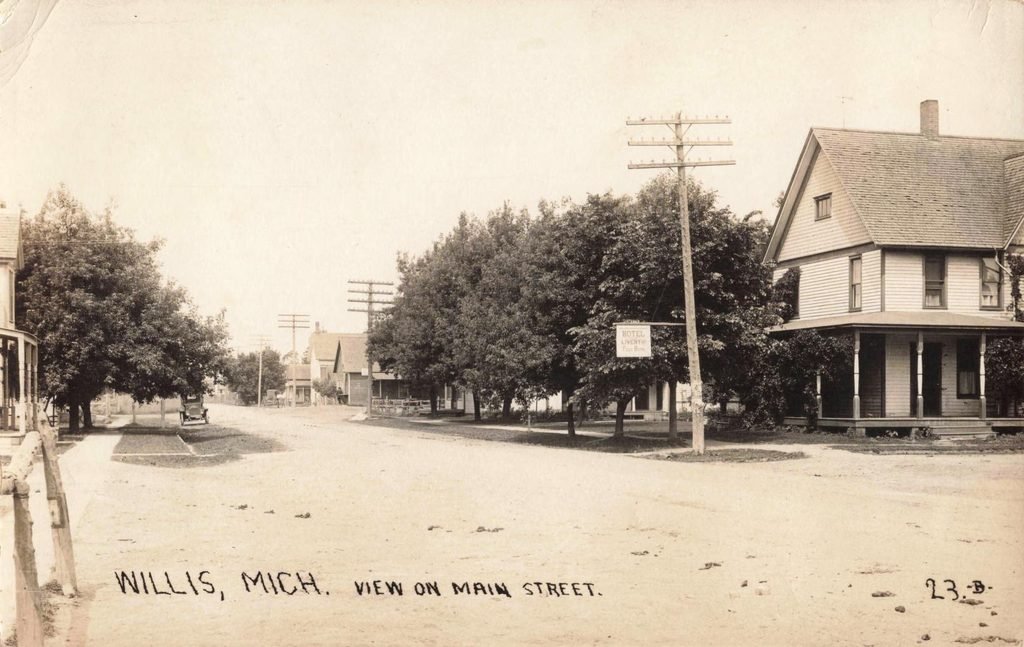
A traveler arriving by train might need to hire a horse and carriage to visit a farm several miles away. Farmers also needed places to feed their animals while conducting business.
These services were an important part of everyday commerce. The village functioned as a meeting place between railroad transportation and the horse-drawn traffic of the surrounding countryside.
Traveling Salesmen Brought Household Products to Rural Farms
Not every merchant waited for customers to come into town.
Traveling salesmen made regular trips through rural Michigan, bringing household products directly to farm families. Some represented national companies, and their products became familiar throughout the countryside.
An unusual 1912 photograph shows one of these salesmen near Willis.


The wagon carries the name Watkins, a company known for selling household products through traveling representatives.
The salesman stands beside his wagon with a case at his feet. We aren’t sure who he was, but the picture shows how rural customers got everyday products before widespread automobile ownership.
A traveling salesman could spend much of his day covering a relatively small territory. Poor roads and changing weather made these trips difficult, particularly during the muddy spring months.
When Removing a Fallen Tree Required a Work Crew
Another photograph captures a group of men working around a large fallen tree in Willis.
Several men stand among the timber and debris. A horse is visible on the left, while a young person sits near the foreground. The scene appears to show a community work crew handling a substantial tree.


The circumstances are uncertain. We don’t know whether the tree fell during a storm or was deliberately cut down. What is clear is how much labor it required. Before chainsaws and hydraulic equipment, removing a large tree could require several workers using hand tools and horses.
The people pictured are unidentified. Their clothing and equipment suggest an early 20th-century scene, although the exact date remains unknown.
The Methodist Church Was Part of Village Life
Religion played an important role in small farming communities, where churches gave residents regular opportunities to gather. By the early 1900s, Willis had an established Methodist Episcopal congregation. A 1909 postcard shows its substantial wooden church building.
The structure featured pointed Gothic-style windows, a steep roof, and a prominent steeple. Its design was typical of many Methodist churches constructed in rural Michigan during the late 1800s.

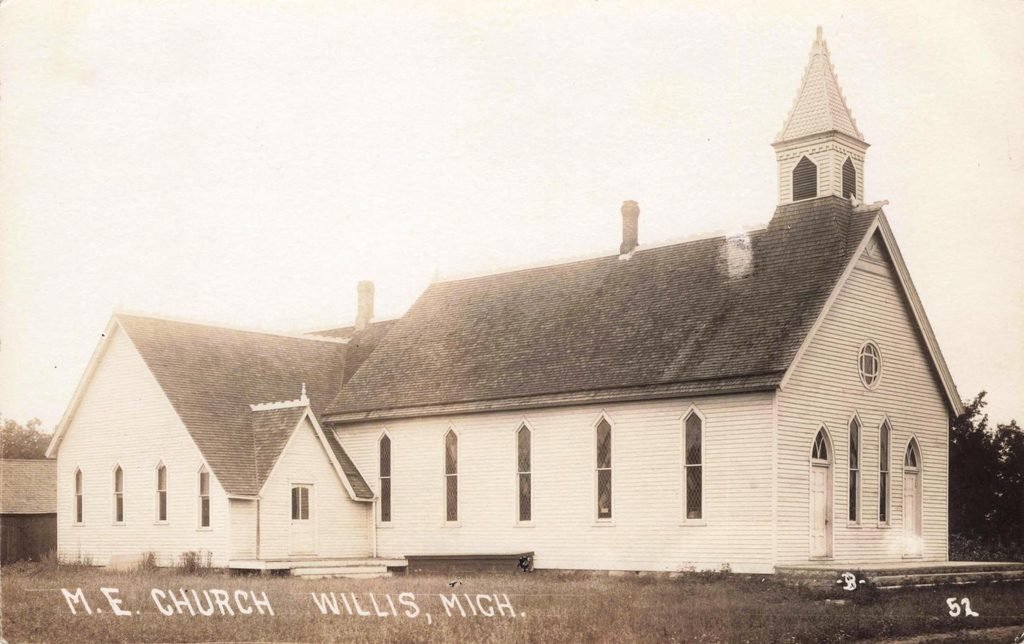
The church provided a regular meeting place for families across the surrounding agricultural district. Sunday services and church activities were part of village life.
The University of Michigan’s David V. Tinder Collection includes another Willis church postcard bearing a message dated May 8, 1909. It helps establish what the building looked like during this period.
Automobiles Begin Appearing Along Willis Streets
By the 1910s and 1920s, motor vehicles were becoming more common in rural Michigan. Automobiles gradually began sharing streets with the horse-drawn wagons that had served farming communities for generations.
A postcard looking east along Willis shows this change.


The automobile stands along an otherwise quiet street lined with trees and wooden buildings. Another view shows an automobile on Main Street near the hotel property. Together, these images help document the period when residents began relying less on horses for transportation.
The change was gradual. Farmers continued using horses for fieldwork even after automobiles became available for personal travel. Better roads eventually made it easier for residents to shop and conduct business in neighboring communities. That reduced some of the commercial advantages that small railroad villages had enjoyed.
Willis in 1927: A Village Between Two Eras
An image identified as Willis in 1927 provides another look at the community’s commercial buildings.
A large structure with a cupola stands beside an adjoining two-story building. The road remains unpaved, and the immediate foreground shows little activity.

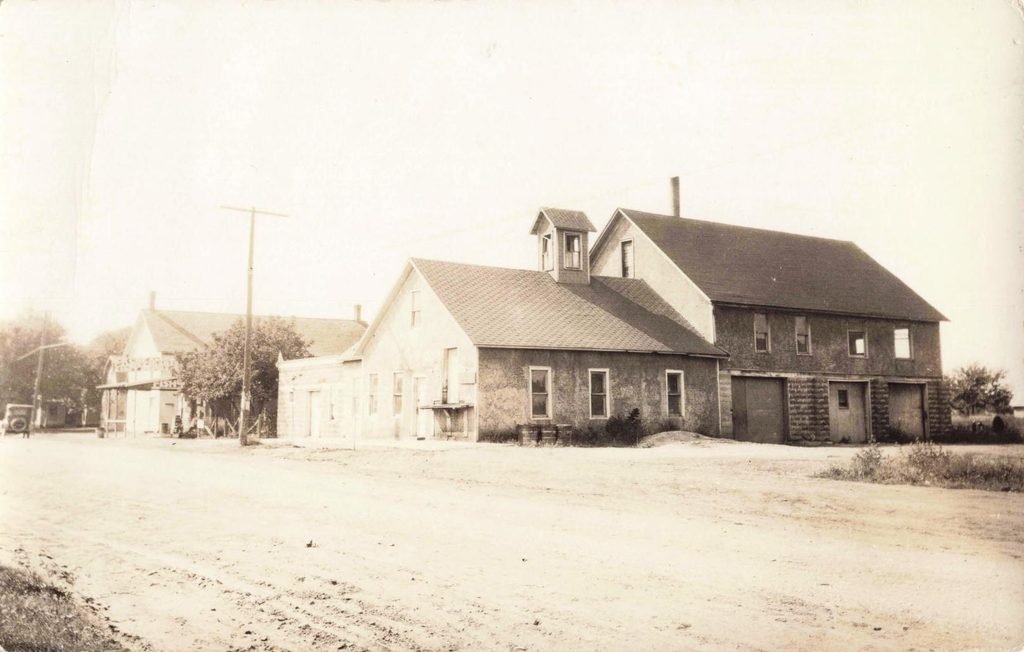
Further research is needed on the location and businesses associated with these buildings. The image may offer clues about the village’s agricultural operations, but the picture alone cannot confirm their identities.
By this period, Willis had developed into an established rural community. Agriculture remained important, but automobiles and transportation improvements changed how residents conducted business.
What Happened to the Willis Railroad Depot?
The railroad station that helped create Willis eventually became unnecessary.

During the 20th century, improved highways and changes in railroad operations reduced the need for small rural passenger stations. Businesses and farmers increasingly depended on motor transportation.
According to the Milan Area Historical Society, the Willis depot remained standing until the mid-1960s, when it was demolished.
The same historical society identifies an older commercial building along Willis Road that served several purposes, including a pickle-processing operation and grocery store. Later, the building was used as a restaurant.
The railroad’s arrival had once shifted commerce away from older settlements such as Paint Creek. Decades later, changing transportation patterns again affected the businesses that served rural residents.
The History of Willis, Michigan Is Still Visible in Its Old Pictures
The history of Willis, Michigan, is closely tied to the development of agriculture in southeastern Washtenaw County.

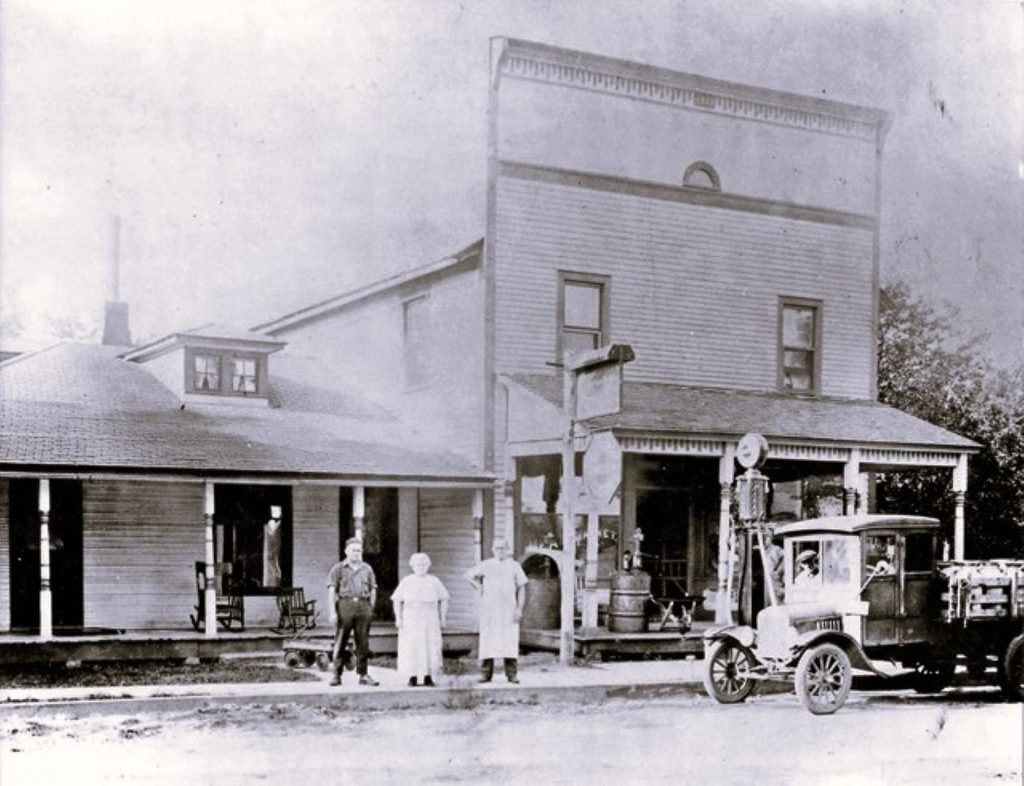
The railroad attracted merchants and provided farmers with better access to outside markets. The creamery became an important local industry, while stores and equipment dealers served the surrounding countryside.
Many of the businesses that supported early Willis have disappeared. The depot is gone, and horse-drawn milk wagons ended long ago.
Fortunately, the surviving historical photographs document a period when nearly every part of the village depended on agriculture. They preserve the appearance of businesses, streets and buildings that would otherwise be difficult to reconstruct.
Unanswered questions remain about the people pictured and several of the businesses they operated. Local business directories, railroad records and newspaper accounts may eventually help fill those gaps.
For now, these early views provide a good account of Willis during the years when a railroad station and a busy creamery made it an important stop for Augusta Township farmers.
? Works Cited
Augusta Charter Township. History of Augusta. Augusta Charter Township, accessed 9 Oct. 2026.
Beardsley. Willis Depot. 1909. David V. Tinder Collection of Michigan Photography, University of Michigan Library Digital Collections.
Beardsley. M. E. Church, Willis, Mich.. 1909. David V. Tinder Collection of Michigan Photography, University of Michigan Library Digital Collections.
Milan Area Historical Society. Willis. Milan Area Historical Society, accessed 9 Oct. 2026.
Michigan Agricultural College. The M.A.C. Record, 30 January 1906. Michigan Agricultural College, 1906.
University of Michigan Library Digital Collections. Willis Mich, Looking East. David V. Tinder Collection of Michigan Photography.
Washtenaw County Historical Society. Village of Willis Celebrates Centennial, Augusta Township, Its Sesquicentennial. Washtenaw Impressions, October 1987, p. 1.

