


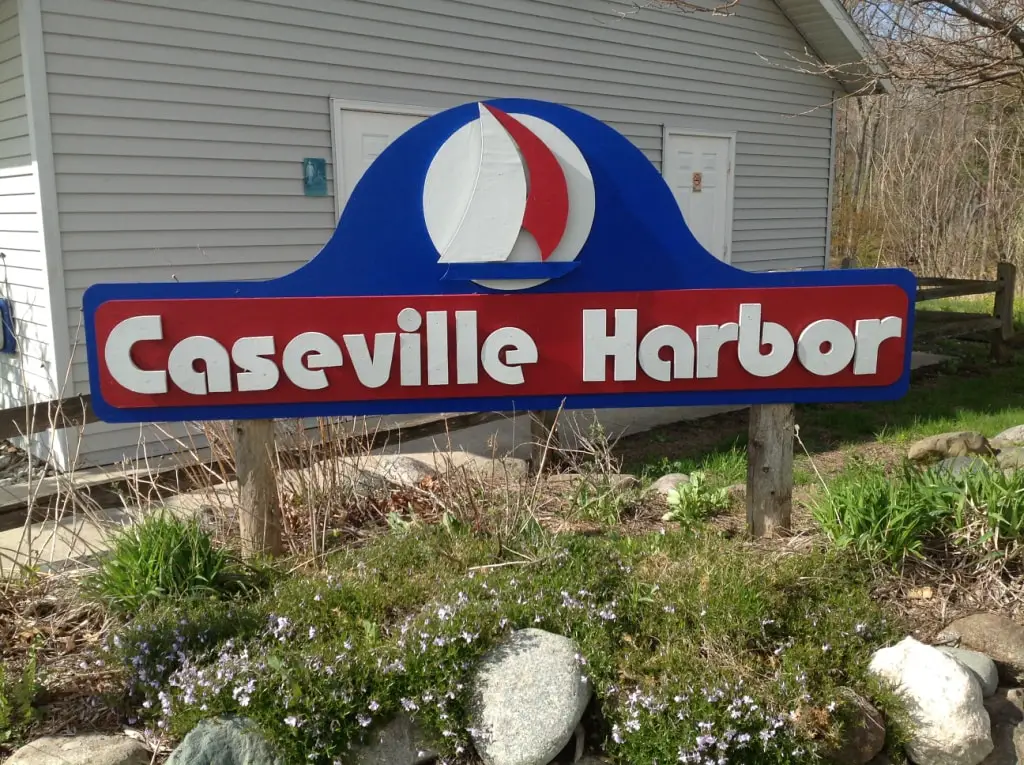
Caseville Harbor Adds Accessible Boat Boarding Station as Michigan Population Ages
CASEVILLE, Mich. — For someone who uses a wheelchair, getting into a boat can be the hardest part of enjoying a day on Saginaw Bay. Caseville is working to remove that barrier with a new accessible boat boarding station at its waterfront.
The city is preparing to unveil what WNEM-TV5 called a “first-of-its-kind accessibility feature” at Caseville Harbor. The station is part of a larger effort to make the waterfront easier to use for people who have trouble with docks, boats, steep ramps or uneven ground.
The project has been years in the making.
Plans for the Riverside Park and Water Trailhead redevelopment included an ADA-compliant boat launch, a kayak launch and a lift to help boaters with limited mobility. Earlier reports described the equipment as unusual for the region and possibly one of the first systems of its kind in the area.
The station allows a person to move from a wheelchair into a boat, Caseville City Manager Jamie Learman said while discussing the Riverside Park project in 2025.
“We’re very excited to give people additional opportunities to enjoy Lake Huron and the Saginaw Bay,” Learman said.
Accessibility Has Been Part of Caseville’s Waterfront Plans


The new boarding station is not Caseville’s first investment in making the waterfront more accessible.
Caseville Municipal Harbor received nearly $900,000 in improvements completed in 2022. The work included accessible docks and barrier-free ramps, along with new docks, fuel-system improvements and electrical upgrades. Much of the project was paid for through a Michigan Department of Natural Resources Waterways Grant.
Nearby Pointe Park also has paved parking and sidewalks, accessible fishing areas and a kayak and canoe launch. Caseville’s master plan calls for continued efforts to find money for more boat launches, canoe and kayak launches and better access to the water.
The Riverside Park project is another step in that plan.
The city received a $298,800 Michigan Natural Resources Trust Fund grant for the development. Plans included a fishing pier, an accessible kayak launch, a boat launch and equipment to help boaters with mobility limitations.
By 2025, the Riverside Park redevelopment had grown to include a recreation center, pavilion, walkways, fishing access, seawall lighting and more boat launches. The recreation center alone was estimated at $1.03 million, with much of the funding coming from state and federal sources.
Accessible Recreation Helps More Than People With Disabilities
Accessible facilities are often designed with people who have permanent disabilities in mind. But their benefits can reach much farther.
Michigan is getting older.
The Michigan Center for Data and Analytics projects that the number of Michigan residents age 65 and older will pass 2.4 million by 2032, up from about 1.9 million in 2022. That would mean about 23% of the state’s population is 65 or older.
Baby boomers are a major reason for the change.
The U.S. Census Bureau defines baby boomers as people born from 1946 through 1964. As this generation ages, more people may need help with stairs, steep ramps, slippery docks or the difficult step from a dock into a moving boat.
Michigan’s population aged 75 to 84 is expected to grow sharply through the 2030s. The state’s population aged 85 and older could increase by about 150% between 2025 and 2050, according to state projections.
That makes accessible design important for more than people who currently identify as disabled. Someone may still be able to fish, boat, and travel but struggle with a steep ramp or an unstable surface. Accessible equipment can also help people recovering from injuries or experiencing temporary mobility issues.
For waterfront towns that depend on tourism, accessibility is both a public-service issue and an economic one.
The Final Stretch to the Water

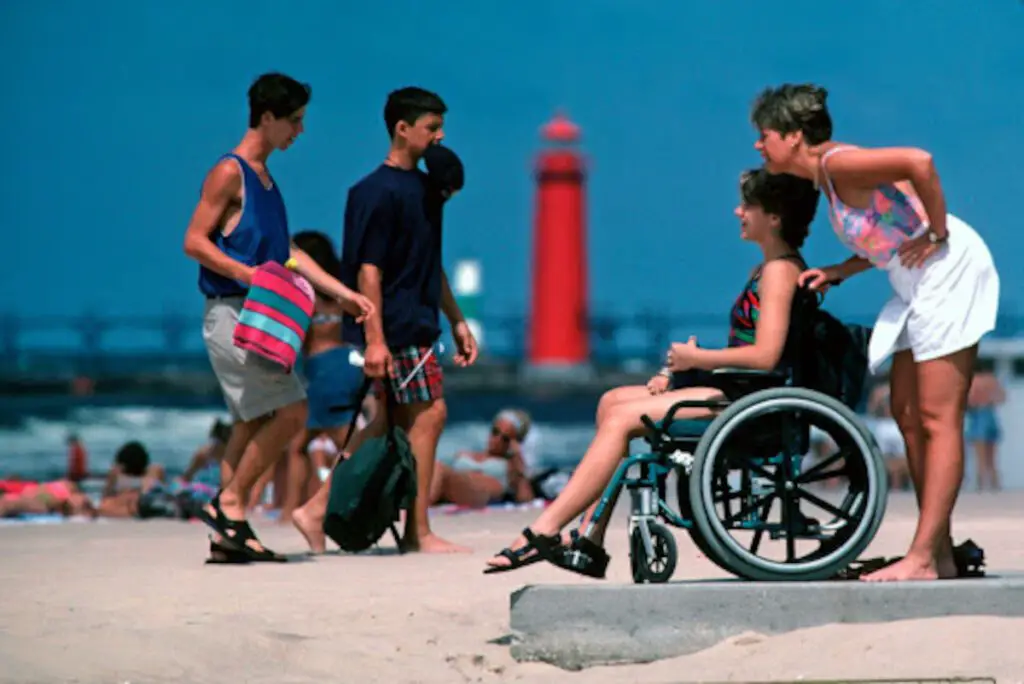
The Caseville project also fits a larger trend across Michigan.
Thumbwind.com has highlighted 41 accessible beaches in Michigan, including parks with stable paths, beach-access chairs and other equipment that helps people reach the shoreline. The list includes Caseville County Park, where a barrier-free walkway leads from the parking area toward the waterfront.
The Michigan Department of Natural Resources keeps a similar statewide list. Depending on the park, features may include firm waterfront surfaces, accessible walkways and beach wheelchairs that can travel across sand and, in some cases, into the water.
Those improvements solve a problem that parking spaces and accessible restrooms cannot: the final stretch between the parking lot and the outdoor experience.
At a beach, that may mean crossing soft sand to reach Lake Huron. At a marina, it may mean using a ramp, crossing a floating dock and managing the height difference between a wheelchair and a boat.
Caseville’s boarding station is designed to help with that last challenge.
Caseville Continues Its Waterfront Investment

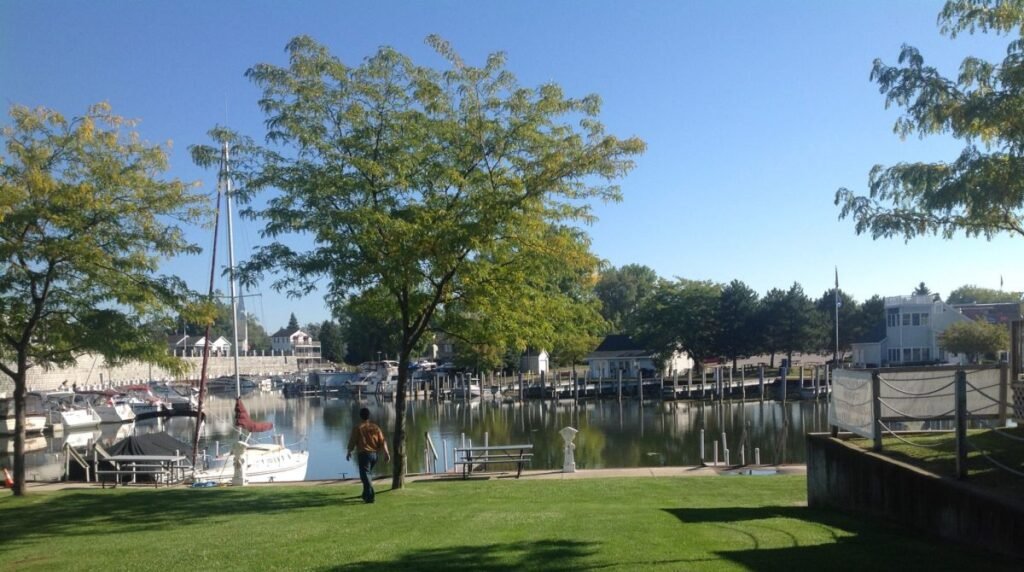
Caseville has steadily expanded public access near the mouth of the Pigeon River.
Pointe Park received more than $480,000 in grants from the DNR and another $35,000 from Saginaw Bay WIN. Improvements included fishing access, bathrooms, an accessible canoe and kayak launch and lighting.
The city acquired Riverside Park in 2020 with help from the Michigan Natural Resources Trust Fund. Plans later turned the former marina property into a public recreation area with boat launches, fishing access, walkways and a community facility.
Caseville Harbor is jointly managed by the city and Caseville Township. It has 62 transient slips and 62 seasonal slips and operates from spring through fall.
The accessible boarding station adds a new purpose to that waterfront.
It also points to a larger question for Michigan’s recreation communities: How can longtime boaters, anglers and beachgoers continue enjoying the Great Lakes as their mobility changes?
In Caseville, the answer is beginning to take shape at the water’s edge.

