


History of Yale Michigan – 17 Old Photos Show How a Mill Town Became Famous for Bologna
Yale, Michigan, has one of the best punch lines in the state. Its history is full of bologna, and the town is proud to say so.
The joke is easy. The real story is richer. Yale began as a lumber camp, grew beside Mill Creek, and became a farm-service and manufacturing center in western St. Clair County. Its workers made wool cloth, ground grain, canned produce, repaired Ford automobiles, and loaded freight cars. T.J. Minnie did not begin selling his well-known bologna until 1906, after the town already had rail service, electric lights, a newspaper, and major employers.

The History of Yale Michigan is therefore not the story of a food creating a town. It is the story of a working town choosing a food as its most lasting symbol.
Table of Contents
Watch – Yale Michigan History: Main Street, Mills, and Community Life in the Early 1900s

History of Yale Michigan Began Beside Mill Creek
Yale began in 1851 as a lumber camp near South Main Street and Brockway Road. The settlement became known as Brockway Centre. White pine drove the first economy, while Mill Creek helped shape the location and movement of logs.
The lumber era could not support the community forever. As the best timber disappeared, settlement shifted toward farming, milling and trade. This was a common change across Michigan’s Thumb, but Yale made the transition with unusual speed.

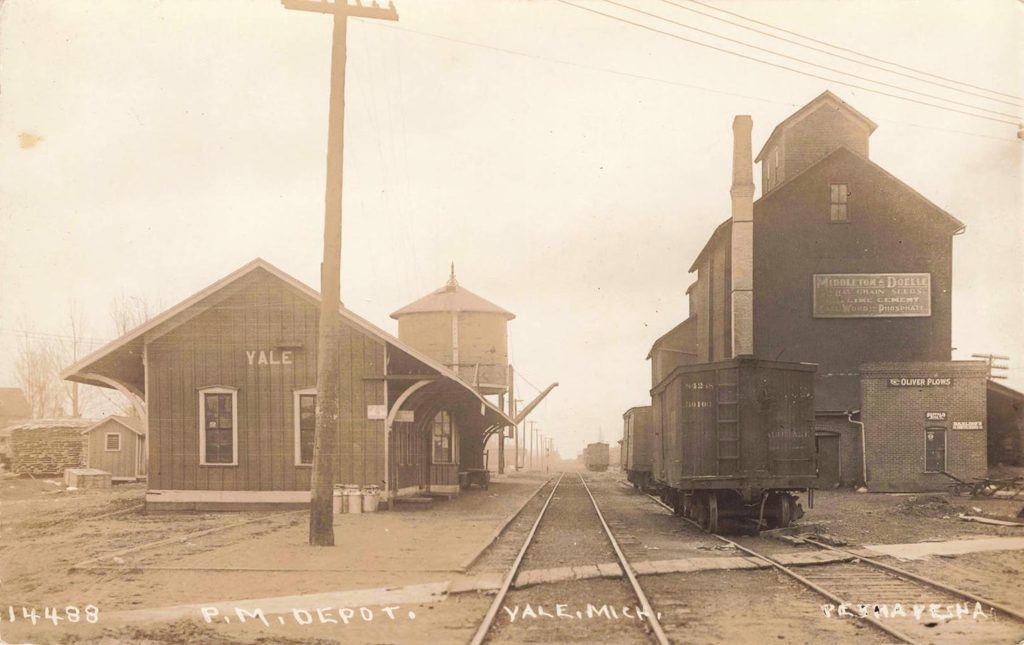
The railroad arrived in 1881. The Port Huron and Northwestern built a branch through Brockway Centre on its route toward Marlette, Mayville and Vassar. The narrow-gauge line later became part of the Flint and Pere Marquette, then the Pere Marquette system.
Rail service changed Yale’s value. Farmers gained access to distant markets. Merchants could order inventory more quickly. Manufacturers could ship cloth, flour, and canned goods. Hotels could serve railroad employees, salesmen and other travelers.
The Yale Expositor began publishing in 1882, one year after the railroad arrived. Its pages recorded business notices, local arguments, prices, family news and the daily business of a growing town.
A New Name and the Work of Becoming a City
Brockway Centre took the Yale name in 1889. It incorporated as a village in 1895 and became a city in 1905, separating from Brockway Township.

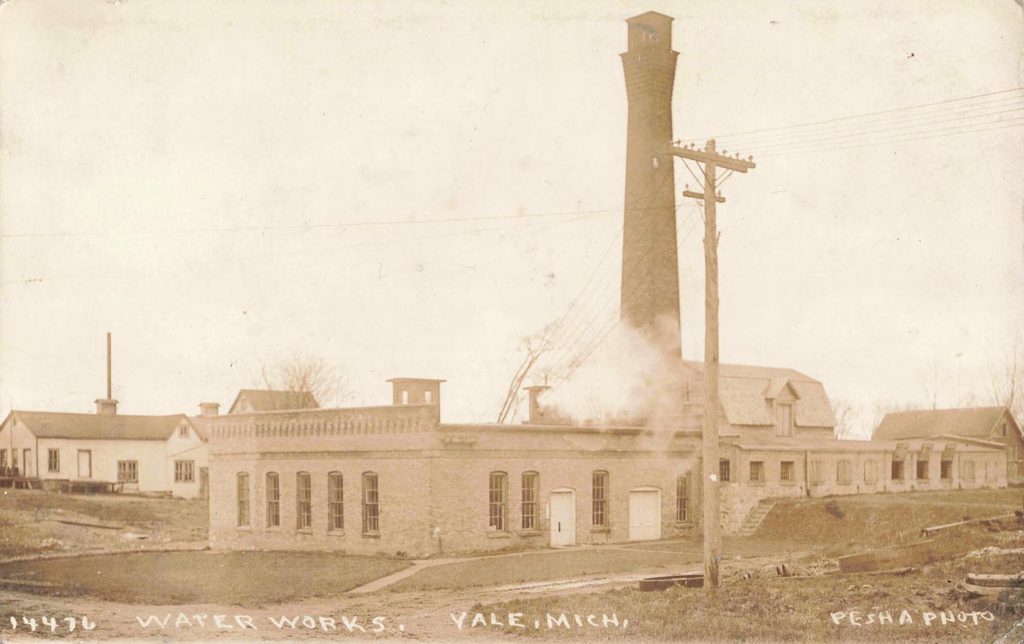
The legal changes followed years of public investment. Yale built its first wooden sidewalks in 1885 and obtained its first fire engine in 1891. Electric lights arrived in 1898. A local account noted three automobiles in 1902. Workers poured the first cement sidewalk in 1903, and the city water system supplied every home and business that same year.
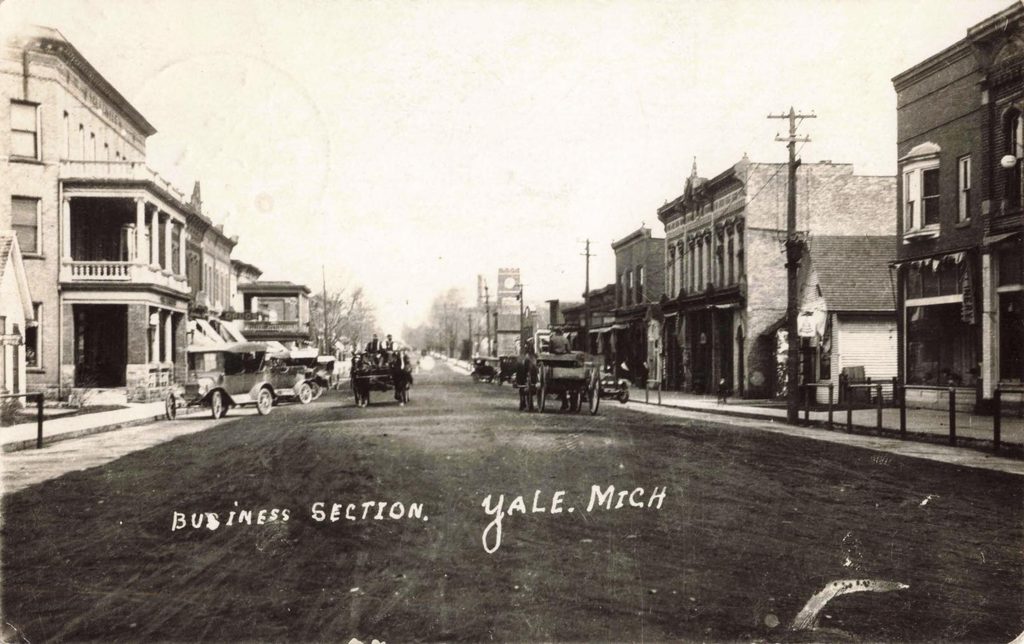
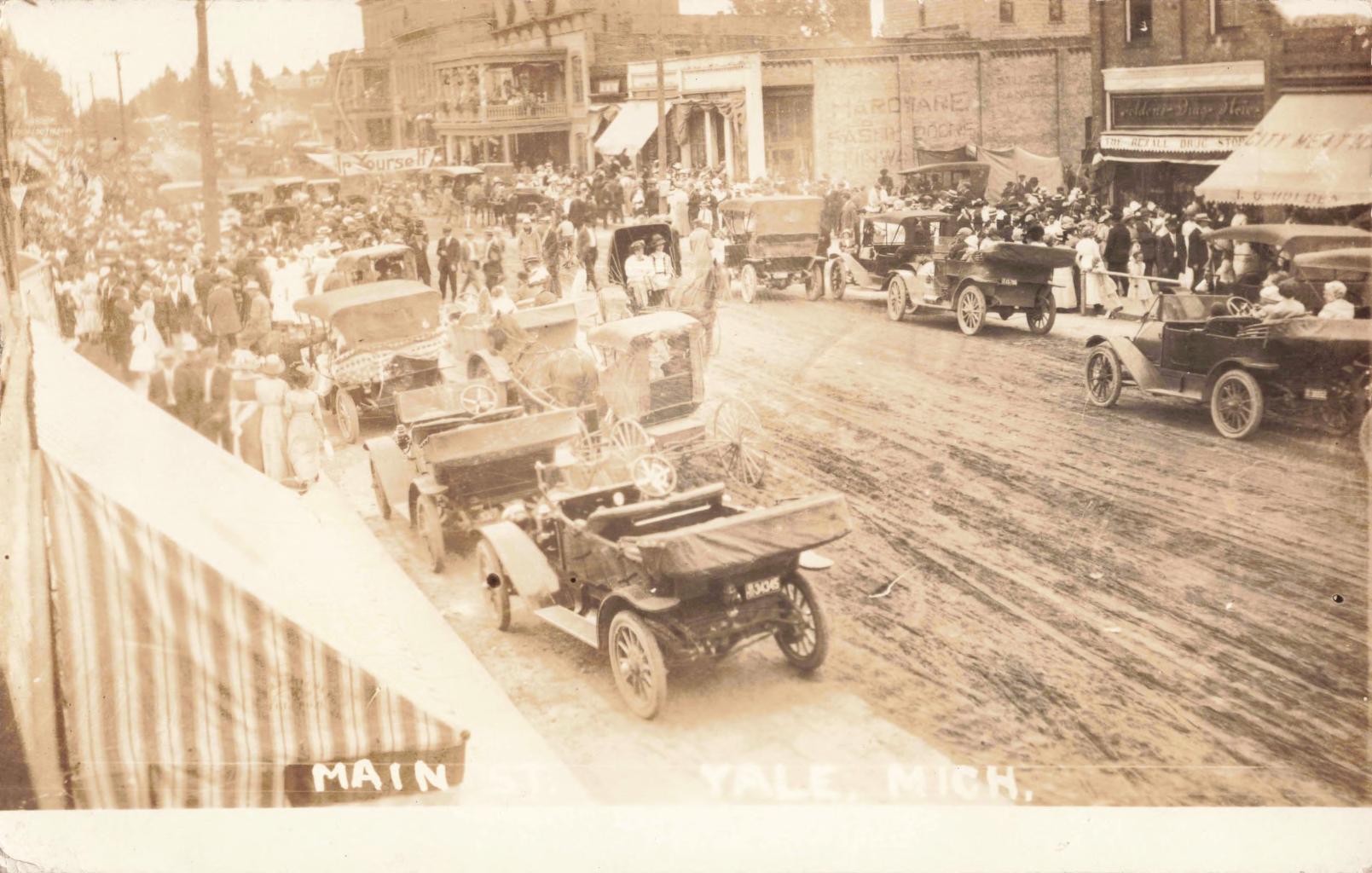
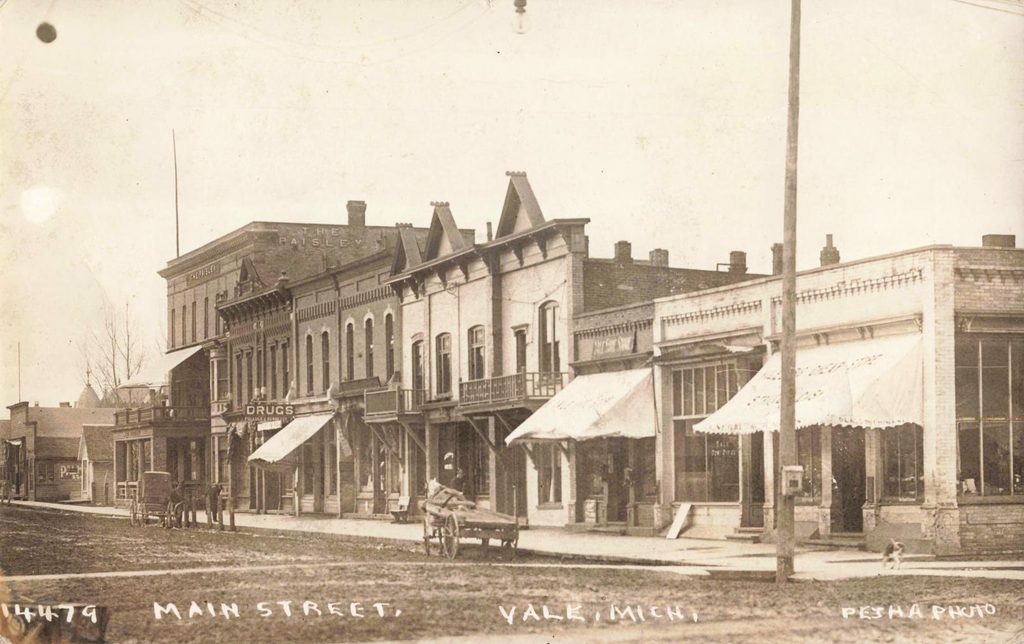
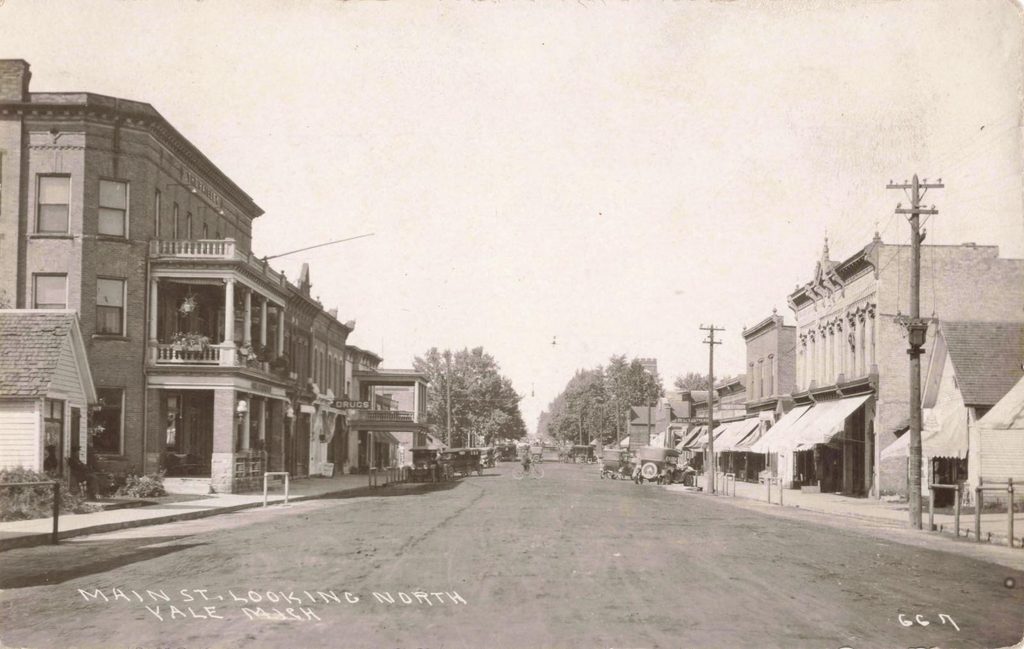
Those improvements did not arrive in a neat order. Yale had electric lamps and automobiles while much of Main Street remained dirt. Cars shared the road with horse-drawn wagons. Cement sidewalks bordered mud after heavy rain.

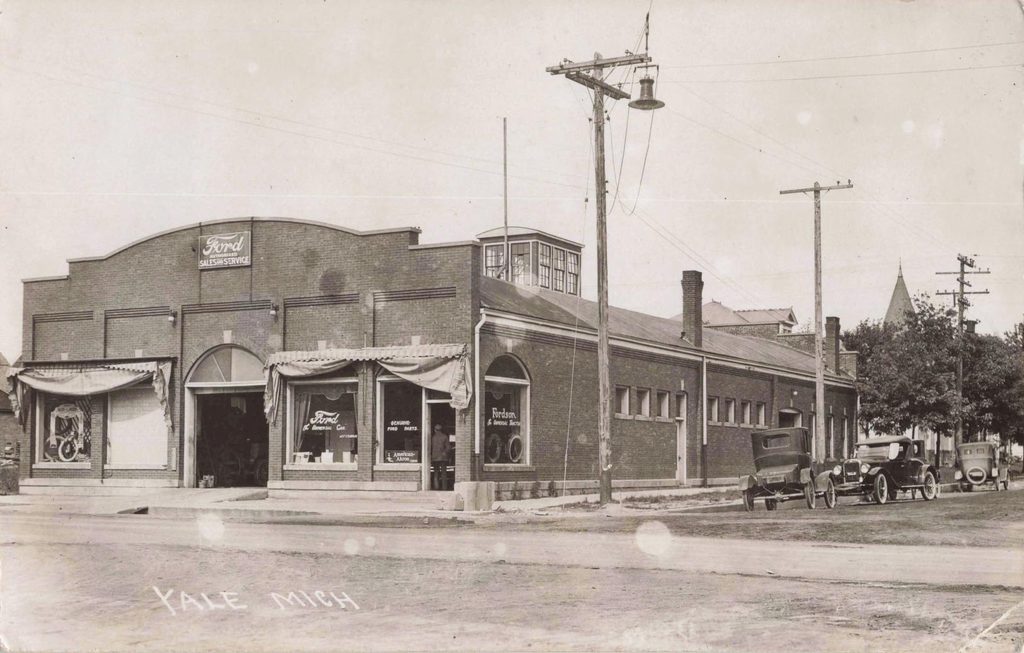
This uneven change is one of the strongest lessons in the History of Yale Michigan. New technology did not sweep the old world away. It stood beside it, often for years.
Wool, Grain and Canned Peas Built Payrolls
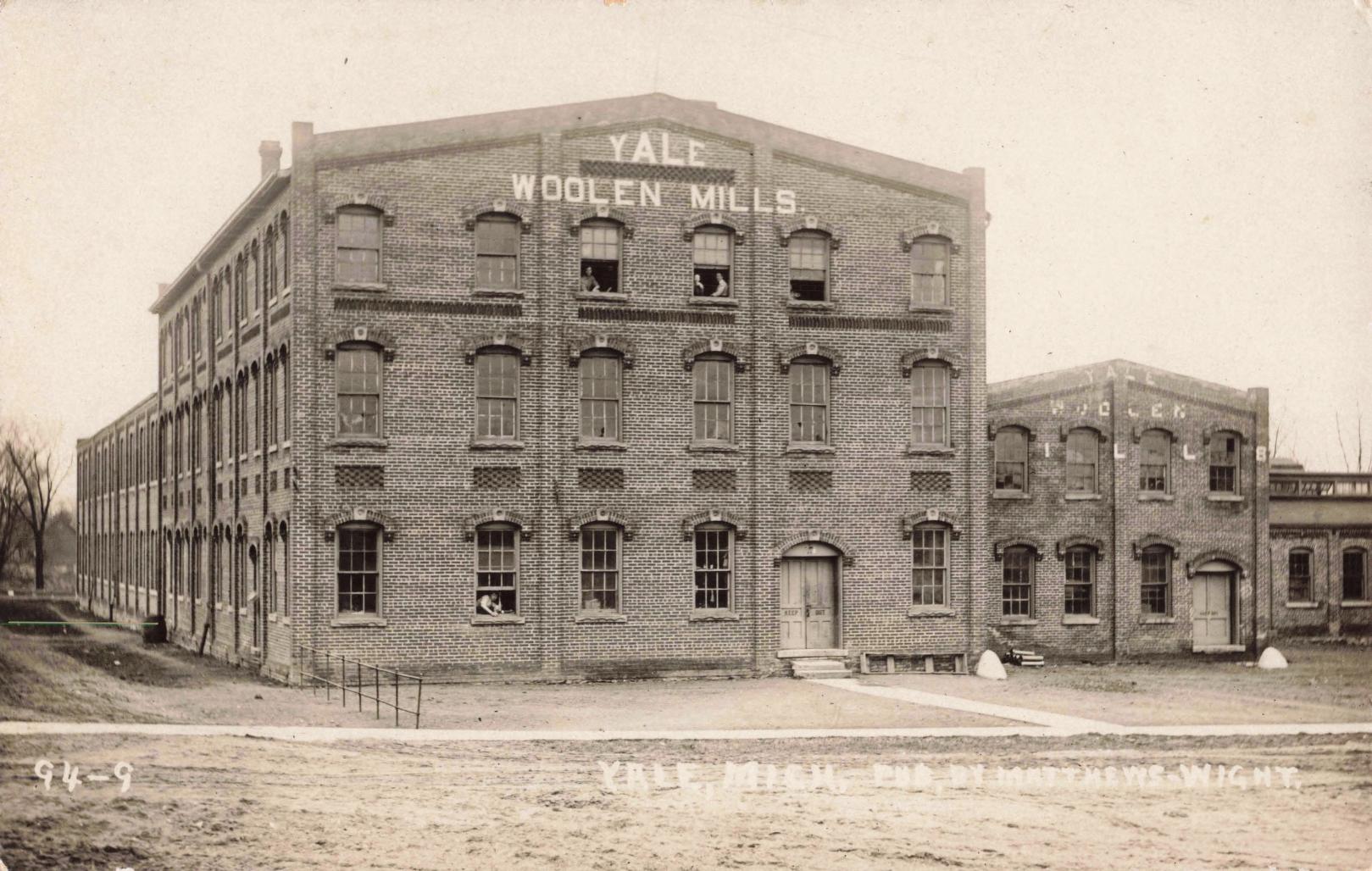
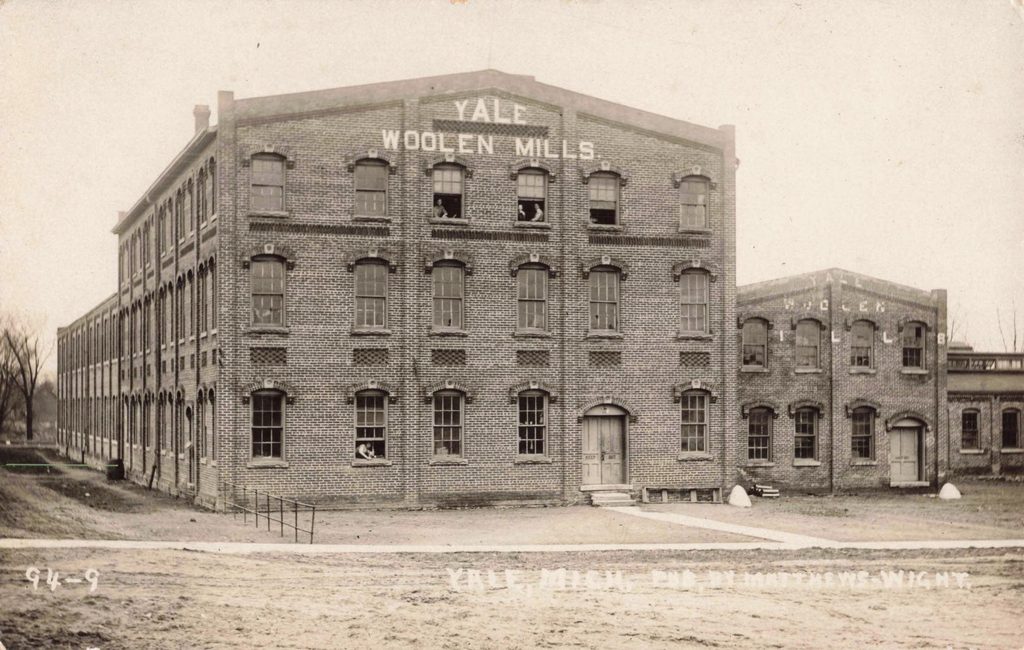
Yale Woolen Mills was the largest and most unusual of the town’s industrial operations. Founded in 1881, it bought fleece from nearby sheep farmers and turned it into yarn and clothing. During World War I, the mill produced olive-drab cloth for Army uniforms. It later made automobile upholstery for major car companies and returned to military uniform production during World War II.
That history gives Yale a rare connection. A woolen mill in a rural farm town supplied material for both soldiers and Detroit’s automobile business. Local agriculture, national defense and factory production met inside the same brick building.

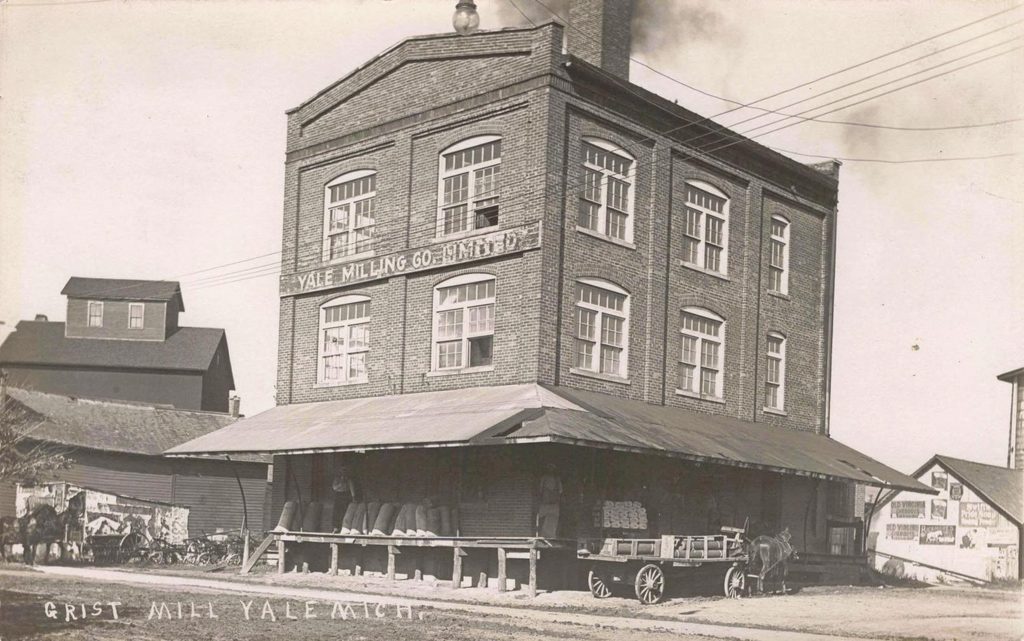
The Yale Milling Company served another part of the farm economy. Grain arrived by wagon, then moved through the brick grist mill. Sacks, barrels, and a loading platform marked the point at which a farm crop became a commercial product.

Yale’s canning factory handled produce that could not wait. A 1902 newspaper item reported that the plant had begun canning peas. Later images identify the large operation as the W.R. Roach Company canning factory. Its buildings stood near rail lines, allowing packed food to move quickly after harvest.
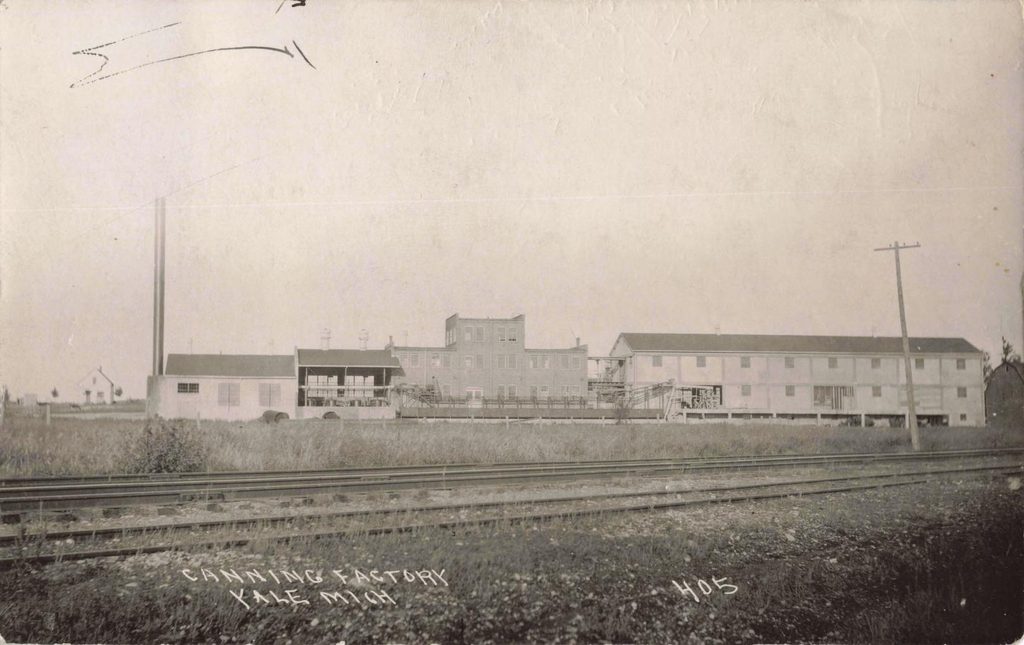
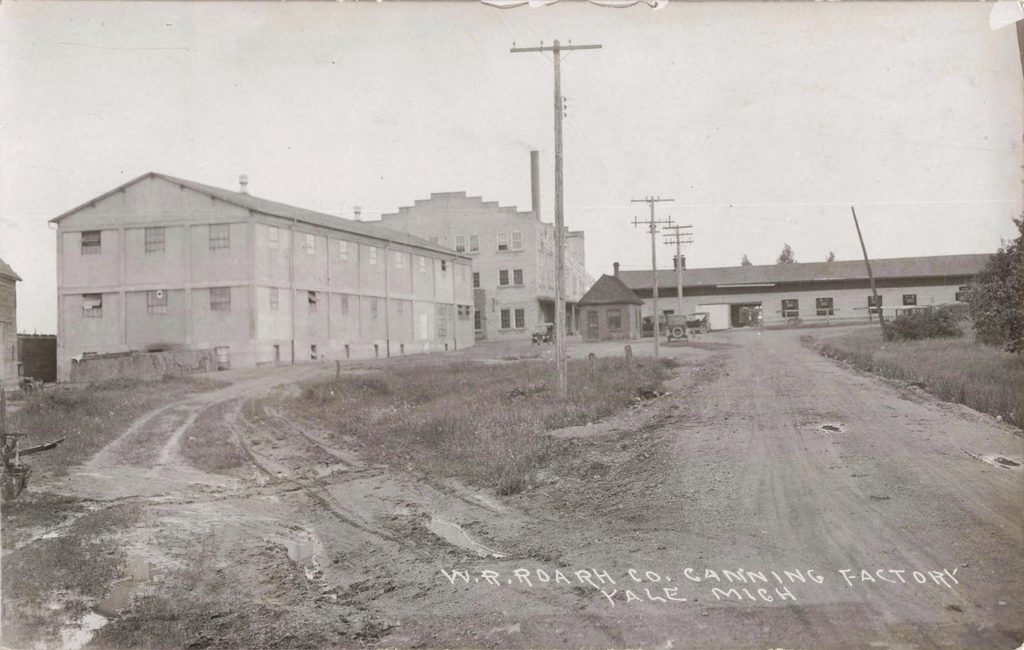
Here is the counterintuitive point: bologna did not build Yale’s early prosperity. Railroads, farm processing, the woolen mill and city services were already operating when Minnie opened his Main Street meat shop.
Main Street Served Work, Travel and Daily Life
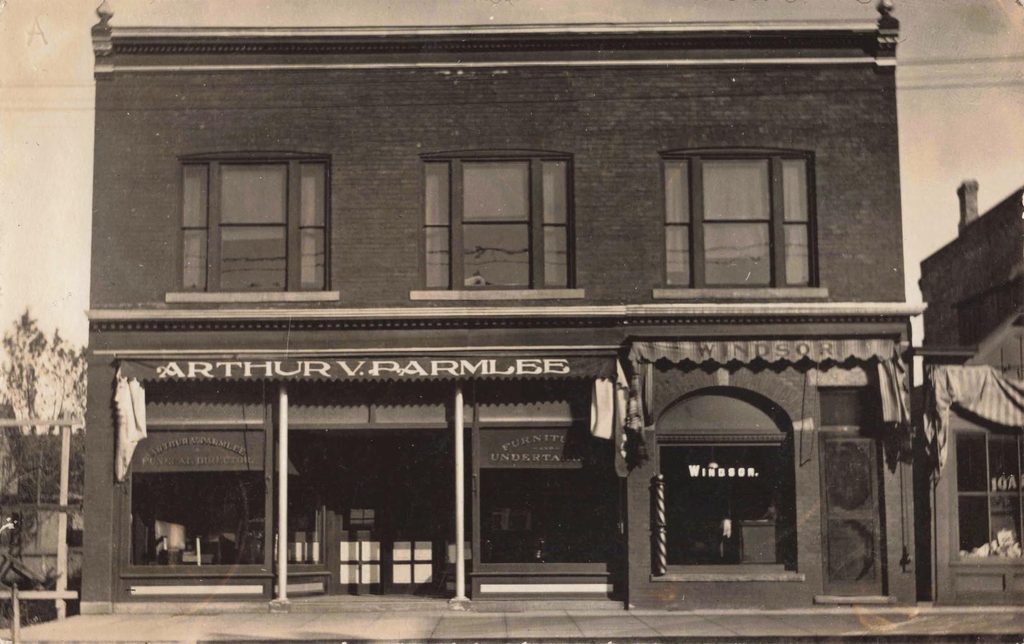
Yale’s business district reflected its wider service role. Holden’s Drug Store occupied a substantial brick corner. Eva J. Black & Co. placed a woman’s name above a storefront in 1914, although a city directory is needed before her exact role. Arthur V. Parmlee combined furniture sales and undertaking, two trades often linked by woodworking skill and access to funeral goods.

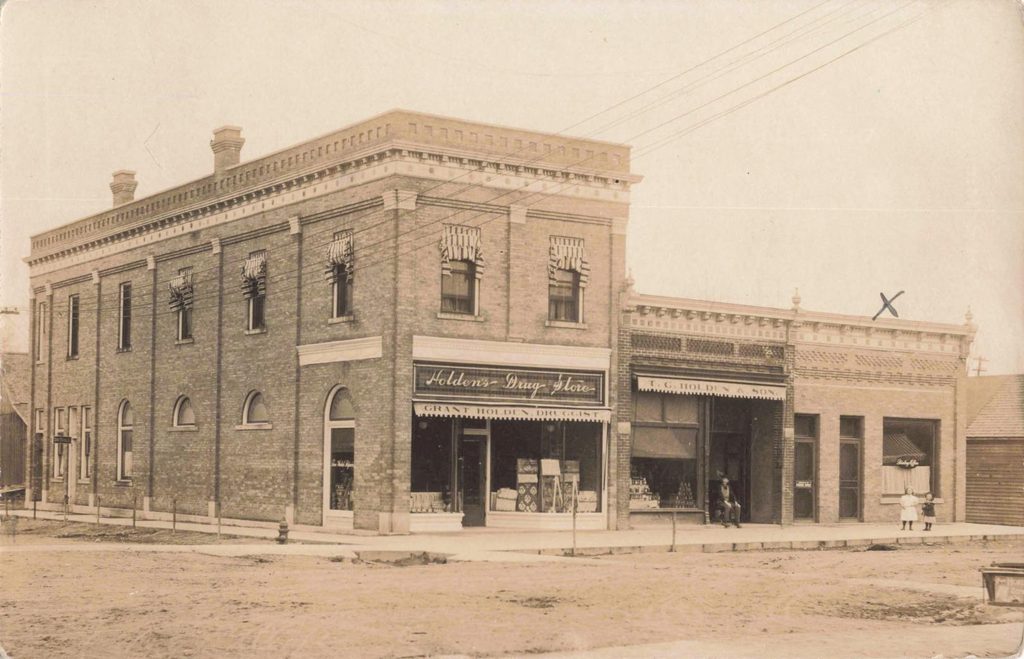

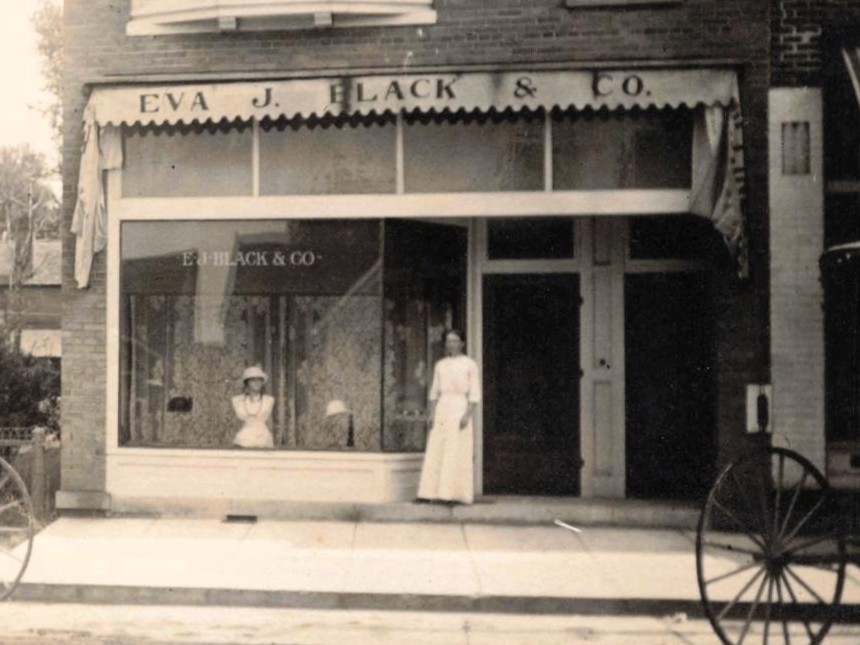
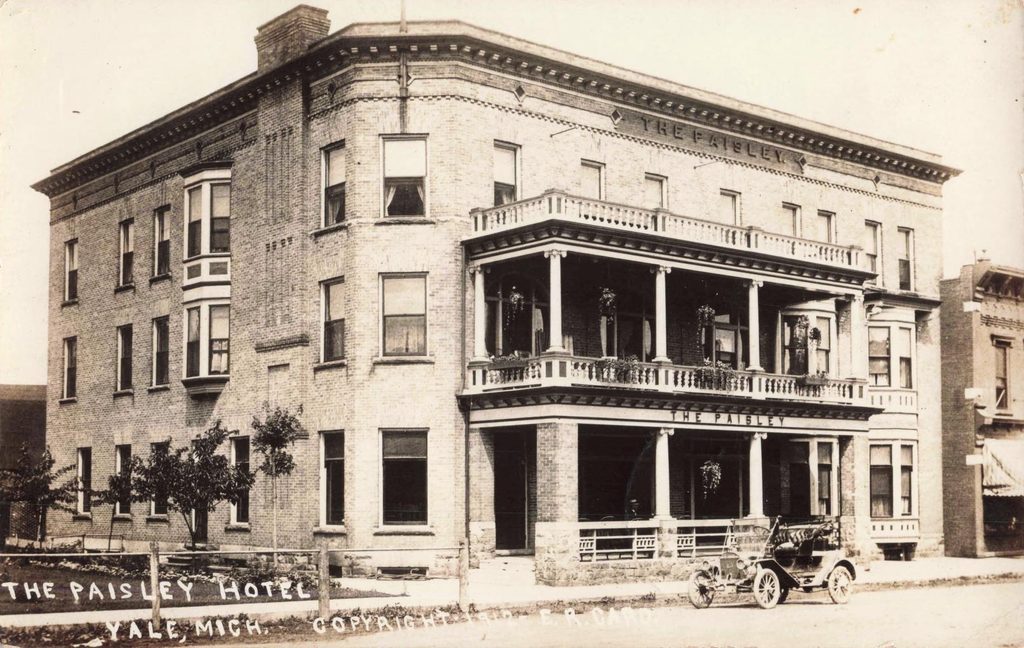
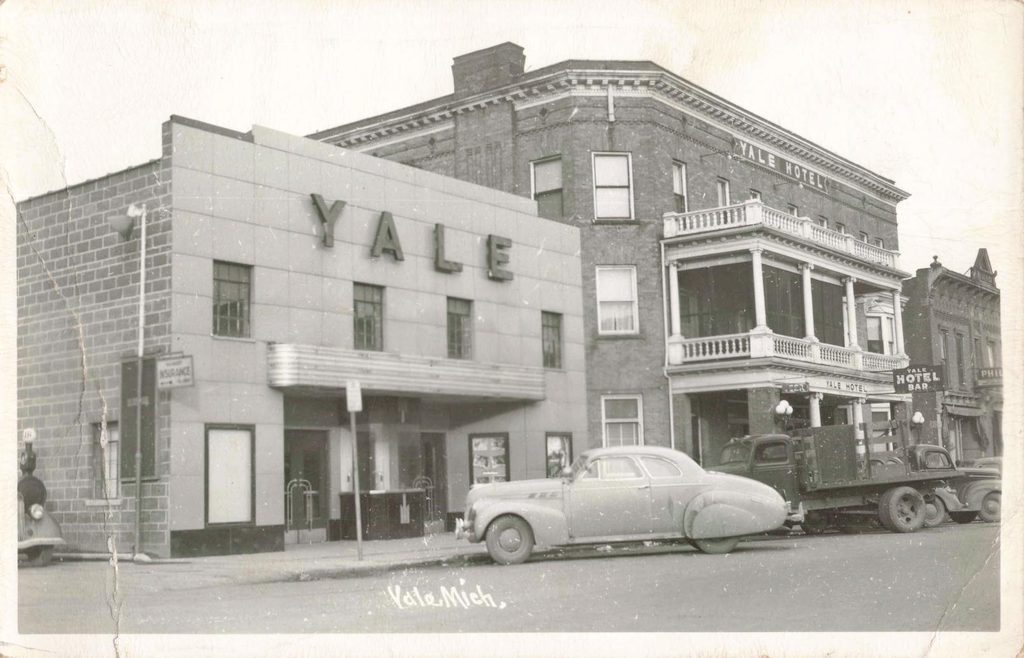
Hotels signaled that Yale expected outside visitors. The three-story Paisley Hotel presented broad porches and a formal brick front. The smaller Harrington Hotel offered a deep veranda. By the late 1930s or early 1940s, the Yale Theater had added a modern entertainment front beside the older Yale Hotel.


A Schoolhouse and a Newspaper Poet
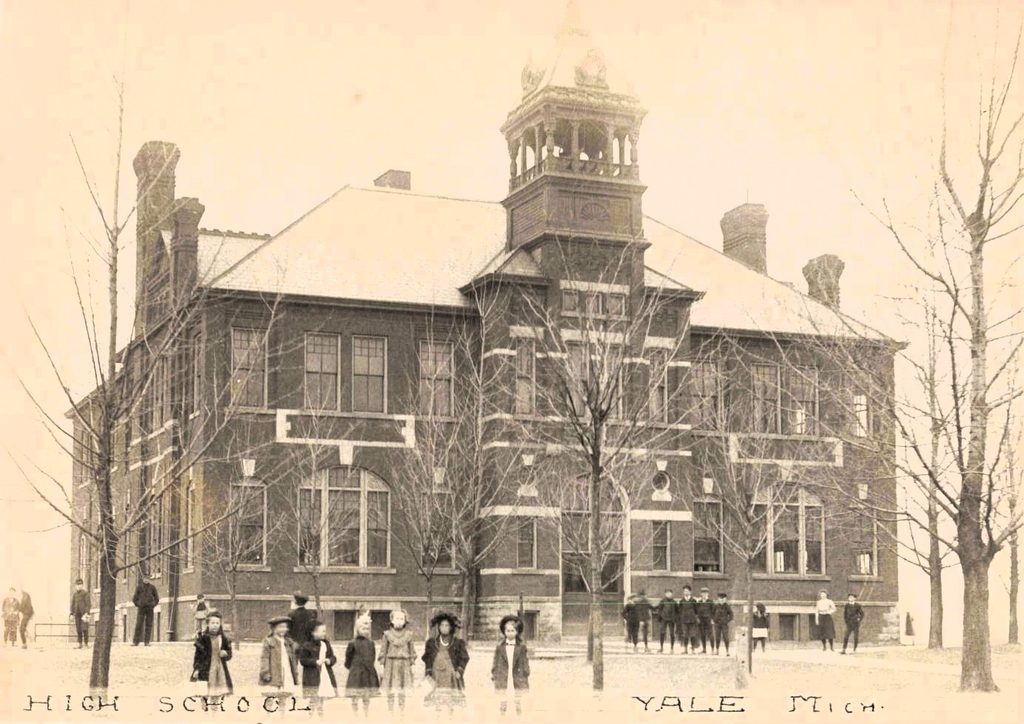
Yale’s first brick school dated to 1887. The large school shown on a card dated 1906 had a central tower, tall windows, and enough visual weight to rival many commercial buildings. The town was announcing that public education belonged near the center of civic life.

Anne Campbell was born in Lynn Township near Yale in 1888. She published her first verse as a child and later became a staff poet for the Detroit News. Beginning in 1922, Campbell wrote six poems a week for 25 years. Her career anniversary in 1947 drew a large celebration in Detroit. Her writing about home and ordinary life reached readers far outside Michigan.
Campbell’s success adds an important human note to the History of Yale Michigan. The town’s record is not limited to production totals and civic improvements. A child of the Yale area became one of the country’s best-known newspaper poets of her time.
Yale Bologna Became the Symbol That Lasted
Tilden J. “T.J.” Minnie began selling bologna from a small Main Street shop in 1906. The product fit local life. Smoked bologna traveled well, could be sliced or fried and offered a filling meal without ceremony.
C. Roy Inc. was established in June 1924 and later carried on Yale’s commercial bologna tradition. The family business continued using hickory smoke and hands-on cooking and cooling methods. Its survival gave the community a direct connection to the town’s early food trade.
The Yale Bologna Festival began in 1989. That was 83 years after Minnie’s first sales. The delay helps explain the festival’s strength. Organizers did not invent a historical identity. They built a public celebration around a tradition local families had already kept alive for generations.
The festival also solved a memory problem. The woolen mill closed in 1963. Passenger rail service and older factory work faded. A ring of bologna remained easy to make, sell, carry, and share. It became a friendly stand-in for a much larger industrial story.
Why Yale’s History Still Holds Attention

The History of Yale, Michigan, is unique because the town connected farm labor with national industry. Sheep fleece became Army cloth and automobile upholstery. Grain became a rail shipment. Fresh peas became canned food. A small meat shop created a product that later defined the city’s largest celebration.
Yale’s old images make the transition visible. Cars sit in mud. Wagons wait near brick stores. Factory windows rise above a rural community. A waterworks stack, a depot and a high school each mark a different kind of public confidence.
The bologna joke survives because it contains a serious truth. Yale built an identity from work people could see, food they could taste, and traditions they could pass on. Its history is full of bologna. It is also full of rail schedules, wool fibers, grain dust, canned peas, school bells, and Main Street commerce.
Works Cited
Chasar, Mike. “Back to School with Anne Campbell.” Stanford Humanities Center, 26 Aug. 2014. Accessed 31 Aug. 2026.
City of Yale. “About Us.” City of Yale. Accessed 31 Aug. 2026.
Fredendall, Liz. “Celebrating Small-Town Pride, Yale Bologna Festival Returns for 34th Year.” The Keel, 17 July 2024. Accessed 31 Aug. 2026.
Historical Marker Database. “Our Town Yale.” Submitted by Craig Doda, 16 Sept. 2024. Accessed 31 Aug. 2026.
Historical Marker Database. “The Spirit of Yale Bulldogs.” Submitted by Craig Doda, 16 Sept. 2024. Accessed 31 Aug. 2026.
Historical Marker Database. “Yale Historical Murals.” Submitted by Craig Doda, 31 Jan. 2021. Accessed 31 Aug. 2026.
Historical Marker Database. “Yale Woolen Mills.” Submitted by Craig Doda, 17 Sept. 2024. Accessed 31 Aug. 2026.
“In Town.” Tri-County Chronicle, 18 July 1902. Accessed 31 Aug. 2026.
Library of Michigan. “Anne Campbell.” Authors and Illustrators Database, 21 Feb. 2017. Accessed 31 Aug. 2026.
MichiganRailroads.com. “Port Huron and Northwestern Railway Company.” Accessed 31 Aug. 2026.
MichiganRailroads.com. “Yale, MI (St. Clair Co.).” Accessed 31 Aug. 2026.
Pere Marquette Historical Society. “The Pere Marquette Historical Society.” Accessed 31 Aug. 2026.
Yale Bologna Festival. “Yale Bologna Festival.” Accessed 31 Aug. 2026.
“The Yale Expositor (Yale, St. Clair County, Mich.) 1894-Current.” Library of Congress. Accessed 31 Aug. 2026.

