


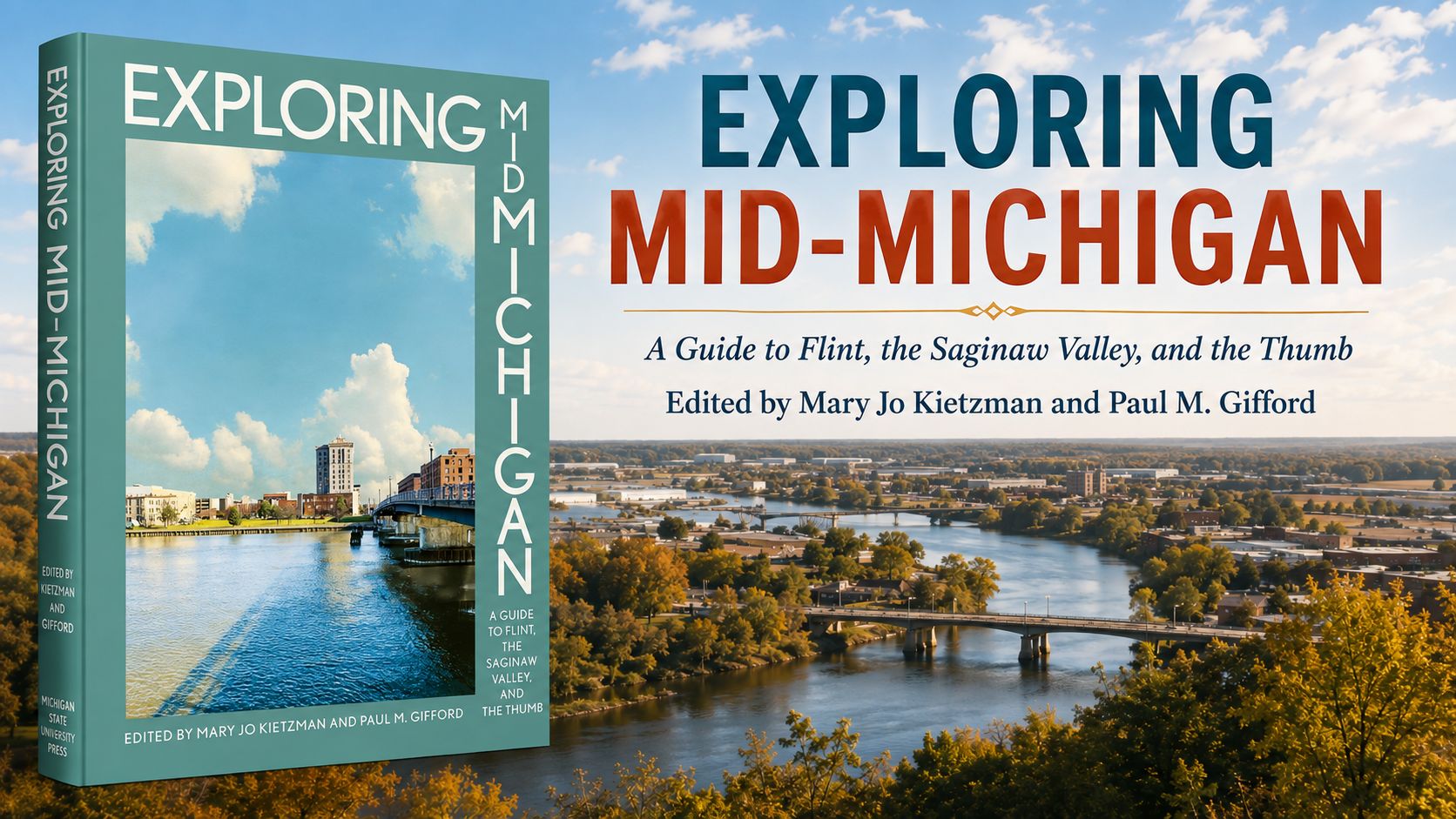
New Mid-Michigan Guidebook Gives the Thumb a Larger Place in Michigan History
The 420-page book includes four Thumb tours, a Black River route and accounts of farming, ecology, immigration and Shay Lake’s history as a Black resort community.


A new Mid-Michigan guidebook is placing the Thumb within a broader story of factories, farms, migration, environmental damage and community life.
Exploring Mid-Michigan: A Guide to Flint, the Saginaw Valley, and the Thumb was published Aug. 1 by Michigan State University Press. The 420-page book was edited by Mary Jo Kietzman and Paul M. Gifford and written through a collaborative effort involving Michigan contributors.
The book was modeled after the American Guide Series produced by the Federal Writers’ Project during the Great Depression. Those state and regional guides combined history, cultural reporting, travel routes and accounts of everyday life.
Kietzman and Gifford use a similar approach to examine 10 Mid-Michigan counties, including communities across the Thumb.
The result is not a standard tourism book built around hotels, restaurants and roadside attractions. It is a collection of essays, photographs, travel routes and regional studies covering geography, industry, farming, migration, folklore, music and ecology.
Michigan State University Press describes the region as Michigan’s industrial and agricultural center, shaped by the sometimes uneasy relationship between factories and farms, cities and rural communities, workers and management.
Four Thumb Tours and a Black River Route

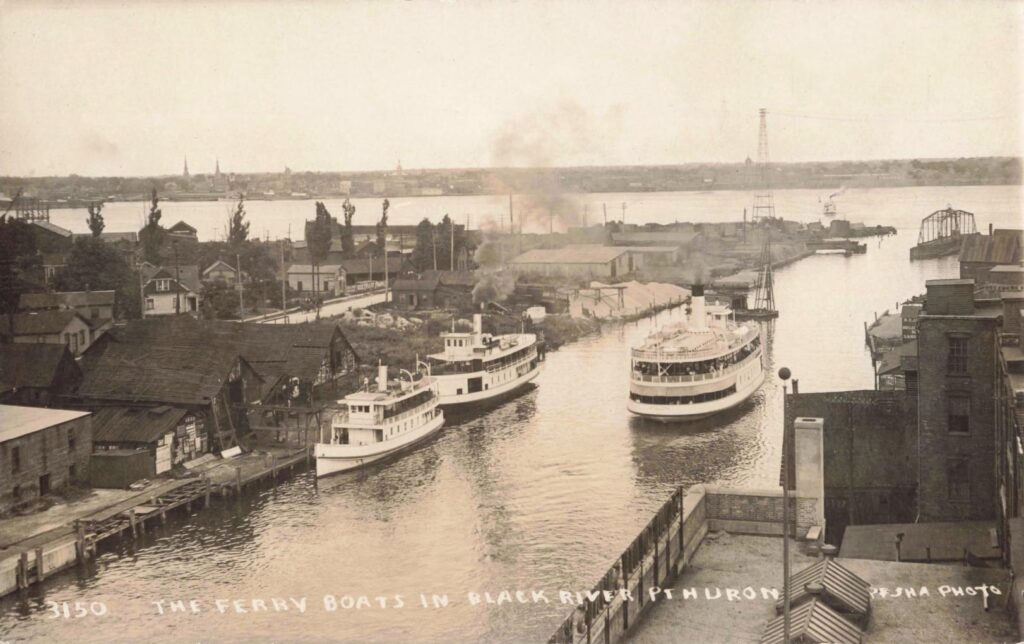
The guide includes four tours through the Thumb. A fifth route follows the Black River Greenway.
The tours connect towns, waterways, farms, historic sites and natural areas. They are designed to show how individual places fit into the economic and cultural history of the larger region.
The Thumb material includes original photographs and music, along with a study of changes in farming.
That agricultural coverage comes as many rural Michigan communities continue to confront farm consolidation, population decline and the loss of smaller operations. The book examines those changes as part of a larger relationship between Mid-Michigan’s industrial cities and the farmland surrounding them.
For generations, factories drew workers from rural counties while farms supplied sugar beets, beans, grain, livestock and other products to regional processors and markets.
The guide also documents how deforestation, habitat loss, disappearing species and repeated water problems helped create greater environmental awareness across Mid-Michigan.
Shay Lake’s Role as a Black Vacation Community


One of the book’s notable Thumb stories concerns Shay Lake in Tuscola County.
The guide examines the lake’s development during the 1950s and 1960s as a resort and vacation community for Black factory workers and their families.
The story places Shay Lake within an era when discrimination often restricted where Black Michigan residents could purchase property, rent vacation cottages or spend their leisure time.
Shay Lake provided a place for recreation, family gatherings and community life outside the state’s industrial centers. Its history also challenges the common image of the Thumb as a region shaped only by white European settlement and agriculture.
The Shay Lake account is part of the book’s broader effort to include people whose experiences have sometimes received limited space in local histories.
Those groups include Indigenous peoples, African Americans, immigrants, lumber workers, farmers, foundry employees, labor activists, judges, artists, poets and environmental advocates.
A Regional Story Built From Many Voices
Kietzman is an associate professor of English at the University of Michigan-Flint.
Gifford is a former archivist at the Genesee Historical Collections Center at the University of Michigan-Flint.
Their roles are listed as editors because the book grew from the work of multiple contributors rather than two sole authors. Michigan State University Press describes it as a collaboratively written account built through research, personal experience and collective memory.
The contributors examine a region that has lost population, factories, small farms, natural resources, and clean water. However, the book does not present Mid-Michigan only as a place of decline.
Instead, it focuses on the people who came to the region, worked there, and remained through major economic and environmental changes.
University of Michigan historian Francis Blouin called the book more than a guide, describing it as a companion for travelers and residents seeking a deeper understanding of Mid-Michigan.
Historian Sharon Ann Musher said the book restores humanity to a region that has often been misunderstood.
Other reviewers have praised the project for following the spirit of the Federal Writers’ Project while creating a detailed portrait of Mid-Michigan from the viewpoints of people who live there.
More Than a List of Places to Visit
The new guide arrives as much of Michigan’s tourism coverage remains concentrated on Detroit, Traverse City, Mackinac Island and the Upper Peninsula.
The Thumb often receives attention for beaches, summer festivals and Lake Huron attractions. Less attention is given to the region’s labor history, racial history, agricultural changes and environmental problems.
Exploring Mid-Michigan attempts to provide that wider context.
Its regional approach connects travel with history, science, race, industry and agriculture. That may make it useful to residents, teachers, researchers, genealogists and visitors seeking more than a list of stops.
It also follows a central idea behind the original Federal Writers’ Project guides: Local communities cannot be fully understood apart from the national events that shaped them.
Manufacturing, immigration, segregation, labor disputes, agricultural consolidation and environmental policy all left marks on Flint, the Saginaw Valley and the Thumb.
Exploring Mid-Michigan Guidebook Details
Images on this page may contain affiliate links in which we may receive a commission. See our affiliate disclosure for details.
Exploring Mid-Michigan: A Guide to Flint, the Saginaw Valley, and the Thumb was published by Michigan State University Press on Aug. 1, 2026.
The book has 420 pages and is available in paperback, hardcover, PDF and EPUB formats.
Michigan State University Press lists the paperback at $39.95, the hardcover at $89.95 and each digital edition at $39.95. Retail prices, discounts and availability may vary.
The paperback ISBN is 978-1-61186-577-6. The hardcover ISBN is 978-1-61186-579-0.

