


Why are Pickles Zero Calories – Or Are They?
The zero-calorie label on your jar of Michigan dills is a legal fiction permitted by federal rounding rules. Most snackers reach for a spear from a brand like Vlasic or Gielow believing they’ve found a loophole in the laws of thermodynamics. It’s natural to ask why are pickles zero calories when the cucumbers they’re made from clearly contain energy.
Michigan leads the nation in pickling cucumber production, growing 218,720 tons in 2024 according to data from the Chronicle Journal. Whether those cucumbers end up in processing plants in Imlay City or Lexington, they don’t lose their caloric value in the brine. We’ll uncover the FDA labeling thresholds in 21 CFR 101.9 that allow manufacturers to mark servings under five calories as zero.
This guide explains exactly how many calories are hiding in a full jar and the biological facts behind cucumber density. You’ll also see the trade-offs involved with high sodium levels that often conflict with the 2,300 mg daily limit recommended by the USDA. By the end, you’ll understand the difference between marketing claims and nutritional reality.
Key Takeaways
- Learn how FDA regulation 21 CFR 101.9 allows manufacturers to round down any food with fewer than five calories per serving to zero.
- Understand Michigan’s role as the nation’s leading producer of pickling cucumbers, supporting major local brands like Gielow Pickles and Vlasic.
- See the biological reasons why are pickles zero calories on paper, including their high water content and the sugar-reducing fermentation process.
- Identify the health trade-offs of this snack, such as sodium levels that can reach one-third of your recommended daily intake in a single serving.
- Recognize how small serving sizes on nutrition labels can hide the true caloric impact of eating an entire jar of pickles.
The FDA Five-Calorie Rule and Nutritional Labeling
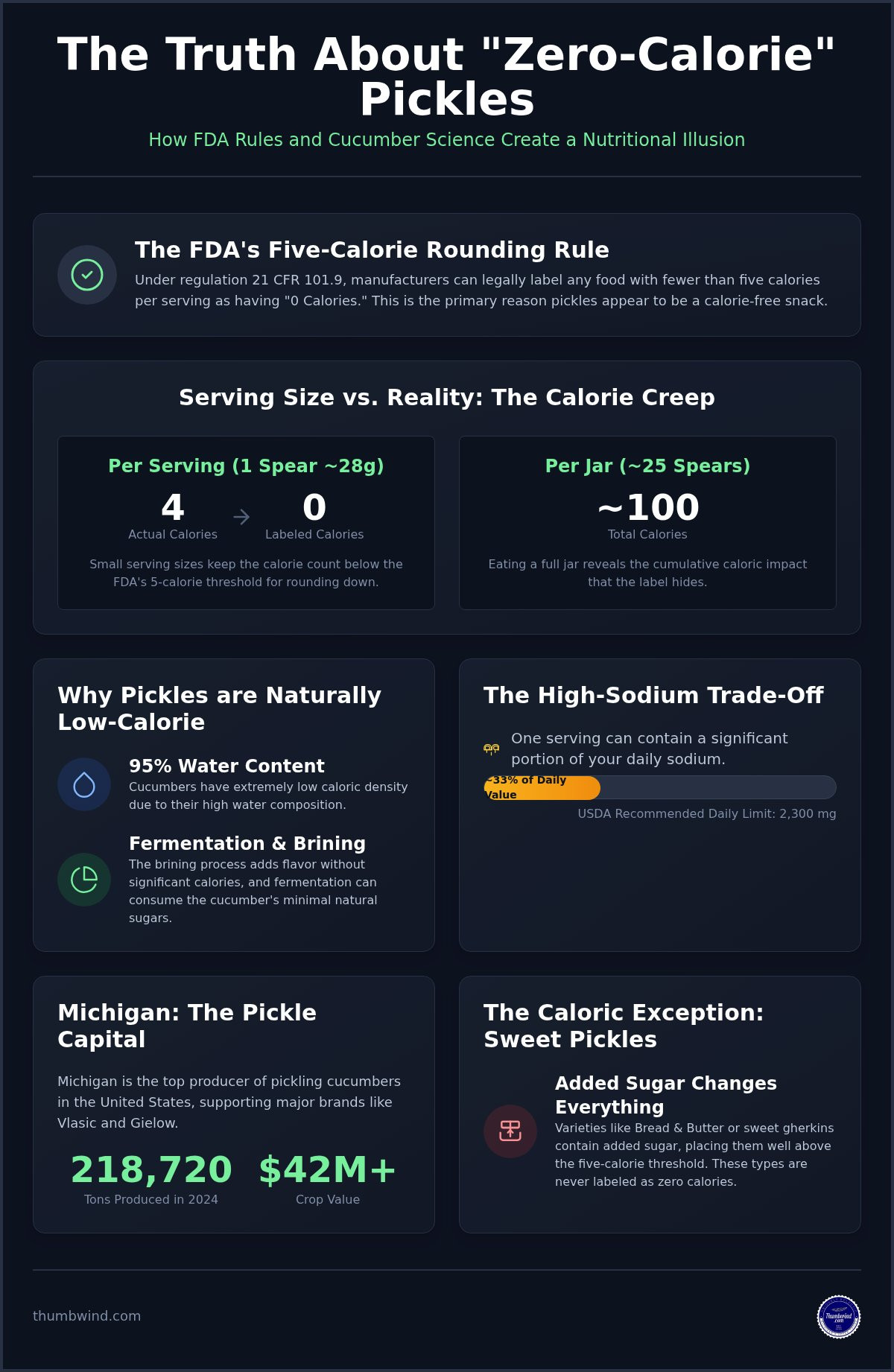
Federal labeling laws create the illusion that some snacks have no energy value. Under the FDA’s Title 21 rounding rule, specifically 21 CFR 101.9, any food item containing fewer than five calories per serving may be legally labeled as having zero calories. This regulation is the primary reason why are pickles zero calories on the jars you find at grocery stores across Michigan. While a single cucumber slice might not impact your daily total, the math changes quickly when you eat more than the suggested serving.
The cumulative error of this rounding rule becomes apparent for anyone who treats a jar as a single-sitting snack. If a spear actually contains four calories, the label will still read zero. Eating ten spears means you’ve consumed 40 calories that don’t technically exist on the nutrition facts panel. This discrepancy remains a point of skepticism for many health-conscious shoppers who track their intake closely.
Serving Size Manipulation in the Brine Industry
Manufacturers often set serving sizes at just one spear or a few chips to stay below the five-calorie threshold. This practice allows Michigan-based brands like Vlasic in Imlay City or Gielow in Lexington to market their products as guilt-free snacks. When you compare “per serving” metrics to “per container” data, the caloric reality often shifts from zero to nearly 100 calories for a full jar. You can find more details on this labeling gap in our look at whether pickles really have zero calories.
The 20 Percent Margin of Error
The brining process preserves cucumbers but doesn’t erase their natural sugars entirely. FDA regulations allow for a 20 percent margin of error in caloric reporting to account for natural variations in produce. Since cucumbers grown in the Thumb region vary in size and density based on soil conditions and rainfall, exact precision is nearly impossible. This legal leeway ensures that even if a pickle spear hits six or seven calories, the manufacturer is rarely penalized for sticking to the zero-calorie claim.
Caloric Density of Cucumbers and the Brining Process
Cucumbers are essentially vessels for water, consisting of 95 percent liquid by weight. When farmers in Michigan’s Thumb region harvest these vegetables and send them to be submerged in a brine of vinegar and salt, the cucumbers gain flavor without adding macronutrients. This lack of fat, protein, and carbohydrates explains a large part of why are pickles zero calories on most commercial labels.
The method of preparation also changes the nutritional profile. Quick-process pickles use a hot vinegar bath to achieve flavor rapidly, while naturally fermented pickles sit in crocks where beneficial bacteria consume the cucumber’s remaining natural sugars. This chemical change further reduces the already low energy density of the vegetable. Understanding why are pickles zero calories requires looking at how these sugars vanish during the fermentation or pickling process.
The Myth of Negative Calories
Skeptics often cite the “negative calorie” theory, claiming the body burns more energy chewing and digesting a pickle than the snack provides. This idea relies on the thermic effect of food (TEF), which is the energy required for processing nutrients. While pickles are high-fiber and low-energy, they don’t actually create a caloric deficit. You aren’t losing weight just through the act of crunching, though they remain a far lighter choice than processed chips.
Sugar-Added Pickles: The Caloric Exception
Not every jar on a Michigan grocer’s shelf is calorie-free. Bread and butter pickles or sweet gherkins contain substantial amounts of added sugar to achieve their signature taste. Producers like Gielow Pickles in Lexington must account for these carbohydrates on their labels. Because these varieties exceed the FDA Five-Calorie Rule, they cannot legally claim to be zero calories. For a deeper look at the chemistry behind these snacks, you can check our analysis of whether pickles really have zero calories.

Michigan Influence on the Commercial Pickle Industry
Michigan remains the top producer of pickling cucumbers in the United States. In 2024, the state produced over 218,000 tons of the crop, valued at more than $42 million. This massive output centers largely in the Thumb region, where soil conditions in Lapeer and Bay counties favor firm, low-sugar varieties. These specific agricultural traits are part of why are pickles zero calories when processed, as the base vegetable starts with a very low Caloric Density of Cucumbers.
The industrial history of the Michigan pickle is tied to Detroit roots. The Vlasic brand began as a small creamery in the city before expanding into a massive pickling operation in Imlay City. Today, other major players like Gielow Pickles maintain a significant presence. The Gielow facility in Lexington serves as a primary employer for Sanilac County, processing crops harvested from nearby fields to meet national demand.
From Field to Jar in the Thumb
Moving cucumbers from a field in the morning to a brining tank by afternoon requires precise logistics. This speed ensures the crunch that Michigan diners expect at a local fish fry. Pickles are a mandatory side dish for regional favorites like perfectly prepared walleye, where the acidity cuts through the richness of the fried fish. Local processors prioritize fast turnaround to keep natural sugars from developing further during transport.
The Economic Impact of the Michigan Pickle
Industrial agriculture transformed the state’s landscape during the 20th century. You can read more about these shifts in our guide to 45 significant events in Michigan history. Seasonal labor and multi-generational family farms sustain the national supply of dills and spears. This local industry ensures that the technical question of why are pickles zero calories remains a topic of conversation for health-conscious consumers across the country.
To see the regions where these crops grow and the weather affecting this year’s harvest, check out our live regional webcams for a look at the Thumb’s current conditions.
Sodium Content and Practical Health Considerations
While the question of why are pickles zero calories often leads to labeling loopholes, the real health impact lies in the brine. A single large dill pickle can contain over 800mg of sodium. This amount represents roughly one-third of the 2,300mg daily limit recommended for adults. For Michigan snackers watching their blood pressure, the salt content matters far more than the negligible energy count.
High salt intake triggers water retention, which often causes temporary weight fluctuations. Even if you stick to snacks that claim zero calories, the sodium can make the scale move upward overnight. This physiological reaction doesn’t involve fat gain, but it complicates the tracking process for those focused on weight management. It’s a reminder that a label reading “zero” doesn’t mean a food has no biological impact, and prioritizing your overall wellness is easier with resources like Reston Family Dental Center.
When examining a jar at the store, use this checklist to look beyond the calorie count:
- Serving size: Check if the “zero” applies to a whole spear or just a thin chip.
- Sodium percentage: Look for the Daily Value percentage to see how it fits your 2,300mg limit.
- Added sugars: Ensure you aren’t eating a sweet variety that bypasses the zero-calorie rule.
Managing Salt Intake for Michigan Snackers
Low-sodium alternatives are becoming more common in Michigan grocery aisles. These versions often replace some salt with potassium chloride, which shifts the flavor profile toward a sharper, more metallic tang. If you only have standard dills on hand, rinsing them under cold water for 30 seconds can remove a significant portion of the surface salt without ruining the crunch. This simple step helps balance the flavor while reducing your overall intake.
Pickle Juice: Beyond the Snack
Brine isn’t just waste liquid. Michigan hikers and athletes frequently use it for electrolyte replacement during long treks or high-intensity sports. The high salt content helps prevent cramping by quickly restoring sodium lost through sweat. To understand the science behind this trend, you can read our look at whether do pickles really have zero calories and its summary of the 2025 brine benefits study.
Smart Snacking in the Great Lakes State
The zero-calorie label on a jar of dills is a legal convenience rather than a biological reality. By navigating the FDA’s rounding rules and understanding the water-dense nature of Michigan’s top crop, you can better manage your daily intake. While these snacks remain a staple of our local industry from Imlay City to Lexington, the high sodium levels require a practical approach to consumption.
Recognizing why are pickles zero calories allows you to look past the marketing and see the agricultural effort that goes into every spear. Whether you’re prepping for a summer fish fry or grabbing a quick snack, knowing the facts about brine and fermentation keeps your health goals on track.
Since 2009, Thumbwind has provided independent Michigan journalism with a deep focus on Thumb region culture and industry. We aim to be a reliable guide for those who value accuracy in regional news and heritage. Read more about Michigan’s unique food history and regional news to stay connected with the stories that shape our local identity. Enjoy your next Michigan-grown snack with a clearer perspective on what’s actually inside the jar.
Frequently Asked Questions
Is it true that pickles have negative calories?
No, the idea that pickles have negative calories is a nutritional myth. While your body uses energy to chew and digest high-fiber foods, this process doesn’t burn more energy than the pickle provides. Even though a spear contains very little energy, it still contributes a small number of calories to your daily total. You won’t create a caloric deficit simply by eating more dills.
How many calories are actually in a whole jar of dill pickles?
A standard 24-ounce jar of dill pickles typically contains between 50 and 100 calories. While labels often list zero because of the FDA’s rounding rules, those small amounts add up when you eat the entire container. This cumulative effect is the main reason why are pickles zero calories on the label but not in reality. Always check the total number of servings per container to estimate the true caloric impact.
Why do sweet pickles have more calories than dill pickles?
Sweet pickles have higher calorie counts because manufacturers add substantial amounts of sugar to the brine. While a dill pickle relies on vinegar and salt, varieties like bread and butter pickles contain corn syrup or cane sugar to achieve their flavor. A single serving of sweet pickles can contain 20 to 30 calories. Because they exceed the five-calorie limit, they can’t use the zero-calorie labeling permitted for dills.
Can eating too many ‘zero calorie’ pickles stall weight loss?
Eating too many pickles can stall weight loss progress primarily due to high sodium levels. A single large pickle can contain 800mg of sodium, which causes the body to retain water. This extra water weight often shows up on the scale the next morning. While you aren’t gaining fat, the inflammation and bloating from excessive salt intake can mask your actual progress and make tracking your intake difficult.
What does the FDA consider a single serving of a pickle?
The FDA generally defines a single serving of pickles as 28 grams, which equals about one medium spear or roughly three to four chips. Manufacturers use these small increments to stay under the five-calorie threshold required for a zero-calorie label. If you eat a whole large pickle from a Michigan producer like Vlasic, you’re likely consuming two or three official servings. Always verify the weight listed on the nutrition facts panel for accuracy.
Disclaimer
Information published on Thumbwind.com is provided for general informational purposes. While we make reasonable efforts to keep articles accurate and current, details such as prices, hours, regulations, access conditions, and other information may change without notice. Readers should verify important details with the appropriate business, agency or official source before making travel, financial or other decisions. Thumbwind.com is not responsible for the content, availability or practices of third-party websites linked from our articles.