



Prices Spike Affect Cost of Living 1917
The big issue 100 years ago was the cost of living in 1917 and the availability of food and coal due to the First World War. It was a theme that was clearly evident as stories were appearing weekly. Sugar beets were being sold by local farmers to processing companies for $8 a ton.

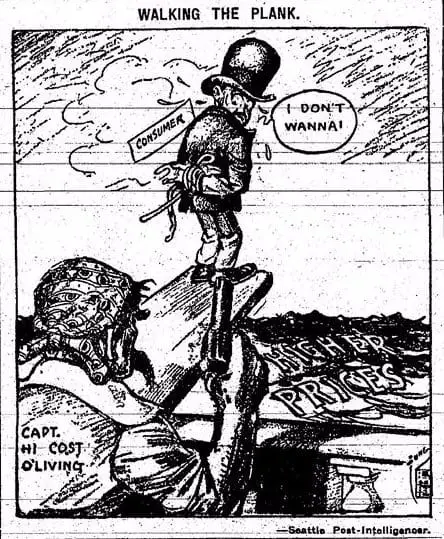
Prices Affecting the Cost of Living in 1917
Back in 1917, if you were making $700 year, you were doing about average. Gas was 15 cents a gallon. A first class stamp cost 2 cents. A new house cost about $3,300.
The cost of living 1917 is closely aligned with the census statistics on prices for 1915 include:
- Loaf of bread: 7 cents
- Dozen eggs: 34 cents
- Quart of milk: 9 cents
- Pound of steak: 26 cents
The average price of a car in the US was about $400 ($8,900 in todays dollars when adjusted for inflation). The average hourly wage was 22 cents an hour. (About $5 in todays dollars). In 1917 traffic in New York city showed more cars than horses for the first time.
Related Reading
- Frank Murphy – Michigan’s Supreme Court Justice
- Christian German Agricultural and Benevolent Society of Ora et Labora
- Walt’s Restaurant, A Caseville Institution
- Did a Derecho Hit the Upper Thumb?


Ahhhh if only we had the worries of yesteryear. Yet I am sure they were as daunting as todays are to us.