


A Day in the Life of Capac Michigan 1912 – Video
Step back to 1912 Michigan! Our new 3-minute mini-documentary takes you through the history of Capac, Michigan—from the grand Palmer
Continue reading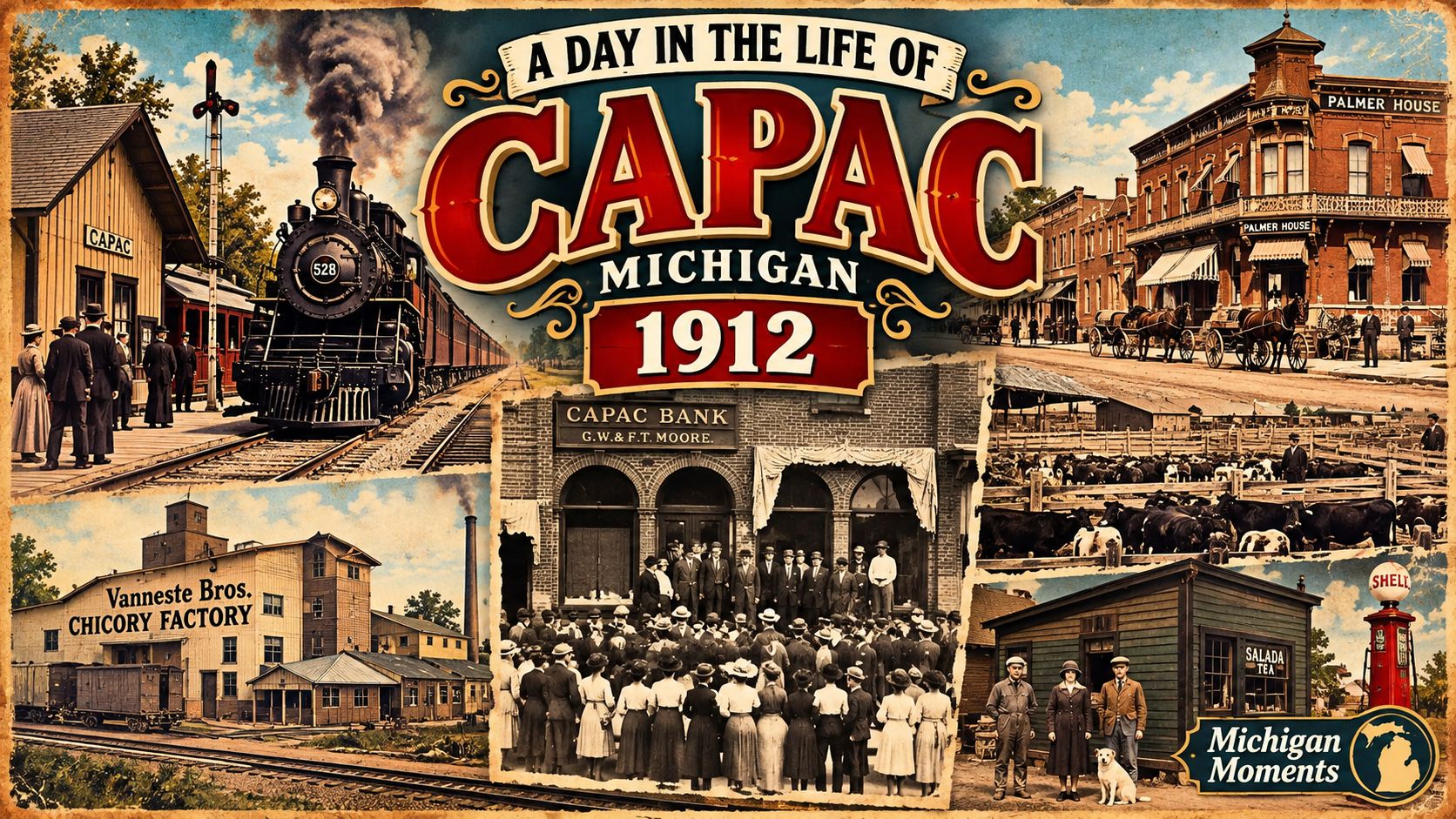
Step back to 1912 Michigan! Our new 3-minute mini-documentary takes you through the history of Capac, Michigan—from the grand Palmer
Continue reading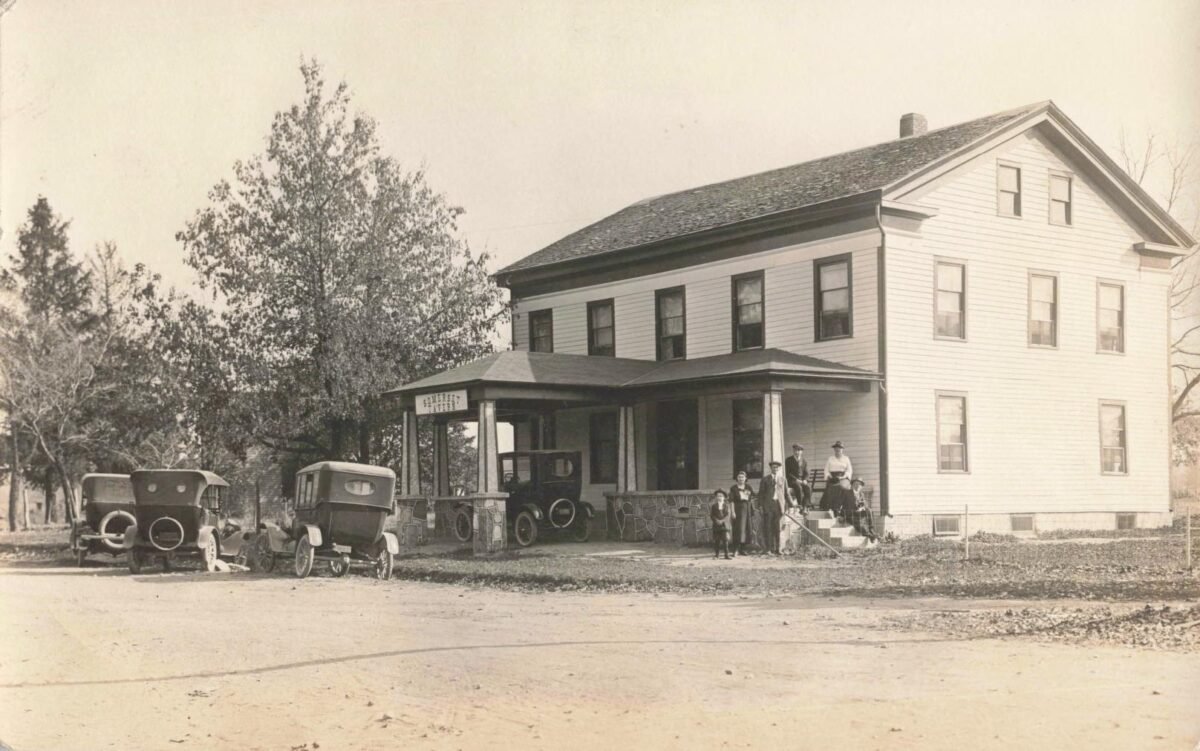
A photograph taken around 1920 shows the Somerset Tavern in Hillsdale County with several early automobiles lined up outside. A
Continue reading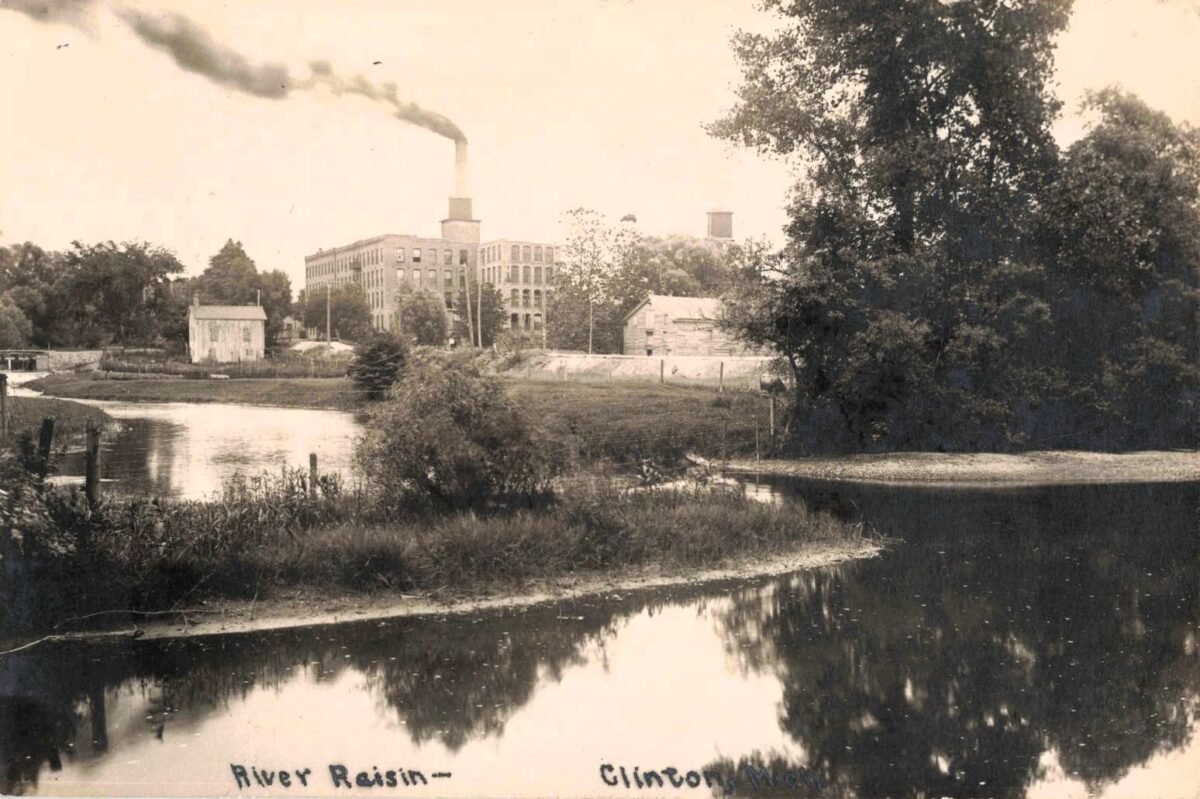
For generations, a tall smokestack rising above the River Raisin announced that Clinton, Michigan, was more than a farming community
Continue reading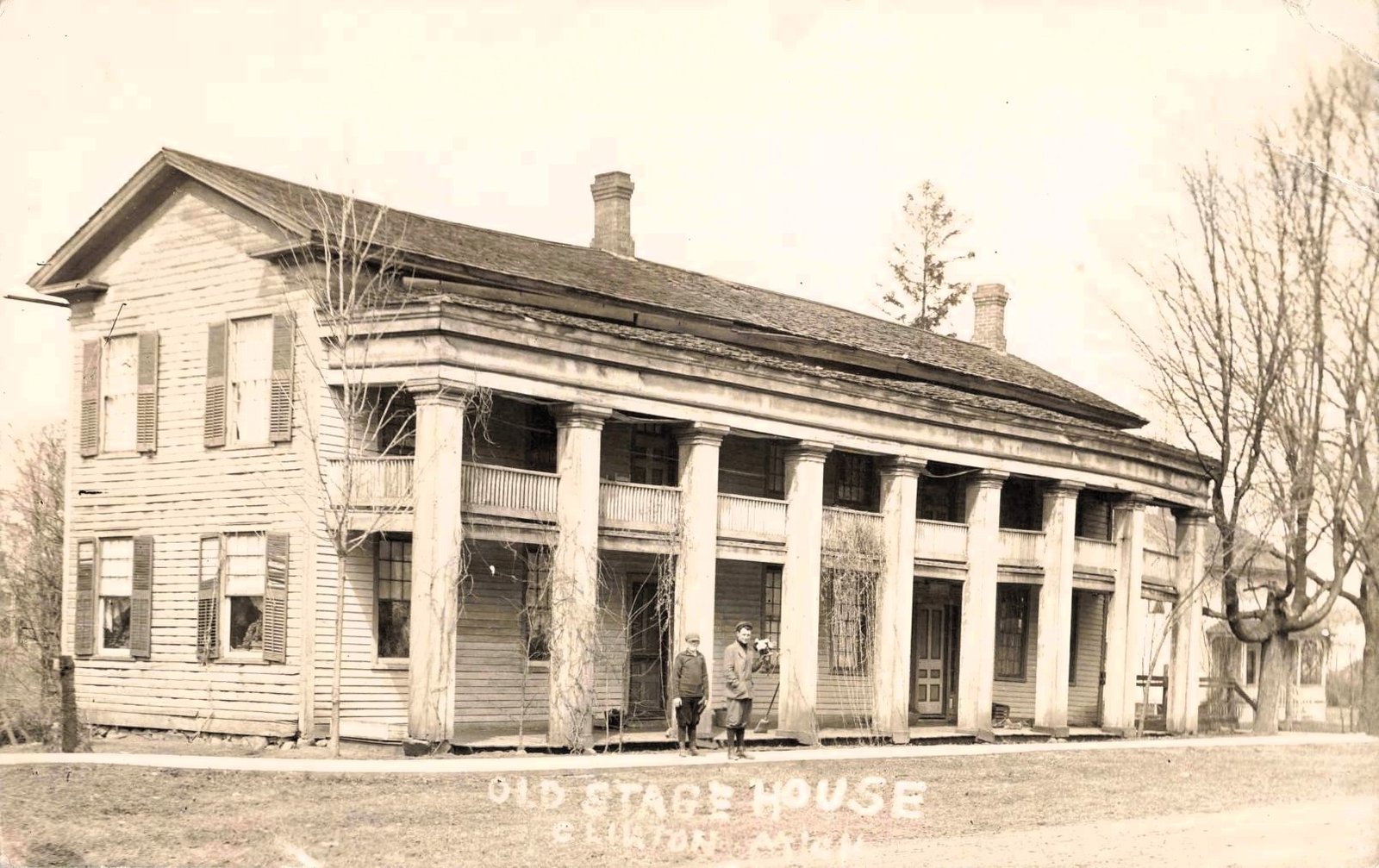
Before Interstate 94, before automobiles and even before Michigan became a state, travelers heading between Detroit and Chicago faced a
Continue reading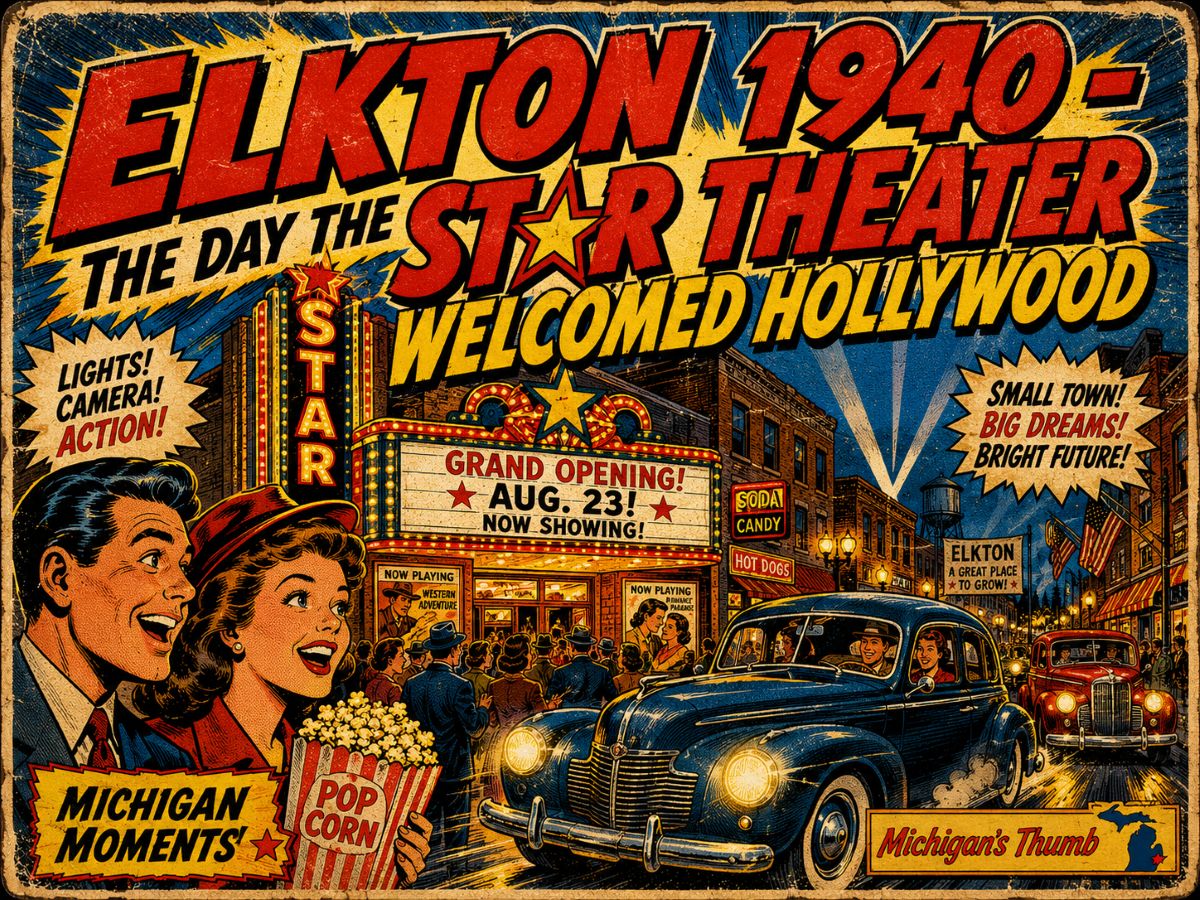
Watch this Michigan Moments episode as we travel back to downtown to see a bit of Elkton Michigan history in
Continue reading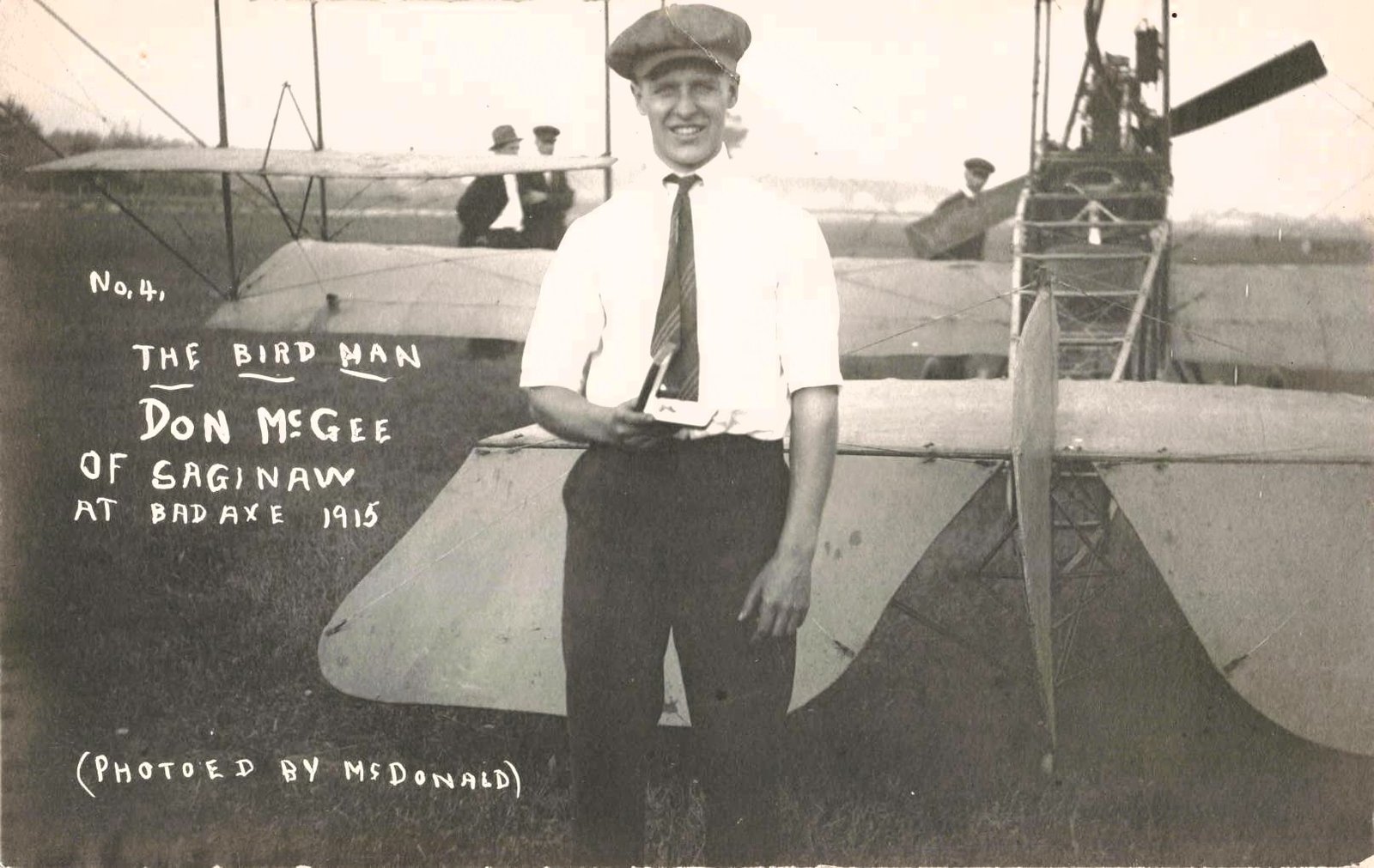
A century-old photograph can sometimes catch technology at the exact moment it still seemed impossible. This image, dated 1915, shows
Continue reading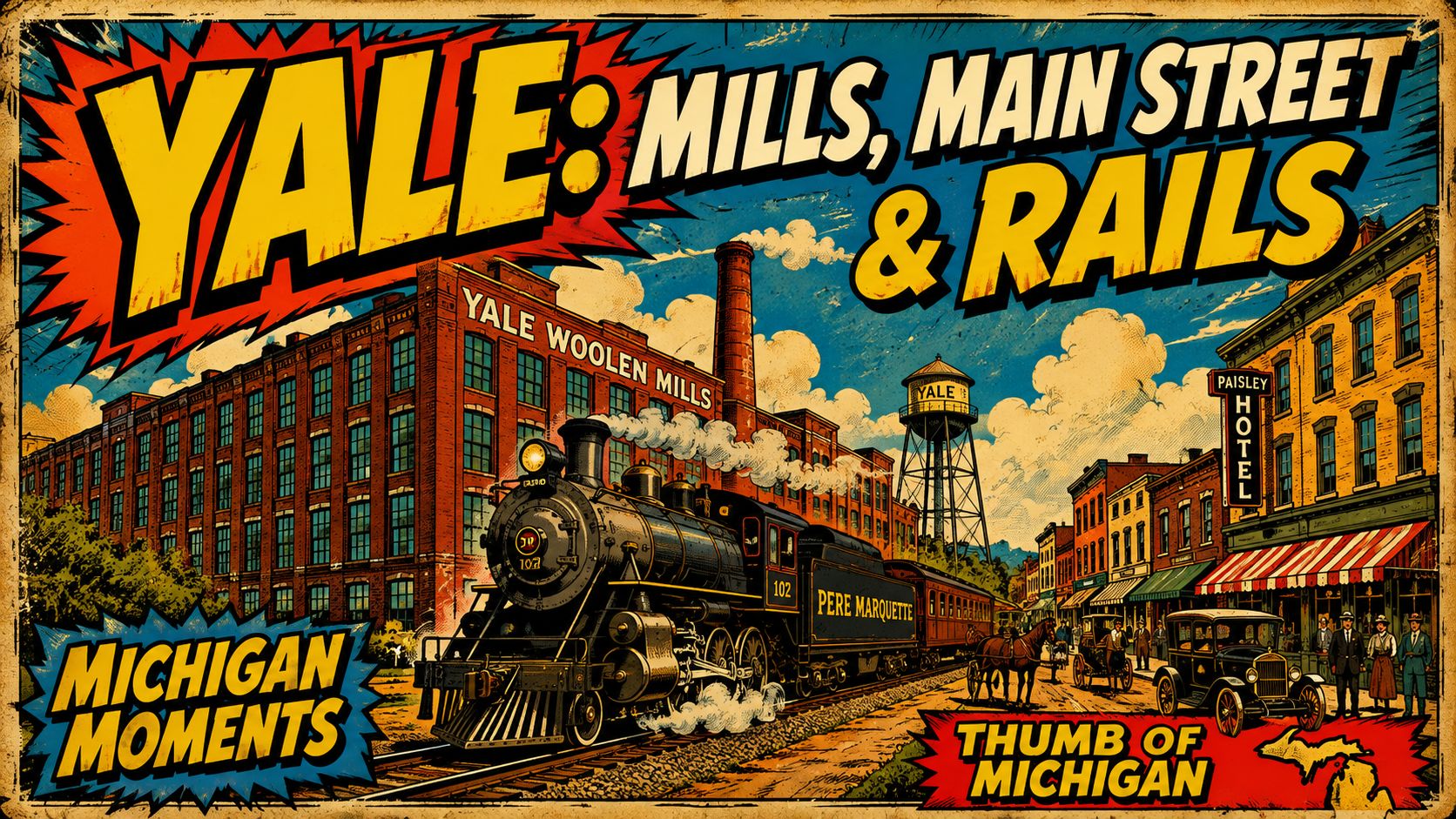
Historic images of Yale, Michigan, show a busy Main Street, the Paisley Hotel, woolen and flour mills, a canning factory and the Pere Marquette railroad during the community’s early 20th-century industrial era.
Continue reading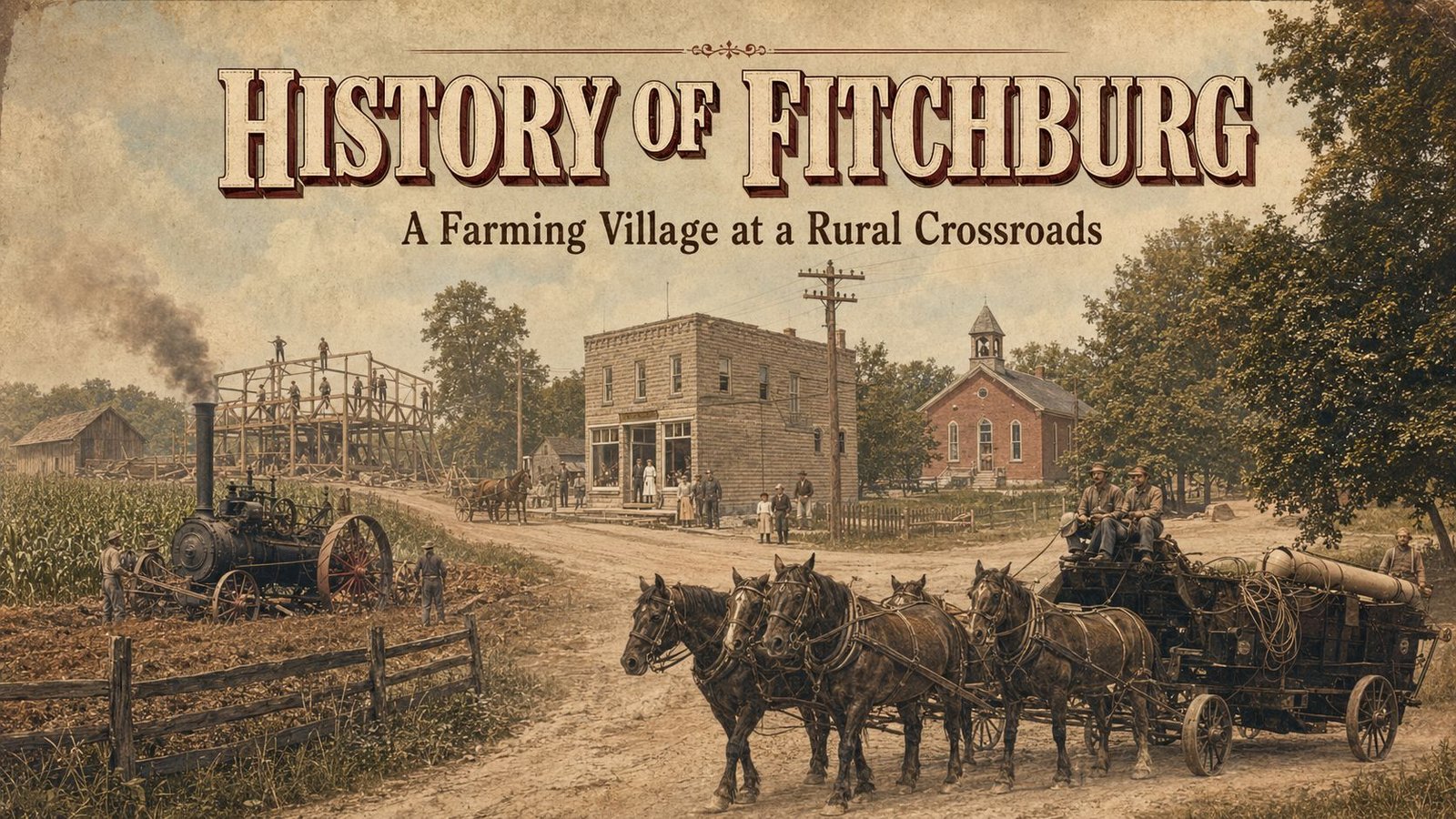
The History of Fitchburg Michigan follows a sawmill village that served Ingham County farms with stores, blacksmiths, a church and a school. Better roads and machinery later weakened its business center while nearby farms became more productive.
Continue reading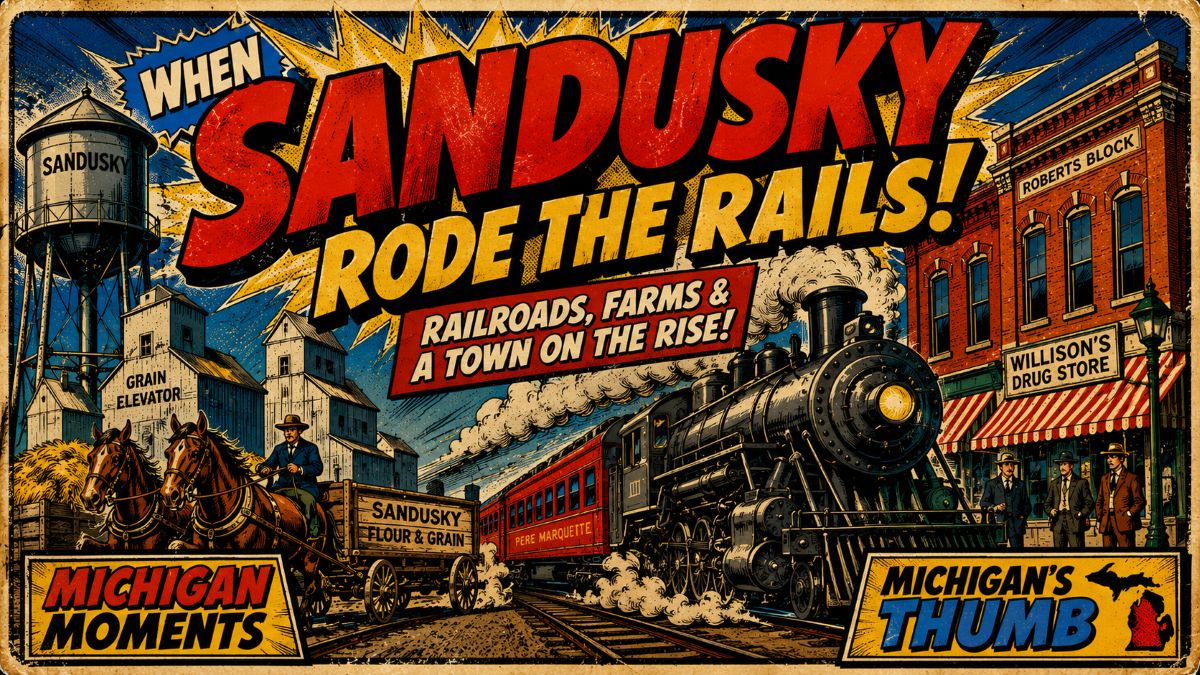
Historic photographs trace Sandusky, Michigan, from its lumber-era roots into a busy county seat shaped by railroads, agriculture and local commerce. The account follows two depots, grain elevators, downtown hotels, the 1915 courthouse fire and the unusual Practical Institute of Pharmacy class photographed in 1929.
Continue reading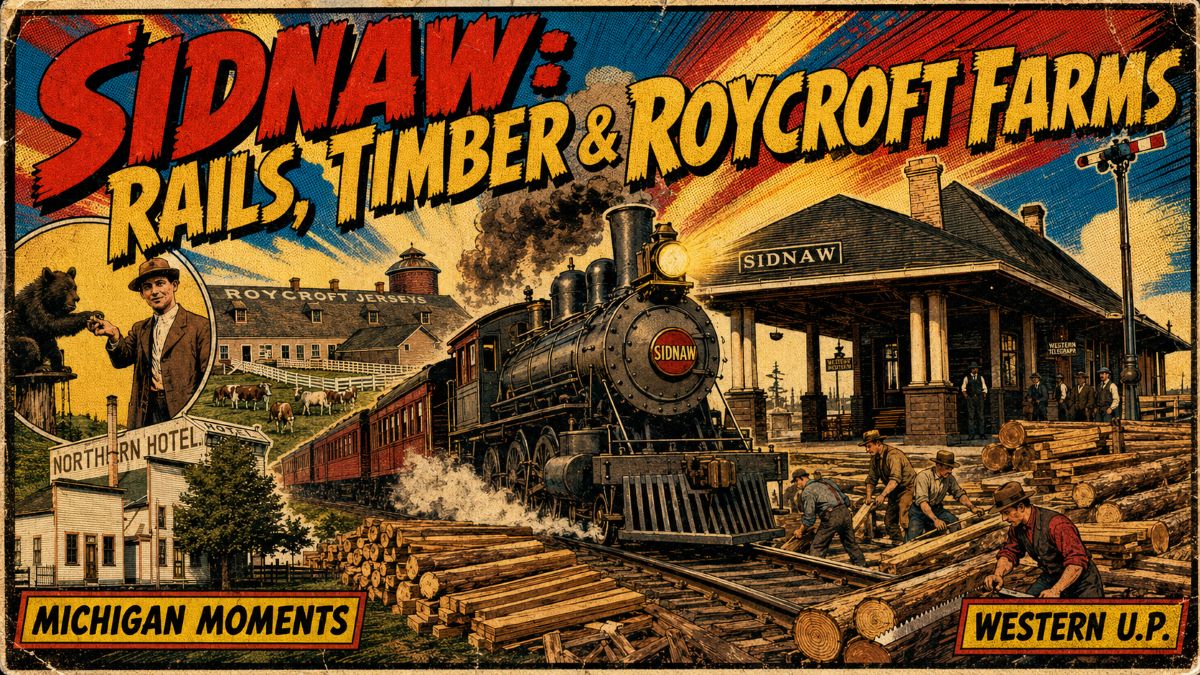
Sidnaw, Michigan, began as a booming lumber town in the late 1800s. By the early 1900s, it had sawmills, factories, hotels, and a union depot where the Milwaukee Road and South Shore railroads crossed. Families arrived, stores opened, and farms replaced the forests.
Continue reading


