



The Unexpected History of Lum Michigan – Railroad, Pickles and Main Street (1877 – 1964)
In the early 20th century, a horse-drawn wagon stood outside W. and M. Dixon’s two-story grocery and dry goods store in Lum, Michigan. Across Main Street were a bank, a butcher, and a hardware merchant who sold harness for the very horses that carried customers into town. The History of Lum Michigan begins with an intersection between the farm economy and the railroad.

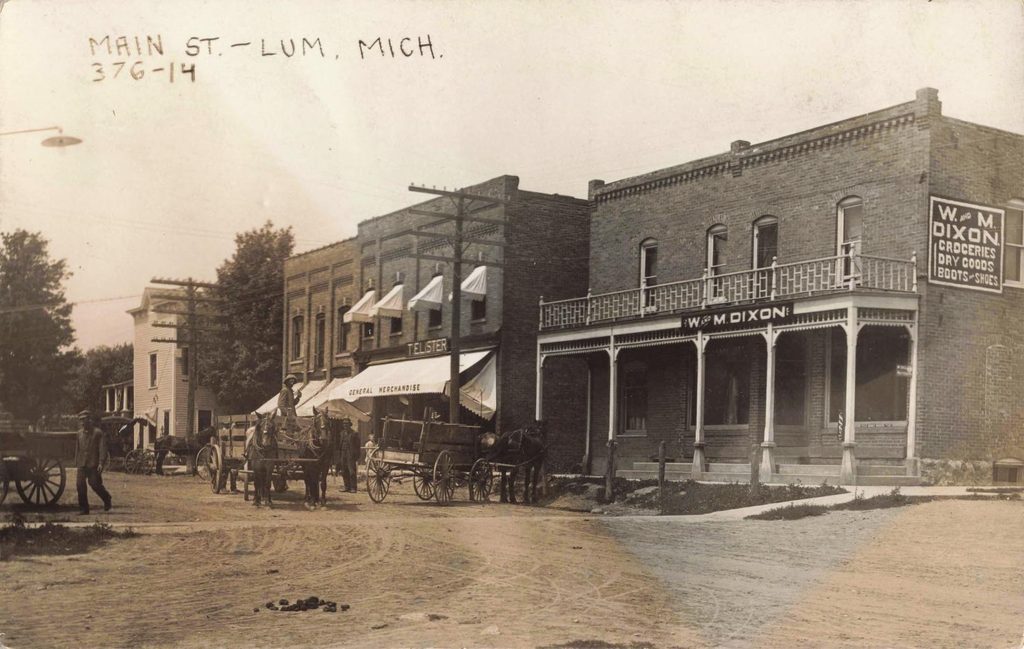
Today, Lum is an unincorporated community in Arcadia Township, roughly seven miles northwest of Imlay City in Lapeer County. Its historical commercial district was compact enough to walk through, yet the businesses served customers from a much wider area. Much of what happened there depended on the surrounding farms and a railway that stretched north toward Lake Huron.

History of Lum Michigan: A station with a soldier’s name
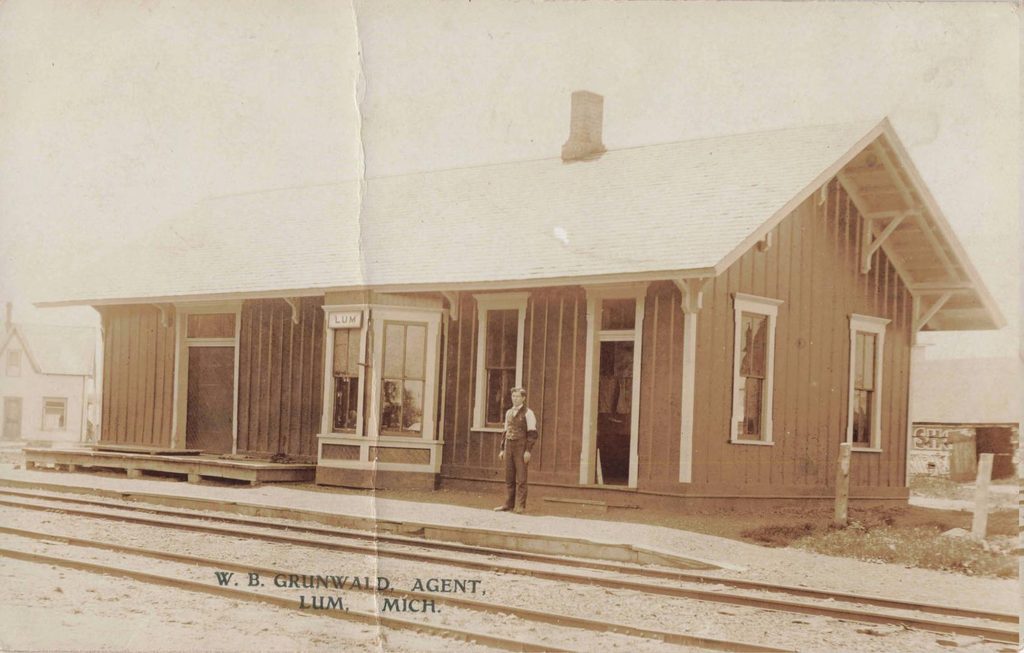
In October 1883, the full Pontiac, Oxford and Port Austin Railroad opened between Pontiac and Caseville. Lum became a station around 1884. The company was reorganized in 1889 under a new name, the Pontiac, Oxford and Northern Railroad, and eventually became part of Grand Trunk Western. The small station had become part of a route more than 100 miles long.
Local historical accounts say the proposed name for the settlement was Arcade Center. Wallace Huntley suggested honoring Charles M. Lum, a Civil War colonel under whom he reportedly served. An 1861 Michigan military commission bears Colonel Lum’s signature and establishes his connection with the Tenth Michigan Infantry. A generation later, his surname appeared on the side of a railway station in Lapeer County.

The land around Lum was already being worked. The 1906 Lapeer County atlas lists Frank Gould, a farmer who had arrived in the county in 1864, and H. D. Goodrich, a farmer born in the county in 1838. Both had Lum postal addresses. Families such as theirs supplied the village with customers and gave the station a reason to exist.
When Main Street was the shopping district
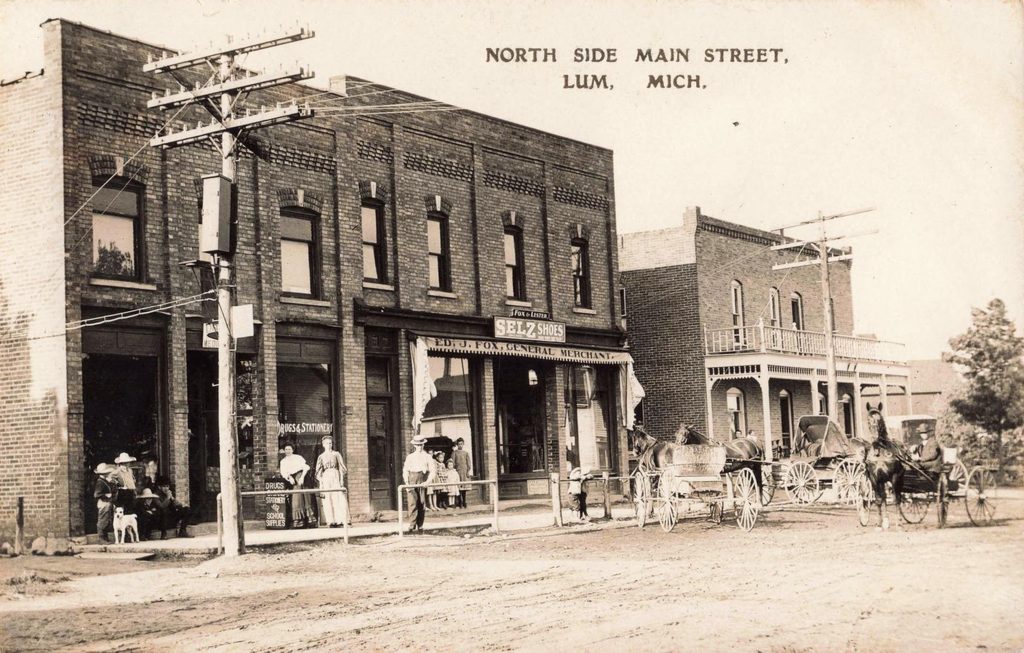
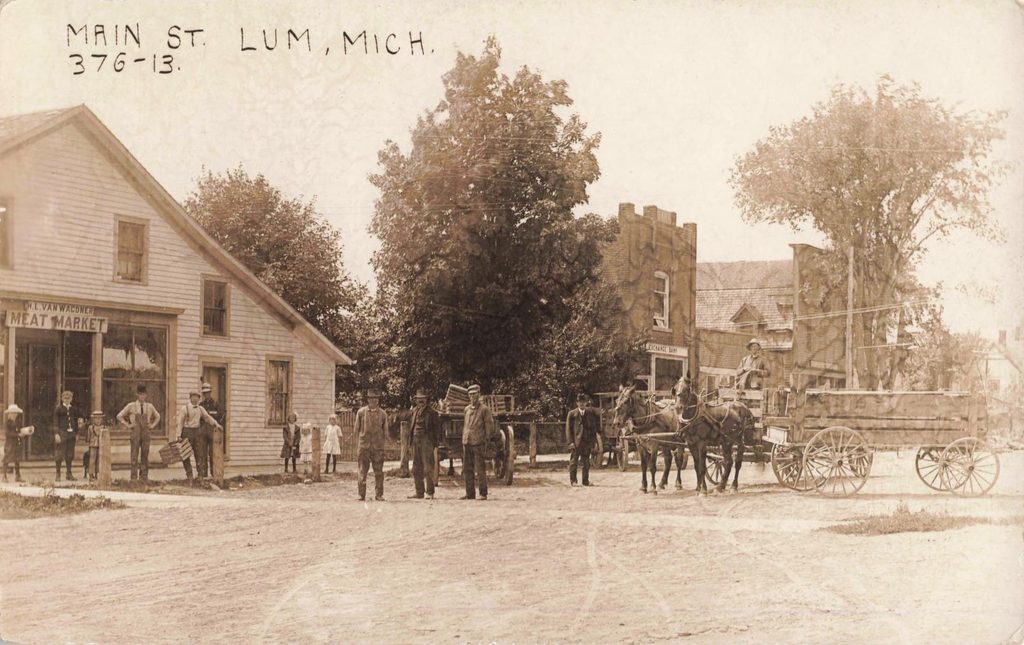
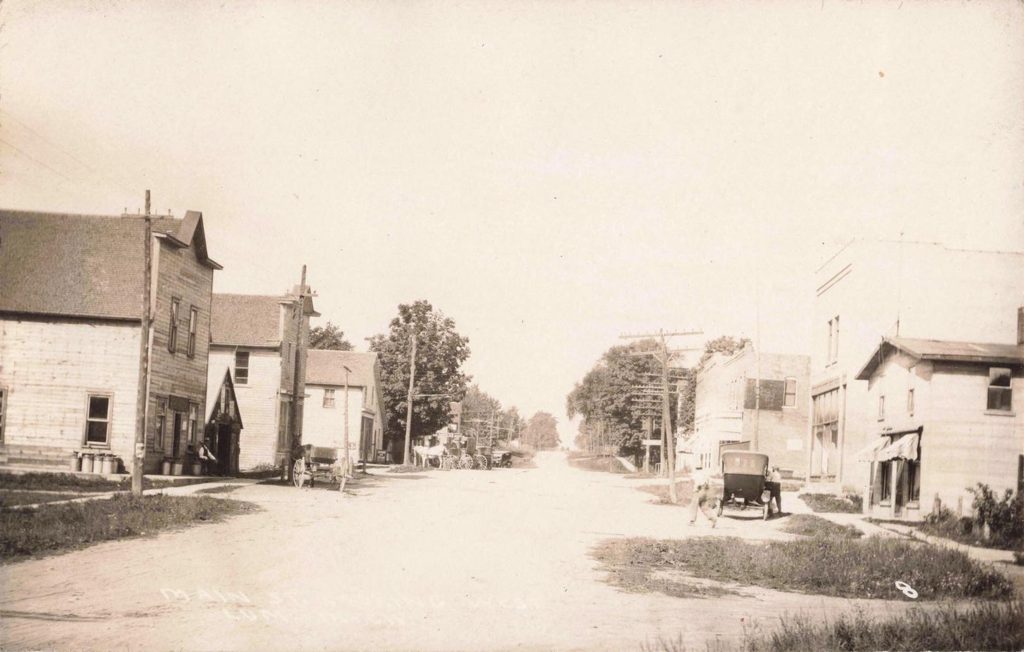
The north side of Main Street had a row of brick commercial buildings with broad ground-floor windows and rooms above. Ed J. Fox advertised himself as a general merchant, while a sign for Selz shoes hung above his awning. Nearby, lettering in a shop window offered drugs, stationery and school supplies. A family coming to town could take care of a considerable amount of business in one trip.
On the south side, the Lum Exchange Bank stood in a narrow brick building. H. L. Van Wagoner’s meat market and Miles Finkle’s hardware and harness shop occupied neighboring premises. Finkle’s mix of merchandise was especially practical at the time: much of the equipment customers used to get to town was made of leather, wood, and metal, and it all wore out.

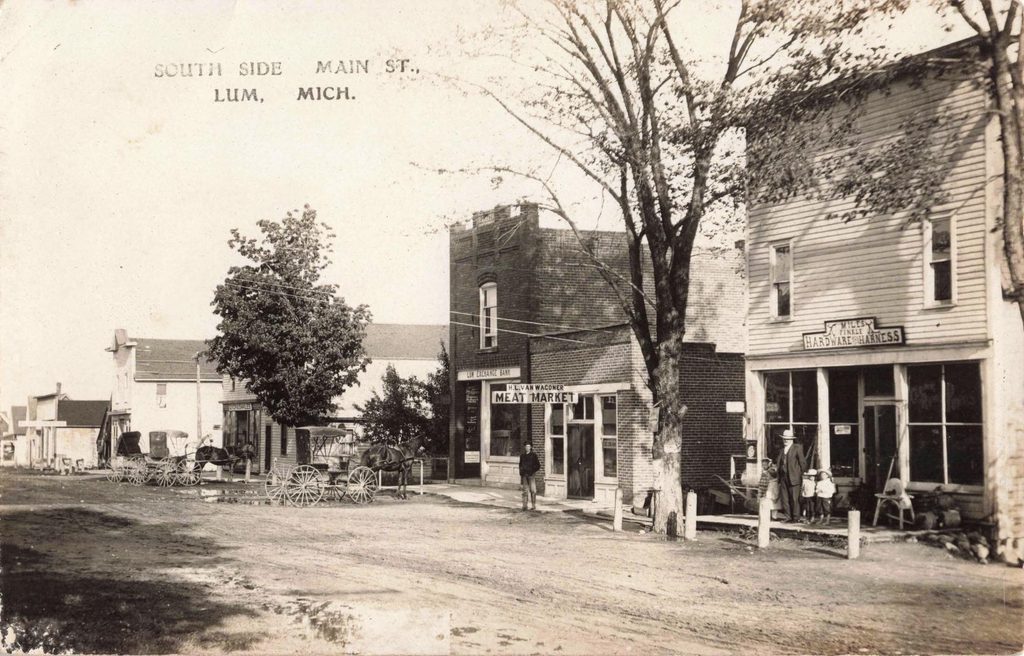
The street itself was still largely unpaved. Hitching posts, wagons, and the tracks left by carriage wheels were ordinary features of the business district. Even substantial brick buildings had wooden porches opening toward the road. The contrast between permanent shops and a dirt street is one of the most telling details in the early History of Lum Michigan.

Williams Brothers and the pickle business
One of the less expected businesses in historic Lum was a pickle shed operated by Williams Brothers. The building was long and wooden, with space for deliveries along one side. Wagons and baskets at the site indicate how closely the operation was tied to the farming district. Cucumbers needed to be handled promptly, and preserving them allowed them to be sold later.

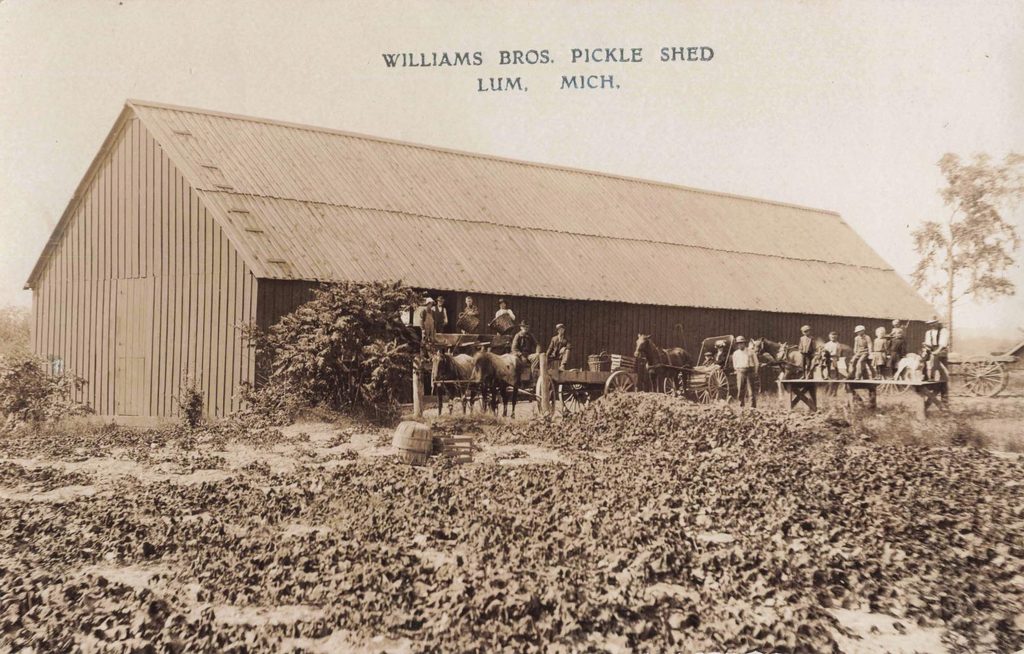
The pickle shed fits the broader railway economy. According to a 1903 report summarized by Michigan’s Internet Railroad History Museum, agricultural products accounted for 37 percent of freight tonnage on the entire Pontiac, Oxford and Northern line. That figure covers the railroad as a whole, not just Lum. Still, it explains why small agricultural communities were important destinations and shipping points along the route.
The little depot had a different purpose from the pickle shed or the grocery store. The businesses collected or distributed goods within a local area; the railroad connected that area to other towns. A horse team could bring baskets, sacks or crates to a collection point, while a freight train was suited to the much longer journey. The two forms of transport complemented each other.
The depot survives a troubled year
In 1909, an explosion damaged the Lum depot. The explosion seriously disrupted the building that connected the community to the larger railway system. The surviving railroad station history documents the damage and also records subsequent service.
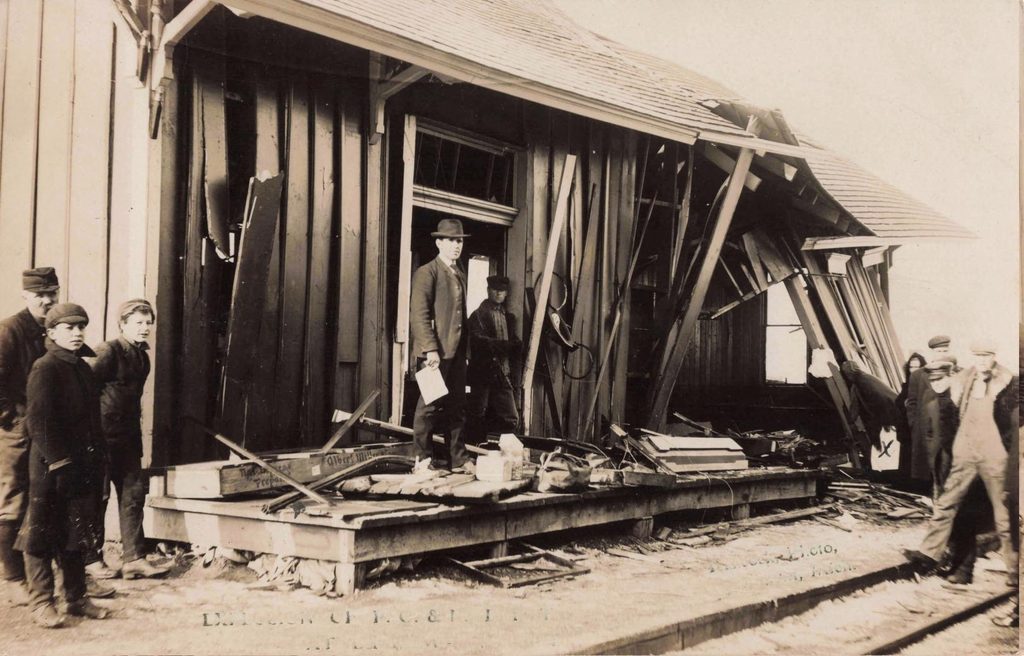
Grand Trunk Western took control of the Pontiac, Oxford and Northern in 1910. A daytime station agent was assigned to Lum in 1917, and Grand Trunk Western locomotive No. 2100 was recorded there around 1920. The smaller company was formally merged into Grand Trunk Western in 1928. Despite the ownership changes, the railway remained a familiar part of local life.
A school principal who also farmed
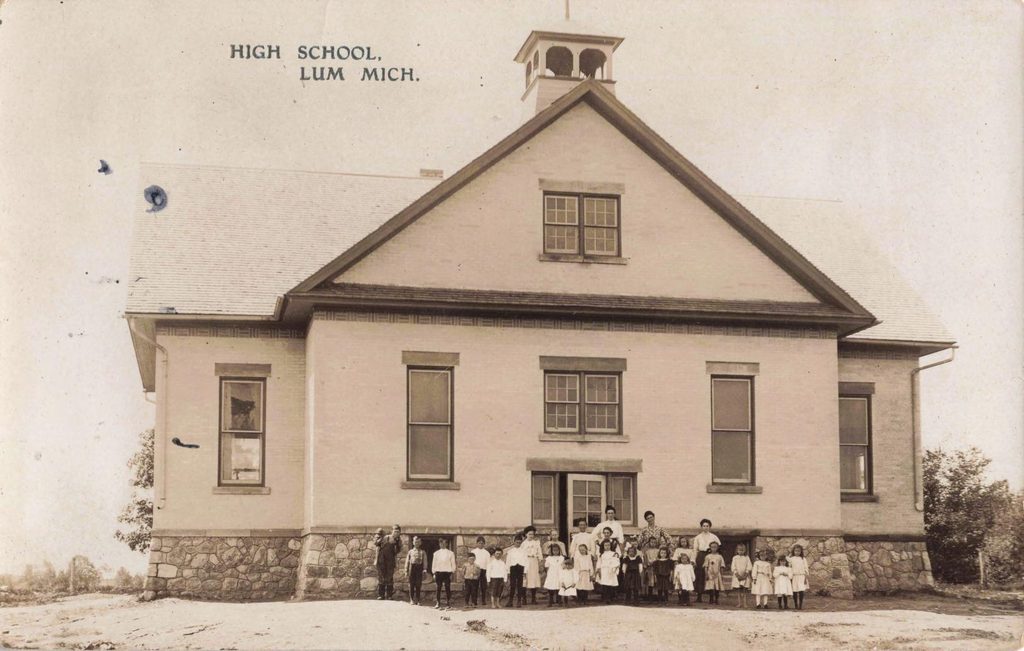
For all the activity around the station and shops, Lum had the ordinary institutions of a community in its own right. Its public school was a substantial building on a stone foundation with a bell tower at the top. In 1906 the principal, Norman Goodrich, was listed in the county atlas as a farmer as well as an educator. He was born in Lapeer County in 1877.

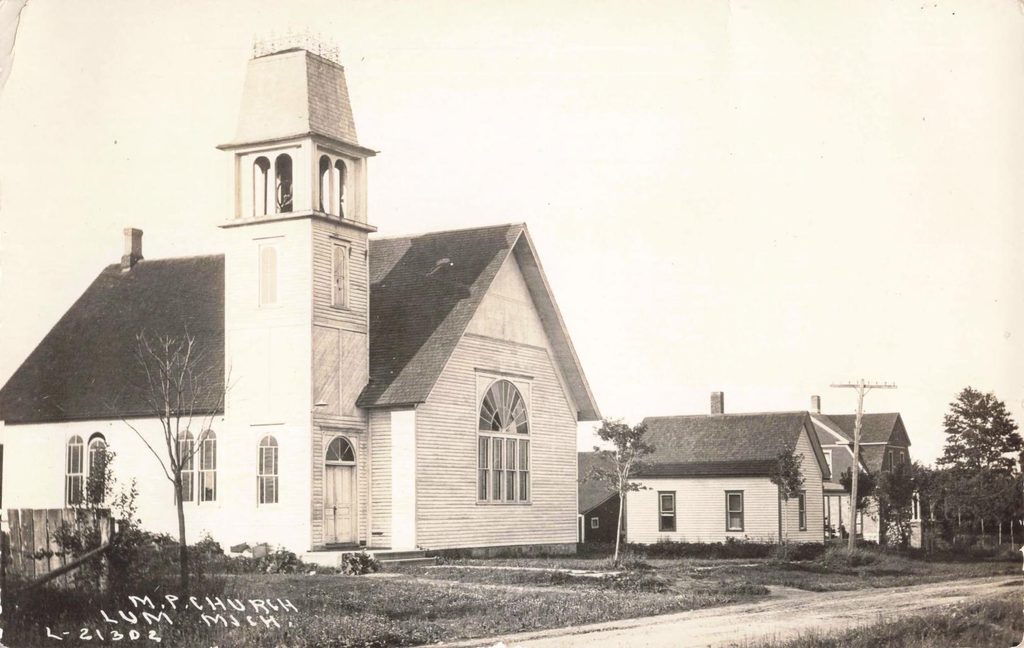
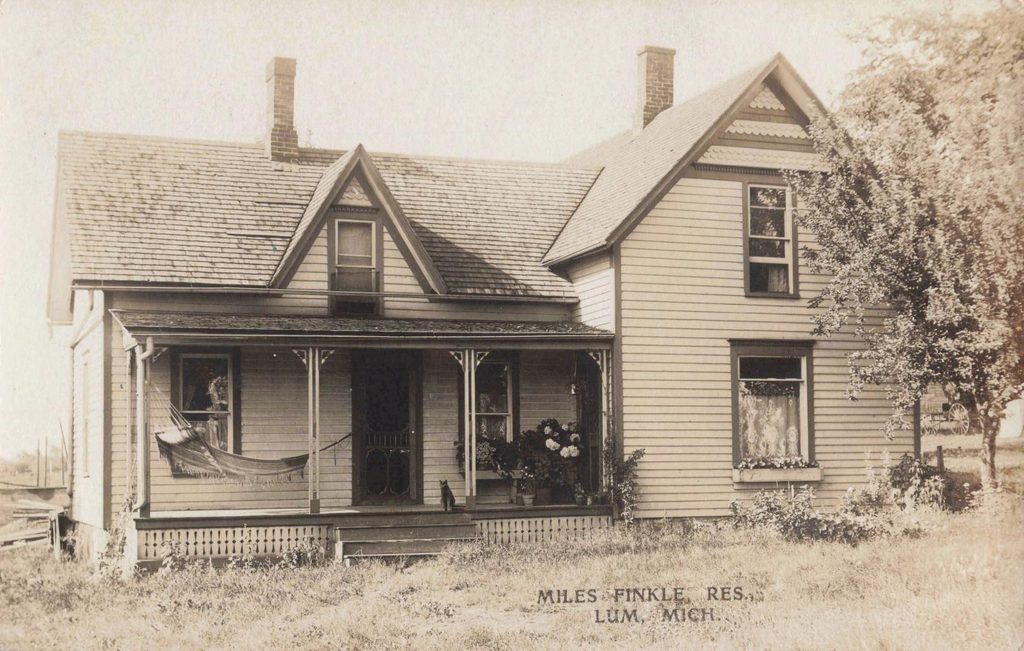
The Methodist Protestant church offered another gathering place. Its distinctive tower and arched windows stood among the village houses. Nearby residences, including the home identified as that of hardware merchant Miles Finkle, featured decorated gables and large porches. They were places where the business owners and their families lived when the day’s work was over.

Two brothers, a post office and the camera
Perhaps the most fitting detail in the History of Lum Michigan is the work of brothers John and Michael Middleditch. The Directory of Early Michigan Photographers records John as Lum’s postmaster in 1910 and a stationery merchant. Trade directories also listed him as a photographer from 1916 through 1919.
Michael was a photographer and rural mail carrier during the early 1910s and continued delivering mail in later decades. The brothers worked in an era when postcard photography allowed even a very small village to record its own streets, businesses and public buildings. Those cards could then travel through the mail to people outside the community.
When the horse and the automobile shared Main Street
As motor vehicles appeared alongside the old wagons and buggies, the practical distance people could travel changed. Better road transportation made larger shopping districts more accessible to farming families. That gradual change helps explain why a small railway-centered collection of stores became less necessary, even as residents remained in the area.

Local accounts report that some former store buildings were moved to nearby King’s Mill. The post office, which began operating in 1884, closed in 1964. Later, a fire in 1989 destroyed Lum’s golf course clubhouse, which was rebuilt. The settlement’s commercial life had changed, but local government continued: January 2024 Arcadia Township meeting minutes record a board meeting and fire department report at the hall on Spencer Street in Lum.
Lum, Michigan: Historical Timeline
Lum, Michigan: Historical Timeline
Explore the years that shaped Lum
- 1861 — Colonel Lum signs a Michigan military commission.
- 1883 — The Pontiac-to-Caseville railway route opens.
- 1884 — Lum becomes a station about this year; its post office opens.
- 1889 — Railway reorganized as Pontiac, Oxford and Northern.
- 1893 — County directory lists Lum postal addresses.
- 1906 — County atlas lists Norman Goodrich as farmer and school principal.
- 1909 — An explosion damages the depot.
- 1910 — Grand Trunk Western gains control of the railway; John Middleditch is recorded as Lum postmaster.
- 1917 — A daytime station agent is recorded at Lum.
- About 1920 — Grand Trunk Western locomotive No. 2100 is recorded at Lum.
- 1928 — Pontiac, Oxford and Northern merges into Grand Trunk Western.
- 1964 — Lum’s post office closes after 80 years.
- 1989 — The golf course clubhouse burns and is subsequently rebuilt.
- 2024 — Township board conducts business at its hall on Spencer Street.
Sources: Lum railway station history; railroad chronology; 1906 county atlas; Tinder directory; La Posta; Tri-City Times; Arcadia Township minutes.
Frequently asked questions about Lum, Michigan
When was Lum, Michigan, established?
Lum emerged as a railroad station about 1884, the year its post office began operating. Farming families had settled in the district earlier.
Who was Lum named after?
Local historical accounts credit Wallace Huntley with proposing the name of Civil War Colonel Charles M. Lum, associated with the Tenth Michigan Infantry
Which railroad served Lum?
The Pontiac, Oxford and Port Austin Railroad, reorganized as the Pontiac, Oxford and Northern in 1889, later became part of Grand Trunk Western
What businesses operated in historic Lum?
Postcards document the Lum Exchange Bank, general merchandise stores, a meat market, a hardware and harness shop and Williams Brothers pickle shed.
Do you remember Lum?
If your family lived in Lum, shopped at its stores, attended its school or worked at the depot, we’d like to hear from you. Names, old letters, business records and dated family pictures can help identify the people and buildings in these postcards.
? Works Cited for History of Lum Michigan: Railroad, Pickles and Main Street
Arcadia Township. “Regular Meeting of the Arcadia Township Board.” 9 Jan. 2024.
Atlas and Directory of Lapeer County, Michigan. 1893. University of Michigan digitized copy.
Fredrick, David. “Lum Fire Department History Is Deep.” Tri-City Times, 15 May 2025.
La Posta: A Journal of American Postal History. Vol. 22, no. 2. Post office listing for Lum.
Michigan’s Internet Railroad History Museum. “Railroad: Pontiac, Oxford and Northern Railroad Company, The.”
Michigan’s Internet Railroad History Museum. “Station: Lum, MI.”
Michigan, State of. “Noah Hart Lieutenant Commission, 1861-10-01.” 1 Oct. 1861. Noah Hart Papers, Dominican University.
Robinson, John. “A Look at the Forgotten Town of Lum, Michigan.” 99.1 WFMK, 29 July 2025.
Standard Atlas of Lapeer County, Michigan. 1906. University of Michigan digitized copy.
Tinder, David V. Directory of Early Michigan Photographers. William L. Clements Library, University of Michigan.
William L. Clements Library. David V. Tinder Collection of Real Photo Postcards. University of Michigan. Gift of David and Cynthia Walters, Meaghan and Joel Cole, and Jennifer and Zachary SantAmour. Individual postcard accessions linked in the captions.

