


The Clinton Michigan Stagecoach Tavern That Henry Ford Moved – Video
Before Interstate 94, before automobiles and even before Michigan became a state, travelers heading between Detroit and Chicago faced a long overland journey. In Clinton, one building became part of that traffic story.
The structure remembered as the Old Stage House was built in 1831-32 along the Detroit-to-Chicago road. Michigan was still a territory. Roads could be rough, travel was slow, and stagecoach passengers depended on taverns for meals, lodging, and a place to rest horses.

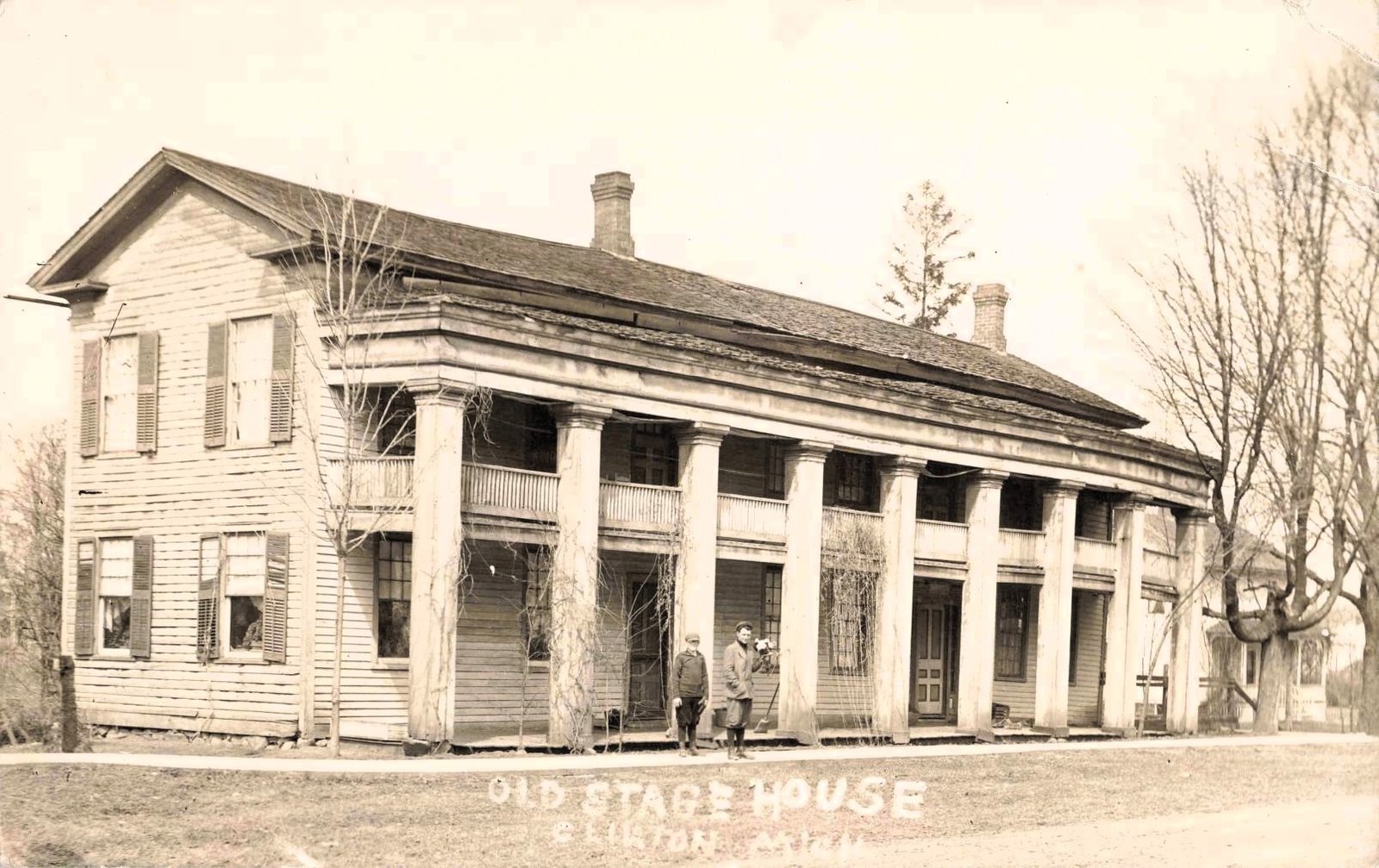
The Clinton building was unusually imposing. Its long two-story porch and row of columns gave arriving travelers a clear sign that food and shelter were available. The building changed names as owners came and went. At various times it was known as Parks Tavern, Eagle Tavern, the Union Hotel and Smith’s Hotel.
One of its best-documented periods came between 1849 and 1854, when farmer Calvin Wood operated the tavern with his wife, Harriet, Harriet’s daughter Irene, and hired help. Research by The Henry Ford, using deeds, census records, tax records, probate material, and newspapers, has helped reconstruct this chapter of the building’s life. That research is why the building is now presented as Eagle Tavern during roughly the 1850 period.
Clinton itself benefited from its position on the Chicago Road. Stagecoach traffic helped make the village a commercial stop between Detroit and points farther west. By 1835, daily stage service connected Detroit and Chicago, according to Lenawee County tourism history.
But transportation changed. Railroads reduced the importance of stage routes. Later, automobiles changed travel again. By the early 20th century, the former tavern had outlived the transportation system that helped create it.
A photograph from 1909 identifies it simply as the “Old Stage House.” Other surviving photographs from the 1910s and 1920s show the same long porch and classical columns, but they also document the building’s gradual decline into disrepair.
That might have been the end of it.


In 1927, Henry Ford purchased the old tavern from Ella Smith, whose father, Walter Smith, had operated it as Smith’s Hotel during the late 19th century. Ford was then assembling historic structures for the project that became Greenfield Village in Dearborn.
The Clinton tavern holds a special place in that story: The Henry Ford identifies it as the first historic building Ford purchased for the village. The structure was dismantled, moved roughly 45 miles east and reconstructed. By 1929, it stood on the village green under the name Clinton Inn.
For years, Clinton Inn served practical purposes, including feeding students associated with the Edison Institute schools and later serving visitors. In 1982, after additional historical research, the building opened as Eagle Tavern, a dining experience built around its documented 1850 period.
That makes the two images especially striking. The older photograph shows the building where its story began, beside the road that gave it a reason to exist. The modern image shows the same structure in Dearborn, repaired and interpreted for visitors.
Clinton lost a building in 1927, but the move also preserved a rare stagecoach-era Michigan tavern. Nearly two centuries after its construction, Eagle Tavern still tells the story of a time when crossing Michigan meant horses, rough roads, shared meals and a bed before the next day’s ride.

