


History of Grand Blanc Michigan – School Reform Began Behind Horses
The history of Grand Blanc, Michigan, includes an early horse-powered school bus. Yep, back in 1904, Grand Blanc and nearby rural districts combined their schools, an arrangement recognized by local histories as Michigan’s first consolidated school district. Getting children to that shared school required transportation. Horses supplied the power before motorized buses became the familiar answer.
That visualization offers a useful introduction to the town south of Flint. Grand Blanc’s development involved farms, mills, transportation, and public institutions well before its later suburban growth. The surviving street and building views show a community already changing in the early 1900s. Its residents were making practical adjustments to education, commerce, and travel.

Watch for an upcoming Michigan Moments history series video about Grand Blanc in the near future.
A French Name and an Earlier Native Presence
Grand Blanc translates as “great white,” a name the city connects with French traders who arrived before 1800. The city’s history also identifies the area as home to the Chippewa people before the later American farming settlement. The popular explanation involving a particular tall trader remains less firmly documented in the sources reviewed. It should be treated as a local tradition rather than a settled fact.
Jacob Stevens and the Perry family figure prominently in accounts of settlement during the 1820s. Township records credit Edmund Perry with an early school and sawmill. These contributions helped supply education and building materials as the community grew. Grand Blanc Township organized in 1833, decades before the separate city government.
The History of Grand Blanc Michigan Runs Along Saginaw Street
Saginaw Street helps explain how the community worked. The view supplied as 1908 shows a broad unpaved road, utility poles, and trees. It has a different appearance from the later paved street lined with motor-service businesses. The comparison records change without requiring the invention of an account for a particular day.

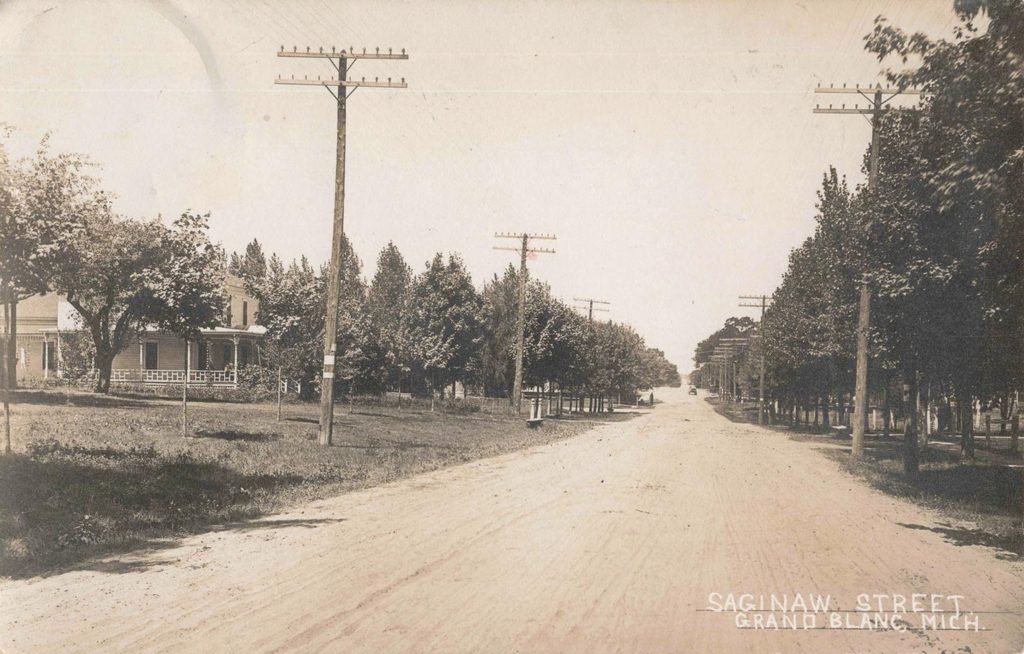
Road improvements long preceded the automobile. A township historic inventory describes military-road development and plank roads along local routes. Better surfaces could make it easier to move people and farm goods, although construction and upkeep required money. A road through town also brought business to places where travelers could buy supplies or stop for lodging.
Mills and Elevators Served Surrounding Farms
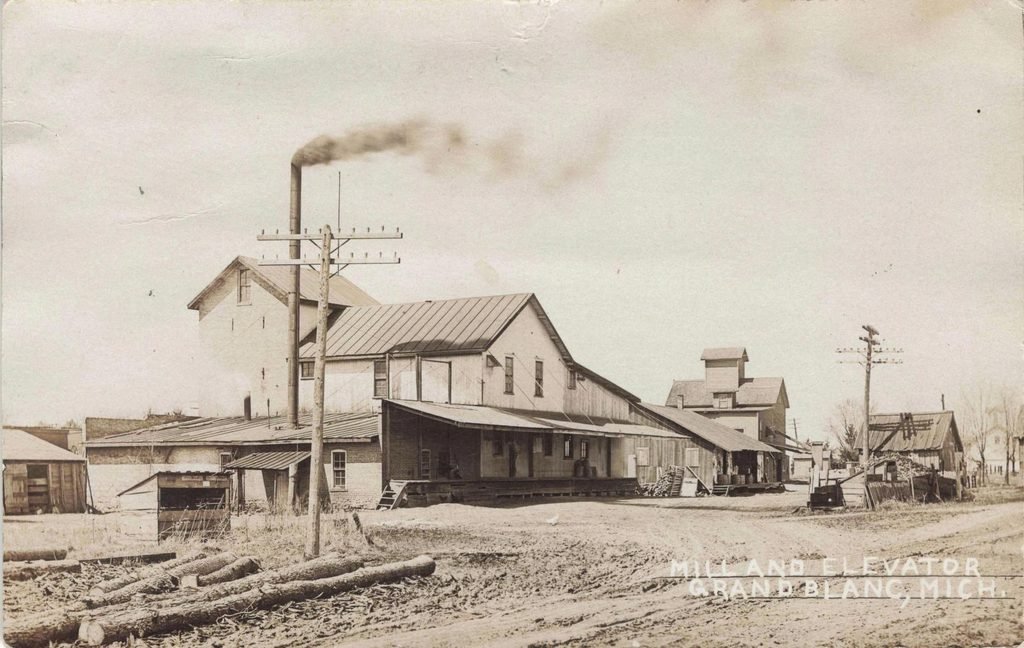
Two mill views provide some of the strongest evidence of Grand Blanc’s working economy. One inscription identifies Chas. Macham’s mill and John Crapser’s elevator. Its yard contains a wagon and substantial wheeled equipment beside the industrial buildings. In the other view, dated 1908, smoke rises above the mill complex.

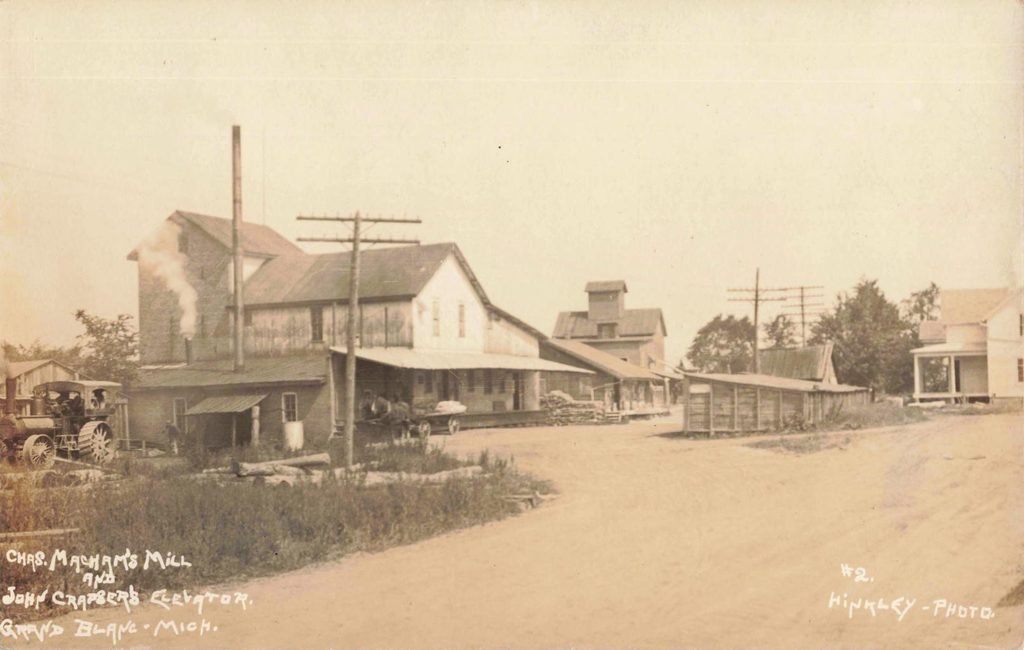
These scenes challenge the idea that a farming community must have been untouched by industry. Processing, handling, and storing crops required work beyond the fields. The mill and elevator provided different services within that system. Their size and equipment show that machinery belonged in Grand Blanc’s daily life before automobile services became prominent along Saginaw Street.
The arrangement of the mill buildings is also useful evidence. Long rooflines and lower additions give the complex a different shape from the bank or hotel. Space here was organized around work. The wagon beside the buildings also keeps the farm connection visible, rather than leaving the mill isolated from the people bringing goods to it.
The Pere Marquette Depot Connected Grand Blanc
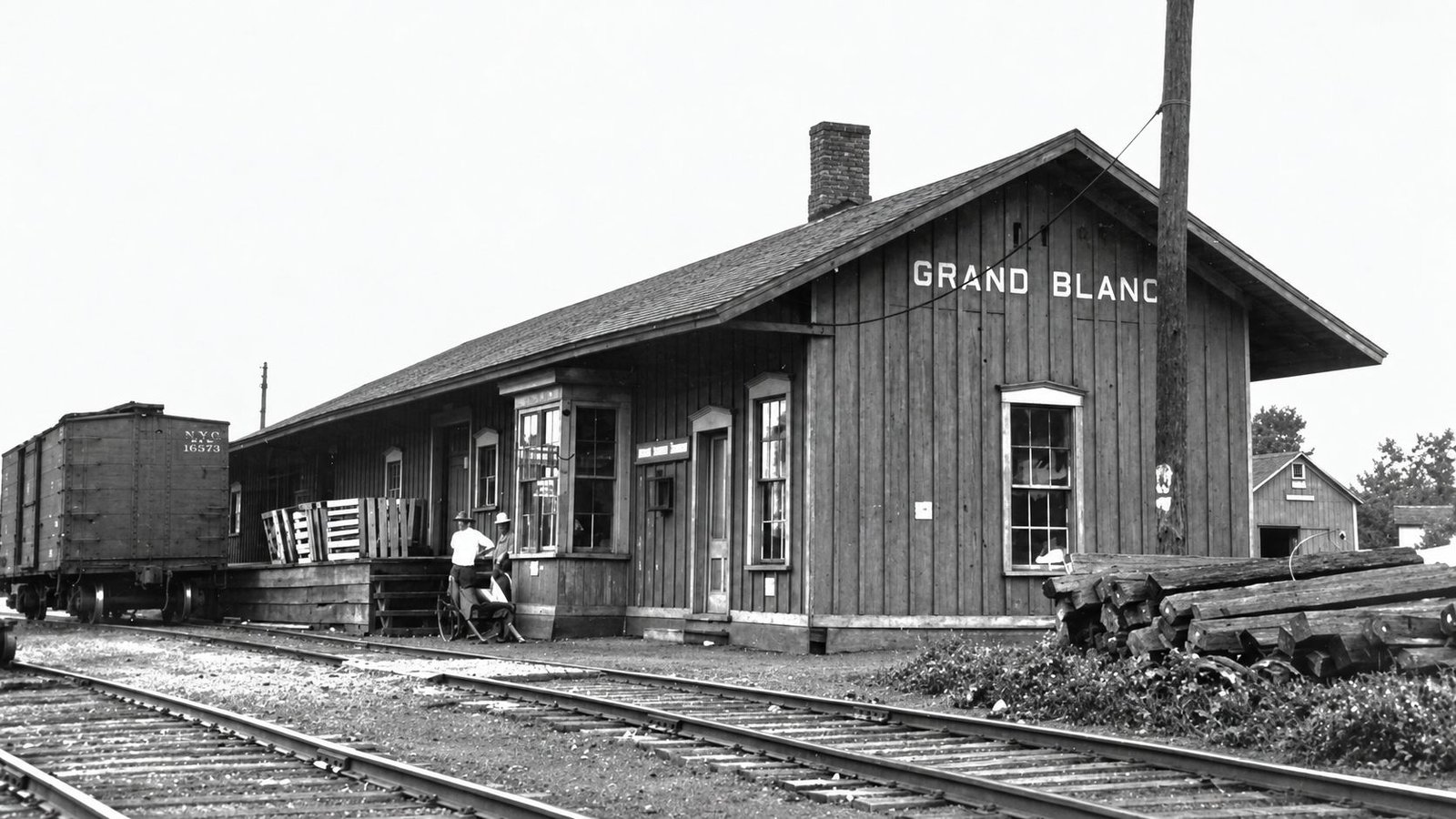
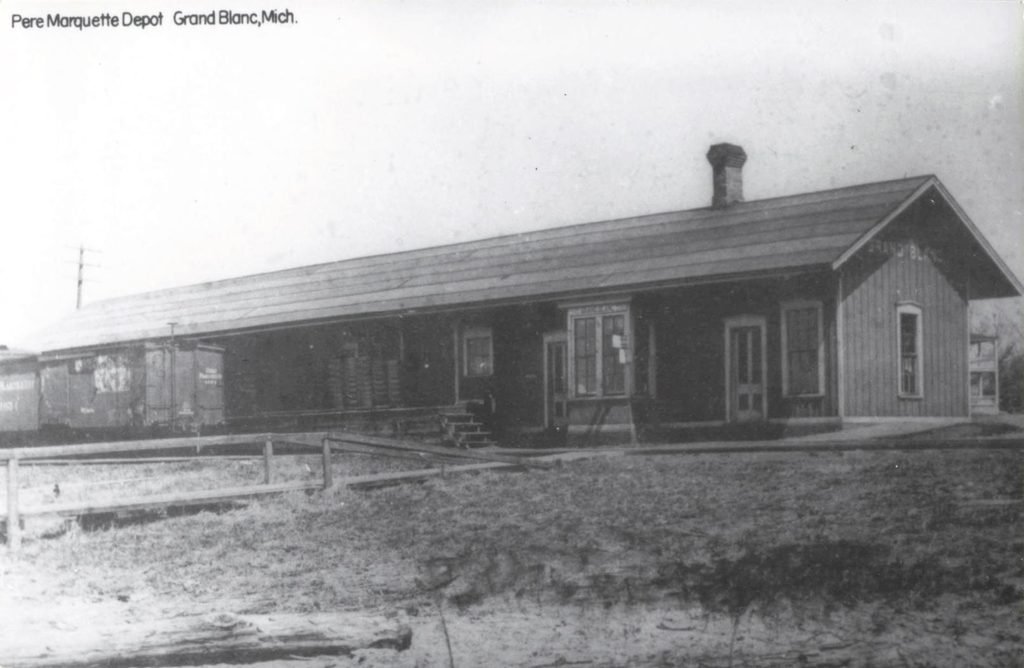
The Pere Marquette depot places the community within a larger transportation network. A trackside platform, broad roof overhang, and nearby railcar give the building a clearly practical setting. Rail connections helped support movement between small towns and larger markets. The depot’s identity does not establish its construction date or the year of the first local train.
Local sources disagree about whether to date Grand Blanc’s first rail connection to 1862 or 1864. The township’s detailed inventory distinguishes the 1862 Saginaw–Flint line from local construction dated 1864. For a general account, “during the 1860s” avoids overstating certainty. The Pere Marquette company name itself dates to the 1900 merger of earlier railroads.

Hotel Waldo and Farmers Exchange Bank
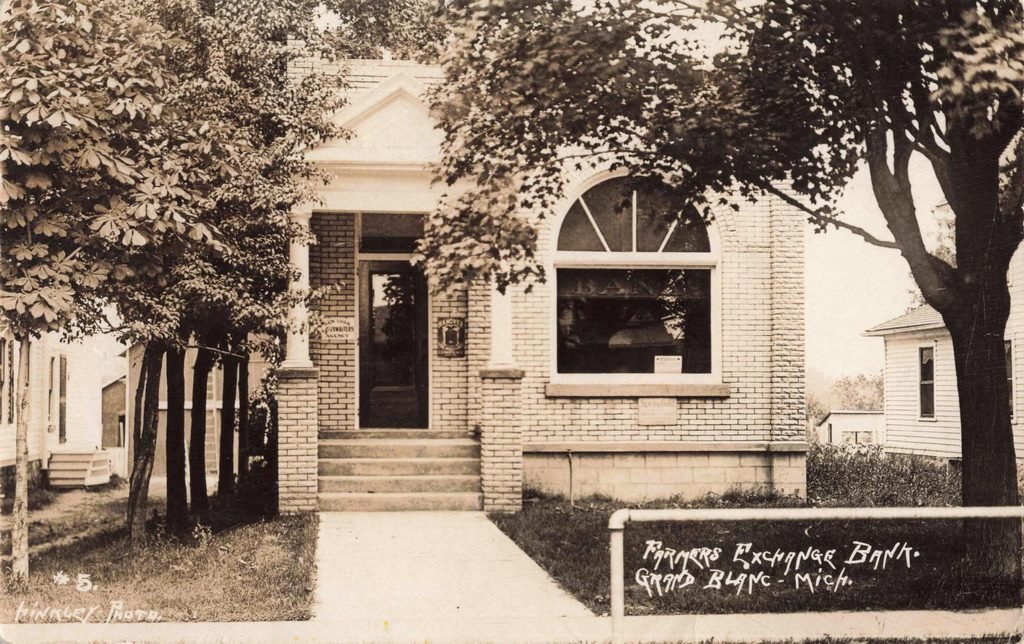
Hotel Waldo and Farmers Exchange Bank show two other services available in Grand Blanc. The hotel is a compact two-story building with a balcony above its entrance. The bank has masonry walls and arched openings. Their different forms suited different kinds of business within the same community.

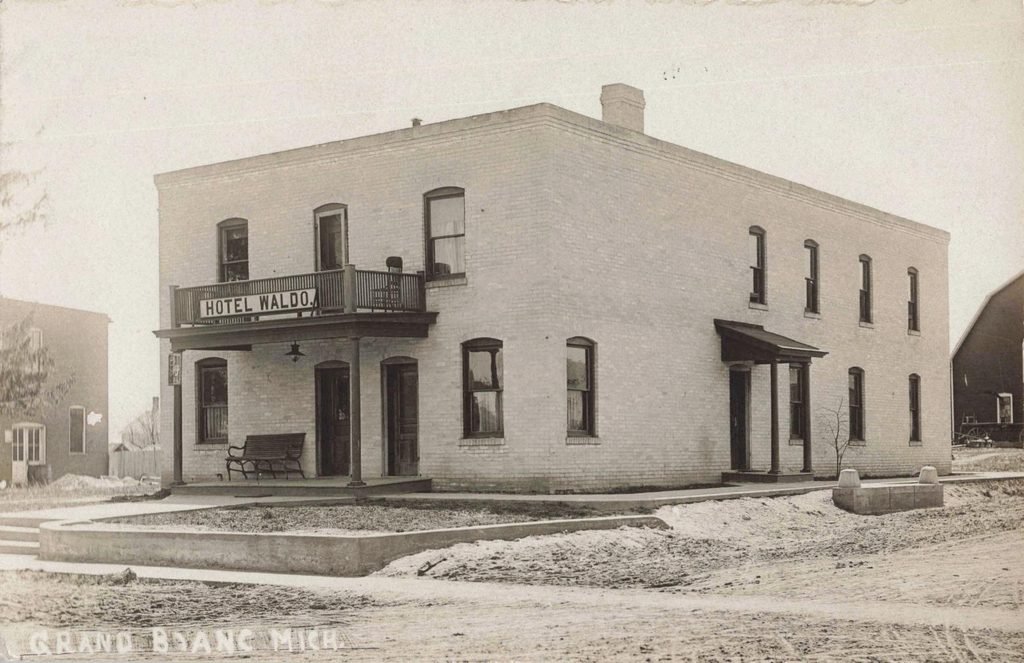
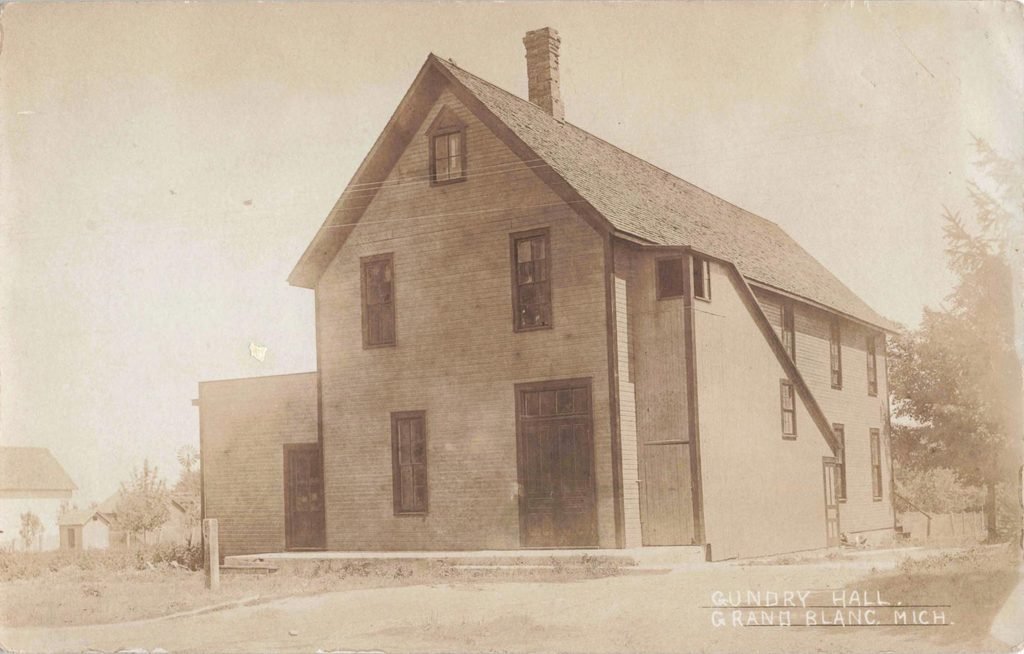
Neither building needs an invented story to earn a place in the history of Grand Blanc, Michigan. Lodging and financial services were part of the town’s commercial structure. The surviving views establish their names and appearance, while leaving ownership details and individual transactions unanswered. Gundry Hall adds another named building, but its specific activities need further records before they can be described confidently.

Porches and Church Towers Complete the Town

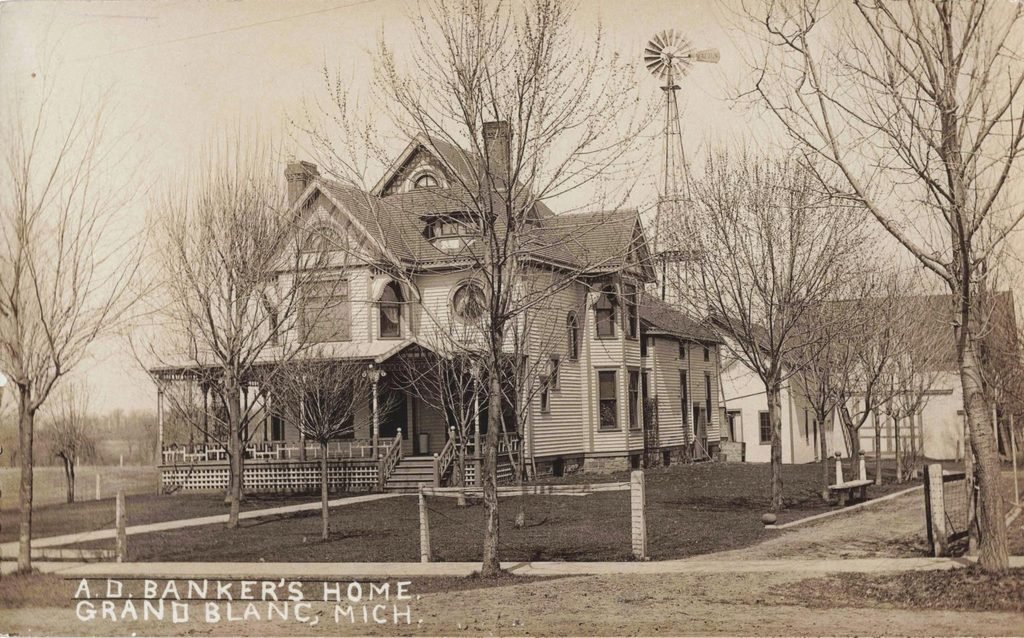
The residential views balance the commercial buildings with places where people lived. The home identified as A. D. Banker’s includes gables, decorative trim, and a broad porch. Another card identifies homes with Mrs. O. C. Beals and Henry Mason beneath mature trees. These details help establish the neighborhood’s character without making assumptions about residents’ private lives.

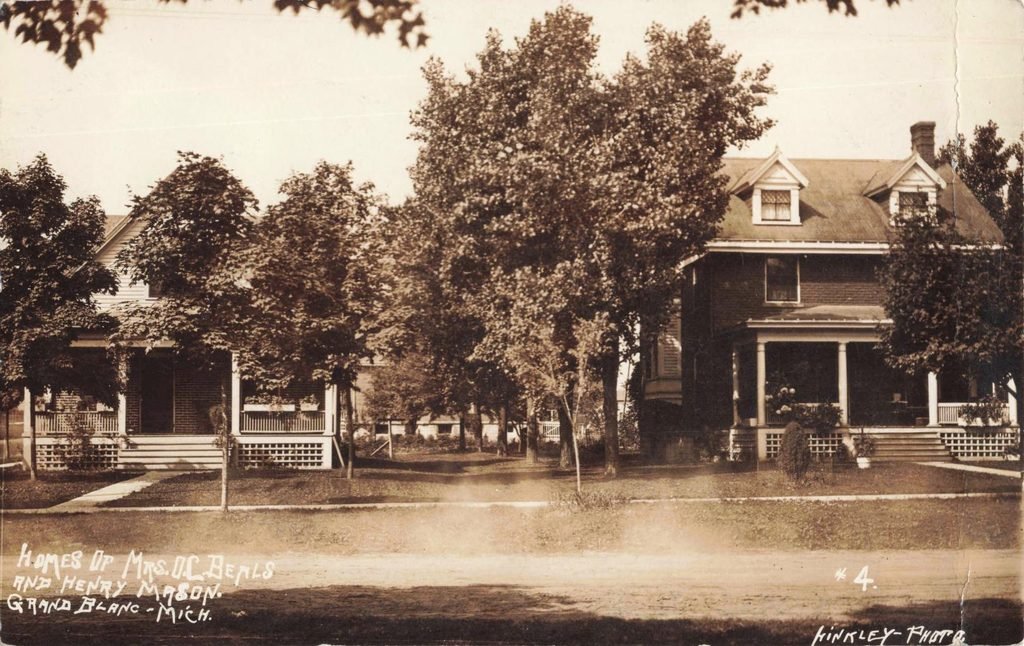
The porch was a prominent part of the street-facing design in these views. Steps connected the house to the yard, while trees partly screened the buildings from the road. Those visible relationships are useful when describing an older neighborhood. They show the spaces between buildings, as well as the buildings themselves.

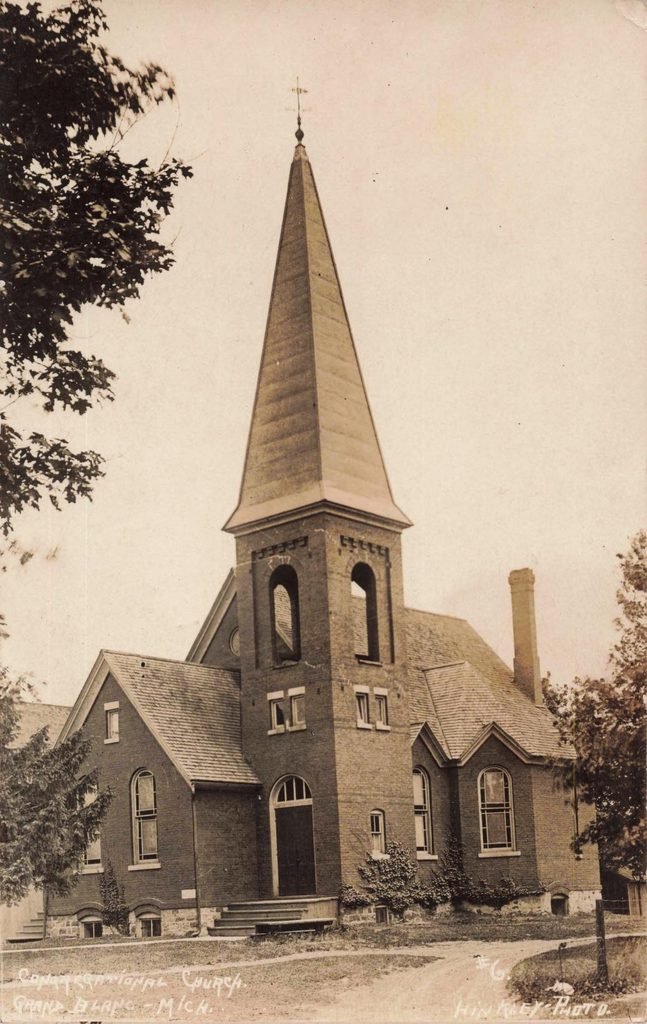
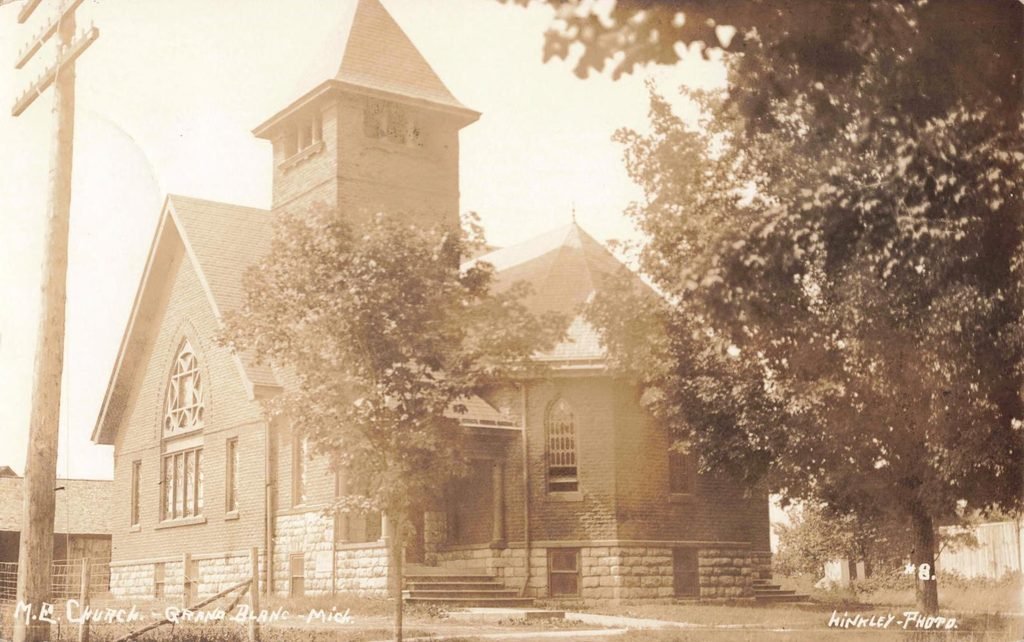
The Congregational and Methodist Episcopal churches also had distinct forms. One view emphasizes a tall steeple, while the other shows a substantial tower partly framed by trees. The former 1885 Congregational Church later became the Grand Blanc Heritage Museum. That reuse connects a building in the early town with the preservation of its history.

Horse-Drawn Buses Served a Consolidated School
School consolidation gives Grand Blanc a particular place in Michigan’s education history. The state historical marker records the 1904 joining of the Cook and Porter districts with Grand Blanc. It also explains that pupils initially arrived by horse-drawn bus. The counterintuitive point is simple: a new school arrangement did not require a new kind of transport, just a new way of thinking about educating the local kids.

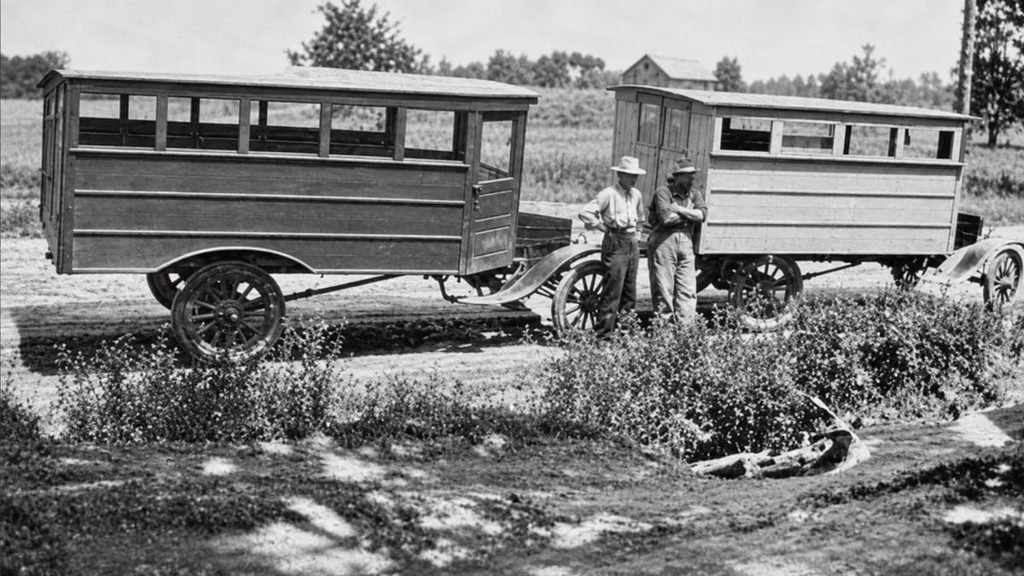
When the Cook, Porter and Grand Blanc school districts consolidated in 1904, getting rural children to a central school required organized transportation. Enclosed early motorized school wagons, like those shown here, carried students along country roads. These early school buses helped make a larger, shared school practical for families spread across the farming community.
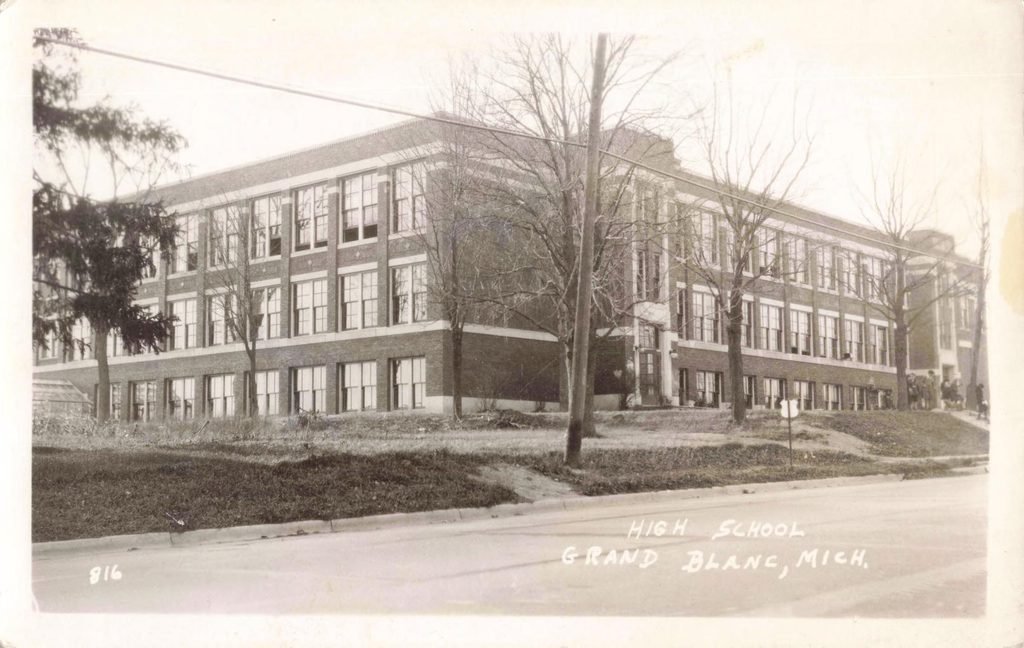
The earlier school burned in 1920, and the replacement building was dedicated in January 1922 with 350 pupils. The view of the high school in 1937 belongs to that later era in the history of Grand Blanc, Michigan.
Cars Changed the Services Along the Road

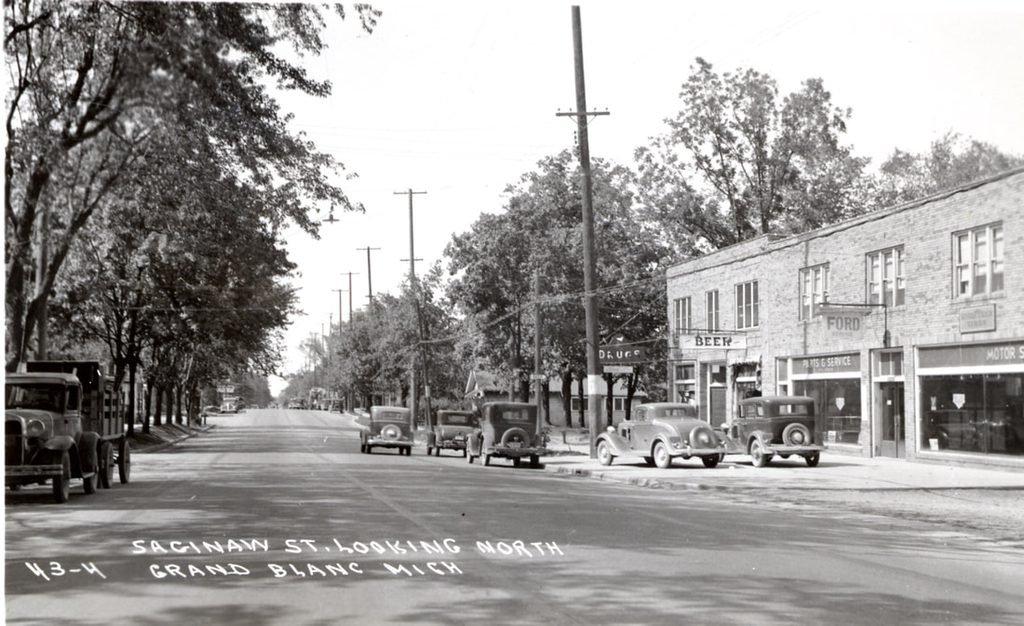
The two Saginaw Street views we managed to find are especially useful for showing later change. Looking north, parked automobiles stand near a Ford parts-and-service business. Looking south, the Atkins canopy and signs for tourist rooms, gasoline, and ice show a street serving road travelers. The vehicle’s style suggests the 1930s, when America was in the days of the Great Depression.

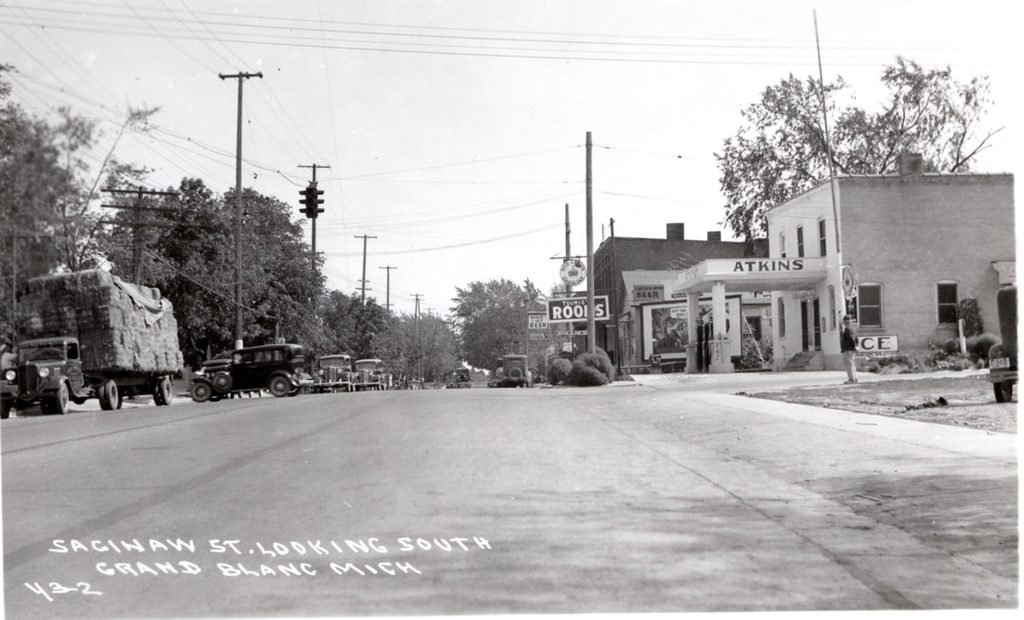
These signs document a change in what customers needed. The street remained a route for people and goods while businesses adapted to motor travel. Grand Blanc adopted its city charter on March 4, 1930, after a much longer history as a community. The charter date marks a governmental milestone rather than the town’s beginning.
Preserving Grand Blanc’s Earlier Years
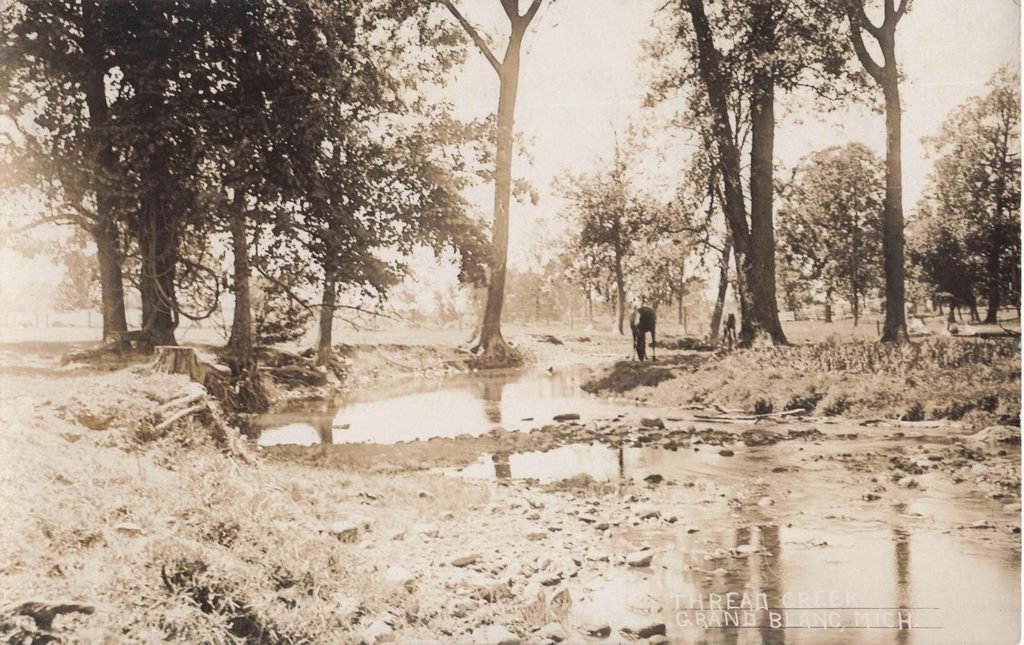
Thread Creek provides a geographic setting alongside the streets and buildings. Its wooded banks offer another part of the town’s record, without establishing a particular mill site or event. Together, these views make the history of Grand Blanc, Michigan, more specific. They preserve names, structures, and visible details that broad accounts of regional growth can miss.

The Grand Blanc Heritage Museum offers a place to continue studying the history of Grand Blanc, Michigan. Its collections include schoolroom and domestic-life exhibits alongside older musical instruments. Those everyday objects suit the story told here. Grand Blanc’s earlier years were shaped by people running businesses, building homes, and finding a workable way to get children to school.
Works cited for the history of Grand Blanc Michigan
City of Grand Blanc. “About Us.” City of Grand Blanc. Accessed 12 Sept. 2026.
City of Grand Blanc. “Heritage Museum.” City of Grand Blanc. Accessed 12 Sept. 2026.
Grand Blanc Heritage Association. “Experience Grand Blanc History.” Grand Blanc Heritage Museum. Accessed 12 Sept. 2026.
Grand Blanc Township. “Government Buildings and Schools.” Historic resources inventory excerpt, pp. 95–98. Grand Blanc Township. Accessed 12 Sept. 2026.
Grand Blanc Township. Historic resources inventory excerpt: transportation and other sites. Pp. 99–102. Grand Blanc Township. Accessed 12 Sept. 2026.
Grand Blanc Township. “Township Profile.” Grand Blanc Township. Accessed 12 Sept. 2026.
Grand Blanc Township. “The Whigville Community.” Historic resources inventory excerpt, including “The Perry Settlement Area” and “The Halsey Road Area,” pp. 103–08. Grand Blanc Township. Accessed 12 Sept. 2026.
Michigan Historical Commission and Michigan Historical Center. “Grand Blanc Consolidated School.” Historical marker L2230, 2012. The Historical Marker Database, transcription and images. Accessed 12 Sept. 2026.
Pere Marquette Historical Society. “The PMHS.” Pere Marquette Historical Society. Accessed 12 Sept. 2026.

