


Sanilac’s Ancient Writing in Stone: What Researchers Now Know About the Michigan Petroglyphs
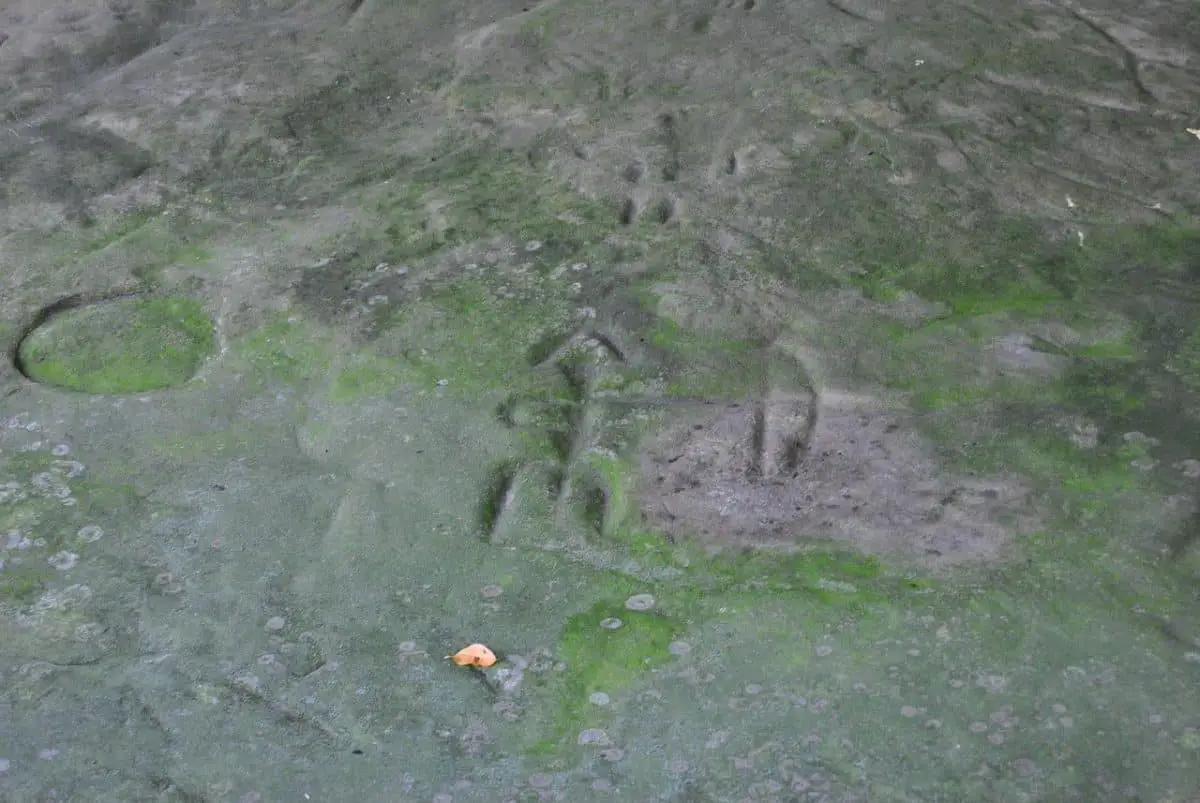
CASS CITY, Mich. — Beneath a protective pavilion along the Cass River sits one of the oldest surviving records of human thought in Michigan’s Thumb. The Michigan petroglyphs have more than 100 figures, spirals, handprints, birds, and other forms cut into a broad bed of sandstone, their exact ages and meanings still partly beyond the reach of archaeology.
Known as the Sanilac Petroglyphs, the carvings form Michigan’s largest known collection of early Indigenous teachings carved in stone. In Anishinaabemowin, the place is called Ezhibiigaadek Asin, commonly translated as “written on stone.” Researchers estimate the carvings were made within roughly the past 1,400 years, although some could be considerably more recent.
The site received renewed attention on Aug. 4, when the Historical Society of Michigan hosted archaeologists Stacy Tchorzynski and Jeff Chivis, along with Marcella Hadden, tribal historic preservation officer for the Saginaw Chippewa Indian Tribe of Michigan. The America250MI program focused on what researchers now understand about the carvings and the future of the historic state park.
More Than Ancient Artwork
For much of the 20th century, petroglyph sites were often presented primarily as archaeological curiosities. Interpretation at Sanilac has changed considerably. The carvings are now presented as cultural teachings that remain meaningful to living Anishinaabe communities, rather than as mere artifacts left by an unknown people.

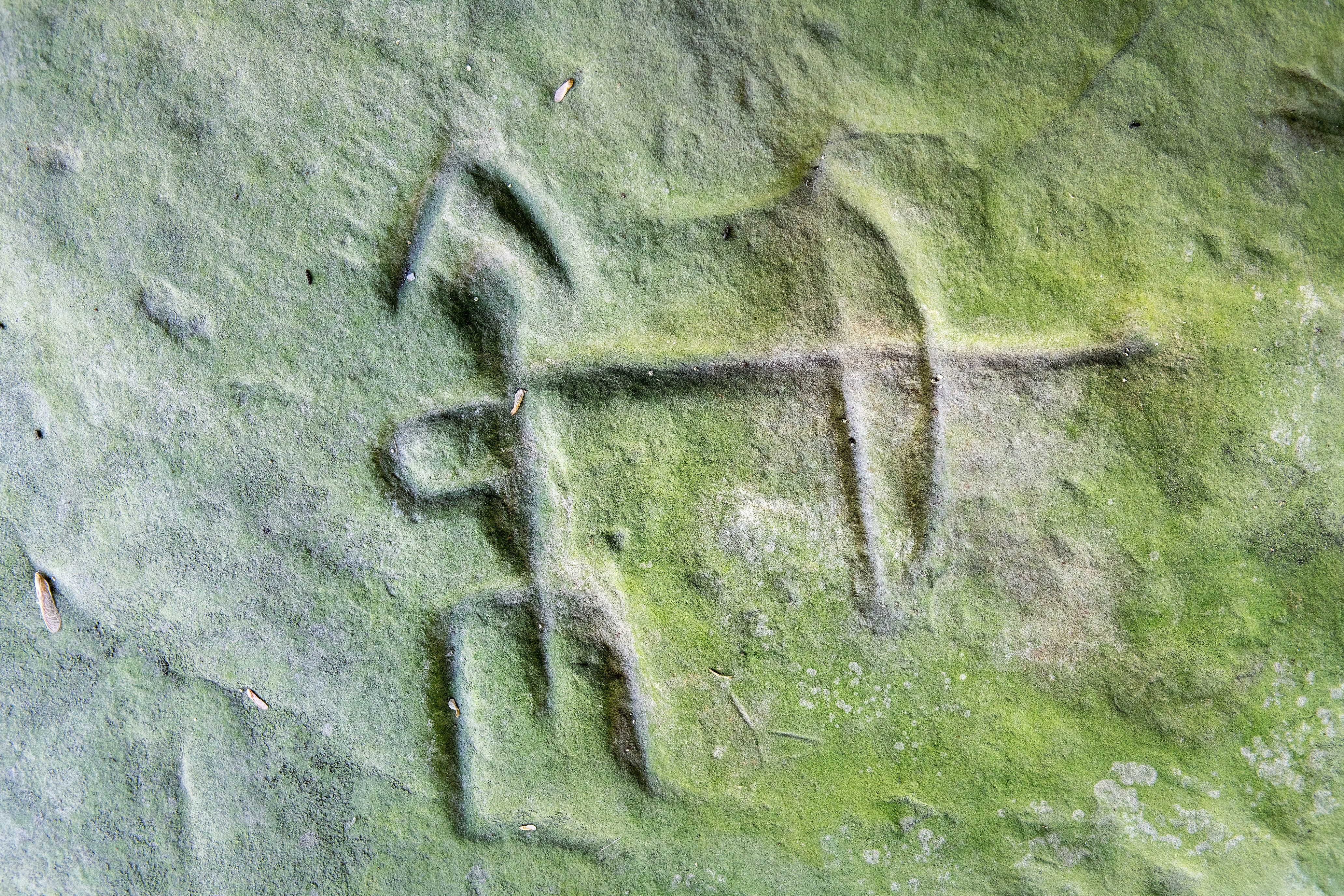
One of the best-known figures is Ebmodaakowet, an archer holding a bow. Tchorzynski has explained that the figure represents knowledge being sent seven generations into the future, carrying with it a responsibility to preserve teachings for descendants. Other carvings include spirals, human figures, handprints and birds in flight.
That interpretation adds context to Thumbwind’s earlier coverage of the Sanilac Petroglyphs and their cultural significance, and offers a broader look at Indigenous settlements, camps, and ceremonial places in Michigan before statehood.
Evidence of 8,000 Years of Human Activity

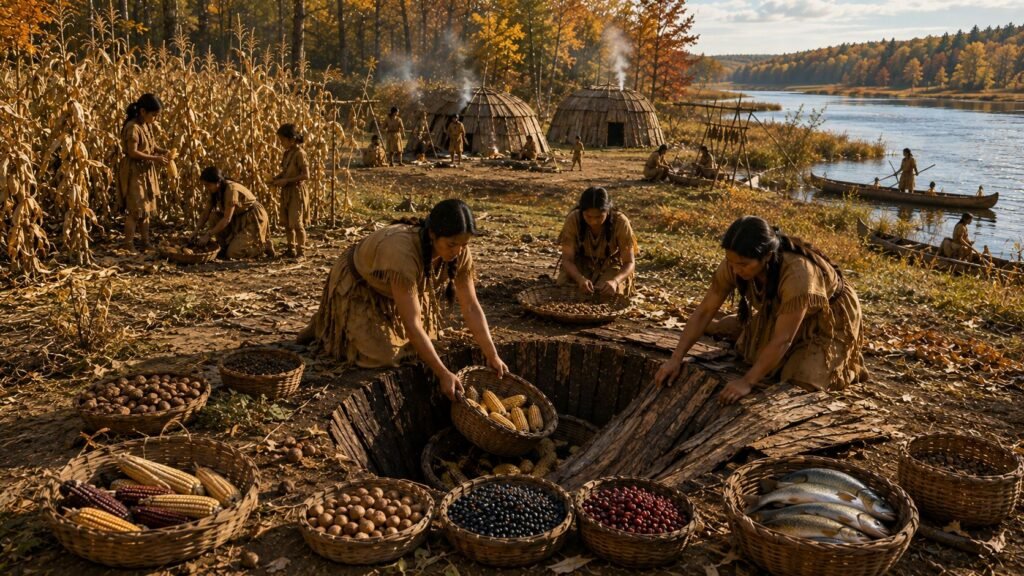
The carvings themselves are only part of the archaeological story. Stone tools, pottery, and other materials recovered from the Cass River floodplain indicate that Indigenous people used the area periodically for roughly 8,000 years, according to the Michigan Department of Natural Resources and the Saginaw Chippewa Indian Tribe.
That long record fits with other archaeological evidence around Saginaw Bay and the Thumb. Recent research into Indigenous food caches and agriculture in the Saginaw Valley has shown communities using rivers, wetlands, forests and agricultural areas as parts of a much larger seasonal food system.
The petroglyph site appears to have carried another purpose. Tribal interpretation describes it as a place associated with teachings, ceremonies and relationships with the natural world. Ceremonies continue to be held there today.
Fire Revealed What the Forest Had Covered

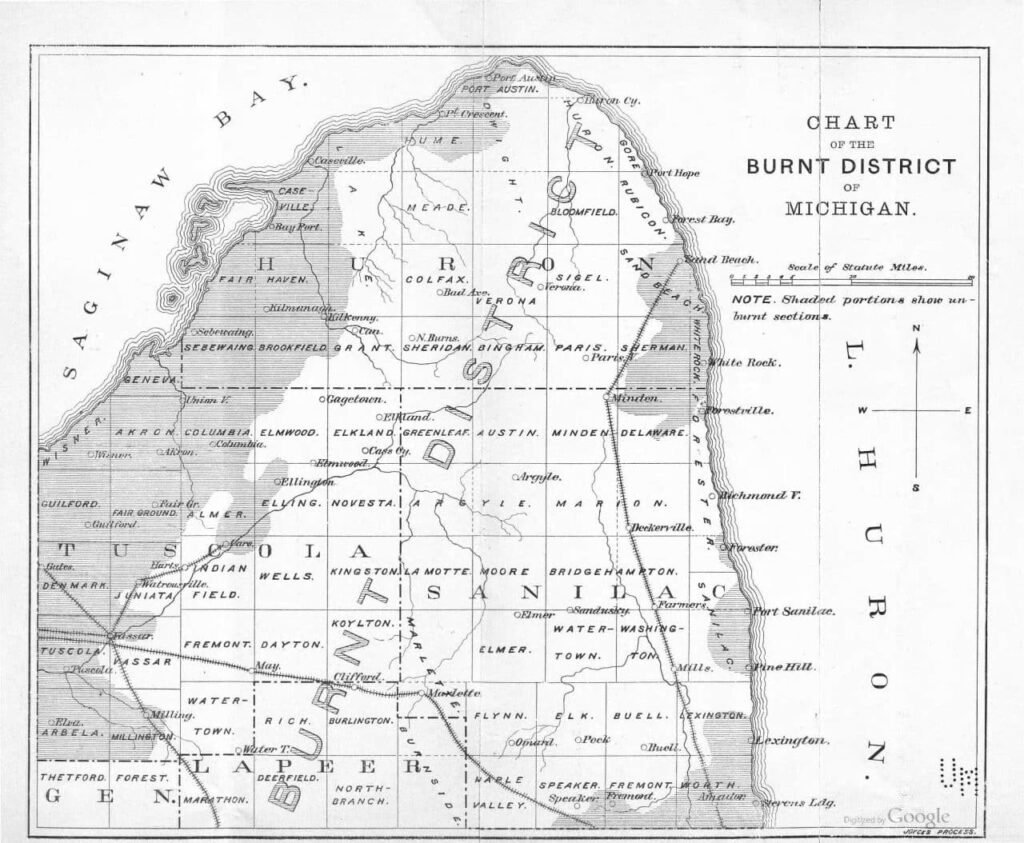
The sandstone carvings came to wider public attention after the devastating Thumb Fire of 1881 burned vegetation from the site. The Michigan Archaeological Society purchased the property in 1966 and transferred it to the state five years later ,with the requirement that it be protected and remain available for public education.
Preserving the carvings presents an unusual problem. Marshall sandstone is relatively soft, and weathering continues whether people visit the site or not. In 2018, researchers used LiDAR laser scanning to create detailed three-dimensional records of the carvings. The survey collected nearly 3 billion data points, creating a baseline that can be compared with later scans to measure subtle changes in the stone.
A Different Model for Protecting the Site
Another major change came in December 2019, when the Saginaw Chippewa Indian Tribe and the State of Michigan signed an agreement to jointly manage the park. It became Michigan’s first state park placed under formal state-tribal co-management.
That agreement has changed who helps decide how the carvings are interpreted, protected and presented to visitors. State planning documents now place protection of the petroglyphs alongside another priority: preserving the ability of Anishinaabe people to use the site as a sacred place.
The guided-tour season ended Sept. 6, but the 240-acre park near Cass City remains open year-round. For visitors walking through the Cass River forest, the sandstone outcrop can appear surprisingly modest.
Its importance lies not in its size, but in what remains there: messages placed in stone centuries ago and a living culture still working to carry their meaning forward.

