



The History of Algonac Michigan: The River Town That Built Chris-Craft
The History of Algonac, Michigan begins with water. The city stands at the lower end of the St. Clair River, where the current divides into the channels of a vast freshwater delta. Long before a factory carried the Chris-Craft name, the river served as a road, workplace, fishing ground, and gathering place.

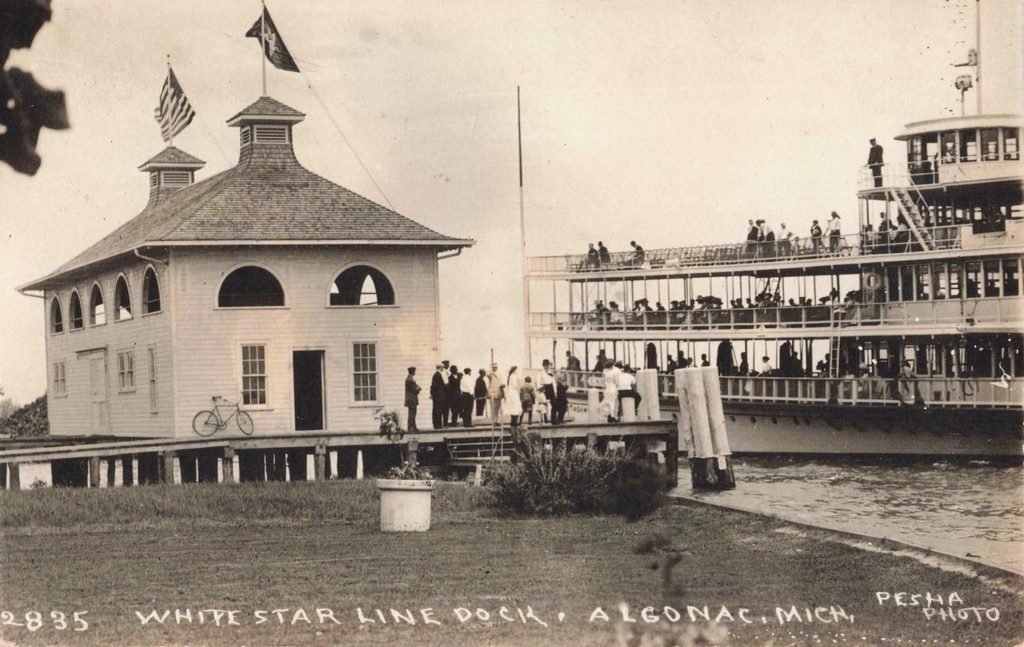
From 1890 to 1940, Algonac passed through a remarkable period of change. Passenger steamers met electric railcars. Horses shared Main Street with automobiles. Small boat shops grew into a factory whose mahogany runabouts changed American recreation.
Table of Contents
Watch: Algonac, Michigan Changed Boating — From River Steamers to Mahogany Runabouts

A Town Facing the River

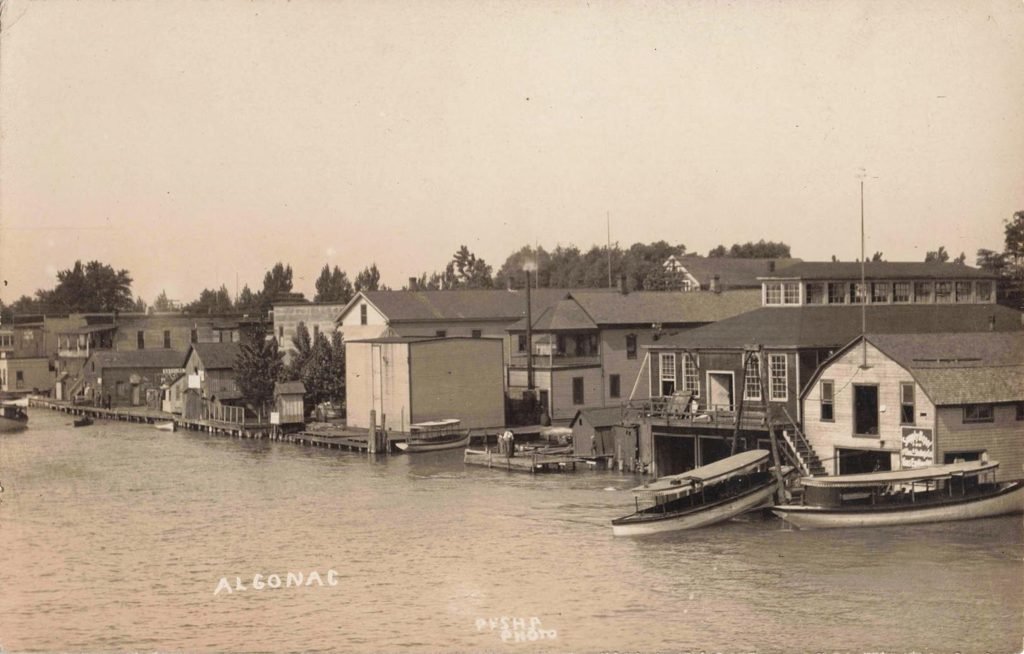
Algonac was settled by Euro-American newcomers in the early 1800s, but its waterways had supported Indigenous travel and life for thousands of years. Nearby Walpole Island First Nation uses the name Bkejwanong Territory. Bkejwanong is commonly translated as “where the waters divide,” a precise description of the channels between the St. Clair River and Lake St. Clair.
By the 1890s, Algonac was known for fishing, boatbuilding, and summer travel. A local centennial history reports that a Detroit newspaper called the area “Michigan’s Venice” in 1895. The nickname was promotional, but canals, cottages, and boats made it credible.
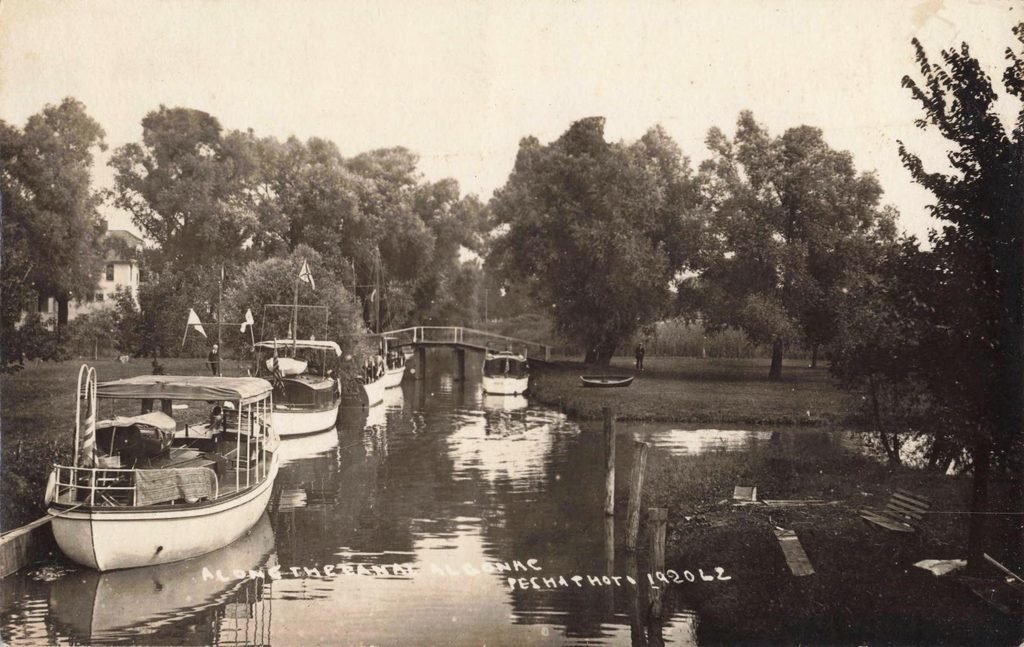
Steamers, Rails and a Very Busy Main Street

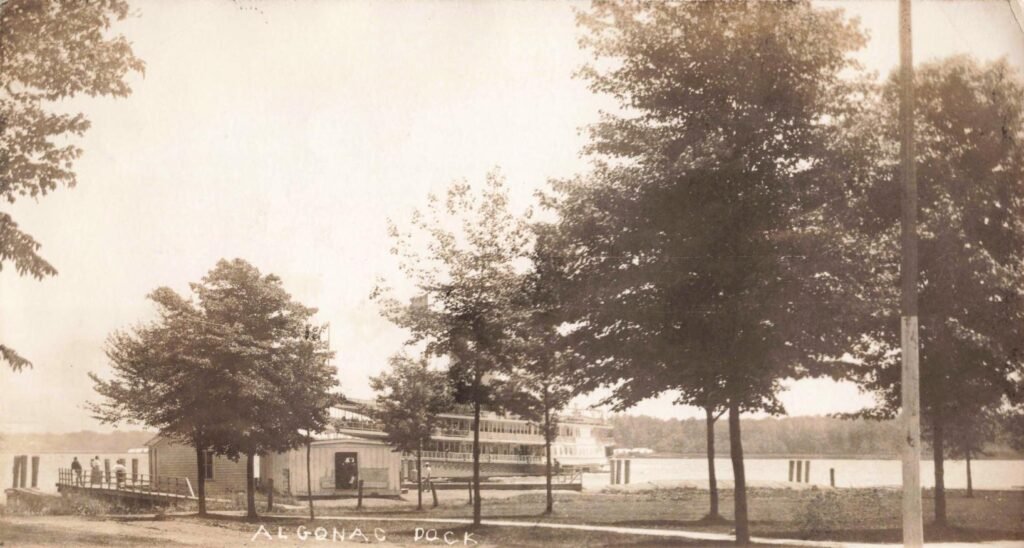
The river brought visitors to Algonac by passenger steamer. The White Star Line and other operators connected Detroit, Port Huron and communities along the St. Clair River. Docks became places of arrival, farewell, commerce and news.
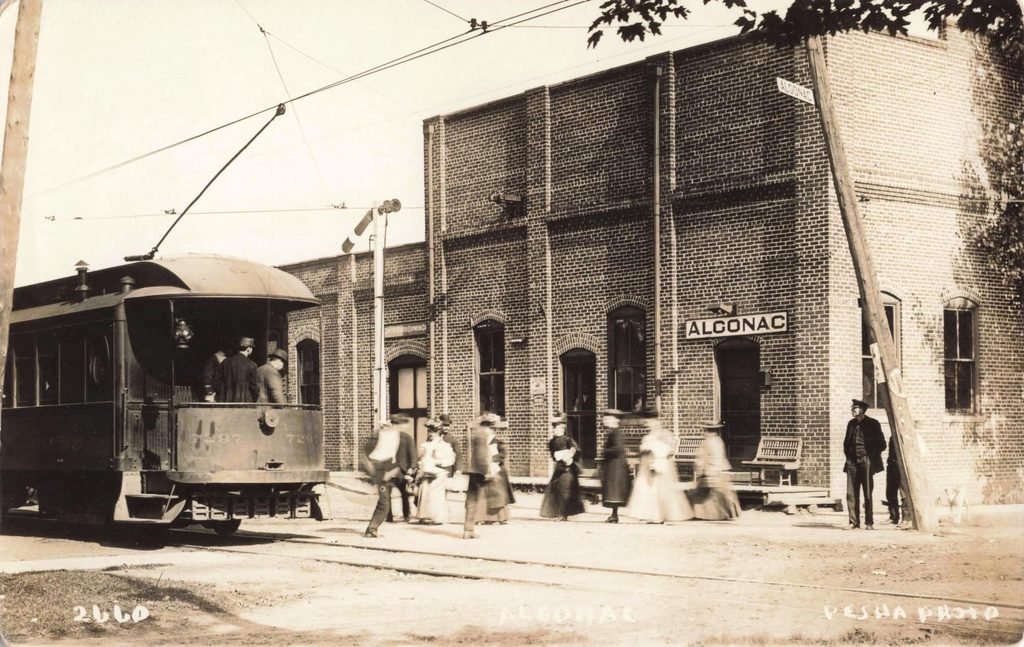
Rail service reached Algonac in 1898. Electric interurban cars followed around 1900. For a few years, residents could choose among steamer, railcar, horse and the new automobile, all within a small town.
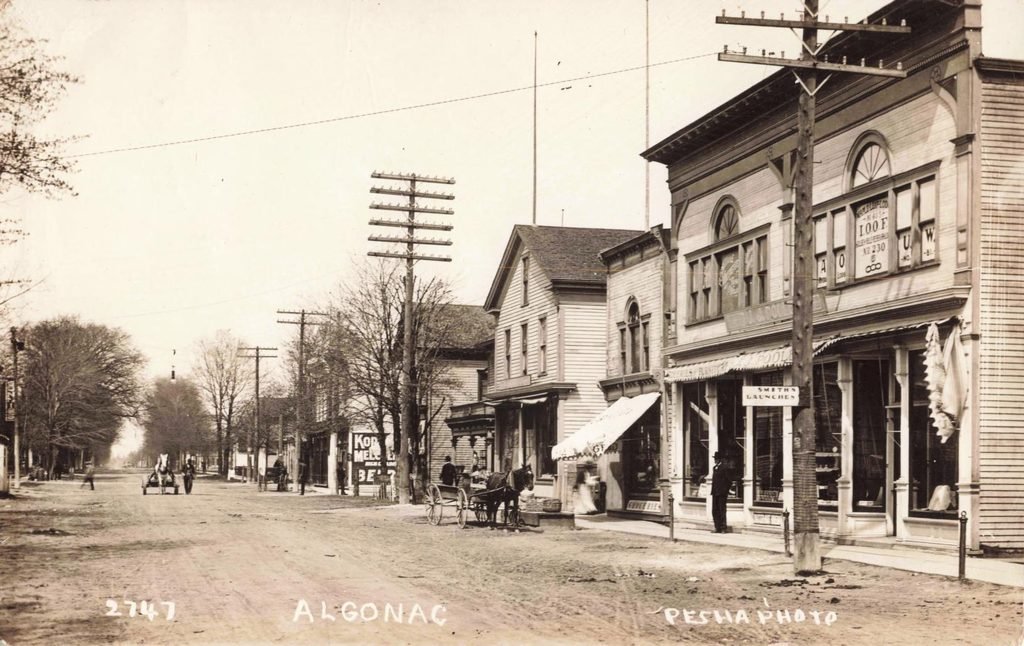
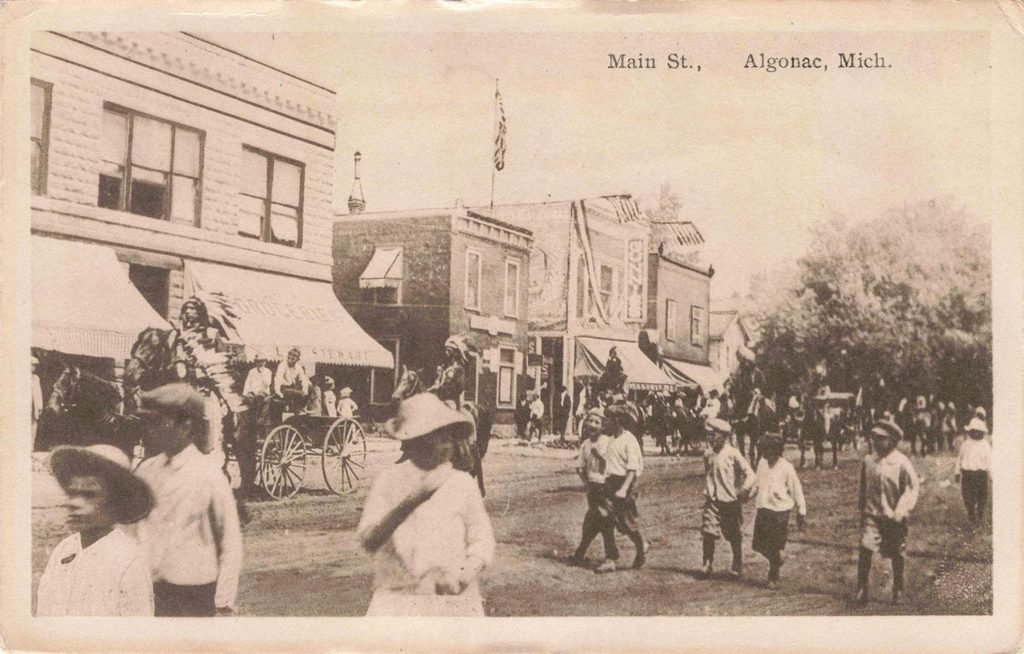
Main Street showed the transition in plain view. In 1913, much of the street remained unpaved. Wagons and horses stood before commercial buildings, while signs advertised launches and newer forms of travel.

The History of Algonac Michigan on Stage and at the Dock
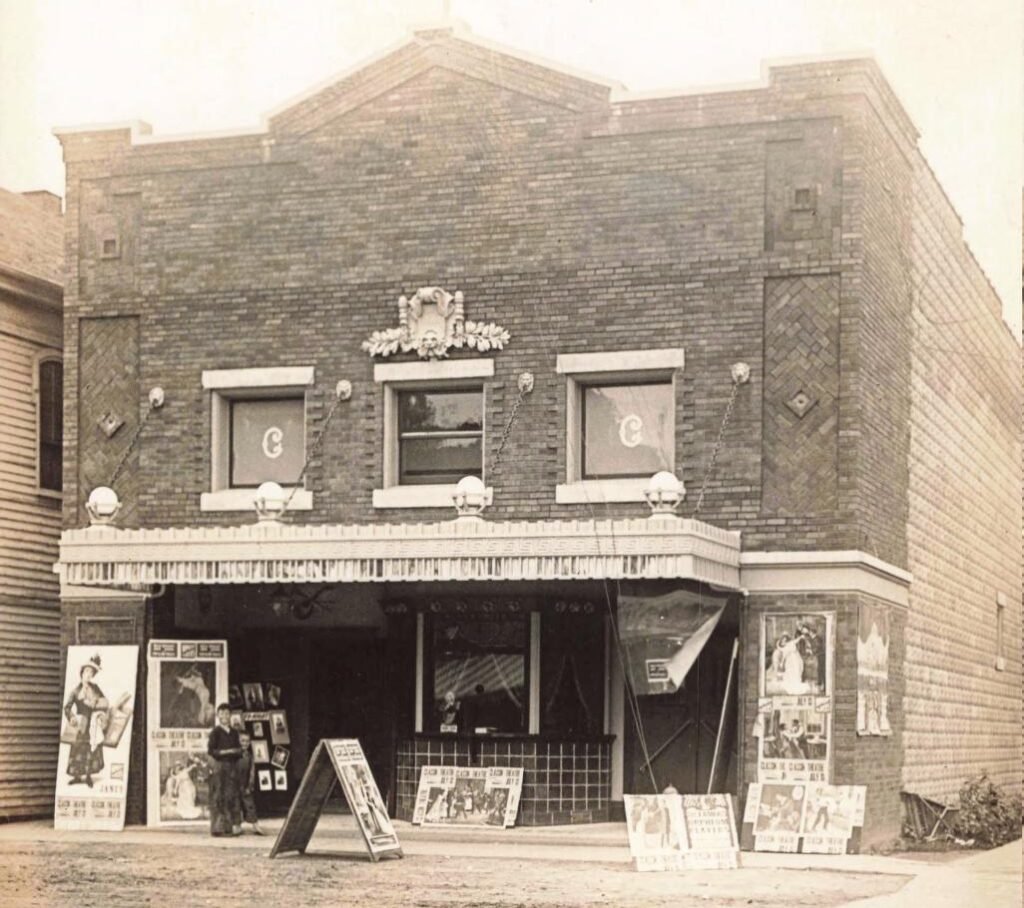
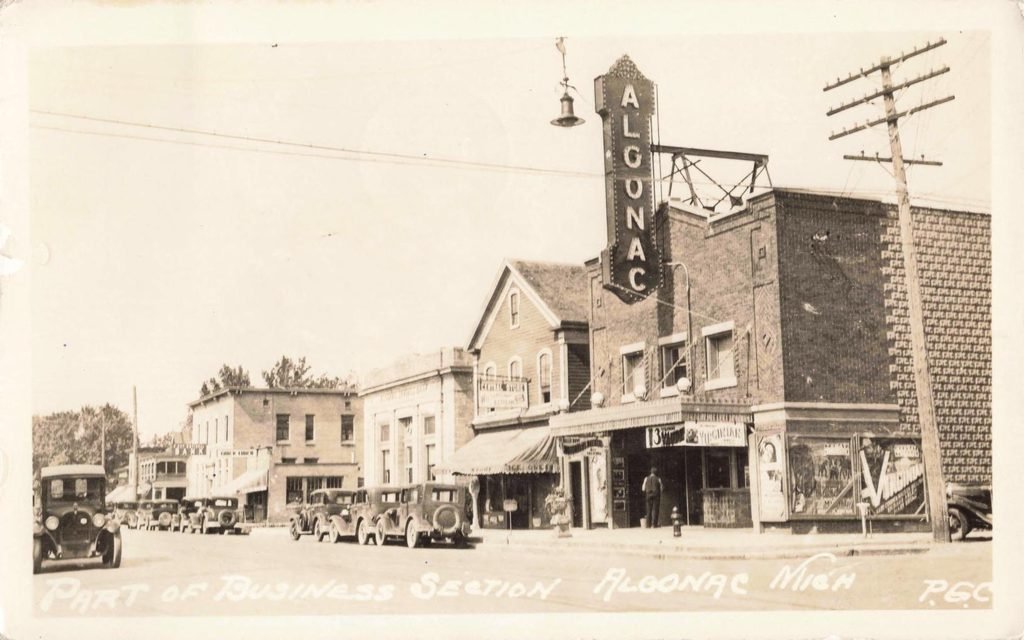
Small-town life was not all work. An early theater brought live acts and motion pictures to local audiences. At a time before broadcast radio became common, a theater could place comedy, drama and distant cities before an audience for the price of a ticket.

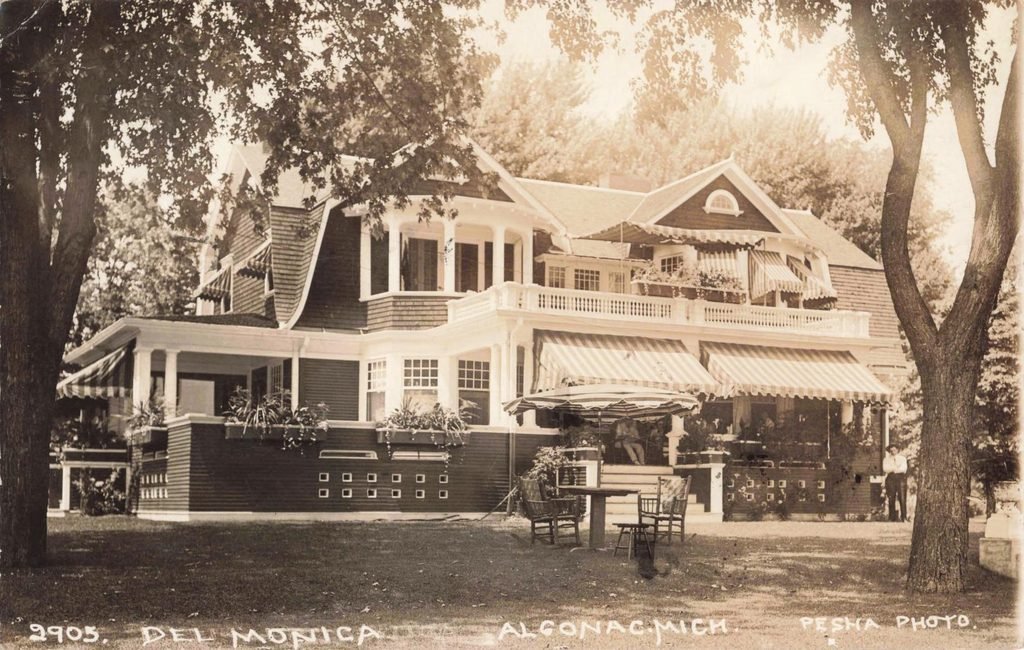
Hotels and dining rooms served summer guests. The Del Monica, with broad porches and shaded outdoor tables, belonged to an era when a vacation could begin at the steamer dock. Visitors came to fish, swim and spend an evening by the water.

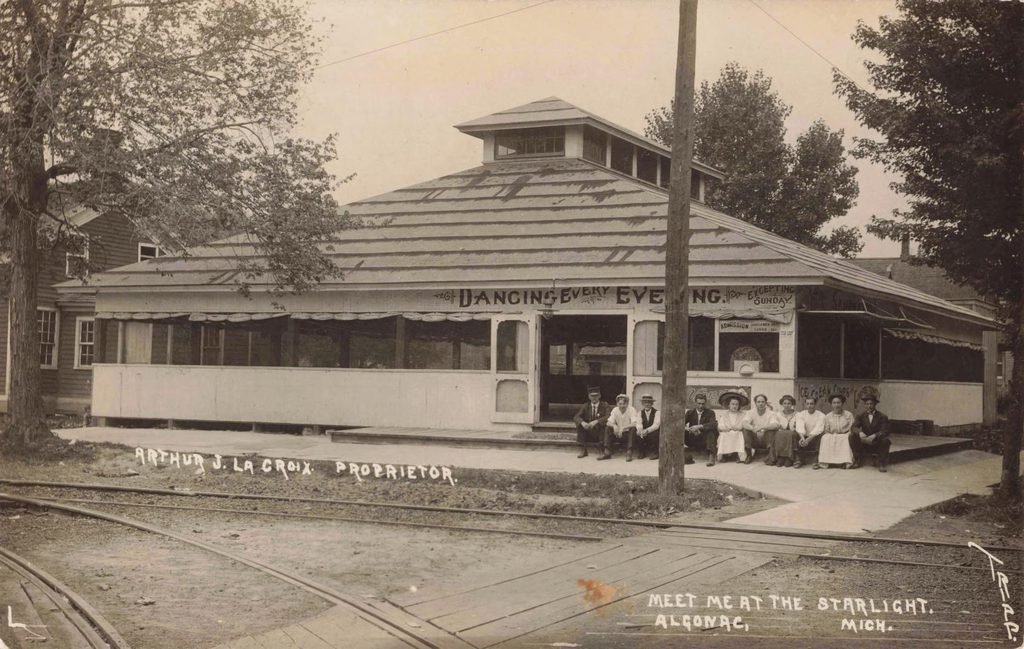
The Starlight dance pavilion offered another attraction. Its advertising promised dancing every evening except Sunday, plus ice cream and lunch. Music, river air and a late boat home made a simple outing feel like an occasion.

Chris Smith Builds a New Kind of Boat
Christopher Columbus Smith was born in 1861 and built his first small boat in Algonac at age 13. He and his brother Henry later guided Detroit hunters and built duck boats, canoes, and rowboats. Those practical craft taught Smith the value of balance, strength, and an efficient hull.
The gasoline engine changed his trade. In 1910, Smith and Detroit businessman John Ryan formed the Smith-Ryan Boat Company. The partnership ended within a few years, but Smith continued building powered craft with his sons.
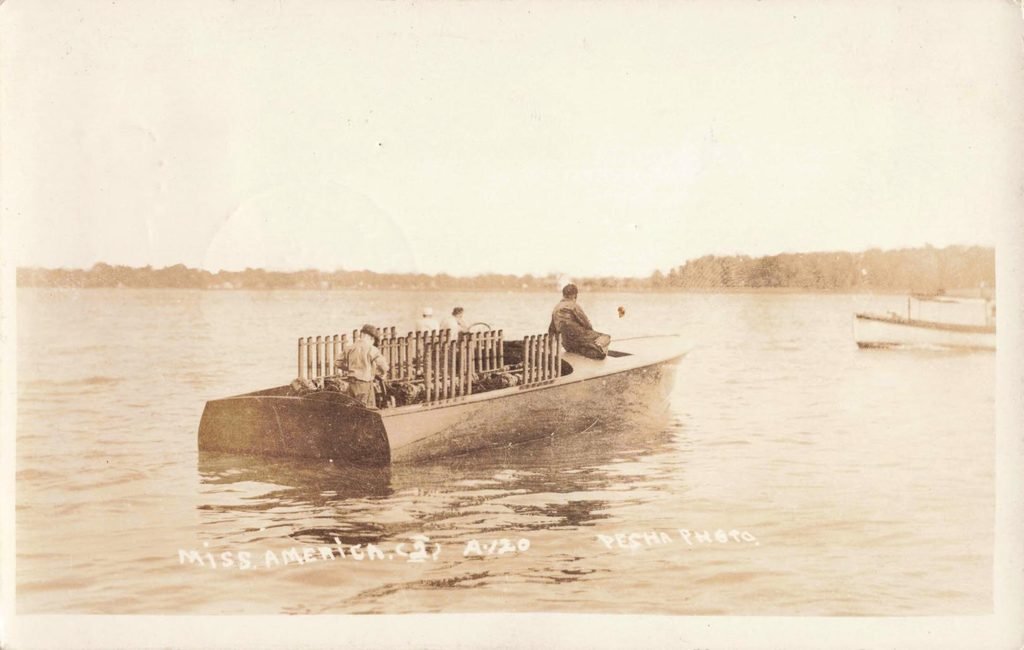
Racer and inventor Gar Wood brought money, ambition, and a taste for speed. Smith-built boats carried Wood to Gold Cup victories and international Harmsworth Trophy wins. According to Algonac’s state historical marker, 10 Miss America racers were built in town between 1921 and 1932.
Miss America X reached nearly 125 mph over a measured mile in 1932. That achievement made this little river city a world center of powerboat racing. The noise and publicity also proved that Algonac builders understood high-speed hulls better than almost anyone.
Racing Rules Help Create the Family Runabout

One of the most unexpected turns in the History of Algonac, Michigan, came from racing restrictions. Rule changes intended to limit Gar Wood’s advantage encouraged Wood and Smith to adapt racing knowledge to private runabouts. An effort to control competition helped move speedboat design toward the family dock.
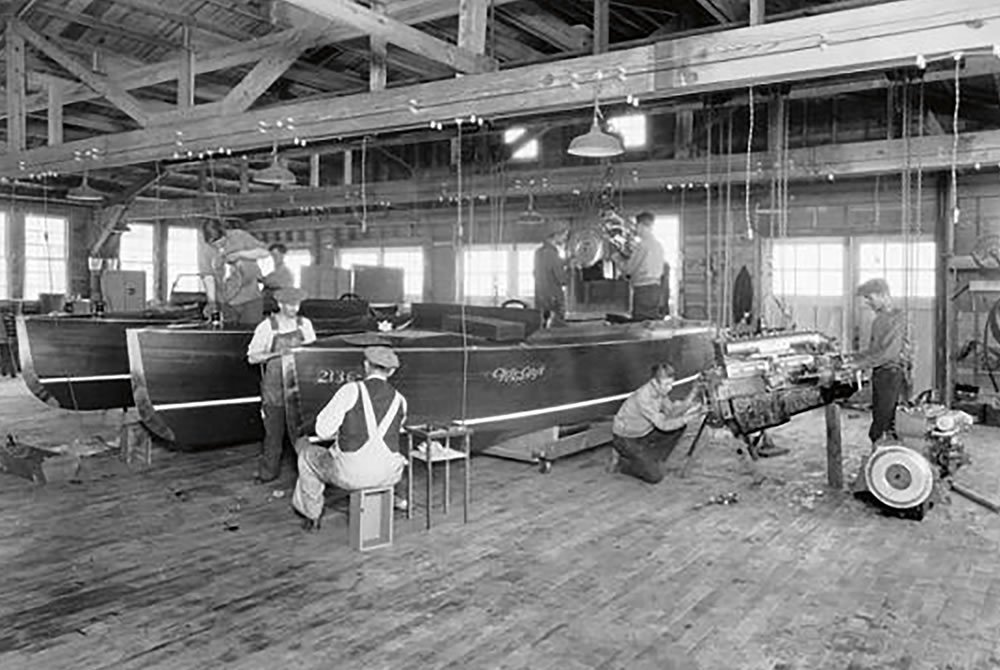
Chris Smith and his sons formed Chris Smith & Sons Boat Company in 1922. By the late 1920s, organized factory production allowed the firm to build polished mahogany boats in greater numbers. The company later took the name Chris-Craft.
Chris-Craft did not make boat ownership ordinary or cheap. It did make the runabout visible and desirable to a broad segment of the American public. The boats joined speed, comfort, and careful woodworking in a form that looked at home beside a cottage or country club.
Factory production did not erase hand skill. Planks still had to fit. Hardware had to align, engines had to be installed correctly, and varnished surfaces had to satisfy buyers who expected elegance. Algonac workers joined repeated production steps with knowledge learned beside the river.
That mix gave the town an unusual identity. Chris-Craft was an industrial employer making an object associated with free time. The whistle could call workers to a shift so that another family, hundreds of miles away, could spend a Sunday afternoon without a timetable.
The Automobile Changes the Vacation
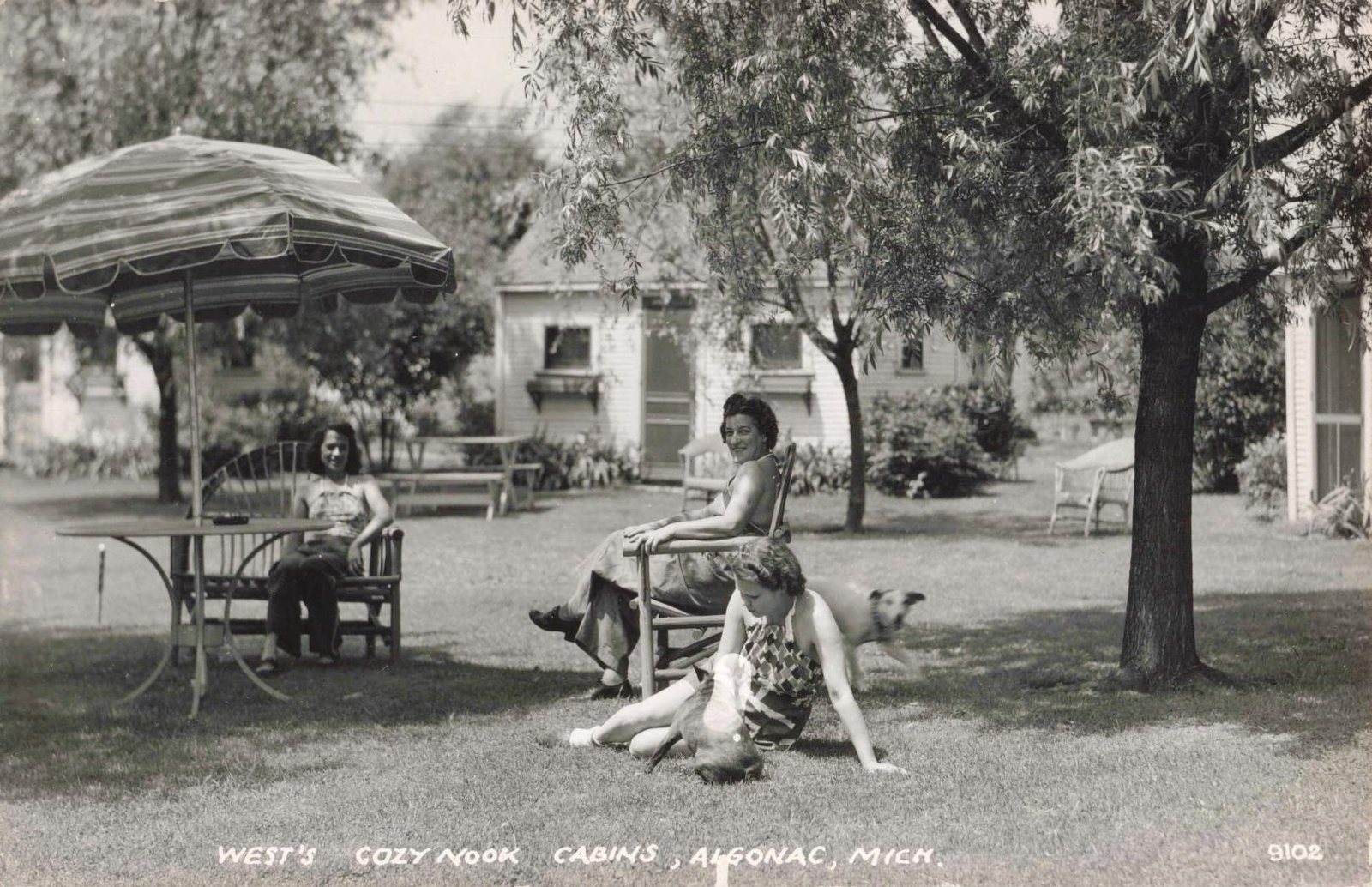
Cars reduced passenger business for steamers and the interurban. They also created a new customer. Garages, gasoline pumps, roadside inns and tourist cabins appeared to serve families who set their own schedules.

The change produced a fine historical irony. In 1930, a company held by Chris Smith’s sons began operating the Algonac Transit Company on part of the former electric railway. Gasoline locomotives hauled lumber, supplies, and finished boats. A passenger system displaced by the automobile returned as a freight route serving pleasure craft of the motor age.
During the Depression, that national market became uncertain. Chris-Craft emphasized smaller runabouts and offered more choices. The strategy kept the company associated with aspiration, even as many customers were postponing large purchases.

Bkejwanong and Algonac: Neighbors Across the Water
The St. Clair River is an international boundary, but it has never been only a dividing line. Walpole Island First Nation, or Bkejwanong Territory, lies close to Algonac. Its Anishinaabe community includes Ojibwe, Odawa and Potawatomi heritage.
A local Algonac history says the Walpole Island Band was a familiar Saturday-night presence in the city during the early 1930s. The detail is important. It places Indigenous musicians within ordinary community life rather than treating them as people outside the town’s story.
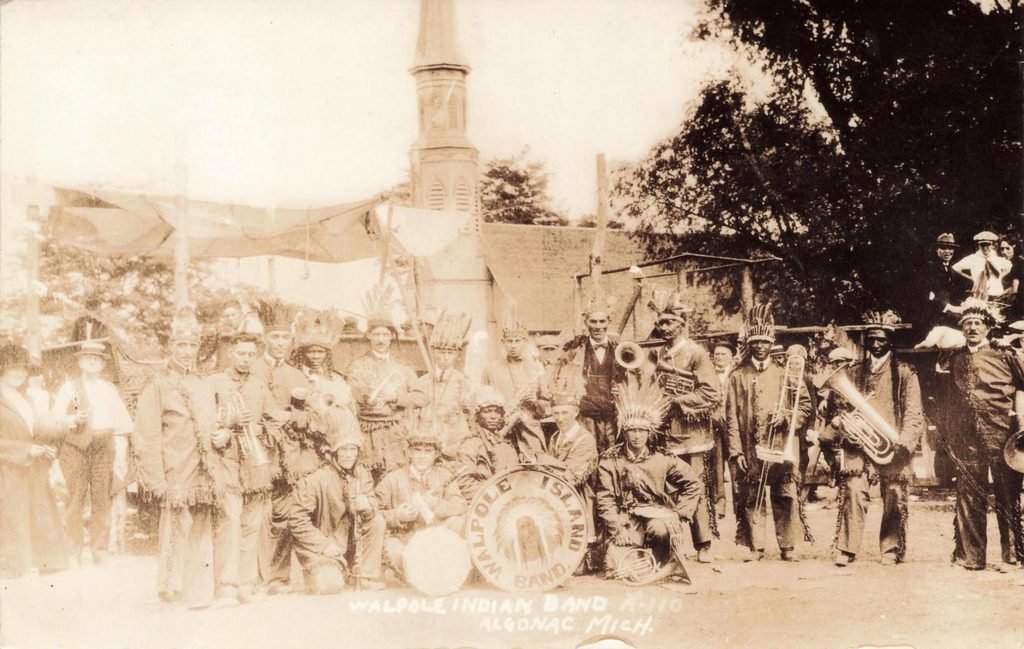
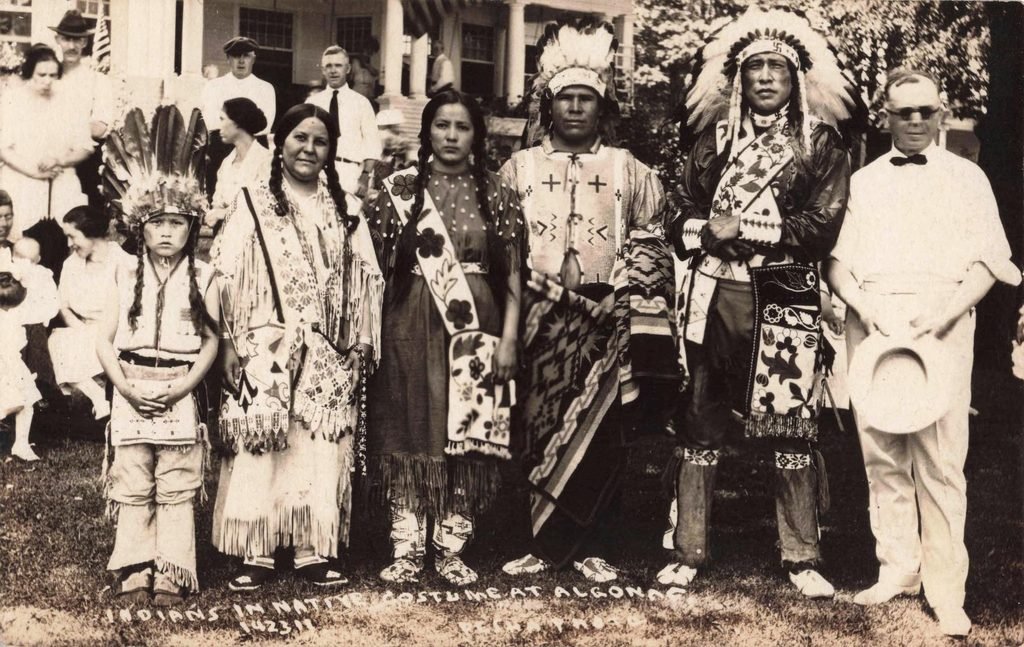
Some older captions require greater care. Words such as “costume” can reduce regalia to theatrical dress, while missing names erase personal identity. The original label should remain visible as evidence of its time, accompanied by respectful language and a clear note about what is not known.
Public pageants present a similar problem. A 1917 Main Street scene includes a rider in a large feathered headdress, but clothing does not prove a person’s identity or nation. Responsible interpretation separates what can be seen from what can only be guessed.
Why the History of Algonac Michigan Still Holds Attention
The Great Depression reduced spending on leisure, but Chris-Craft responded with smaller runabouts and a wider range of models. Algonac also promoted fishing and called itself the “Pickerel Capital of the World.” The river remained a factory floor, playground, and pantry at once.
Chris Smith died in 1939. During World War II, his company built military craft, then expanded rapidly in the postwar boating market. Chris-Craft later left Algonac, and the final mahogany model was built in 1971.
The History of Algonac, Michigan, is unique because industry and recreation were never separate stories here. Local workers built boats that other people used for freedom and fun, while their own town lived by the same water. Algonac did not simply launch a famous company. It helped persuade Americans that a boat could be worth owning even when there was no cargo to carry and no schedule to keep.
Works Cited
Algonac Boating and Historical Museum, Inc., and Michigan History Division. “Water Speed Capital.” Historical Marker Database, 1981. Accessed 3 Sept. 2026.
Algonac Community Schools. 1990 Remembrance: Centennial Edition, Celebrating Algonac High School, 1890–1990. 1990. Internet Archive. Accessed 3 Sept. 2026.
Chris-Craft. “Historical Timeline.” Chris-Craft Boats. Accessed 3 Sept. 2026.
City of Algonac. “About Us.” The Official Website of the City of Algonac, Michigan. Accessed 3 Sept. 2026.
Detroit Historical Society. “Smith, Christopher Columbus.” Encyclopedia of Detroit. Accessed 3 Sept. 2026.
Detroit Historical Society. “White Star Line Landing, Algonac, St. Clair River, Mich.” Detroit Historical Society. Accessed 3 Sept. 2026.
Detroit Historical Society. “Wood, Gar.” Encyclopedia of Detroit. Accessed 3 Sept. 2026.
Gar Wood Boats. “Gar Wood History.” Accessed 3 Sept. 2026.
Jacobs, Clint. “Bkejwanong: Sustaining a 6,000-Year-Old Conservation Legacy.” Ontario Heritage Trust, 11 Feb. 2010. Accessed 3 Sept. 2026.
MichiganRailroads.com. “Algonac Transit Company.” Accessed 3 Sept. 2026.
Walpole Island First Nation. “Boozhoo!” Accessed 3 Sept. 2026.