


Public Invited to Help Return Lake Sturgeon to Saginaw Bay Watershed
Hundreds of young lake sturgeon will be released into four Saginaw River tributaries Sept. 4 and Sept. 26 as Michigan continues a long-term effort to restore one of the Great Lakes’ oldest native fish.
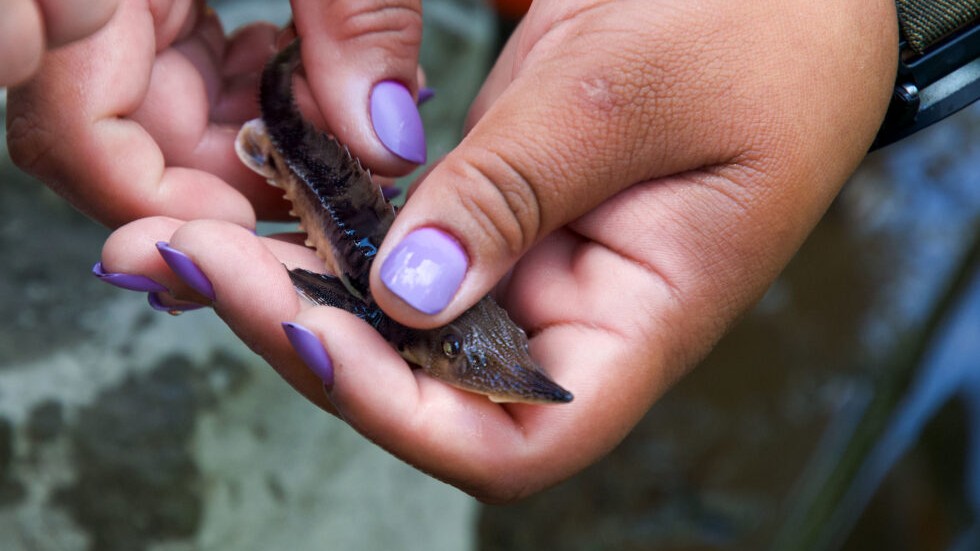
SAGINAW BAY, Mich. — Michigan residents will have a rare chance this September to hold a young lake sturgeon and personally return it to the waters of the Saginaw Bay watershed.
Public sturgeon releases are scheduled for Friday, Sept. 4, and Saturday, Sept. 26, at four locations along the Tittabawassee, Shiawassee, Flint and Cass rivers. About 100 juvenile sturgeon are expected to be released at each location during each round of events. Participation is free, open to all ages and does not require advance registration.
The events are part of a restoration effort that has been working since 2017 to establish lake sturgeon in the Saginaw River system. More than 7,000 young sturgeon have already been released into local waters through the program.
Four Sturgeon Releases Planned Across Saginaw Bay Watershed

The Sept. 4 and Sept. 26 releases are scheduled at the same four locations:
- 11 a.m. — Tittabawassee River: Bob G. Caldwell Municipal Boat Launch in Midland, hosted by Chippewa Nature Center.
- Noon — Shiawassee River: Cole Park in Chesaning, hosted by Friends of the Shiawassee River.
- 2 p.m. — Flint River: Paddlers’ Landings at Mott Park Recreation Area in Flint, hosted by the Flint River Watershed Coalition.
- 2:30 p.m. — Cass River: Gunzenhausen Walkway in Frankenmuth, hosted by the city of Frankenmuth.
Participants may be able to carry an individual young sturgeon into shallow water before releasing it. Chippewa Nature Center advises participants at the Midland release to wear secure shoes that can get wet because those releasing fish may need to wade 1 to 2 feet into the river.
Young Fish Come From Two Great Lakes Populations
The two September releases involve fish from different sources.
Sturgeon being released Sept. 4 originated in the Black River in Cheboygan County, where they hatched naturally. Researchers with Michigan State University’s Department of Fisheries and Wildlife and the Michigan Department of Natural Resources collected the young fish in late May and moved them to the Black Lake Streamside Rearing Facility.
Fish scheduled for release Sept. 26 originated in lower Lake Huron near the upper St. Clair River. Those fish were raised by the U.S. Fish and Wildlife Service at the Genoa National Fish Hatchery in Wisconsin.
The juvenile fish have spent the summer growing to about 4 to 6 inches long before entering the Saginaw River system.
That small size gives little indication of what they could eventually become.
Adult lake sturgeon can grow to about 7 feet long and weigh as much as 300 pounds. They mature slowly, generally not beginning to reproduce until they are at least 15 to 20 years old.
An Ancient Great Lakes Fish Struggles to Recover
Lake sturgeon once lived in large numbers throughout the Great Lakes and many Michigan rivers. Overfishing, dams, logging and the destruction of spawning habitat contributed to major population declines during the 19th and early 20th centuries.
Michigan listed the lake sturgeon as a threatened species in 1994. The DNR says rehabilitation efforts now focus on protecting existing populations while rebuilding depleted populations until they can reproduce without continued stocking.
The scale of the historical loss remains striking. Michigan’s Wildlife Action Plan estimates Great Lakes lake sturgeon abundance at less than 1% of historical levels.
Yet scientists are also learning that the fish may be far more long-lived than previously believed.
A 2026 study using 44 years of capture-and-recapture data from five Great Lakes populations estimated that some female lake sturgeon could potentially live more than 400 years, with estimated maximum ages varying substantially among populations. Researchers estimated ages of up to 279 years for 160-centimeter males and up to 427 years for 180-centimeter females.
That extraordinary lifespan makes September’s small fish a long-term investment in Saginaw Bay.
If the restoration program succeeds, some of the sturgeon carried into a Michigan river by a child this month could still be swimming through Great Lakes waters well into the next century.
Official event information: Michigan Sea Grant sturgeon release schedule

