


St. Clair Flats – 12 Remarkable Rare Views Behind Detroit’s Legendary Island Playground
The History of St. Clair Flats, Michigan, begins with a place that refused to behave like an ordinary town. At the mouth of the St. Clair River, water split into channels around low islands. From the 1890s through the 1930s, houses faced docks, hotels greeted steamers, and Harsens Island became a summer address for Detroit families.

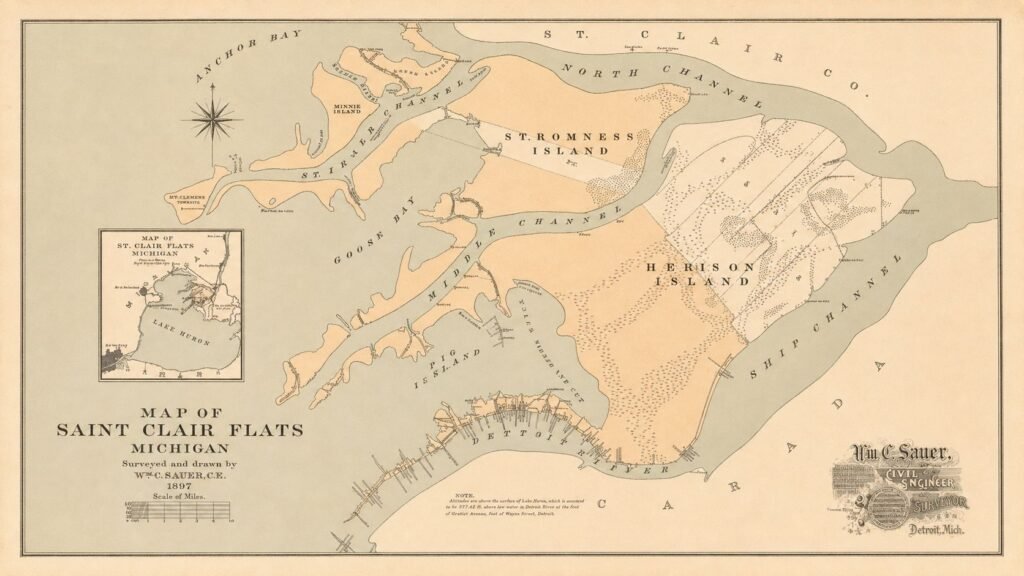
Table of Contents – St. Clair Flats
Watch – History of St. Clair Flats Michigan: When Detroit Vacationed by Steamer

History of St. Clair Flats, Michigan, Began With Water
The St. Clair Flats form a large deltaic wetland where the St. Clair River enters Lake St. Clair. Sediment built the islands over thousands of years. Harsens Island became the main American island, while Bkejwanong, or Walpole Island First Nation, remained part of the older Anishinaabe homeland on the other side of the international line.
Channels carried travelers, and higher ground held buildings. A ship channel was dredged in the river and St. Clair Flats in 1866, improving Great Lakes navigation and also making summer travel easier. Work intended for commerce helped create a resort economy.

The Water Route From Detroit
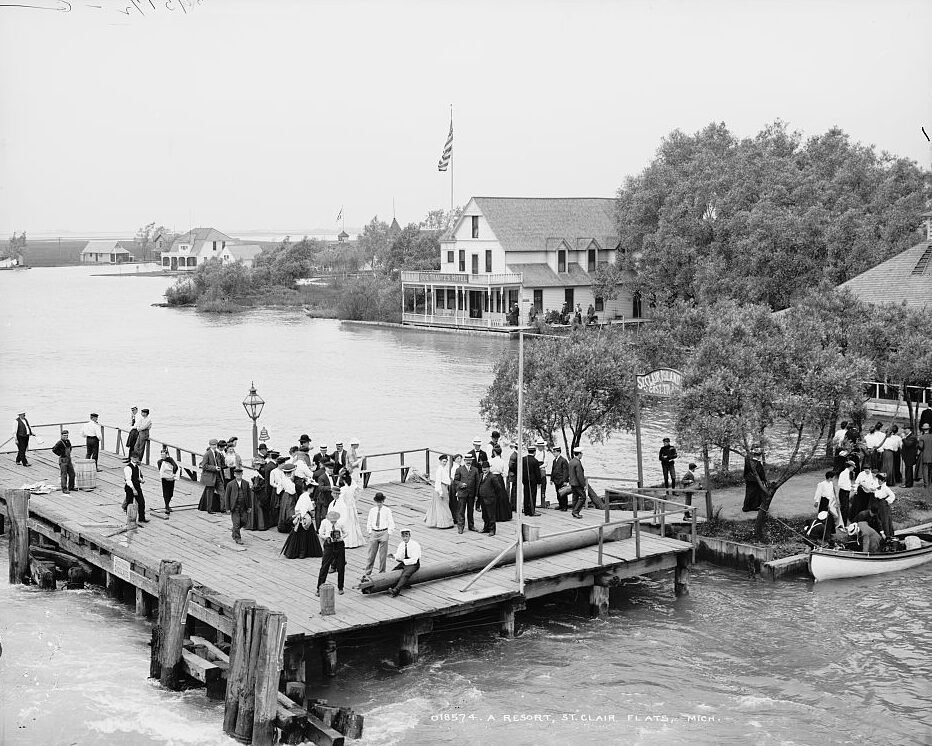
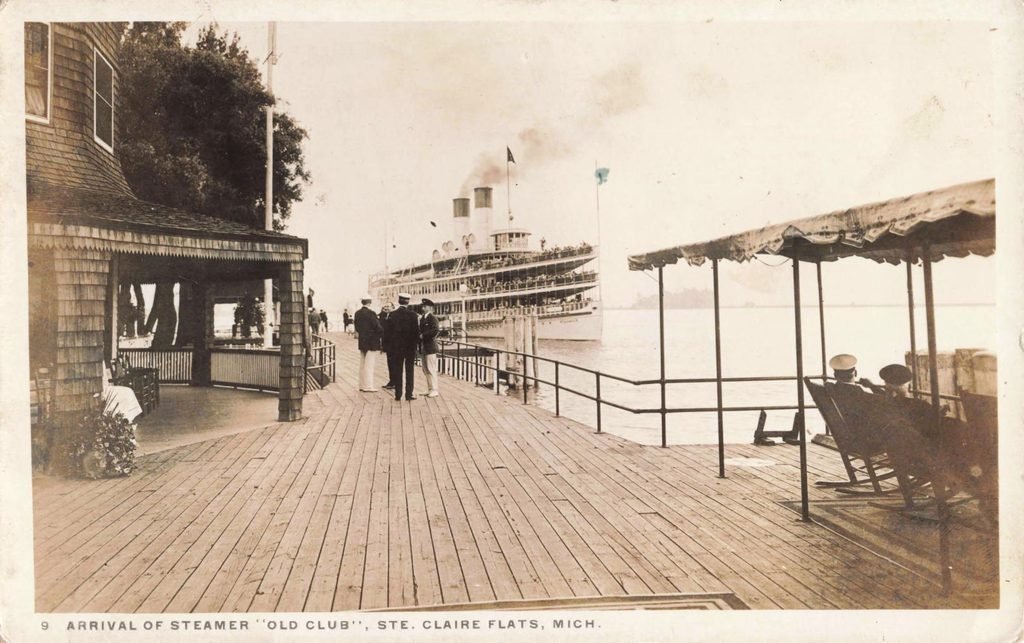
Detroit’s growth supplied the audience. Factory work, crowded neighborhoods, and hot summers increased demand for short trips. Steamers carried passengers from the city to resort docks, where they could spend the day at a park or hotel and return at night. Music, food, and passing freighters made the ride part of the outing.

The surprising point is simple. Few roads did not keep visitors away. A published steamer schedule gave the islands a direct link to downtown Detroit. Remoteness became a selling point because transportation companies had organized the water route.
Clubs, Hotels and Cottages

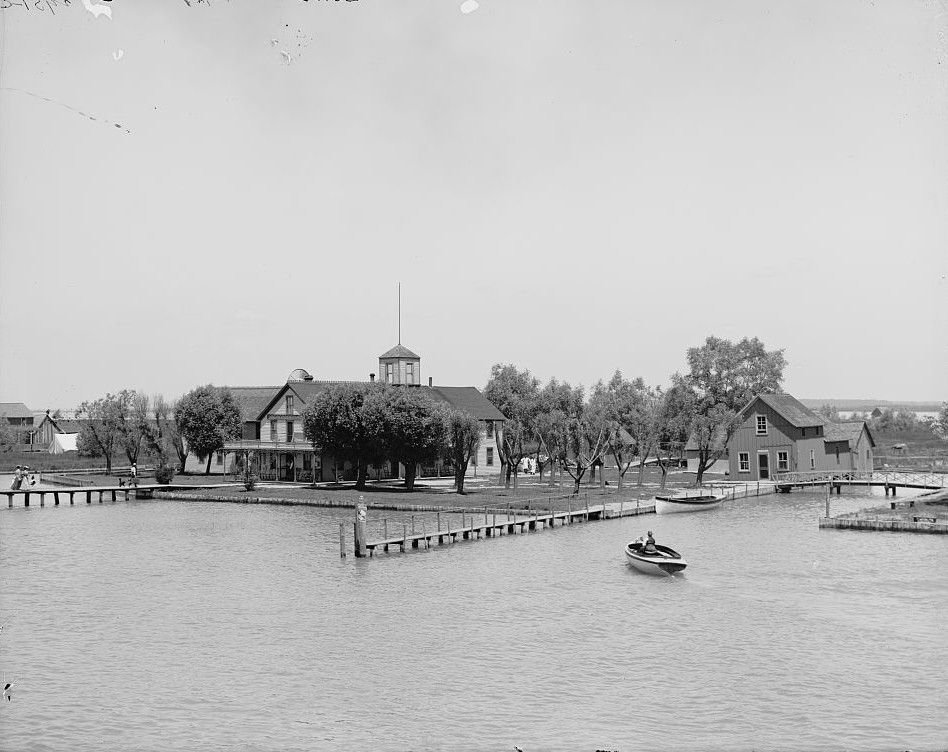
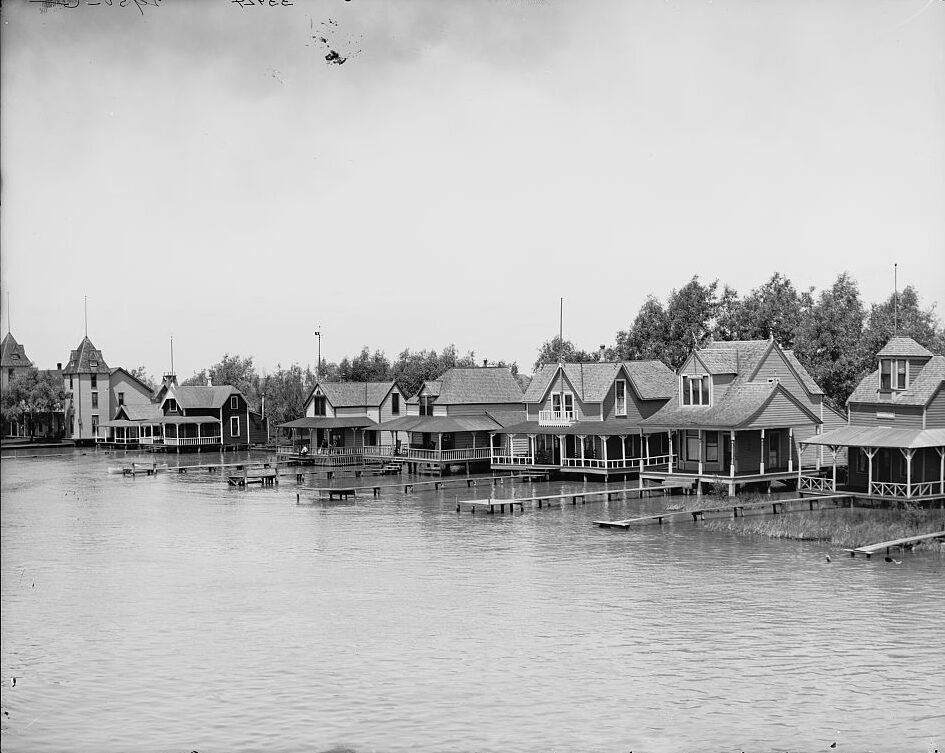
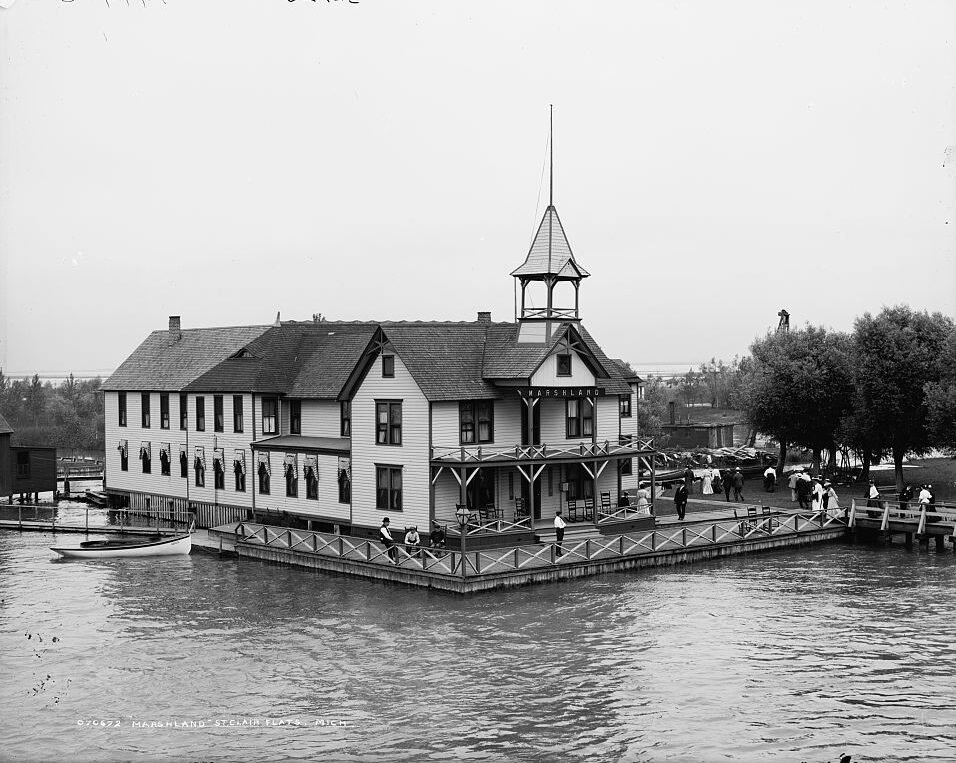
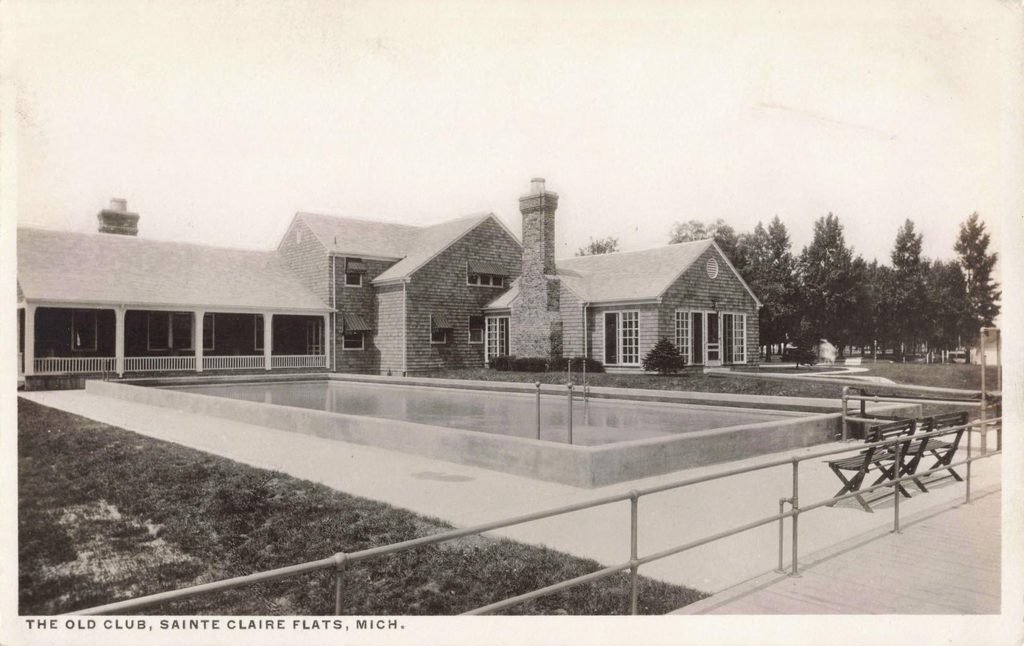
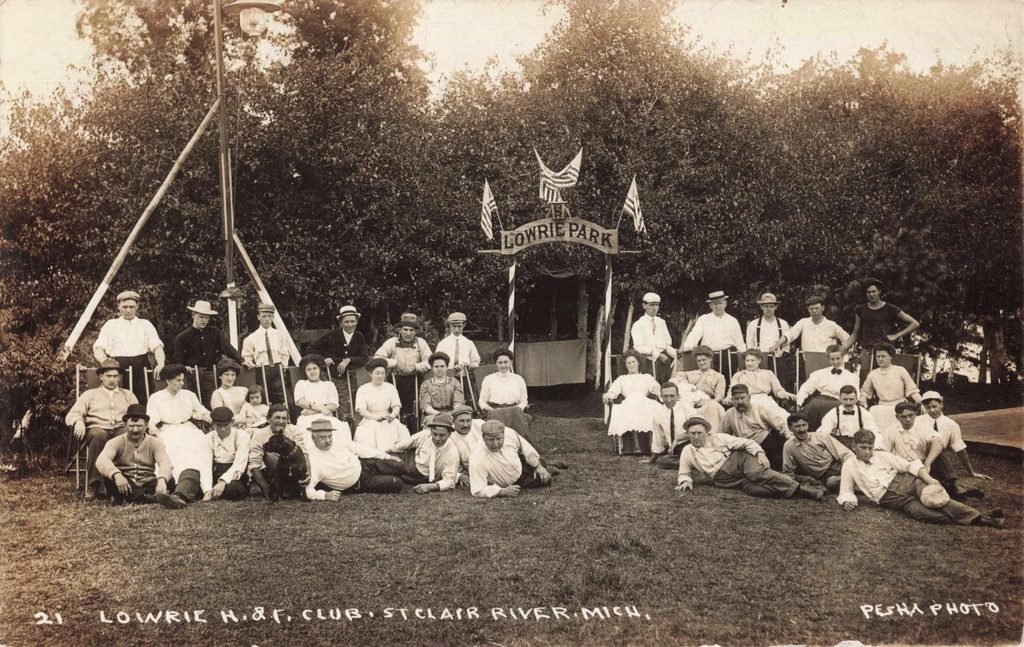
The Lake St. Clair Fishing and Shooting Club was formed in 1872. Members replaced their rough shelter with a larger clubhouse in 1887. Later called the Old Club, it grew into a family resort with cottages, swimming, and sailing. The Marshland, Club Aloha, and Lowrie Hunting and Fishing Club followed the same water-based pattern.
Hotels served visitors without cottages or club memberships. Joe Bedore’s became a familiar landing. Bedore, born in Quebec in 1839, earned a reputation as an energetic host, and his fish, frog and chicken suppers could turn a boat stop into an evening event.

Tashmoo Park and the White Flyer
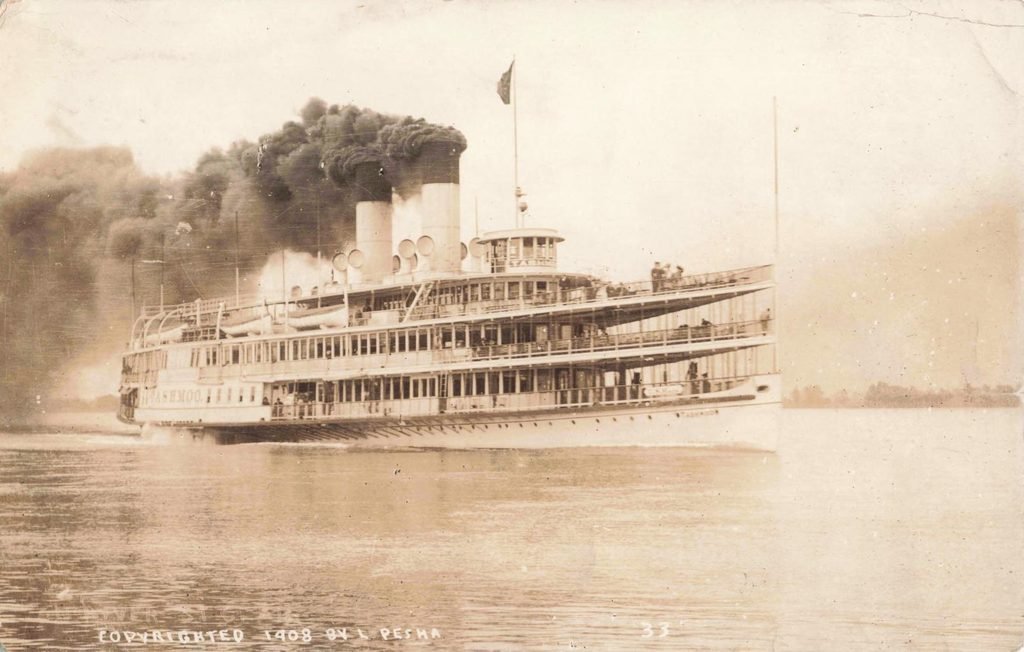
White Star Line opened the 60-acre Tashmoo Park on Harsens Island in 1897. Picnic grounds, games, and a dancing pavilion gave the company both a destination and passengers for its boats.
Frank E. Kirby designed the 306-foot side-wheeler Tashmoo, which entered service in 1900 and became known as the White Flyer. In 1901, she raced the City of Erie from Cleveland to Erie, Pennsylvania. Tashmoo lost the four-hour contest by only 45 seconds, a narrow defeat that strengthened her fame at home.

A Resort Built on State Bottomlands
The History of St. Clair Flats Michigan includes an unusual property dispute. Early residents often occupied parcels without clear deeds. Michigan ordered a survey in 1899, and the work was completed in 1902. In 1910, the state Supreme Court confirmed that the Flats were lake bottomlands owned by Michigan.
The St. Clair Flats Act of 1913 created a lease system while retaining public navigation, hunting and fishing rights. A family might own a cottage while leasing the ground below it. That arrangement shaped ownership for decades.

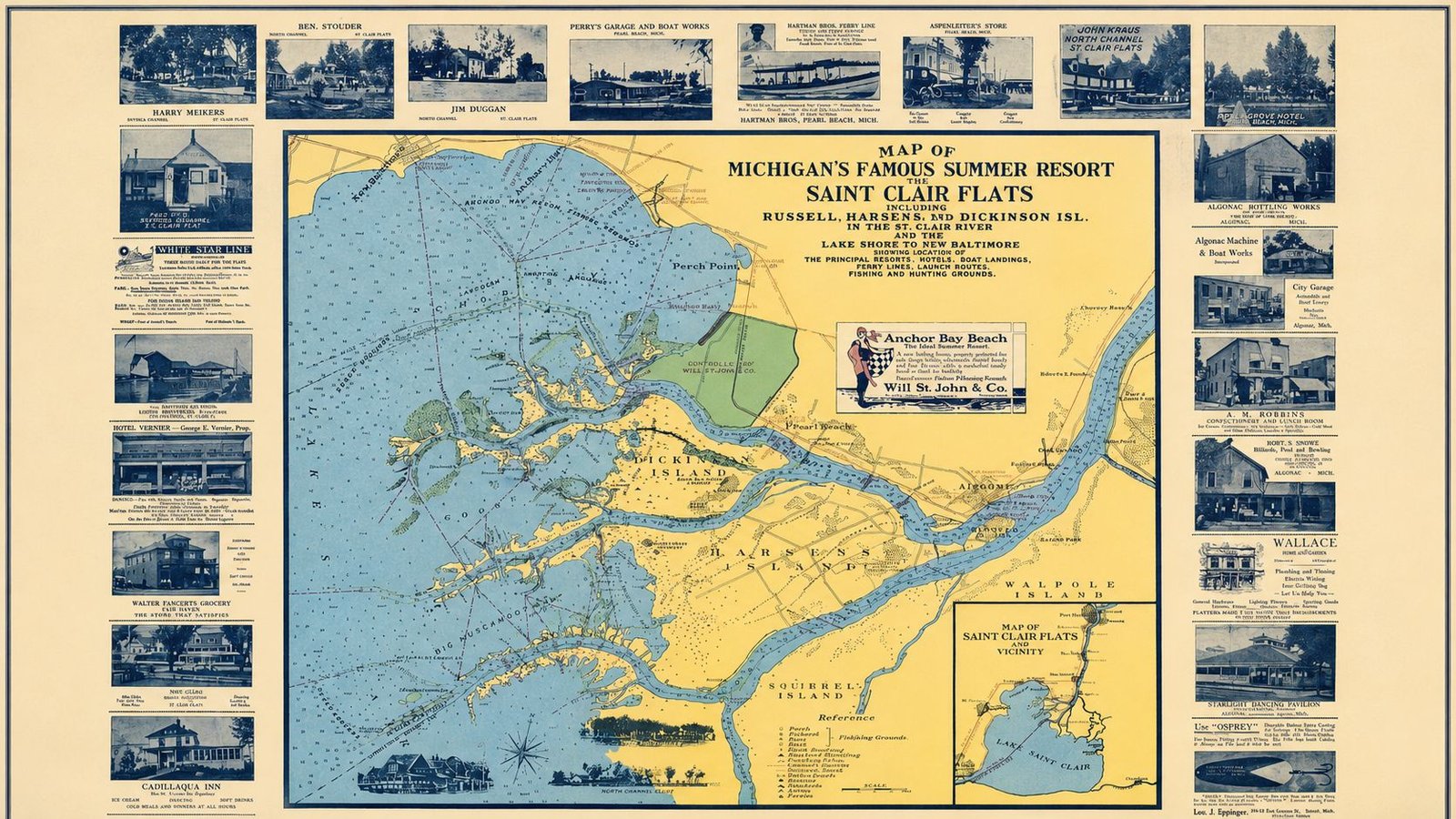
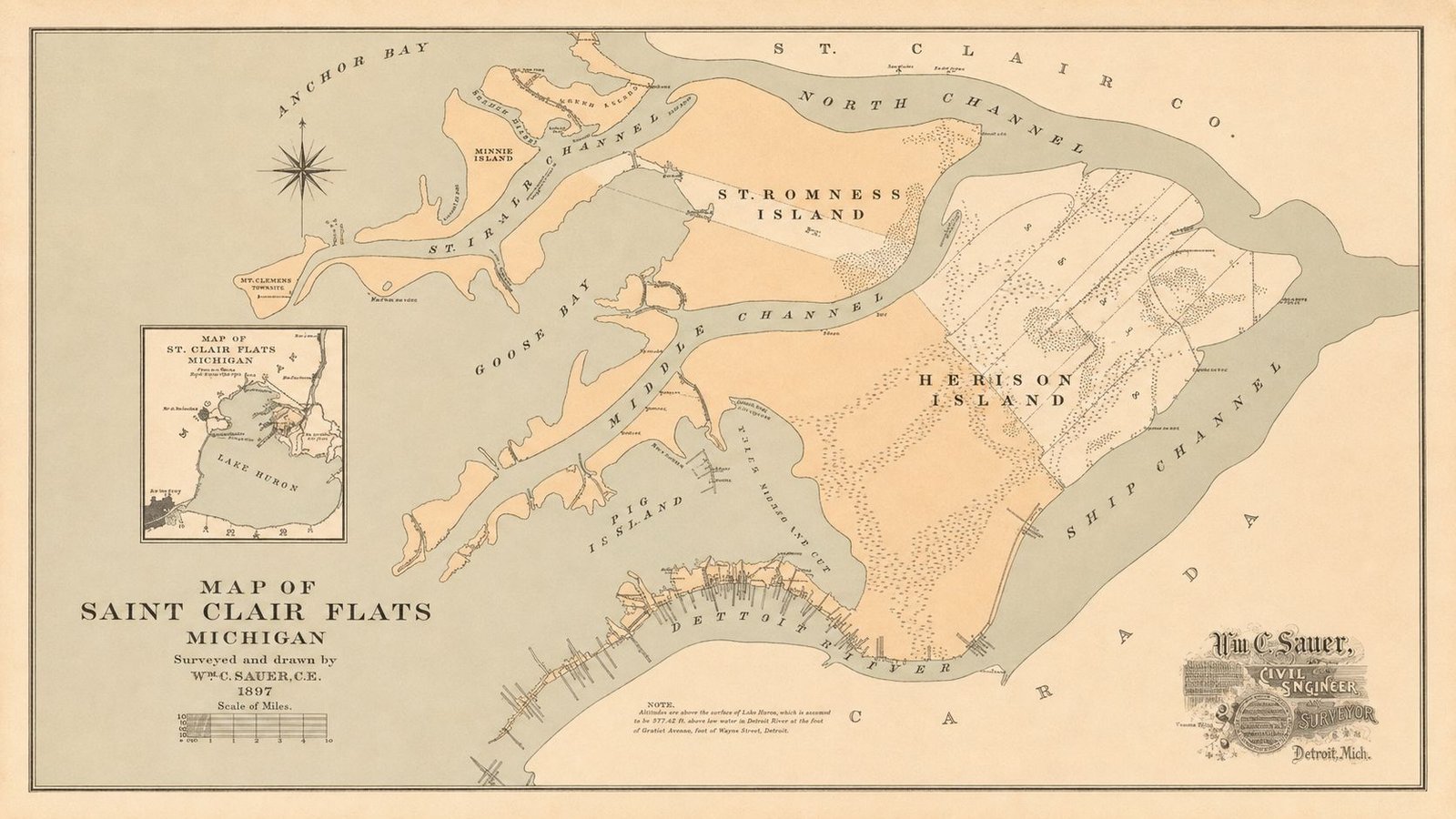
An early resort guide map promoted the St. Clair Flats through named channels, island communities and a border of hotel and cottage scenes.
The City of St. Clair Was a Gateway, Not the Flats

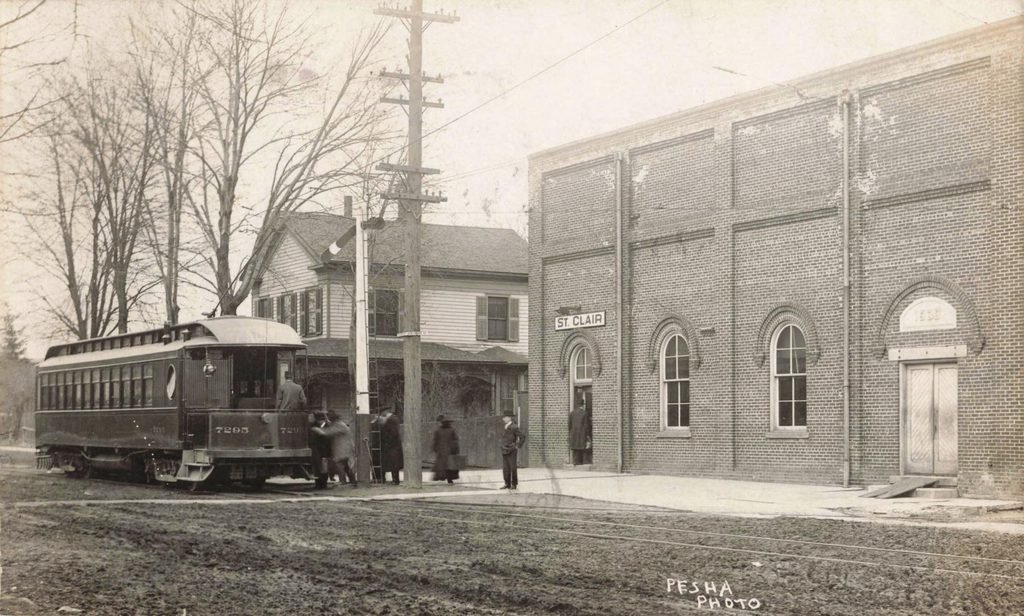
Several surviving views show the nearby city of St. Clair and should not be labeled as island scenes. A Detroit United Railway car stopped at the city’s brick station about 1910, on a line connecting Detroit and Port Huron.

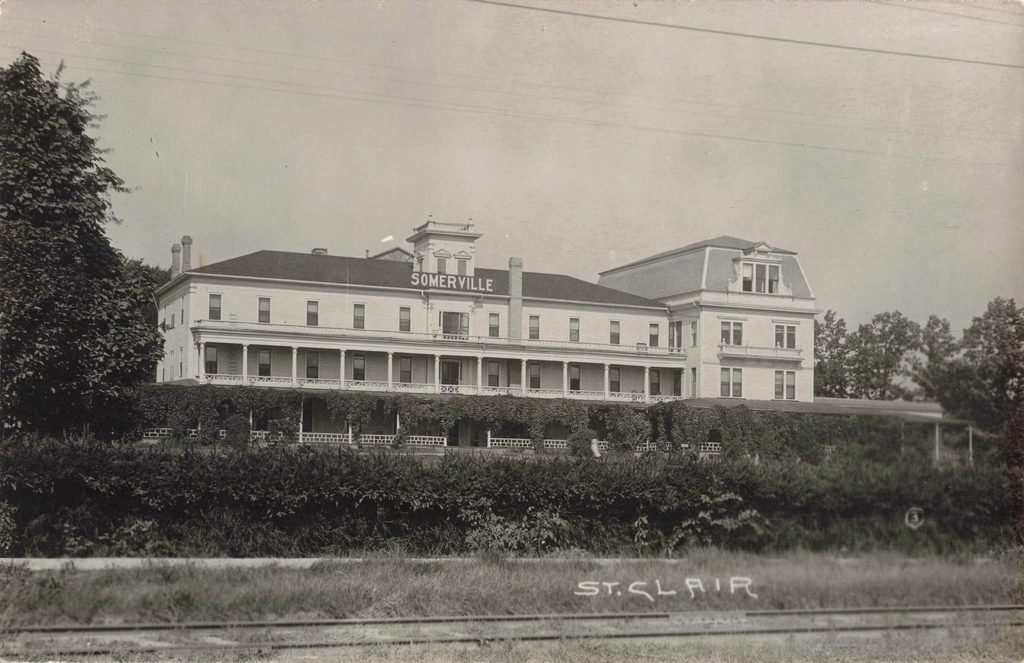
The Somerville Hotel also stood in St. Clair. Opened as a resort in 1888, it offered mineral baths, music, and a steamer dock before closing in 1917. The variety store, 1908 fair and horse-drawn fire wagon share that mainland setting. The city supported delta travel, but it was not the Flats.
A Literary Setting and a Social Divide
Writer Constance Fenimore Woolson used the St. Clair Flats in her Great Lakes work during the 1870s. Her account came before the biggest resort boom, yet it captured the uncertain line between land and water.

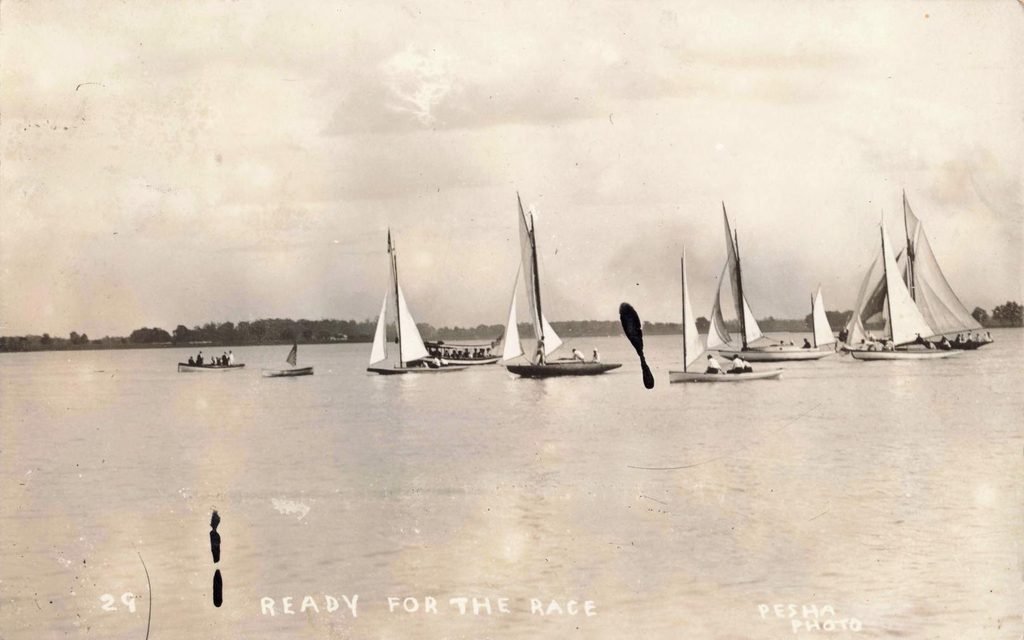
Private clubs and public excursion grounds served different crowds. Wealthy members could spend a season at the Old Club, while working families might save for one trip to Tashmoo Park. Captains, deckhands, cooks, hotel staff, and boat operators kept both worlds running.
Cars and Depression End the Steamer Habit
Automobiles and better roads gave vacationers more choices during the 1920s. The Depression reduced excursion spending, while wooden waterfront buildings faced costly upkeep, storms, ice and fire.

On June 18, 1936, Tashmoo struck a submerged rock while returning from a Sugar Island dance trip with about 1,400 passengers. The crew reached Amherstburg, Ontario, and everyone left safely, but the vessel could not be saved. Tashmoo Park remained open until 1951 as steamer travel faded.
Why the History of St. Clair Flats Michigan Still Stands Apart

The History of St. Clair Flats, Michigan, records a community organized by channels, docks, and public water rights. Its lease system grew out of the basic problem of deciding where land ended and the lake bottom began.
The Old Club continues on Harsens Island; boats still pass cottage porches, and water still sets the daily route. That continuity gives the History of St. Clair Flats, Michigan, its clearest point: Detroit’s island playground stayed close to a major city without becoming an ordinary suburb.
Works Cited

Austin, Dan. “Tashmoo.” Historic Detroit, Accessed 25 Aug. 2026.
Cole, Leon J. “The Delta of the St. Clair River.” Michigan Geological Survey, 1903. Accessed 25 Aug. 2026.
Detroit Historical Society. “Map of St. Clair Flats, Michigan.” Detroit Historical Society, 1897. Accessed 25 Aug. 2026.
Detroit Historical Society. “Joe Bedore’s Hotel, St. Claire Flats, Detroit, Mich..” Detroit Historical Society, c. 1910. Accessed 25 Aug. 2026.
Detroit Historical Society. “Detroit United Railway Car No. 7295 at St. Clair.” Detroit Historical Society, c. 1910. Accessed 25 Aug. 2026.
Library of America. “St. Clair Flats.” Story of the Week, 19 Mar. 2023. Accessed 25 Aug. 2026.
Library of Congress. “The Old Club, St. Clair Flats.” Prints and Photographs Online Catalog, 1890-1901. Accessed 25 Aug. 2026.
Michigan Department of Environment, Great Lakes, and Energy. “St. Clair Flats.” State of Michigan, Accessed 25 Aug. 2026.
Michigan Department of Natural Resources. “St. Clair Flats Management Plan.” GovInfo, 1980. Accessed 25 Aug. 2026.
St. Clair, City of. “A Brief History of St. Clair.” City of St. Clair, Accessed 25 Aug. 2026.
St. Clair Historical Museum. “Somerville Hotel.” St. Clair Historical Museum and Research Center, Accessed 25 Aug. 2026.
Walpole Island First Nation. “Heritage Centre.” Walpole Island First Nation, Accessed 25 Aug. 2026.

