


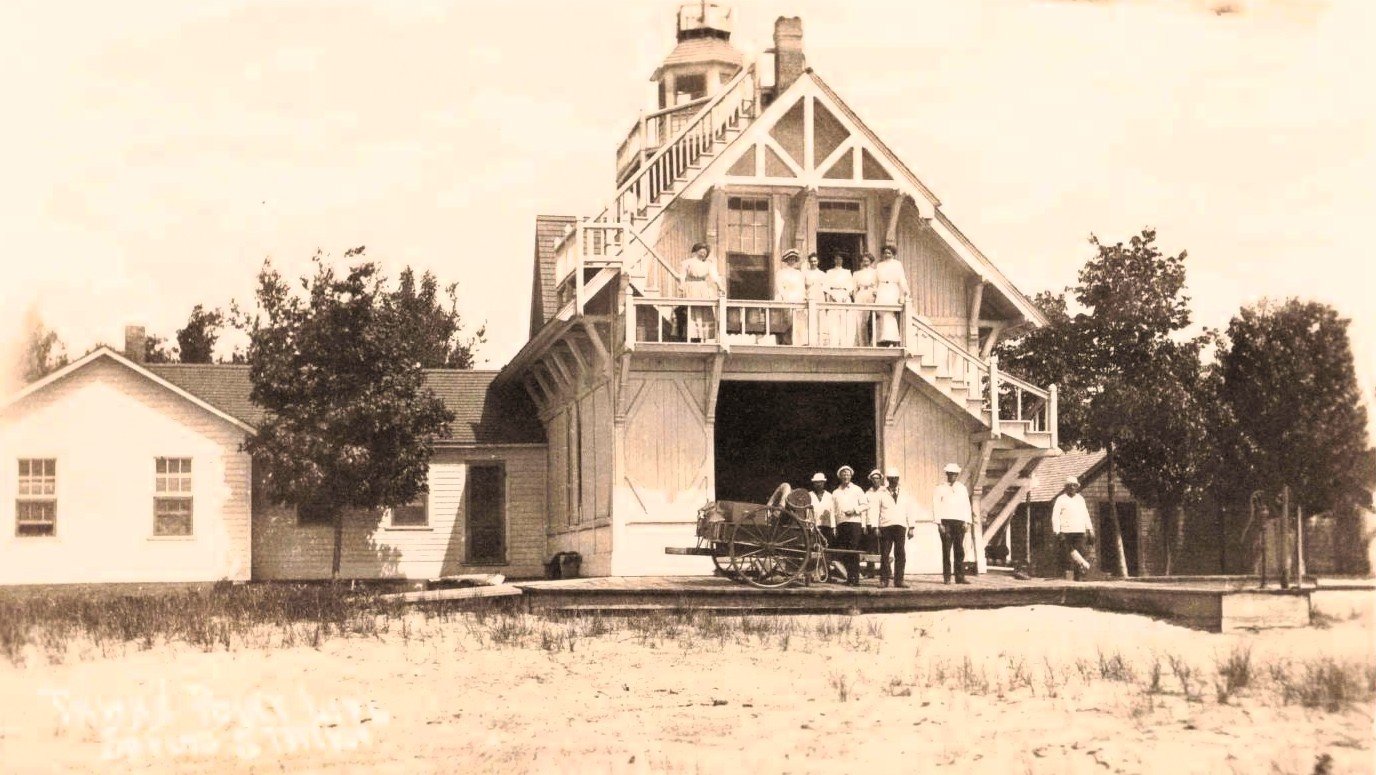
Old Tawas Goes Digital: A Century of Lake Huron History Is Being Saved
A new preservation project to digitize Lake Huron history, including photographs, letters, maps, and newspaper clippings documenting generations of life around Tawas Bay.
EAST TAWAS, Mich. — More than a century of Iosco County history is moving from museum shelves into digital storage.
The Iosco County Historical Society has received a $2,500 Michigan History Alliance Grant to begin digitizing photographs, newspaper clippings, letters, maps and other documents dating from the late 1800s through the 20th century.
The Historical Society of Michigan awarded the grant as part of its 2026 program supporting smaller museums and historical organizations across the state.
The money will pay for high-resolution scanners, digital storage, conservation supplies, and collection-management software.
For a relatively small investment, the project could make a significant body of Lake Huron history easier to preserve, search, and eventually use by researchers and the public.
Preserving Old Tawas and Lake Huron History

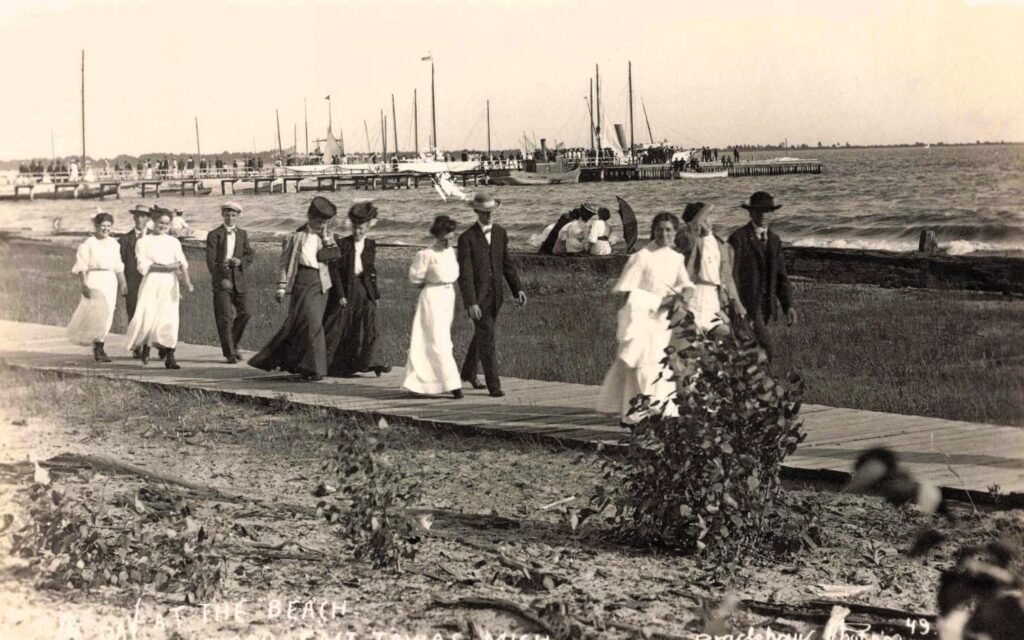
The records cover a period of enormous change around Tawas Bay.
Iosco County was formally organized in 1857, but settlement along the bay was already underway. Tawas City developed around the lumber industry after Gideon O. Whittemore and his associates acquired timber and waterfront property. A sawmill began operating there in 1854.
East Tawas followed in the early 1860s after another sawmill was established farther along the bay.
The two settlements became known locally as the “old town” and “east town.”
For decades, white pine drove the local economy. Logs came out of the interior, were processed at mills near the water and shipped across the Great Lakes.
The records now targeted for digitization span that lumber era and the decades that followed.
Newspapers Recorded Everyday History

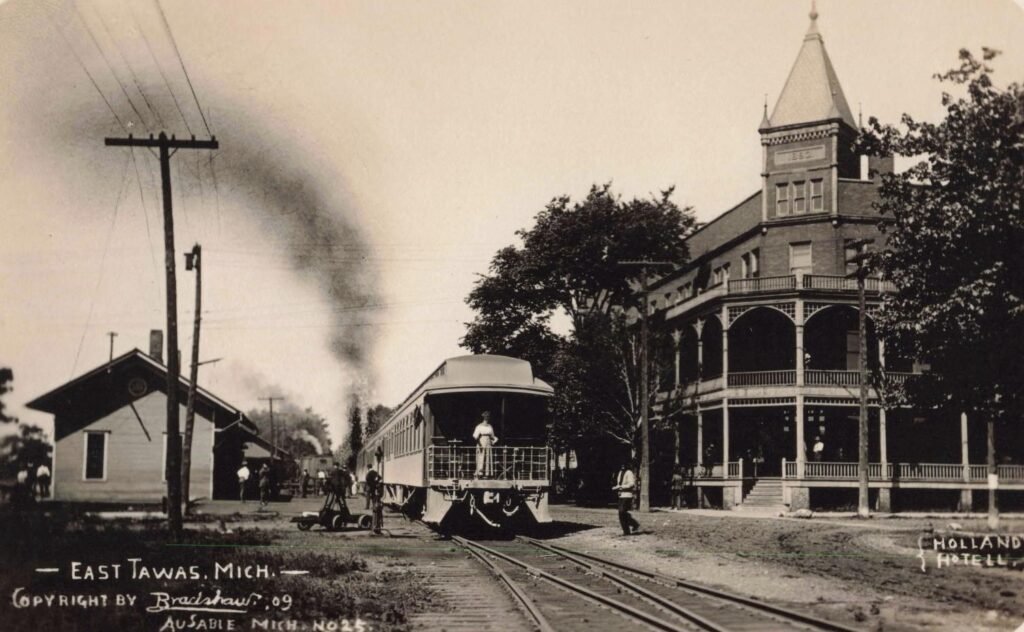
Newspapers are among the most useful records for reconstructing those years.
The Iosco County Gazette began publication in 1868. Later papers documented births, deaths, fires, ship traffic, railroad activity, court cases, businesses, and everyday life around Tawas Bay.
Historical newspaper clippings held by the museum could preserve information that remains difficult to locate elsewhere.
Old photographs present another opportunity.
A photograph of a downtown street can identify businesses that disappeared generations ago. Pictures of docks, mills, fishing boats and railroad facilities can show how the waterfront changed. Names written on the backs of family photographs can reconnect faces with census, cemetery and newspaper records.
High-resolution scanning allows researchers to enlarge those details without repeatedly handling fragile originals.
From Lumber to Railroads and Tourism

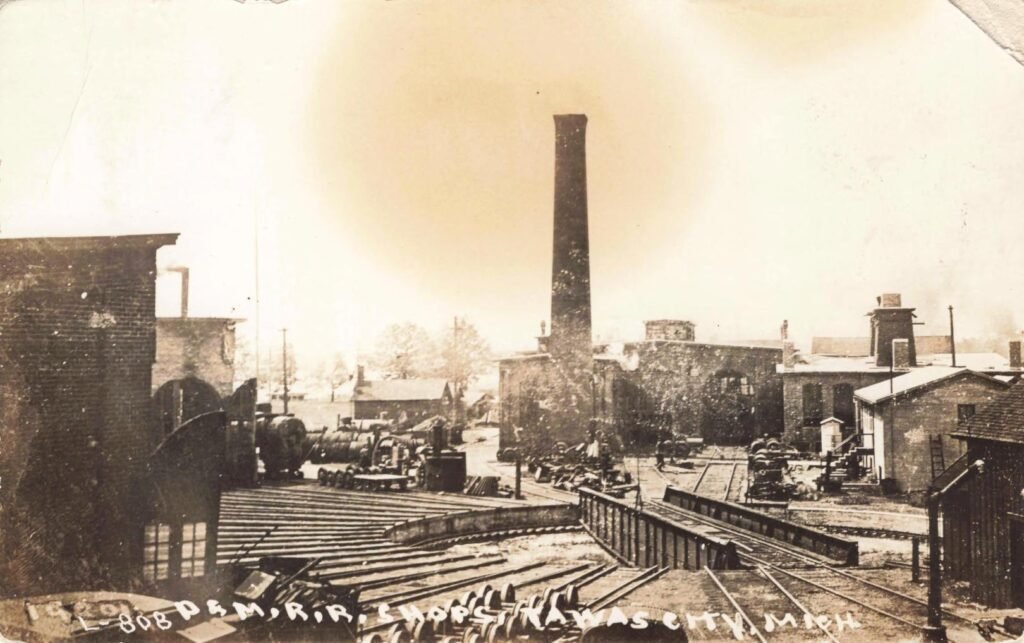
The collection also spans the transformation that followed the decline of Michigan’s white pine industry.
Railroads pushed inland from the Lake Huron shoreline, first serving logging operations and later connecting the Tawas communities with larger transportation networks.
East Tawas became an important stop on the Detroit, Bay City & Alpena Railroad, which later became the Detroit & Mackinac.
By the opening years of the 20th century, the old lumber economy was fading.
Fishing, agriculture, transportation, and tourism became increasingly important. The same Lake Huron shoreline, once valued for its lumber, also attracted visitors.
That transition is one reason the historical society’s collection has value beyond genealogy. Taken together, photographs, maps, letters, and newspapers can document how an entire community changed when the industry that created it declined.
More Than Scanning Old Photographs
Building a useful digital archive requires more than placing documents on a scanner.
Each item needs information identifying people, locations, dates and subjects. A photograph without that information can quickly become another unidentified digital image.
Collection-management software purchased through the grant will help the historical society organize those connections.
Digitization also protects the originals.
Old photographs fade. Paper becomes brittle. Repeated handling can cause additional damage. Creating high-quality digital copies allows researchers to study records while reducing the need to handle the physical documents.
The Iosco County project is one of 26 funded through the 2026 Michigan History Alliance Grant Program. The Historical Society of Michigan awarded $55,029.83 after receiving 61 requests seeking more than $130,000.
That demand points to a continuing problem for Michigan’s small historical organizations. Many hold valuable collections but operate with limited budgets and rely heavily on volunteers.
In East Tawas, $2,500 will not digitize an entire century of history overnight.
It does provide the equipment needed to begin.
For generations, Iosco County residents preserved their history in photographs, letters, newspapers, and maps. Now those records are taking another step toward surviving for the next generation.
Old Tawas is going digital.

