


History Of Grand Haven Michigan – 20 Rare Photos Showing How This Lake Port Became A Beloved Beach Town
Grand Haven, Michigan, is now one of the best-known lakefront communities on the eastern shore of Lake Michigan. People know the beach, the pier, the red lighthouses, the boardwalk and the summer crowds. But the History of Grand Haven Michigan is not only a story about sand and vacations.

It is also a story about work.
Grand Haven grew where the Grand River meets Lake Michigan. That location gave the city a useful advantage. The river connected the interior to the lake. The lake connected the city to Chicago, Milwaukee and other Great Lakes ports. By the early 1900s, Grand Haven had become a place where factories, ferries, trains, shops, courts, mail, fishing boats and summer visitors all shared the same town.
That balance is what makes the History of Grand Haven Michigan so strong. The city was never just one thing.

Washington Street Was The City’s Busy Front Room

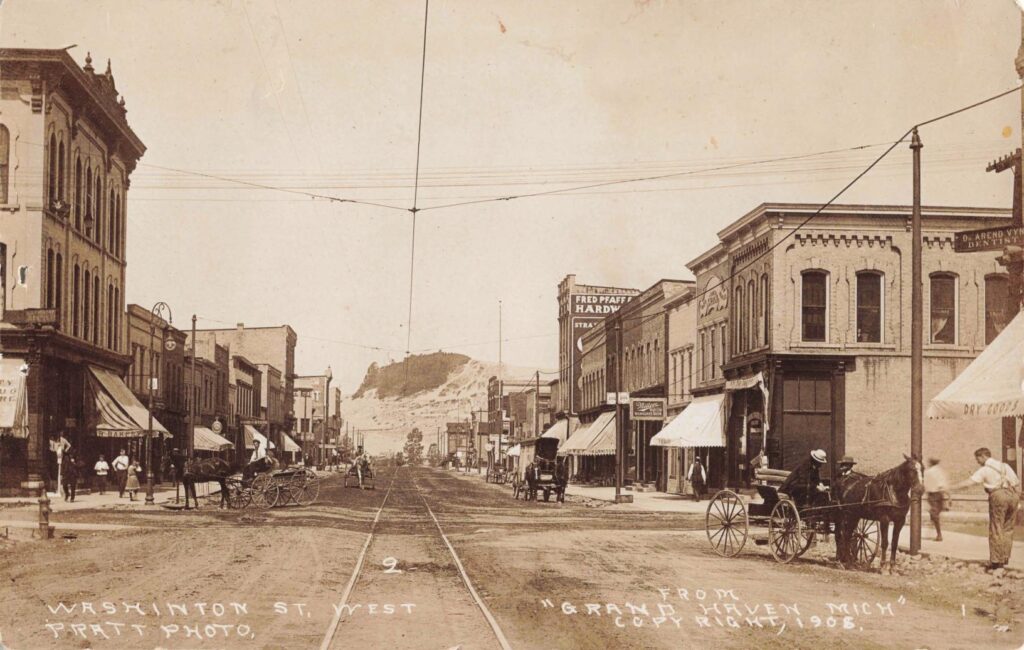
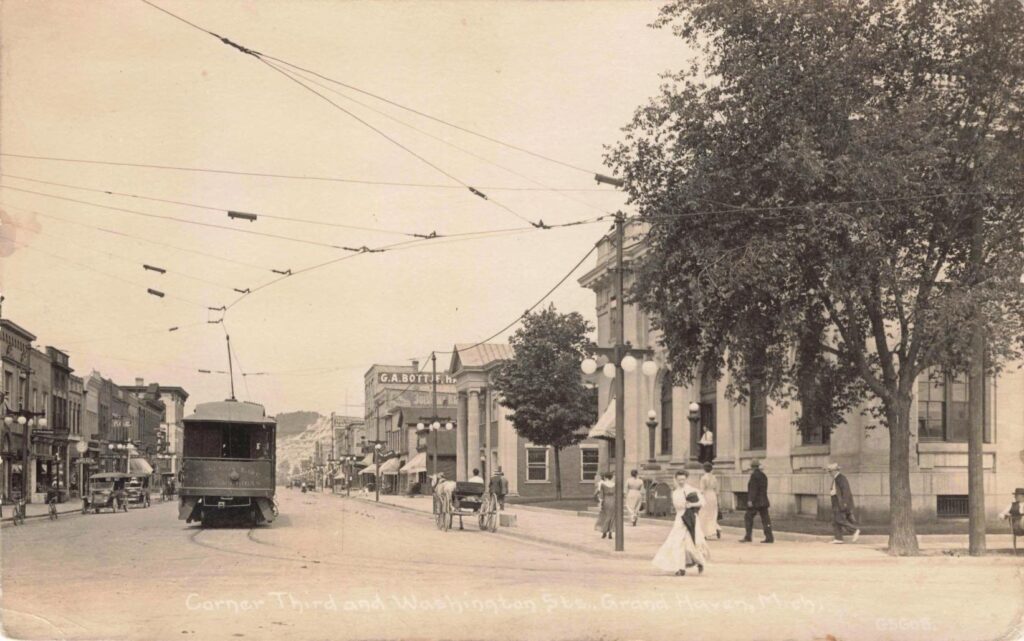
The early Washington Street scenes show a city in motion. The road is broad and rough. Rails run down the middle. Overhead wires cross the street. Horses and buggies wait near storefronts. Men and women stand under awnings outside dry goods stores, drug stores, hardware businesses and offices.
This is not a decorative downtown. It is a practical one.
People came to Washington Street to buy tools, medicine, clothing, household goods and furniture. They came to meet neighbors, send letters, conduct business and hear news. In the early 1900s, downtown was not just a shopping area. It was the public center of the city.

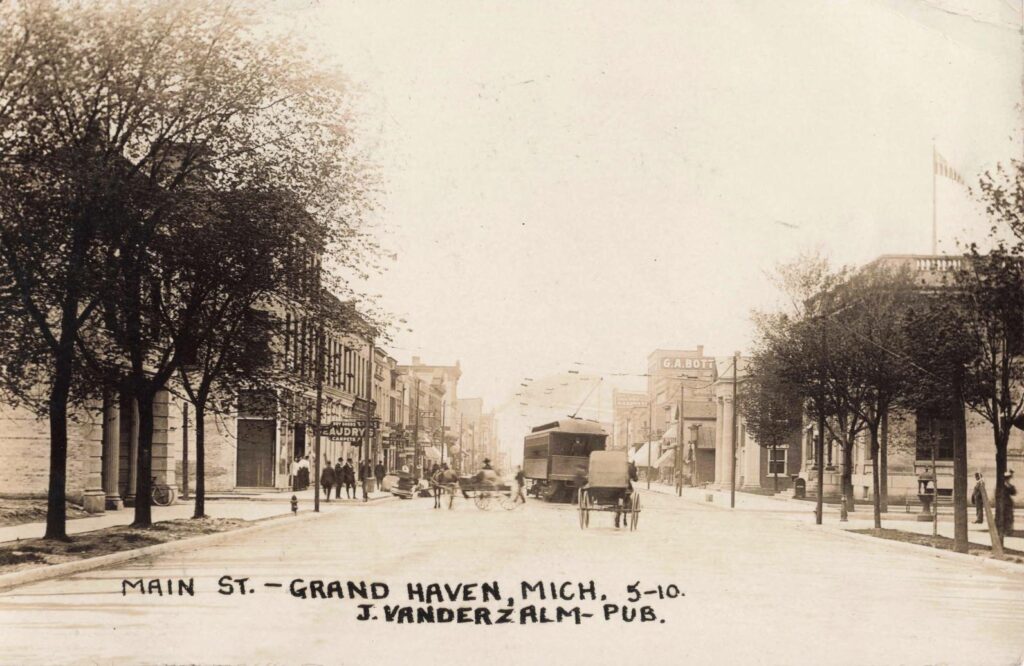
The street views also show a town in transition. Horses still dominated local travel, but rails and wires pointed to the modern age. Automobiles would soon become common. Paved streets would follow. The downtown shown here was standing between older 19th-century habits and a faster 20th-century future.
Factories Gave Grand Haven An Industrial Backbone

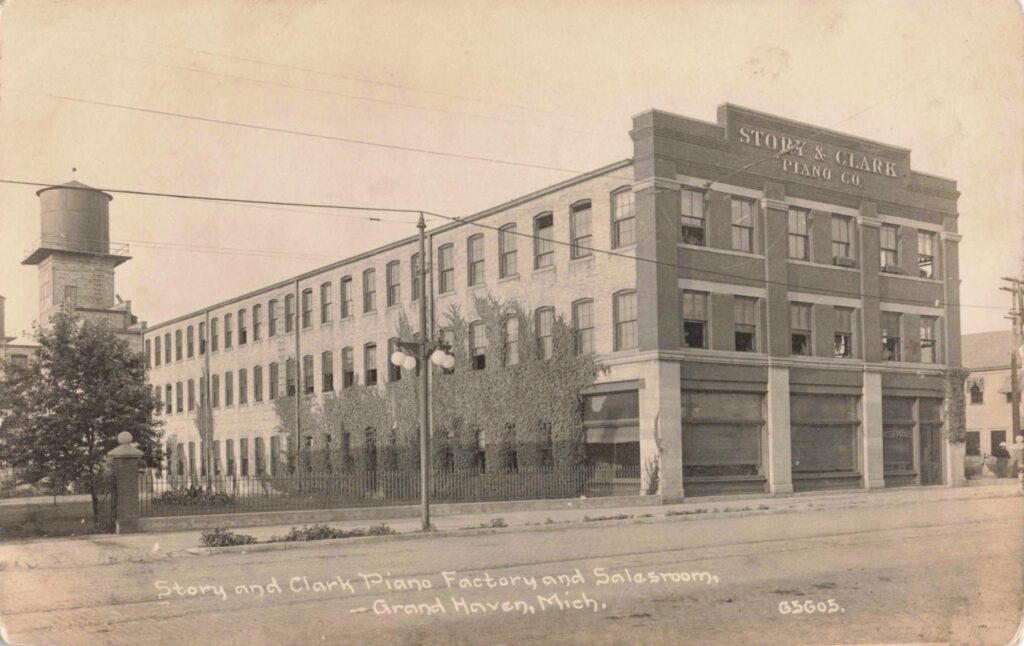
A counterintuitive part of the History of Grand Haven Michigan is how industrial the town was.
Visitors often think first of the beach. But Grand Haven also made things.
Story & Clark Piano Co. became one of the city’s major industrial names. The company’s roots were in Chicago, and piano production moved to Grand Haven by 1901. It remained tied to the city until 1984. That long run made the factory part of local identity.
Piano making required skilled labor. Workers shaped wood, fitted parts, handled finishes and assembled instruments meant for homes, churches, schools and public halls. The finished piano could sound refined, but the work behind it was industrial.

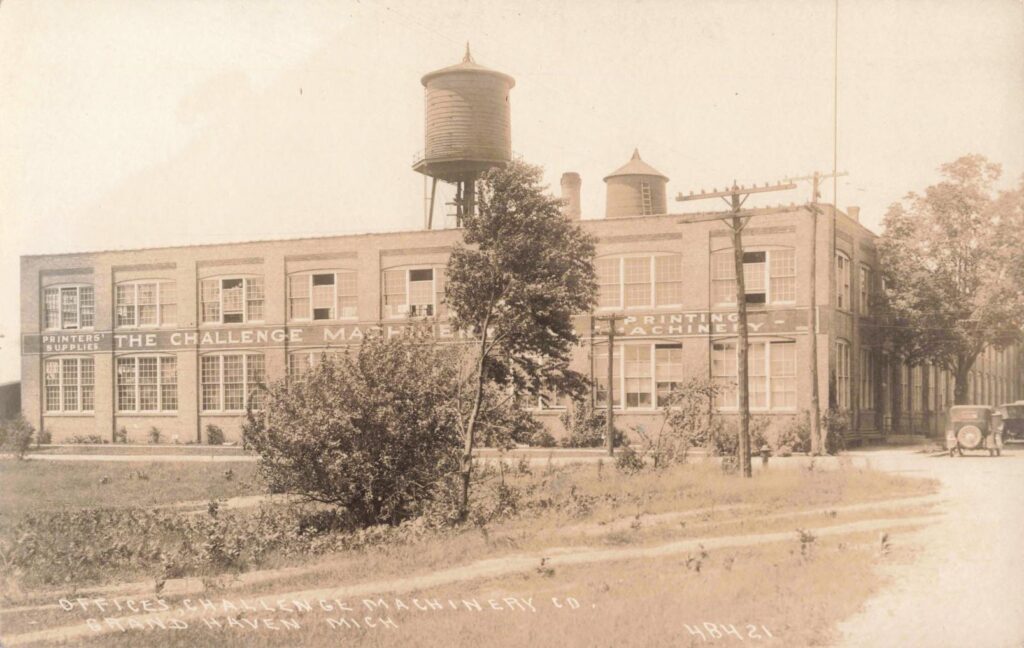
Challenge Machinery Co. tells a related story. The company used its Grand Haven property from 1903 to 2001 to manufacture machinery for the printing and graphic arts industry.
This means Grand Haven helped send music into homes and helped printers produce the printed word. That is a much broader identity than a beach postcard can show.
Government And Civic Life Anchored The City

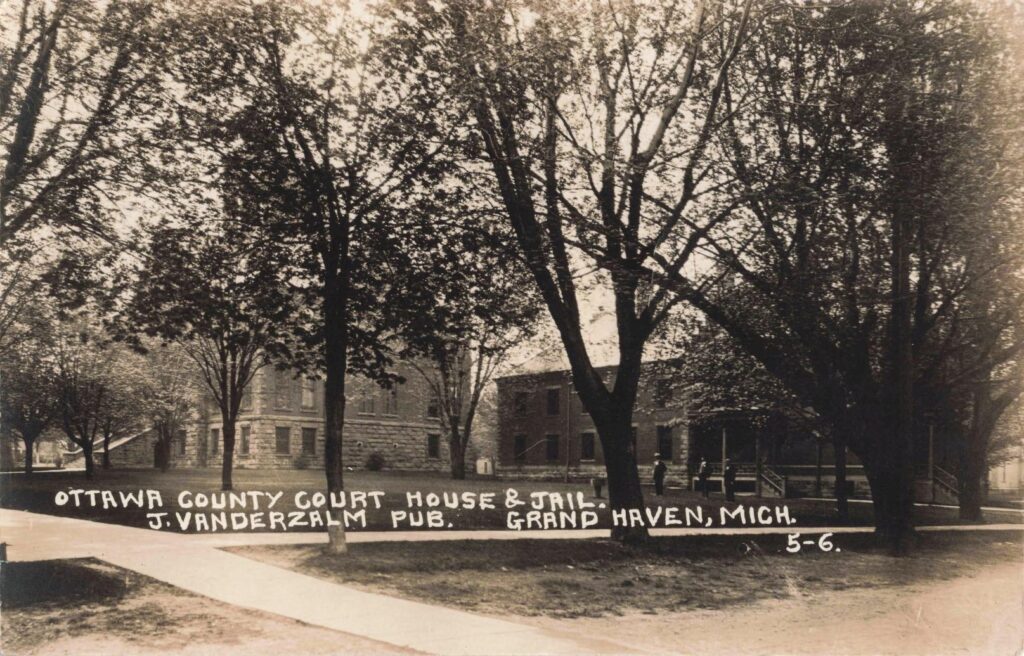
Grand Haven also carried public authority. The Ottawa County courthouse and jail gave the city a county role. Residents came for legal filings, trials, land records, taxes and official business.

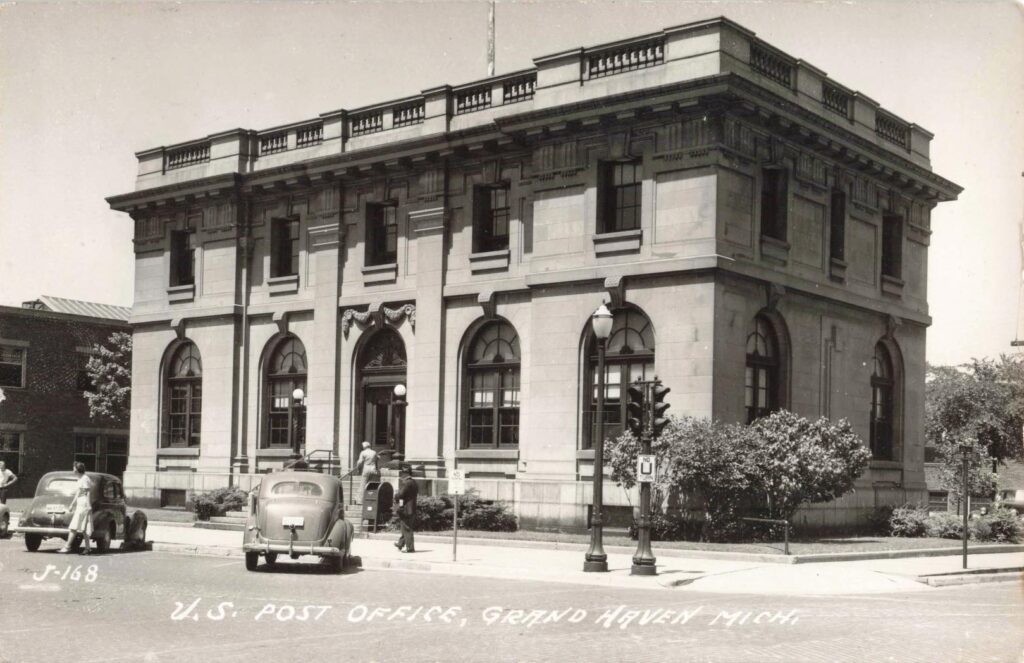
The U.S. Post Office added federal presence. Before digital communication, the post office handled the paper flow of American life. Letters, bills, postcards, newspapers, official notices and business orders passed through its doors.

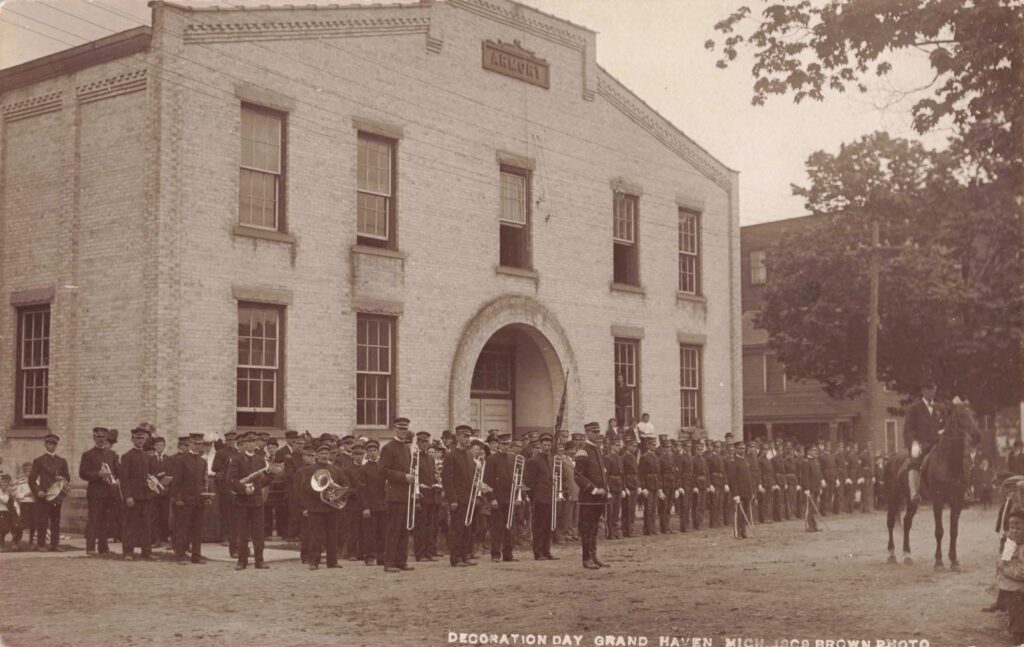
The armory scene shows civic ceremony in public view. On Decoration Day in 1909, uniformed men and a brass band gathered outside the building. Decoration Day, later Memorial Day, began with Civil War remembrance and became one of the major public rituals in American towns.
These images remind us that Grand Haven was more than a harbor and beach. It was a place where government, memory and public duty had visible space.
Rail, Bridges And Steamers Kept Grand Haven Moving
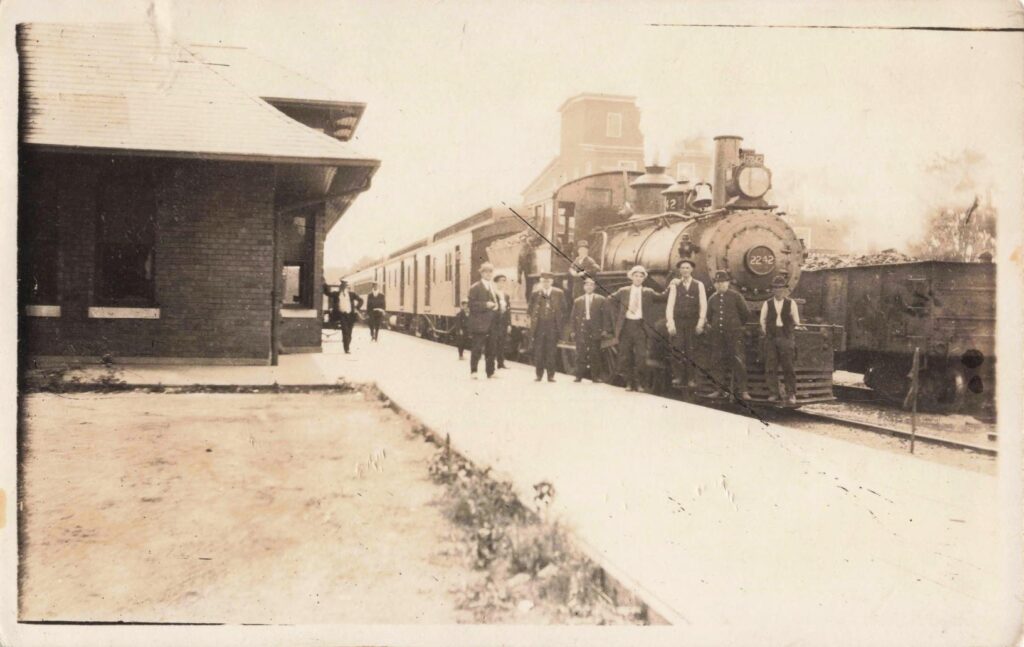
Transportation made Grand Haven important.
The railroad depot shows a steam locomotive at the platform. Men stand near the train. The scene is quiet, but the meaning is large. Rail gave Grand Haven inland reach. It moved passengers, freight and mail. It tied the lakeshore city to farms, towns and markets away from the water.

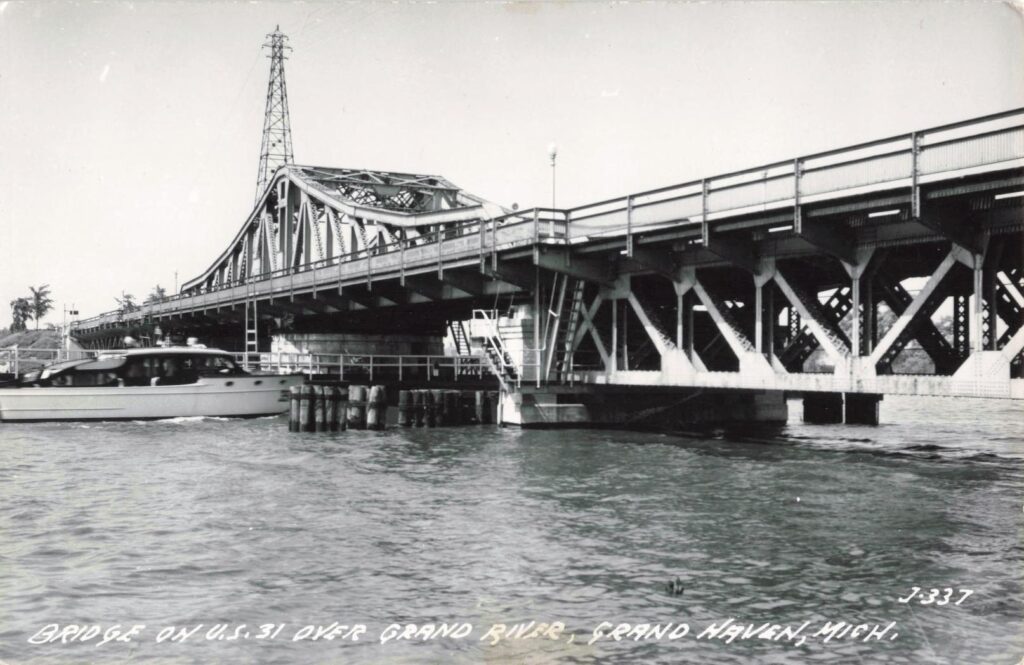
The new $250,000 bridge shows another kind of investment. A bridge at that price was a major public project. It changed travel patterns and signaled local confidence.
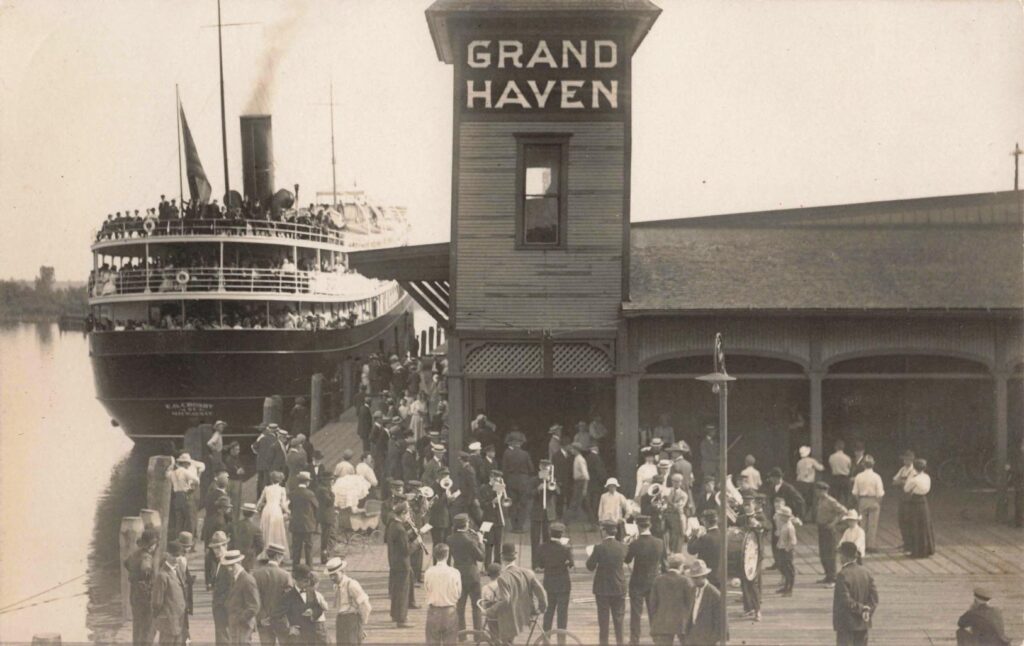
The passenger steamer dock scene may be the most crowded of the group. A large boat sits beside the Grand Haven landing. People fill the dock. A band appears near the crowd. It looks like an event, but it also shows a basic fact: water travel once brought crowds directly into the heart of the city.
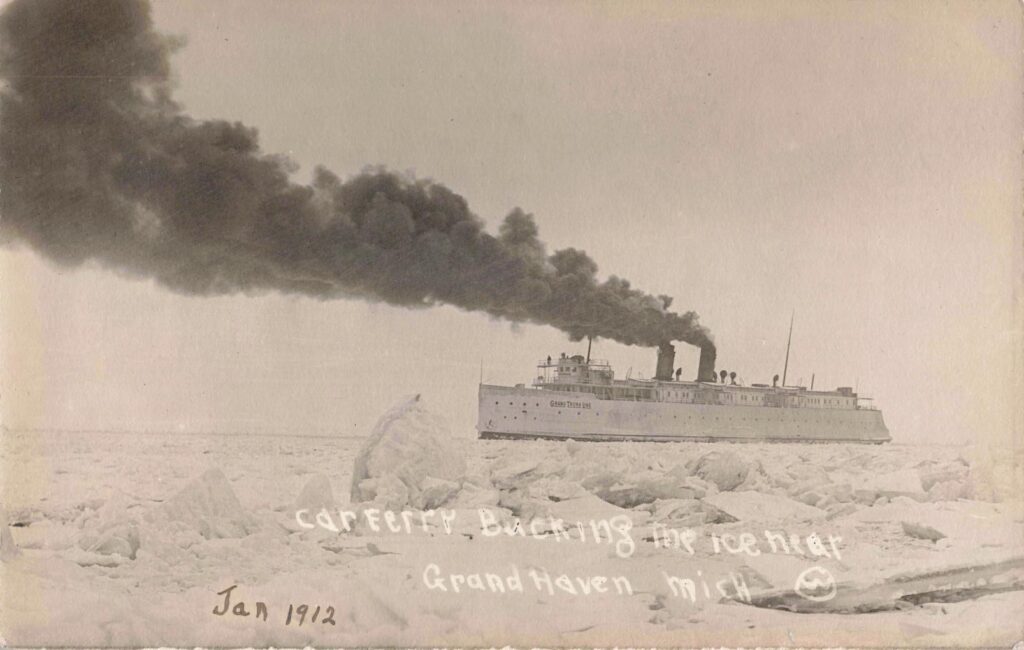
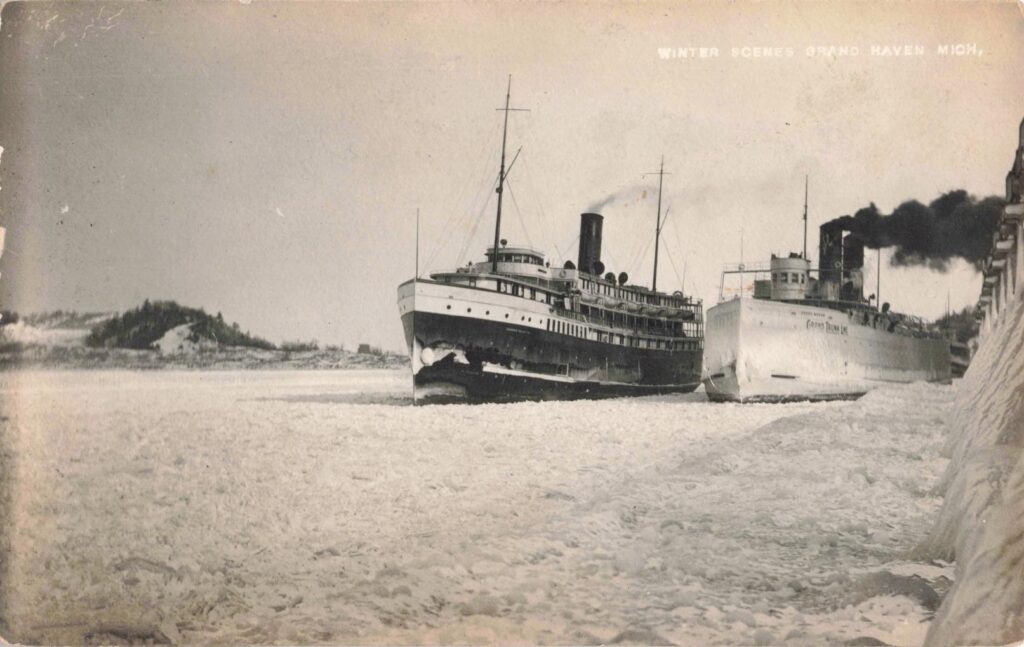
In winter, water travel became harder. The January 1912 car ferry scenes show ships pushing through heavy ice. Smoke pours from their stacks. The lake is broken into plates and ridges. The images are dramatic because they show the fight behind ordinary commerce.
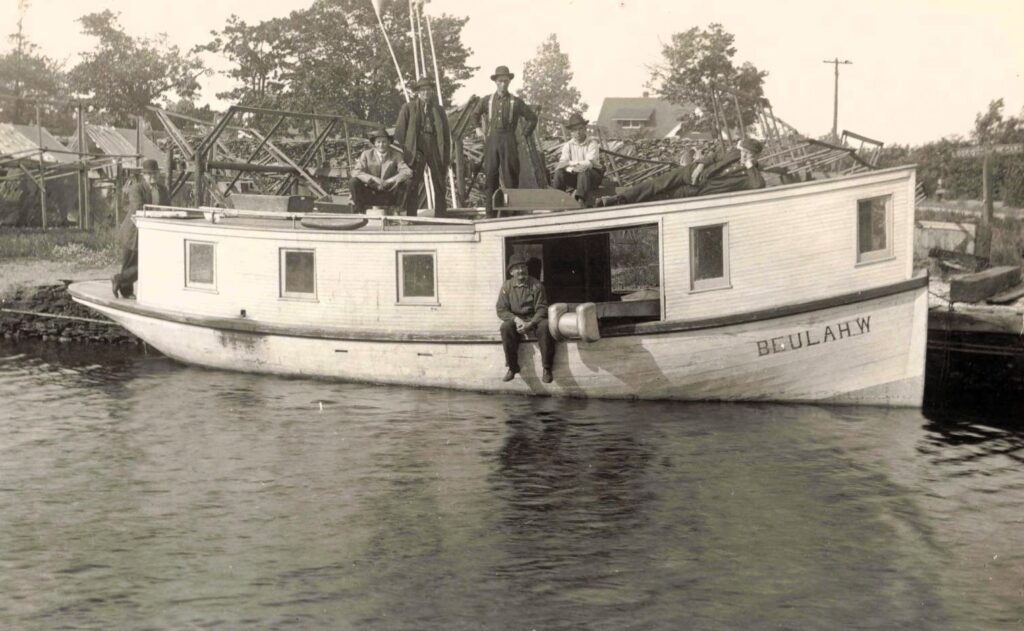
The fishing tug Beulah W adds a smaller but important part of the waterfront economy. Commercial fishing boats worked close to shore and across the lake. Crews knew weather, engines, nets and markets.

The Beach Became A Public Stage
The History of Grand Haven Michigan also includes one of the state’s most familiar beach stories.

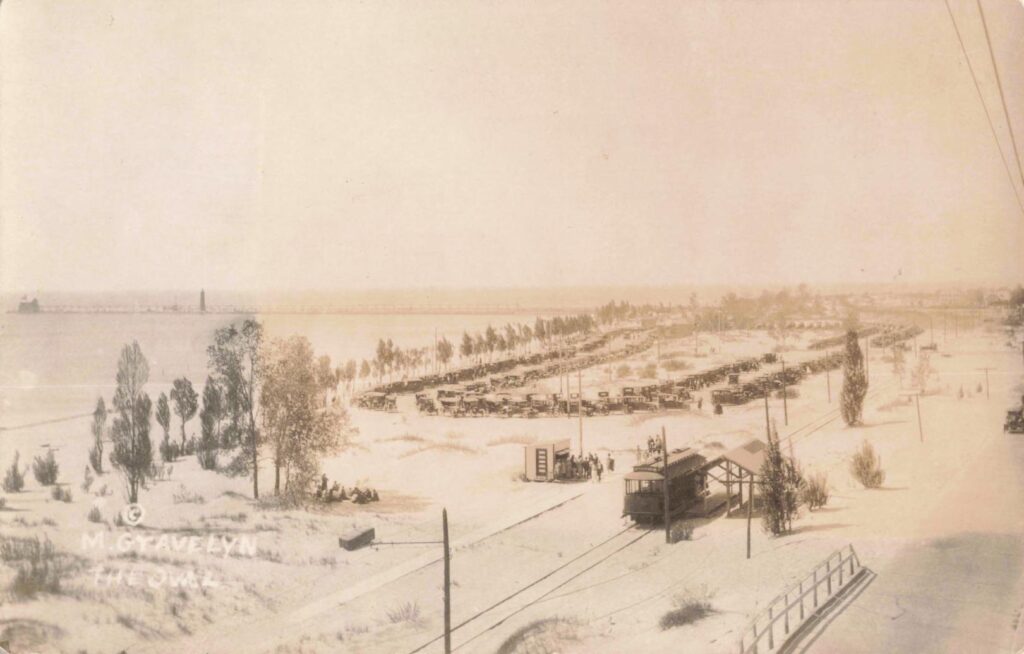
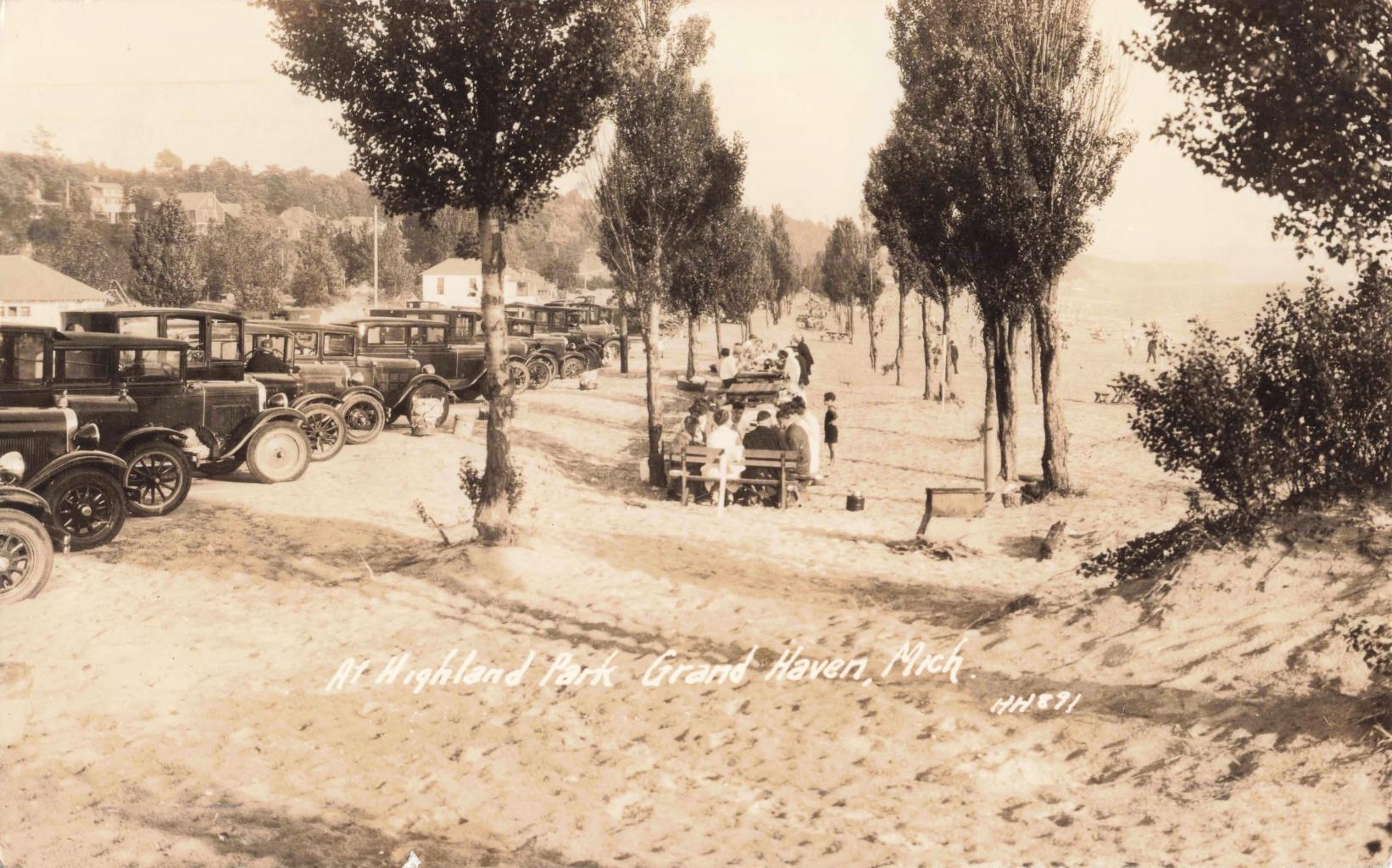
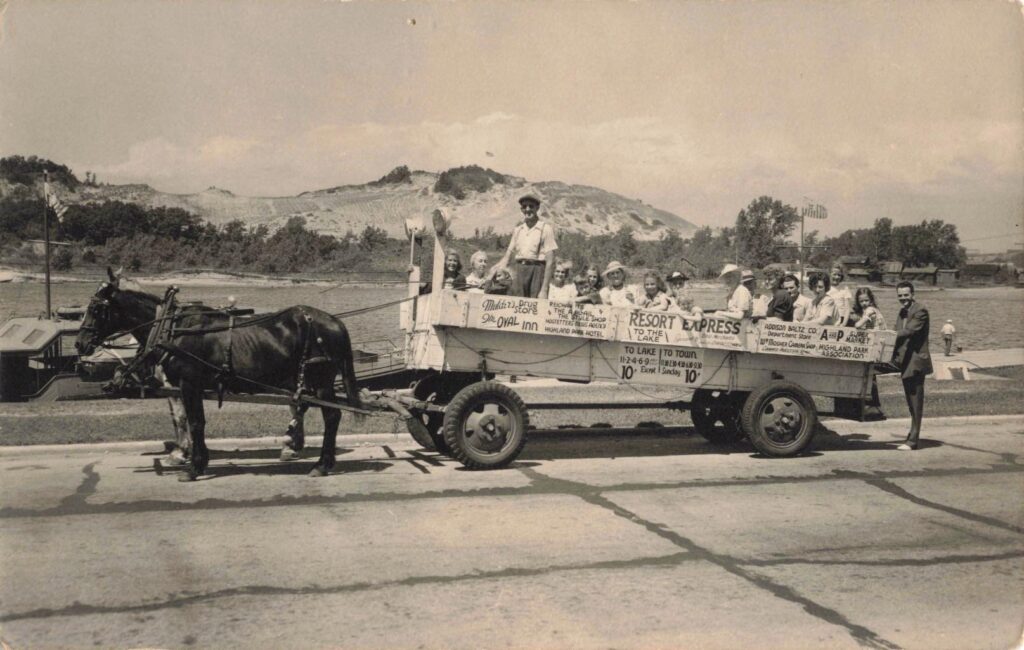
The Oval, shown from above, captures the lakefront as a busy public place. Cars line the roads. Beachgoers gather near the water. Houses and trees sit behind the sand. The view shows a resort identity already taking shape.
Grand Haven State Park later became one of the city’s best-known public spaces. The Michigan DNR describes it as a 48-acre park along Lake Michigan and the Grand River at the mouth of the river, with views of the pier and two lighthouses.

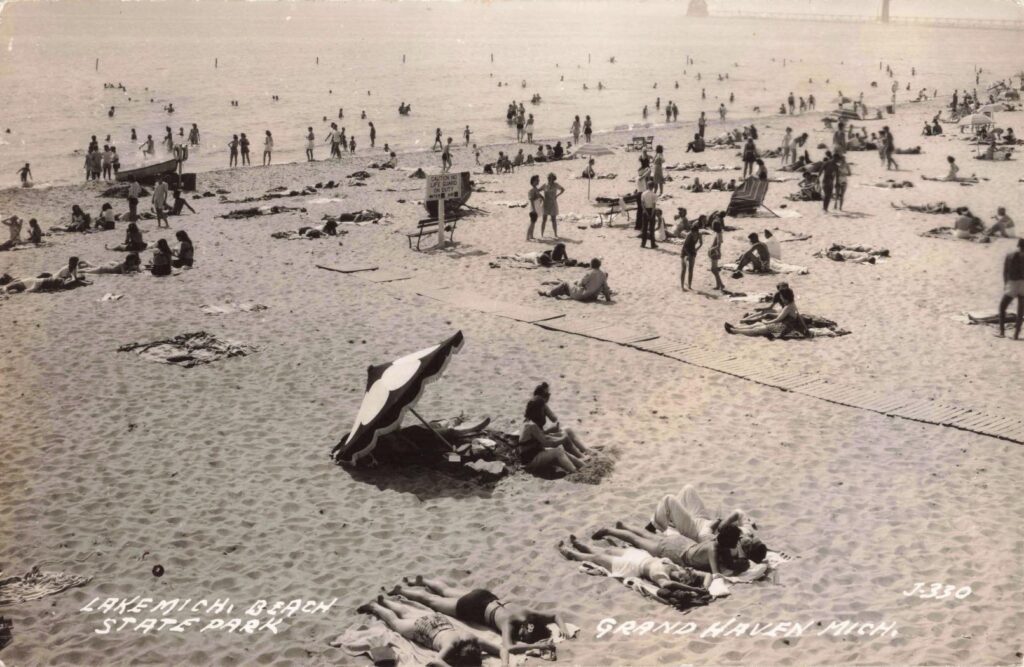
The beach did not erase the working city. It added another layer. Grand Haven could be industrial during the week and full of visitors on a summer weekend. That mix became part of its identity.
Recreation Did Not Stop At The Shore

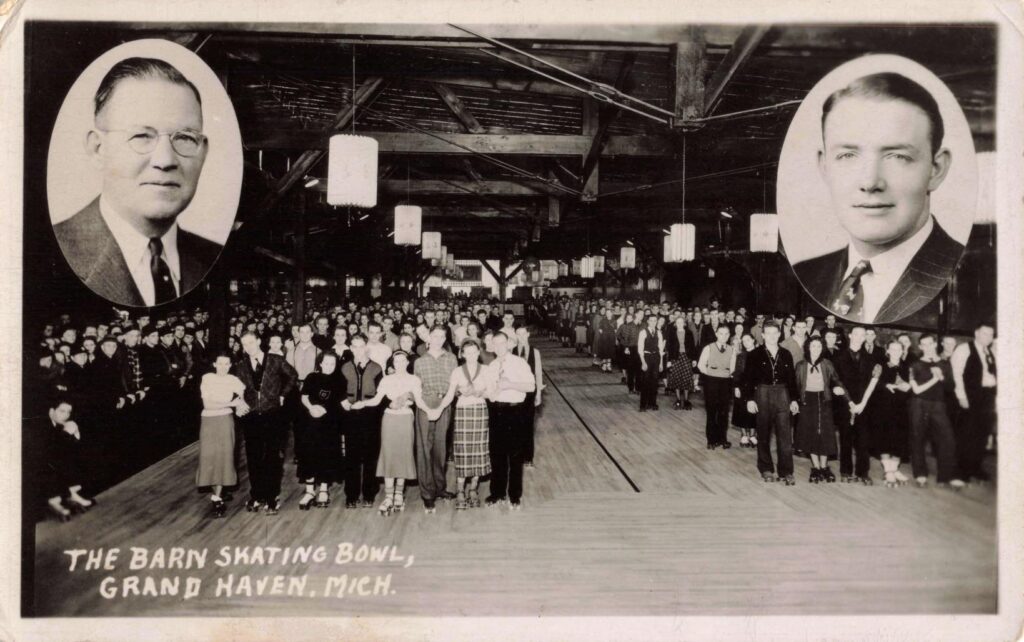
The Barn Skating Bowl shows another side of public fun. A large crowd fills the rink. People stand together in rows. Skaters, spectators and portraits create a scene of youth, music and social life.
Roller rinks were important social spaces in many towns. They gave young people a public place to gather. They mixed sport, music and courtship. In a city with factories, courts, ships and stores, the skating rink gave residents another way to belong.
The Dutch Windmill And Local Identity

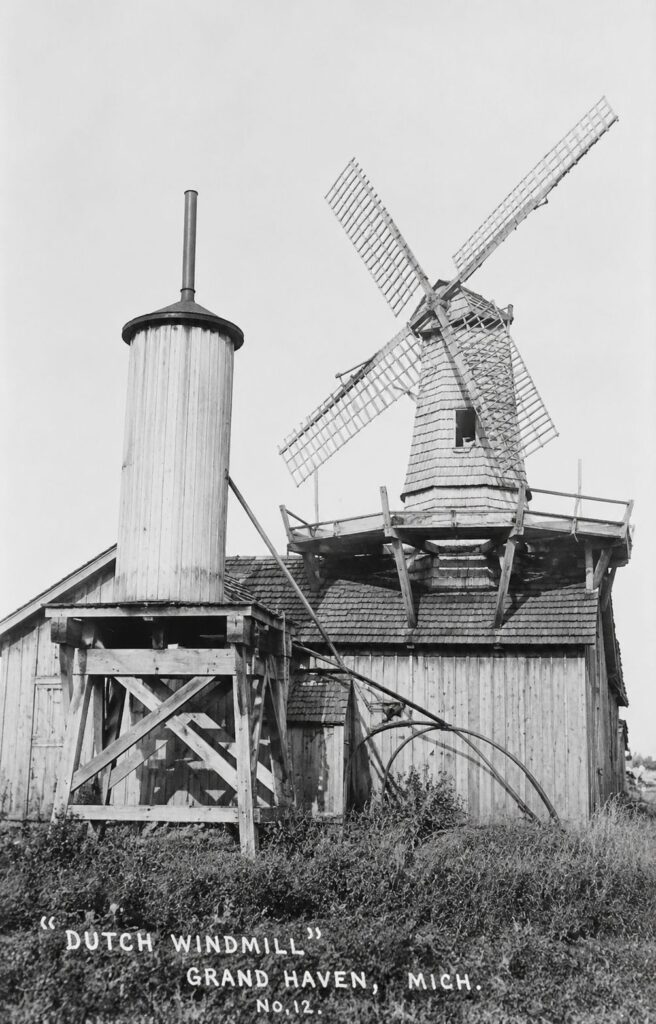
The Dutch windmill scene adds a cultural note. West Michigan has long had strong Dutch-American influence, especially in nearby communities. A windmill image in Grand Haven reflected regional identity and the public interest in ethnic heritage, local pride and recognizable landmarks.
The image is lighter and more worn than the others, but it still supports a useful point. Grand Haven was shaped by more than commerce. It also absorbed regional culture, immigrant influence and public memory.
How Grand Haven Became Coast Guard City, USA

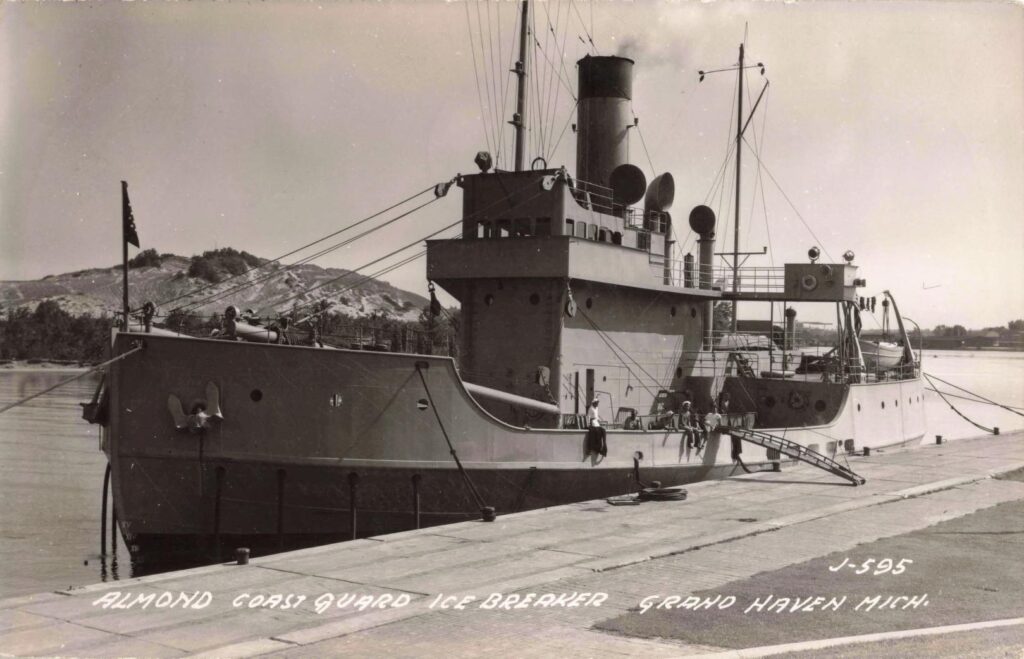
Grand Haven’s later Coast Guard identity grew from its long relationship with the water. A city at a river mouth needed rescue service, harbor knowledge and respect for lake conditions. That relationship became formal in 1998, when Grand Haven was designated Coast Guard City, USA, by federal action.
That honor fits the older story. Grand Haven had already spent generations living with the demands of water. Its people watched storms, ice, river traffic, passenger steamers, fishing tugs and working vessels. The Coast Guard identity did not appear from nowhere. It grew from the city’s waterfront life.
Why Grand Haven Still Holds Attention
The History of Grand Haven Michigan is strong because it refuses to be simple.
Grand Haven was a beach town, but not only that. It was a port, factory town, county seat, rail stop, fishing center, summer resort and civic gathering place. It made pianos. It made printing machinery. It moved people by rail and boat. It gathered crowds for Decoration Day, beach outings, steamer arrivals and roller skating nights.
That is why the old images still feel active.
They do not show a town frozen in time. They show a town working, adapting and pulling people toward the water.
The best way to understand Grand Haven is to hold both sides together: smoke and sand, factory and beach, courthouse and dock, winter ice and summer crowds.
That balance made Grand Haven one of Michigan’s most memorable lakeshore cities.