


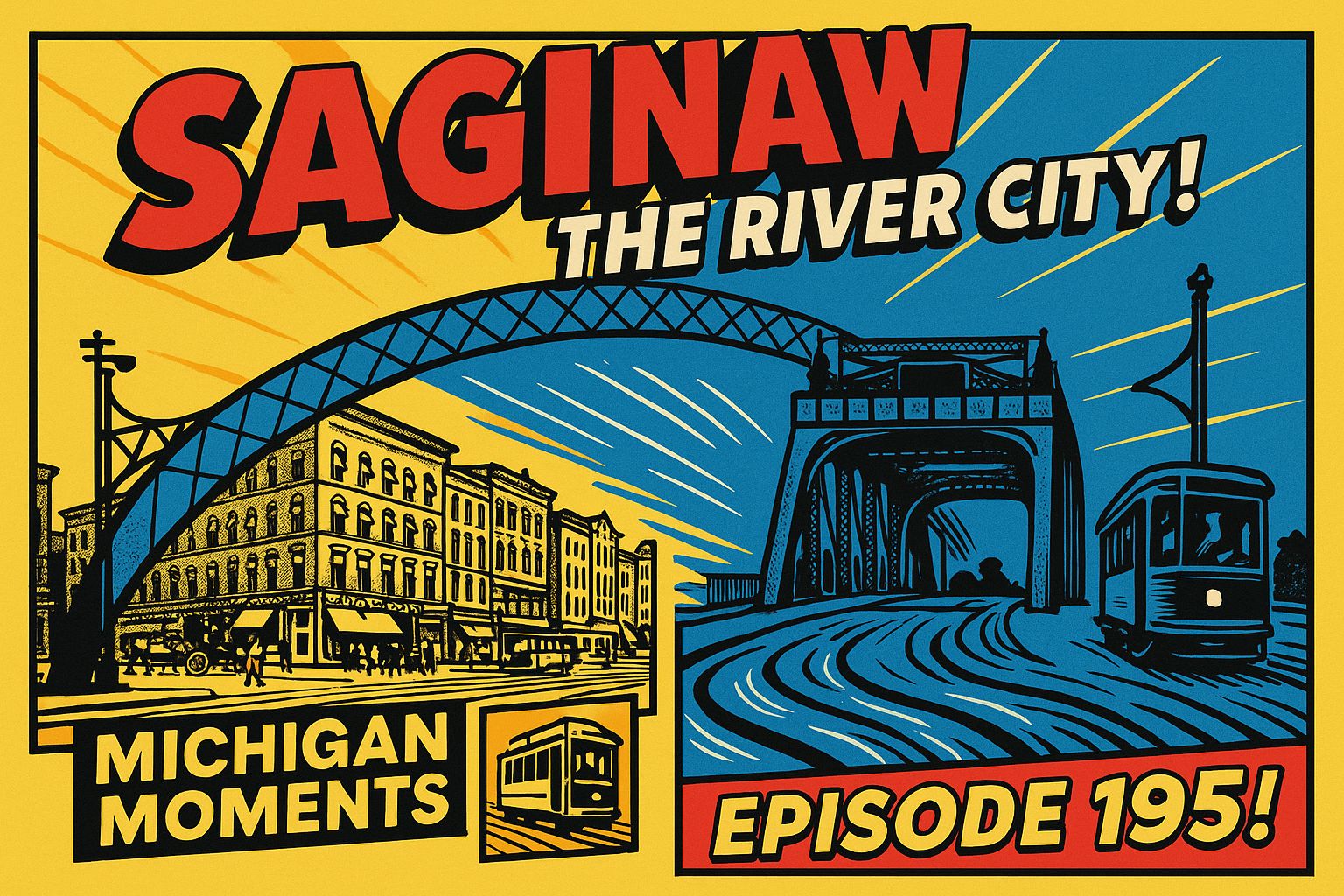
History of Saginaw Michigan: River, Rivalry, and a City United – Video

For decades two towns faced each other across the current: Saginaw City on the west bank and East Saginaw on the east. The bridges carried freight and competition, none more symbolic than Court Street. In 1889–1890, the Legislature united the rivals into one city. Your period photos—Genesee and Baum in 1912, South Washington Avenue labeled “Mich. Bell” in 1918—place us inside the streetscape of a community on the rise.
Sawmills powered the first big boom. Waste wood from the mills fueled brine kettles and launched the valley’s salt industry, a partner to lumber that kept payrolls steady as forests thinned. Civic pride followed industry. Hoyt Library opened in 1890 with strong stone and round arches, a public room for study and lectures. The river could turn rough, too; images of the Bristol Street Bridge after the 1916 flood show how quickly water could stop the city.
By the 1920s the economy had shifted again to furniture, castings, and steering systems, laying groundwork for later wartime production. In the photographs you can see the turn—bridges that connect rather than divide, phones that knit neighborhoods together, and a downtown confident in its future.
This film offers a clear, visual history of how a river town became Saginaw, Michigan. In short: a treaty at the water’s edge, two cities made one, and a workforce that learned new trades as the times changed.
#Saginaw #MichiganHistory #VintageMichigan #MichiganMoments